Green Roofing: Benefits, Types, and Installation Guide
Green roofing represents one of the most innovative approaches to sustainable building design, transforming traditional rooftop spaces into living ecosystems that deliver environmental, economic, and social benefits. As urban areas continue to expand and climate concerns intensify, property owners across commercial and residential sectors are increasingly exploring vegetated roof systems as viable alternatives to conventional roofing materials. These living roof assemblies combine specialized waterproofing membranes, drainage systems, growing media, and carefully selected vegetation to create functional green spaces that reduce energy consumption, manage stormwater runoff, improve air quality, and extend roof lifespan. Understanding the components, benefits, and maintenance requirements of green roofing systems enables property owners to make informed decisions about whether this sustainable solution aligns with their building performance goals and long-term investment strategies.
Understanding Green Roofing Systems and Their Components
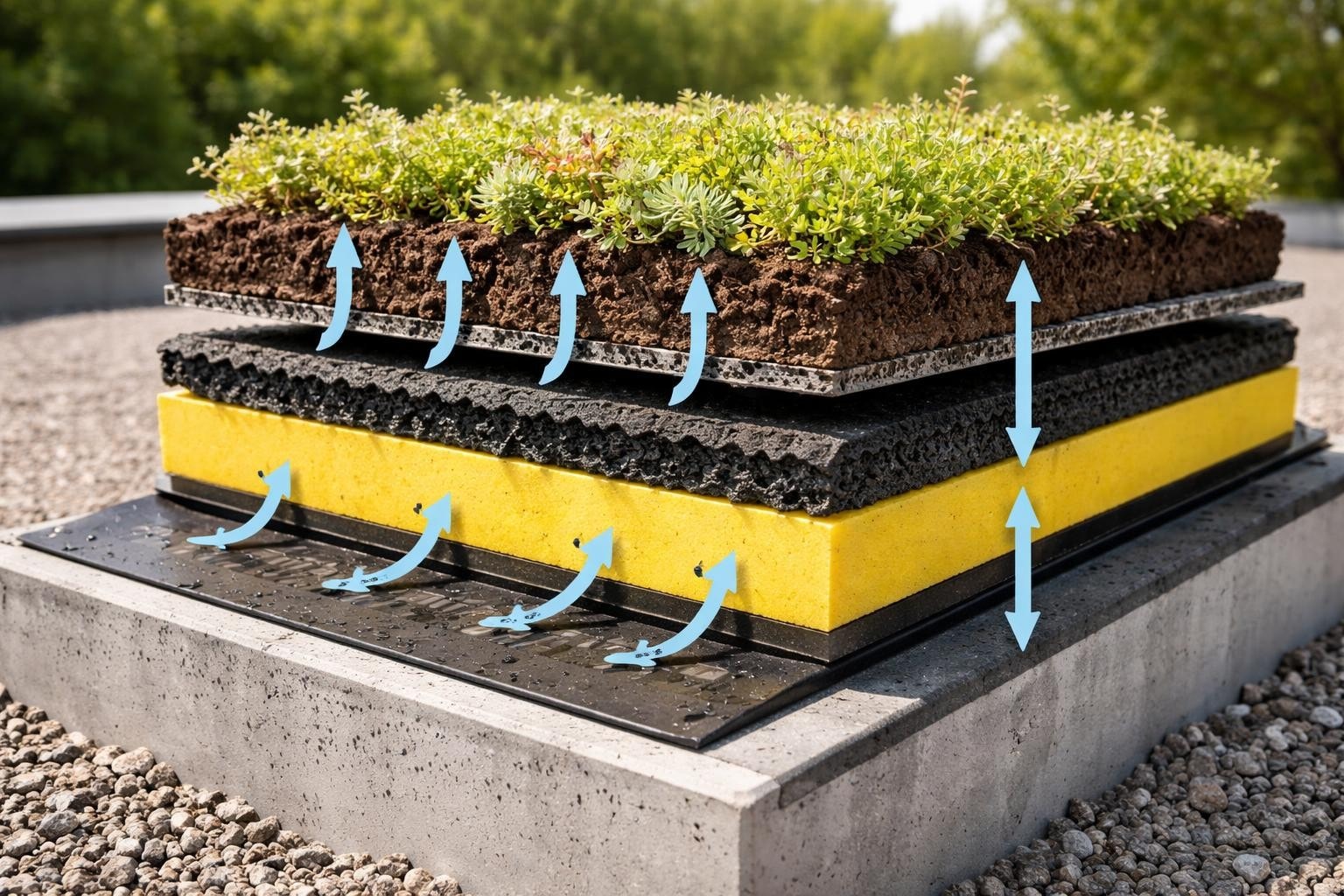
Green roofing systems consist of multiple specialized layers that work together to support vegetation while protecting the underlying structure. The waterproofing membrane forms the foundation, typically incorporating root barriers to prevent plant penetration that could compromise building envelope integrity. Above this critical layer, drainage systems channel excess water away from the growing medium while retaining sufficient moisture for plant health.
The growing medium itself differs substantially from traditional soil. These engineered substrates balance weight considerations with water retention capacity and nutrient availability, often incorporating lightweight aggregates, organic matter, and mineral components. Depth varies depending on system type, ranging from shallow extensive systems to deeper intensive installations that support diverse plant communities.
Extensive Versus Intensive Green Roof Configurations
Two primary categories define green roofing approaches, each offering distinct characteristics and applications:
Extensive Systems:
- Lightweight design with growing media depth of 2-6 inches
- Limited plant palette focused on sedums, succulents, and hardy grasses
- Minimal maintenance requirements after establishment
- Lower installation costs and structural load demands
- Ideal for commercial buildings and residential applications where access is limited
Intensive Systems:
- Deeper growing media ranging from 6-24 inches or more
- Supports diverse vegetation including shrubs, trees, and garden plants
- Requires regular maintenance similar to ground-level landscapes
- Higher structural reinforcement necessary to support increased weight
- Creates usable amenity spaces and rooftop gardens
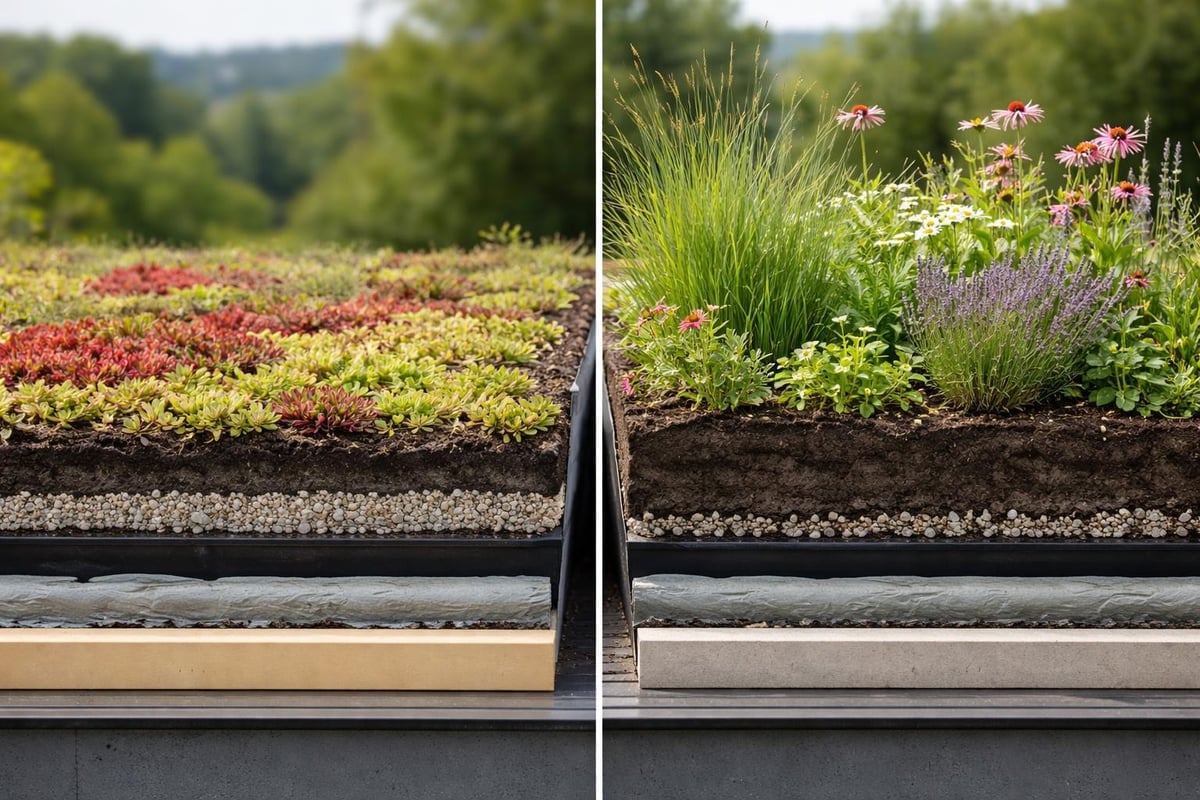
The choice between extensive and intensive configurations depends on structural capacity, budget constraints, intended use, and maintenance capabilities. Most commercial retrofits favor extensive systems due to lower costs and reduced structural modifications, while new construction projects occasionally incorporate intensive designs to create accessible rooftop amenities.
Environmental Benefits and Performance Advantages
The Environmental Protection Agency recognizes green roofs as effective tools for reducing urban heat island effects by providing shade and removing heat from the air through evapotranspiration. This cooling effect extends beyond the building itself, contributing to lower ambient temperatures in dense urban environments where conventional roofing materials absorb and radiate significant heat.
Energy performance improvements represent one of the most compelling advantages of green roofing implementation. Research demonstrates that green roofs significantly reduce building energy consumption by providing additional insulation and reducing heat transfer through the roof assembly. During summer months, vegetated layers absorb solar radiation and cool the building through evapotranspiration, reducing air conditioning demands. Winter performance benefits include enhanced thermal resistance that minimizes heat loss.
Stormwater Management and Water Quality Improvements
Green roofing systems excel at capturing and managing precipitation, offering valuable benefits in urban areas where impervious surfaces overwhelm drainage infrastructure:
- Absorption of rainfall directly into the growing medium
- Gradual release of excess water through drainage layers
- Reduction of peak stormwater discharge rates during intense rainfall
- Filtration of pollutants and particulates from captured water
- Decreased burden on municipal stormwater systems
The stormwater retention capacity varies by system depth, growing medium composition, and vegetation type. Extensive systems typically retain 40-60% of annual precipitation, while intensive configurations can capture 70-90% depending on design specifications. This performance provides measurable value in areas subject to stormwater management fees or regulatory requirements.
Structural Considerations and Load Requirements
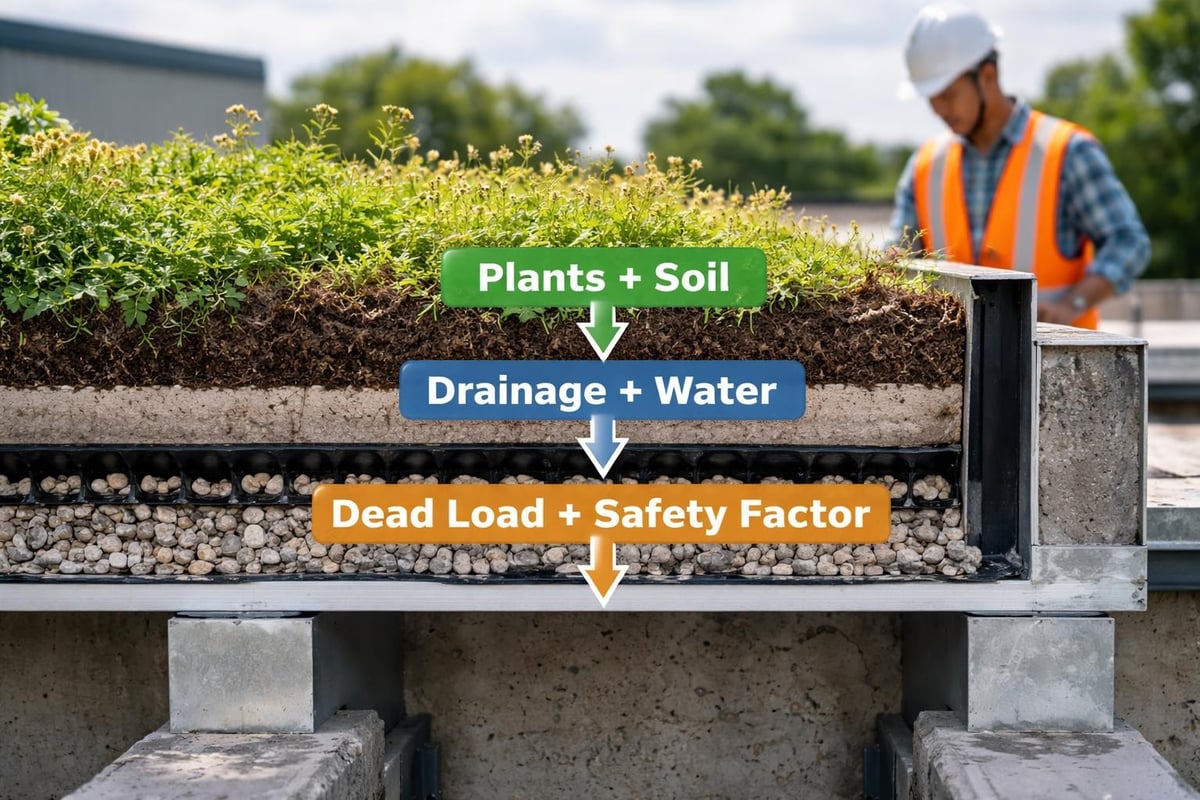
Implementing green roofing demands careful evaluation of structural capacity since vegetated assemblies impose substantially higher loads than conventional roofing materials. Weight considerations encompass both saturated conditions when growing media retains maximum moisture and additional loads from maintenance personnel, equipment, and accumulated organic matter over time.
| System Type | Saturated Weight (psf) | Typical Depth | Structural Requirements |
|---|---|---|---|
| Extensive Sedum | 10-25 | 2-4 inches | Minimal reinforcement often possible |
| Extensive Mixed | 15-35 | 4-6 inches | Moderate structural evaluation required |
| Semi-Intensive | 25-80 | 6-12 inches | Structural reinforcement typically necessary |
| Intensive Garden | 80-150+ | 12-24+ inches | Significant structural upgrades required |
Existing buildings require professional structural assessment before green roof installation proceeds. Engineers evaluate load-bearing capacity, consider building age and construction type, and determine whether reinforcement is necessary or feasible. Many commercial buildings constructed in recent decades can accommodate extensive systems without modification, particularly those designed to support mechanical equipment or roof-mounted units.
Design Process and Professional Requirements
Successful green roofing projects demand collaboration among multiple disciplines including architects, structural engineers, landscape designers, and roofing contractors. The design phase establishes system specifications, addresses waterproofing requirements, selects appropriate vegetation, and develops maintenance protocols tailored to the specific installation.
Waterproofing represents the most critical component of any green roof assembly. The membrane must provide complete protection against water intrusion while resisting root penetration and accommodating building movement. Professional installation by experienced contractors ensures proper membrane installation, drainage configuration, and edge detail execution that prevents moisture-related failures.
Plant Selection and Climate Adaptation
Vegetation selection reflects climate conditions, irrigation availability, maintenance capabilities, and aesthetic objectives. Successful plant communities exhibit:
- Drought tolerance to survive periods without supplemental irrigation
- Shallow root systems compatible with limited growing media depth
- Cold hardiness appropriate to local winter conditions
- Wind resistance suitable for exposed rooftop environments
- Low nutrient requirements that reduce maintenance demands
Sedum species dominate extensive green roofing applications due to their exceptional hardiness, minimal maintenance needs, and ability to thrive in shallow substrates. Native plants adapted to local conditions offer ecological benefits and typically establish more successfully than non-native alternatives. For Fort Worth properties, plant selection must account for intense summer heat, periodic drought conditions, and occasional winter freezes.
Installation Methods and Quality Control
Professional green roofing installation follows systematic procedures that ensure long-term performance and prevent costly failures. The process begins with thorough inspection and preparation of the existing roof deck, addressing any structural concerns or membrane damage before proceeding with system assembly.
Waterproofing membrane installation demands meticulous attention to detail, particularly at penetrations, edges, and transitions. Professional roof inspection prior to green roof installation identifies potential issues that could compromise system integrity. Quality membranes specifically rated for green roof applications incorporate root barriers and provide extended warranties when installed according to manufacturer specifications.
Critical Installation Steps:
- Deck inspection and repair of existing substrate
- Installation of waterproofing membrane with root barrier
- Leak testing to verify membrane integrity before proceeding
- Placement of protection board above waterproofing layer
- Installation of drainage and water retention components
- Application of filter fabric to prevent growing media migration
- Placement and grading of growing medium to specified depths
- Vegetation installation or seeding according to planting plan
- Edge detail completion including gravel borders and flashing
- Initial irrigation and establishment care
The complexity of these systems necessitates contractor expertise specifically in vegetated roof assemblies. Unlike conventional reroofing projects, green roof installation requires knowledge of horticultural principles, drainage engineering, and specialized waterproofing techniques.
Maintenance Requirements and Long-Term Care
Contrary to common misconceptions, green roofing systems require ongoing maintenance to ensure optimal performance and longevity. Maintenance protocols include irrigation during establishment periods and drought conditions, weeding to control unwanted vegetation, periodic fertilization to support plant health, and drainage inspection to prevent blockages.
Extensive systems demand less intensive care than their deeper intensive counterparts, typically requiring semi-annual inspections and basic maintenance activities. Intensive installations necessitate regular care similar to ground-level landscaping, including pruning, seasonal plantings, and more frequent irrigation.
Seasonal Maintenance Checklist
| Season | Maintenance Activities | Frequency |
|---|---|---|
| Spring | Remove debris, inspect drainage, fertilize, address winter damage | Once |
| Summer | Irrigation monitoring, weed control, pest inspection | Monthly |
| Fall | Remove dead vegetation, drainage cleaning, winter preparation | Once |
| Winter | Monitor snow accumulation, inspect for ice damage | As needed |
Regular membrane inspections remain essential even beneath vegetated layers. Many green roof systems incorporate inspection ports or accessible areas that enable waterproofing assessment without disturbing the entire planted area. Identifying and addressing small membrane defects prevents extensive water damage that could compromise both the roof system and building interior.
Cost Analysis and Return on Investment
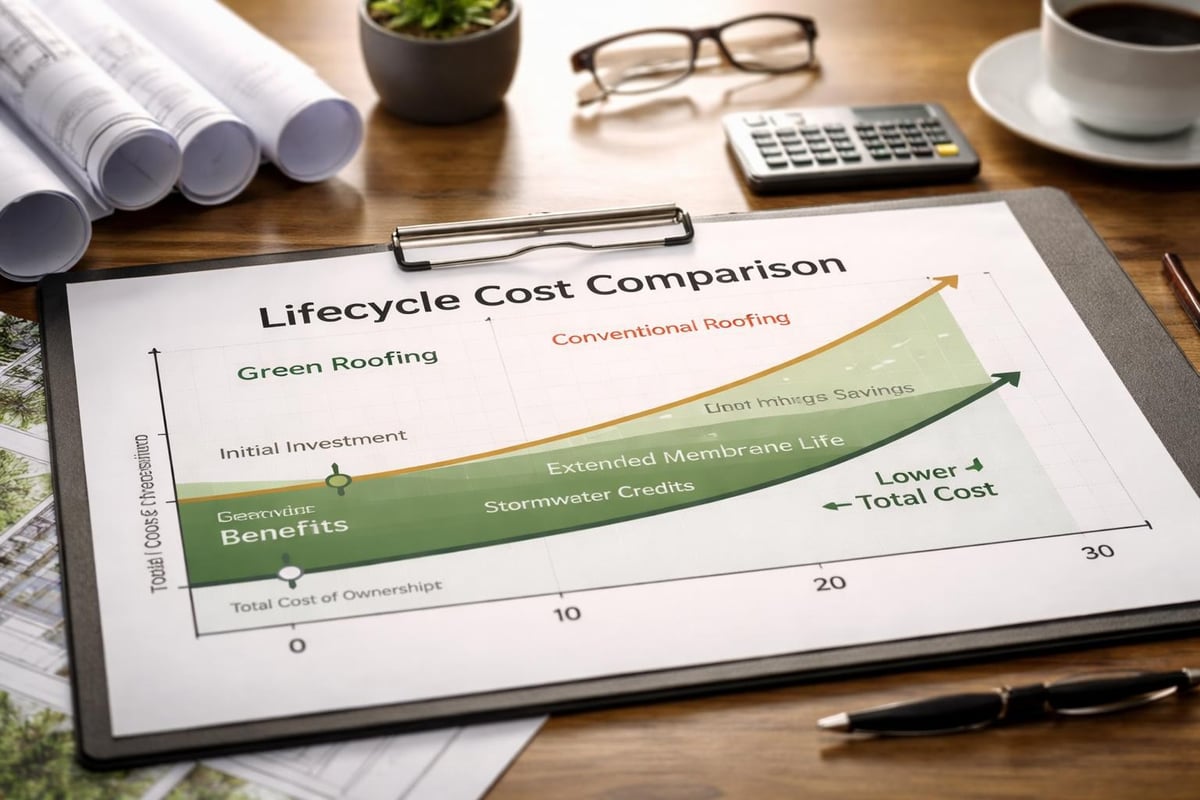
Green roofing systems command higher initial installation costs compared to conventional roofing materials, with expenses varying based on system type, building conditions, and project scale. Extensive systems typically cost between twelve and twenty-five dollars per square foot installed, while intensive configurations range from twenty-five to fifty dollars or more per square foot depending on design complexity and vegetation selection.
Despite elevated upfront costs, green roofing delivers multiple financial returns over the system lifecycle. Energy savings from reduced heating and cooling demands provide ongoing operational cost reductions. Extended roof membrane life results from protection against ultraviolet radiation, temperature fluctuations, and physical damage, potentially doubling or tripling the waterproofing membrane lifespan compared to exposed conventional roofs.
Research examining the economic value of green roofing demonstrates that property owners value these systems for both financial returns and environmental benefits. Additional financial advantages include potential stormwater fee reductions in municipalities that credit green infrastructure, increased property values, and possible insurance premium reductions due to improved building performance.
Challenges and Mitigation Strategies
Implementing green roofing systems presents several challenges that require careful planning and professional execution. Waterproofing failures represent the most significant risk, potentially resulting in extensive water damage and costly repairs. This concern underscores the importance of engaging experienced roofing contractors who understand the specific demands of vegetated roof assemblies and follow manufacturer specifications precisely.
Weight concerns limit green roof applicability on certain structures, particularly older buildings not designed to accommodate substantial additional loads. Structural evaluation during the planning phase identifies these limitations before resources are committed to incompatible projects. For buildings with insufficient capacity, alternative sustainable roofing options may provide better value.
Addressing Common Implementation Obstacles
Property owners considering green roofing benefit from understanding typical challenges:
- Initial cost barriers: Higher upfront investment requires long-term perspective and lifecycle cost analysis
- Structural limitations: Existing buildings may require expensive reinforcement or may not support green systems
- Maintenance commitment: Ongoing care requirements demand dedicated resources and management attention
- Contractor availability: Limited local expertise in green roof installation complicates project execution
- Plant establishment: Initial growth periods require irrigation and care before systems become self-sustaining
- Warranty coordination: Multiple system components from different manufacturers complicate warranty coverage
Successful projects address these obstacles through thorough planning, realistic budgeting, and engagement of qualified professionals with demonstrated green roofing experience. The National Park Service notes that even historic buildings can successfully incorporate green roofs when proper planning and specialized expertise guide the process.
Climate-Specific Performance Considerations
Green roofing performance varies significantly across different climate zones, with system design and plant selection requiring adaptation to local conditions. Research indicates that green roofs provide enhanced benefits in humid subtropical regions under future climate scenarios, making them particularly valuable in areas experiencing increasing temperatures and shifting precipitation patterns.
Fort Worth's climate presents both opportunities and challenges for green roofing implementation. Hot summers with intense solar radiation enable substantial cooling benefits through evapotranspiration, potentially delivering significant energy savings during peak air conditioning months. However, periodic drought conditions and extreme heat events necessitate careful plant selection and may require supplemental irrigation during establishment periods.
Winter considerations include occasional hard freezes that demand cold-hardy plant species and proper drainage to prevent ice damage. The region's variable precipitation patterns require robust stormwater management capabilities while ensuring adequate drainage during intense rainfall events. These climate factors emphasize the importance of working with professionals who understand regional conditions and can specify appropriate system components and vegetation.
Regulatory Framework and Incentive Programs
Building codes and regulations increasingly address green roofing systems as these installations become more common. Local jurisdictions may impose specific requirements regarding structural capacity, waterproofing standards, fire resistance, and accessibility. Understanding applicable codes during the planning phase prevents costly modifications later in the project timeline.
Some municipalities offer financial incentives for green roof installation, recognizing the public benefits these systems provide through stormwater management and heat island mitigation. Incentive programs may include:
- Direct grants or rebates covering a portion of installation costs
- Expedited permitting processes for projects incorporating green infrastructure
- Stormwater fee reductions or credits based on retention capacity
- Tax abatements or property tax incentives for sustainable building features
- Floor area ratio bonuses allowing increased building density
Property owners should investigate available incentives during feasibility analysis, as these programs can substantially improve project economics and accelerate return on investment timelines.
Integration with Other Roofing Systems
Green roofing increasingly integrates with other building systems and sustainable technologies to maximize performance and value. Solar panel installations can coexist with vegetated roofs, with studies suggesting that the cooling effect of green roofs may enhance photovoltaic efficiency. Strategic placement allows both systems to function effectively while sharing roof space.
When severe weather threatens any roofing system, immediate storm protection steps help minimize damage potential. Green roofs provide some inherent storm protection through vegetation that helps stabilize growing medium, though severe wind events may dislodge plants or damage edge details. Understanding post-storm assessment procedures ensures proper documentation if damage occurs.
Innovative research continues expanding green roof benefits, with recent studies showing that green roofs can trap microplastics from rainwater, offering an unexpected environmental advantage beyond traditional stormwater management and energy performance benefits.
Future Developments and Industry Trends
The green roofing industry continues evolving with technological advances improving system performance, reducing costs, and simplifying installation procedures. Pre-vegetated modules streamline installation by eliminating on-site planting, reducing labor requirements and accelerating project timelines. These modular systems arrive with established plant communities, immediately delivering aesthetic and functional benefits.
Smart irrigation systems incorporating soil moisture sensors and weather data optimize water use while ensuring plant health. Automated controls reduce maintenance demands and prevent both underwatering and excessive irrigation that wastes resources. Integration with building management systems enables monitoring and optimization of green roof performance alongside other building systems.
Research into green roof energy performance continues refining our understanding of how these systems interact with building envelopes across various climates and building types. This expanding knowledge base informs improved design guidelines and enables more accurate prediction of energy savings and environmental benefits. As climate change intensifies urban heat island effects and increases extreme weather frequency, green roofing systems will likely play an expanding role in climate adaptation strategies and sustainable building design.
Green roofing offers property owners a proven strategy for reducing energy costs, managing stormwater, extending roof life, and contributing to urban sustainability goals, though successful implementation demands careful planning and professional expertise. When you need reliable roofing guidance, detailed assessments, or expert installation services in the Fort Worth area, Texcore Construction delivers the craftsmanship, transparency, and accountability that complex roofing projects require, backed by in-house crews and a commitment to long-term performance.