Metal Roofing Installers Near Me: 2026 Hiring Guide
Finding qualified metal roofing installers near me requires more than a quick online search. Metal roofing installation demands specialized skills, precise measurements, and detailed knowledge of thermal expansion, fastening patterns, and flashing techniques that differ significantly from traditional asphalt shingle work. The right installer protects your investment through proper technique and manufacturer-approved methods, while the wrong choice leads to leaks, premature failure, and voided warranties. This guide walks you through the evaluation process, certification requirements, installation standards, and key questions that separate skilled metal roofing professionals from general contractors experimenting with unfamiliar materials.
Understanding Metal Roofing Installation Requirements
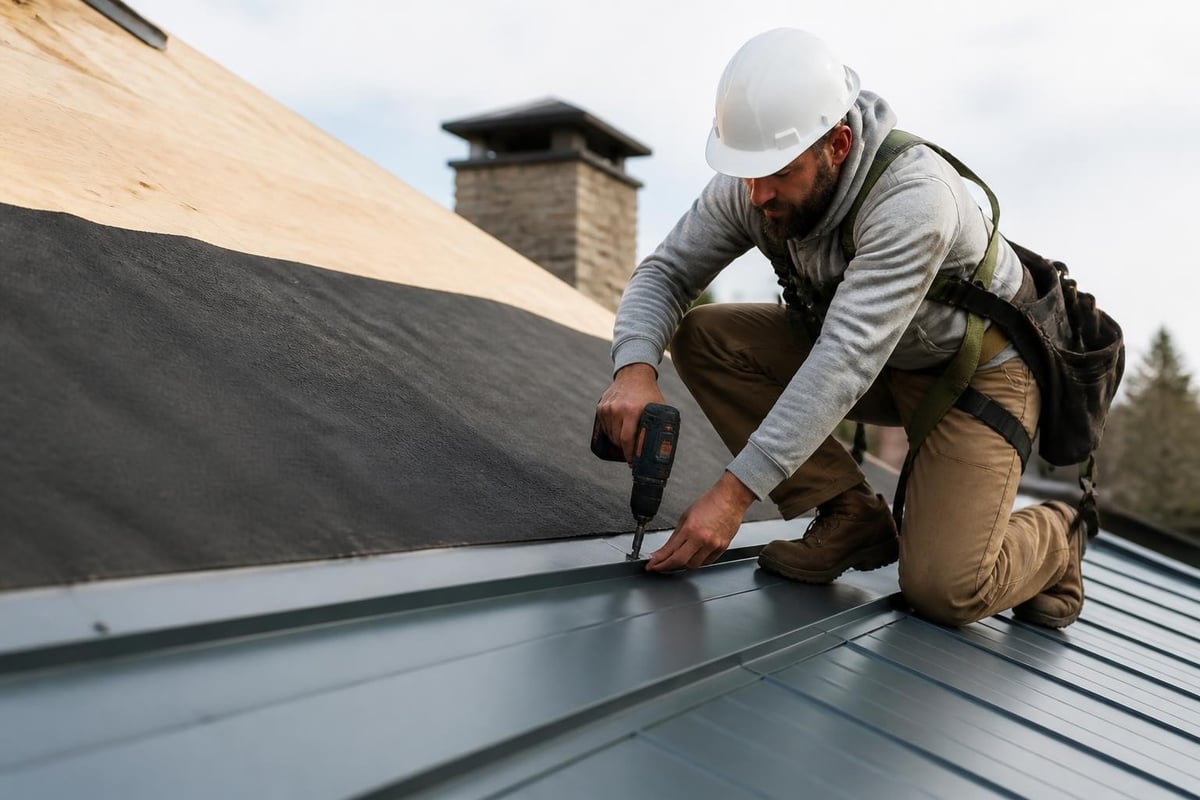
Metal roofing systems require fundamentally different installation approaches than conventional roofing materials. Panel alignment, fastener placement, and underlayment selection directly impact long-term performance and weather resistance.
Professional installers must account for thermal expansion and contraction that occurs as metal panels heat and cool throughout the day. This movement requires specific fastening patterns, expansion joints, and clip systems that allow controlled panel movement without creating stress points or fastener pullout.
Critical Installation Components
When evaluating metal roofing installers near me, understanding the essential installation elements helps you assess contractor knowledge during initial conversations.
- Substrate preparation and deck inspection
- High-temperature underlayment rated for metal contact
- Proper ventilation design and execution
- Panel layout accounting for roof geometry
- Flashing integration at penetrations and transitions
- Fastener type, placement, and torque specifications
The National Roofing Contractors Association developed specific certification standards for metal panel roof system installers that address these technical requirements through structured training and field verification.
Certification and Training Standards for Metal Installers
Not all roofing contractors possess the specialized training required for metal panel installation. Certification programs verify technical knowledge and installation competency through written examinations and practical assessments.
The ProCertification program for metal panel roof systems installers establishes industry-recognized standards that distinguish qualified professionals from general contractors. This certification requires demonstrated knowledge of panel types, fastening systems, thermal movement accommodation, and weather-resistant barrier integration.
Manufacturer-Specific Credentials
Beyond industry certifications, metal panel manufacturers offer training programs specific to their product lines. These credentials confirm that installers understand the unique requirements of particular panel profiles, coating systems, and accessory components.
| Certification Type | Scope | Verification Method |
|---|---|---|
| NRCA ProCertification | Industry-wide metal panel standards | Written exam + field assessment |
| Manufacturer Training | Specific product lines and systems | Product-specific coursework |
| Safety Certifications | OSHA compliance and fall protection | Documentation and site compliance |
When searching for metal roofing installers near me, requesting proof of current certifications provides objective evidence of professional development and technical competency.
Evaluating Installation Experience and Portfolio
Certification demonstrates knowledge, but installation experience reveals practical competency across diverse project conditions. Request detailed examples of completed metal roofing projects similar in scope, panel type, and complexity to your planned installation.
Experienced installers maintain documentation of past projects including panel manufacturer, profile type, square footage, and specific challenges addressed during installation. This portfolio demonstrates breadth of experience across residential, commercial, and industrial applications.
Project-Specific Experience Factors
- Panel profile types: standing seam, exposed fastener, architectural panels
- Building types: residential, commercial, industrial, institutional
- Roof complexity: multi-plane geometry, penetrations, skylight integration
- Coating systems: Kynar 500, SMP, galvalume, copper
- Installation methods: mechanically seamed, snap-lock, batten systems
The benefits of certified installers on metal projects include reduced callback rates, improved warranty compliance, and higher long-term performance across varied installation conditions.
Insurance Coverage and Liability Protection
Professional metal roofing installers near me carry comprehensive insurance coverage that protects property owners from installation-related risks. General liability and workers' compensation insurance transfer financial responsibility for accidents, property damage, and worksite injuries away from the property owner.
Request current certificates of insurance directly from the contractor's insurance carrier, not photocopies provided by the contractor. Verify coverage limits meet or exceed your project value and confirm the policy remains active through your scheduled installation period.
Essential Insurance Components
- General Liability: Minimum $1 million per occurrence
- Workers' Compensation: Statutory limits for all crew members
- Commercial Auto: Coverage for vehicles and equipment transport
- Umbrella Policy: Additional coverage beyond base policy limits
Companies like Texcore Construction complete all work with in-house insured crews rather than subcontractors, ensuring consistent insurance coverage and eliminating gaps in liability protection common when multiple subcontractors work on a single project.
Installation Method Differences and Technical Standards
Metal roofing encompasses multiple installation methods, each requiring specific tools, techniques, and technical knowledge. Understanding these differences helps property owners evaluate whether contractors possess relevant experience for their particular project requirements.
Standing seam systems use concealed fasteners and mechanical or snap-lock seaming that creates continuous watertight panel connections. This method requires specialized seaming equipment and understanding of clip placement, thermal movement accommodation, and panel alignment tolerances.
Exposed fastener systems penetrate the panel surface, requiring precise fastener placement, appropriate gasket selection, and proper torque application to prevent leaks while accommodating thermal expansion. Detailed metal roofing installation guides outline substrate preparation, underlayment requirements, and fastening patterns specific to each system type.
Comparing Installation Methods
| Installation Method | Fastener Type | Seam Profile | Complexity Level | Typical Applications |
|---|---|---|---|---|
| Standing Seam Mechanical | Concealed clips | Raised vertical | High | Commercial, architectural |
| Standing Seam Snap-Lock | Concealed clips | Raised vertical | Medium-High | Residential, light commercial |
| Exposed Fastener | Through-panel screws | Overlapping | Medium | Agricultural, industrial, budget projects |
| Batten Panel | Concealed + cap | Raised batten | High | High-end residential, historical |
For commercial applications requiring storm-resistant performance, commercial roofing companies with documented metal installation experience provide the technical expertise necessary for large-scale projects.
Warranty Coverage and Long-Term Support
Metal roofing warranties typically include separate coverage for materials and labor, with dramatically different terms and conditions. Material warranties from panel manufacturers often extend 30-40 years and cover coating degradation, substrate corrosion, and manufacturing defects.
Labor warranties cover installation workmanship and typically range from one to ten years depending on the contractor. This coverage addresses leaks, fastener failures, and other issues resulting from improper installation technique.
When evaluating metal roofing installers near me, verify both warranty types in writing before project commencement. Understand exclusions, transferability conditions, and claim filing procedures that apply to each warranty component.
Critical Warranty Questions
- What specific conditions void the material warranty?
- Does the labor warranty transfer to future property owners?
- Who handles warranty claim coordination with manufacturers?
- What response time applies to warranty-related service calls?
- Are annual inspections required to maintain warranty coverage?
Working with contractors who provide detailed documentation helps property owners understand coverage limitations and maintenance requirements. For projects requiring storm and hail damage restoration, experienced installers can provide thorough damage assessment and documentation that supports manufacturer warranty claims.
Questions to Ask During Contractor Evaluation
Thorough contractor vetting requires specific questions that reveal technical knowledge, business practices, and project management capabilities. Generic questions produce generic answers, while detailed technical inquiries expose gaps in expertise and experience.
Technical Competency Questions
Ask metal roofing installers near me these specific questions to evaluate technical knowledge:
- What underlayment do you recommend for my specific panel profile and why?
- How do you calculate thermal expansion for panel lengths on my project?
- What fastener spacing and pattern do you use for my roof pitch and wind zone?
- How do you integrate flashing at roof-to-wall transitions and penetrations?
- What clip or fastening system does the panel manufacturer specify?
Qualified installers provide specific answers referencing manufacturer specifications, local building codes, and engineering requirements. Vague responses or generic assurances indicate insufficient technical knowledge for complex metal installation work.
Business Practice Questions
Beyond technical competency, evaluate business practices through direct questions about project management, crew composition, and communication protocols.
- Do you use in-house crews or subcontractors for installation?
- What project manager oversees my installation and how do I contact them?
- How do you handle change orders and unforeseen conditions?
- What daily cleanup and site protection procedures do you follow?
- When do payments occur and what documentation do I receive?
Local Building Code Compliance and Permitting
Metal roofing installation requires compliance with local building codes, wind rating requirements, and fire classification standards. Professional installers manage permit applications and coordinate required inspections throughout the installation process.
Building departments review metal roofing plans to verify wind uplift resistance, fire ratings, structural adequacy, and proper flashing details. Installers must provide engineering data, manufacturer specifications, and installation details that demonstrate code compliance.
When researching metal roofing installers near me, confirm that contractors include permitting services and inspection coordination in their project scope. Unlicensed or inexperienced contractors often skip permitting requirements, creating liability issues and potential problems during property sales or insurance claims.
Permit and Inspection Timeline
- Permit Application: Submit plans, specifications, and engineering data
- Plan Review: Building department verifies code compliance
- Permit Issuance: Authorization to commence installation
- Mid-Installation Inspection: Verify underlayment and substrate preparation
- Final Inspection: Confirm completed installation meets approved plans
For property owners managing roofing contractors in Fort Worth, understanding local permit requirements helps verify that contractors follow proper procedures and maintain compliance throughout project execution.
Comparing Estimates and Proposal Details
Metal roofing estimates should include detailed specifications rather than vague descriptions and lump-sum pricing. Line-item breakdowns reveal exactly what materials, labor, and services each contractor includes in their proposed scope of work.
Quality proposals specify panel manufacturer, profile name, coating type, gauge thickness, and color selection. They detail underlayment brand and type, fastener specifications, trim components, and accessory items. This specificity allows accurate comparison between competing proposals.
Essential Proposal Components
| Proposal Element | Required Detail | Why It Matters |
|---|---|---|
| Panel Specification | Manufacturer, profile, gauge, coating | Confirms material quality and warranty eligibility |
| Underlayment | Brand, type, temperature rating | Impacts long-term performance and code compliance |
| Fasteners | Type, coating, spacing pattern | Prevents leaks and panel failure |
| Flashing Details | Material, gauge, installation method | Critical for weather resistance |
| Labor Warranty | Duration, coverage, exclusions | Protects against installation defects |
| Project Timeline | Start date, duration, completion | Manages scheduling and planning |
Detailed installation guides from panel manufacturers outline the components and techniques that should appear in professional installation proposals.
Reference Checks and Past Client Feedback
References provide direct insight into contractor reliability, workmanship quality, and problem resolution capabilities. Request references from projects completed within the past 12-24 months involving similar panel types and project complexity.
Contact references directly and ask specific questions about communication quality, schedule adherence, site cleanliness, and post-installation support. Inquire whether any installation issues occurred and how the contractor addressed them.
Key Reference Questions
- Did the project finish on schedule and within budget?
- How did the contractor communicate during the installation?
- Were daily cleanup and site protection adequate?
- Have you experienced any leaks or performance issues?
- Would you hire this contractor again for future work?
Online reviews supplement direct references but require careful interpretation. Look for patterns across multiple reviews rather than individual complaints or praise. When searching for metal roofing installers near me, verify that positive reviews mention specific project details rather than generic praise.
Material Selection Support and Technical Guidance
Experienced metal roofing installers provide technical guidance during material selection, helping property owners evaluate panel profiles, coating systems, and color options based on building requirements and performance goals. Professional installers understand material limitations and recommend appropriate products for specific applications.
Panel selection affects installation complexity, long-term maintenance, and weather resistance. Standing seam systems cost more initially but provide superior performance in high-wind regions and eliminate exposed fastener maintenance. Exposed fastener panels offer lower upfront costs but require periodic fastener inspection and gasket replacement.
Contractors who pressure specific products without discussing alternatives or who recommend inappropriate materials for your application demonstrate either insufficient knowledge or concerning business practices. Quality installers present options with honest assessments of advantages, disadvantages, and cost implications for each material choice.
For commercial property owners evaluating construction roofing materials, working with contractors who provide transparent material recommendations based on building requirements rather than profit margins ensures appropriate system selection.
Project Timeline Expectations and Weather Considerations
Metal roofing installation timelines vary based on roof size, complexity, panel type, and weather conditions. Realistic scheduling accounts for material lead times, crew availability, permit processing, and weather-related delays.
Standing seam installations require more time than exposed fastener systems due to seaming equipment setup, panel alignment precision, and clip placement requirements. Complex roof geometries with multiple planes, valleys, and penetrations extend installation duration compared to simple gable or hip configurations.
Timeline Factors
- Material procurement: 2-6 weeks for custom colors or specialty profiles
- Permit processing: 1-3 weeks depending on jurisdiction
- Installation duration: 3-10 days for typical residential projects
- Weather delays: Variable based on season and forecast
- Inspection scheduling: Coordinated with building department availability
Professional installers provide written schedules with milestone dates and communicate proactively about delays or adjustments. When evaluating metal roofing installers near me, confirm that contractors maintain adequate crew size to complete your project within reasonable timeframes without rushing critical installation steps.
Site Protection and Project Cleanliness Standards
Metal roofing installation generates sharp metal scraps, fastener debris, and packaging materials that pose safety hazards and property damage risks. Professional contractors implement comprehensive site protection including equipment mats, debris containment systems, and magnetic sweeps.
Daily cleanup removes metal shavings and scraps that damage vehicle tires, injure people or pets, and create ongoing maintenance problems. End-of-day magnetic sweeps collect ferrous metal particles invisible to visual inspection but capable of causing rust staining on driveways and walkways.
Contractors should protect landscaping, HVAC equipment, and building surfaces from falling debris and equipment contact. Proper site protection reflects overall professionalism and attention to detail that extends to installation quality.
Site Protection Checklist
- Ground protection for high-traffic areas
- Debris containment systems and chutes
- Daily magnetic sweeps of entire property
- Protected pathways for material transport
- Covered or relocated outdoor furniture and equipment
Companies that complete work with in-house crews maintain consistent site protection standards across all projects, while contractors using subcontractors often experience variable cleanup quality depending on which crew performs the work.
Finding qualified metal roofing installers near me requires systematic evaluation of certifications, experience, insurance coverage, and project management capabilities. The right installer combines technical expertise with transparent communication and comprehensive site protection throughout your project.
Texcore Construction delivers professional roofing solutions across the Fort Worth area using in-house insured crews trained in advanced installation techniques. Whether you need metal roofing installation, storm damage assessment, or comprehensive roof replacement, our team provides detailed documentation, accurate project scopes, and clear recommendations backed by a five-year labor warranty. Contact Texcore Construction today to discuss your metal roofing project with experienced professionals committed to quality craftsmanship and dependable results.