
Roofing Companies in Texas: Your Complete Guide
Texas presents unique challenges for property owners seeking reliable roofing solutions. With extreme weather patterns ranging from intense summer heat to severe storms, hailstones, and occasional winter freezes, choosing the right roofing partner requires careful consideration. The state's vast geography means roofing companies in Texas must adapt to coastal humidity, North Texas hail zones, and West Texas wind exposure. Whether you're managing a commercial property in Fort Worth or maintaining a residential home in Dallas, understanding what separates quality contractors from the rest can save you thousands of dollars and years of headaches.
Understanding the Texas Roofing Industry Landscape
The roofing industry in Texas operates on a massive scale. According to data on roofing contractor establishments, Texas maintains one of the nation's largest concentrations of roofing companies, reflecting both the state's population growth and the constant demand for roof repairs and replacements due to weather-related damage.
Market Concentration and Service Areas
Texas roofing companies cluster heavily in metropolitan areas where property density creates sustained demand. Major cities like Houston, Dallas, Austin, San Antonio, and Fort Worth serve as hubs for both residential and commercial roofing operations.
Key market characteristics include:
- High competition in urban centers driving service quality improvements
- Regional specialization based on climate patterns and building codes
- Significant storm-response infrastructure in hail-prone regions
- Growing commercial roofing sector supporting industrial expansion
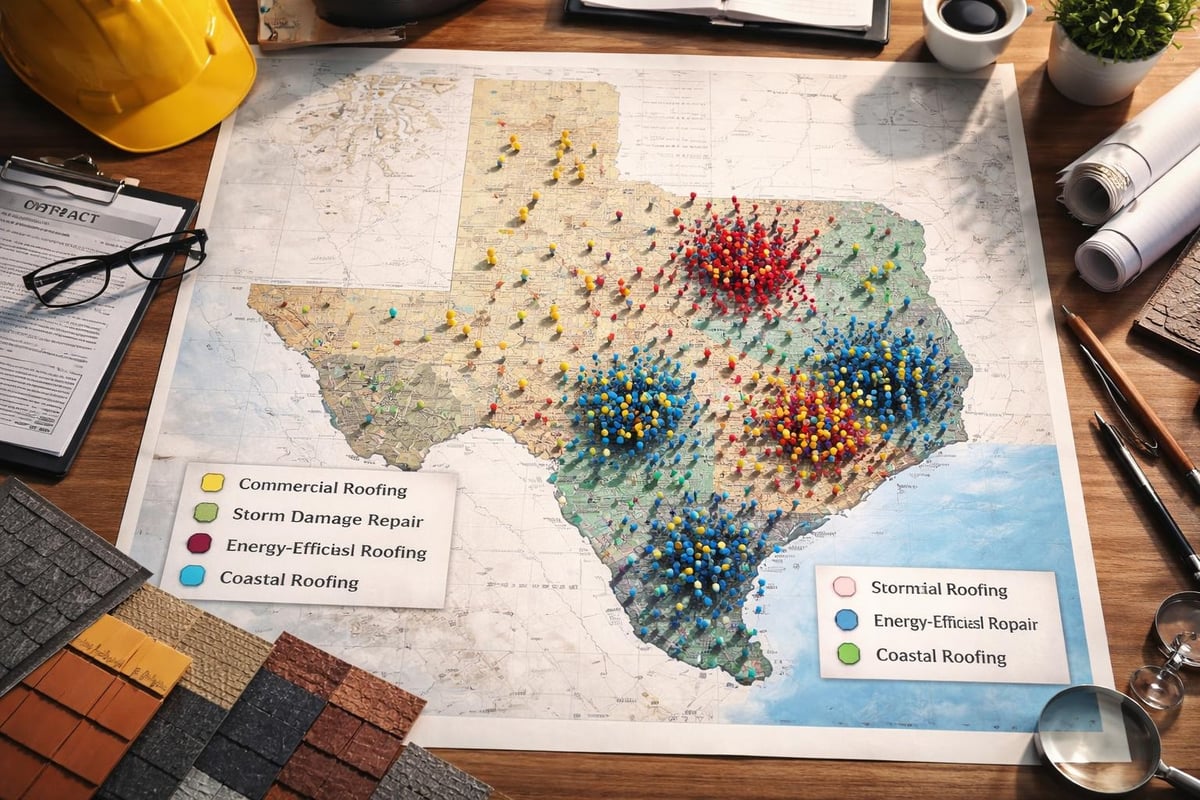
The distinction between residential roofing contractors and nonresidential roofing contractors reveals important market dynamics. While residential contractors outnumber commercial specialists, the commercial sector often handles larger-scale projects with higher technical demands.
Licensing and Regulatory Considerations
Unlike many states, Texas does not require statewide licensing for roofing contractors. According to the Texas Coalition for Affordable Insurance Solutions, this absence of mandatory licensing places greater responsibility on property owners to verify contractor credentials, insurance coverage, and professional experience.
What This Means for Property Owners
Without state licensing requirements, due diligence becomes critical when evaluating roofing companies in Texas. Reputable contractors voluntarily maintain professional certifications, comprehensive insurance policies, and manufacturer credentials.
Essential verification steps:
- Request proof of general liability insurance with minimum $1 million coverage
- Confirm workers' compensation insurance for all crew members
- Verify manufacturer certifications for specific roofing systems
- Check business registration and Better Business Bureau ratings
- Review local references and completed project portfolios
The Texas Department of Insurance provides important guidance on legal requirements, including prohibitions against contractors acting as public adjusters or offering to waive insurance deductibles, both of which are illegal practices in Texas.
Building Code Compliance Across Texas
Texas roofing codes vary significantly based on geographic location and building classification. Understanding these requirements helps property owners ensure contractors deliver compliant work that meets safety standards and insurance requirements.
Regional Code Variations
Coastal regions face the most stringent requirements due to hurricane exposure. The Texas Administrative Code §5.4007 establishes enhanced building standards for designated catastrophe areas, particularly affecting roofing installations in coastal counties.
| Region | Primary Code Focus | Key Requirements |
|---|---|---|
| Coastal Counties | Wind Resistance | Enhanced attachment, impact rating, uplift resistance |
| North Texas | Hail Impact | Class 4 impact ratings, proper ventilation systems |
| West Texas | Wind Uplift | Increased fastener density, edge reinforcement |
| Urban Centers | Fire Rating | Class A fire resistance, proper flashings |
According to OneClick Code’s summary of Texas roofing requirements, all roofing installations must meet minimum fire ratings, ventilation standards, and wind resistance specifications appropriate to the property's location.
Critical Services Offered by Quality Roofing Companies
Professional roofing companies in Texas typically provide a comprehensive range of services designed to address the state's unique challenges. Understanding these service categories helps property owners identify contractors with the right expertise for their specific needs.
Emergency Response Capabilities
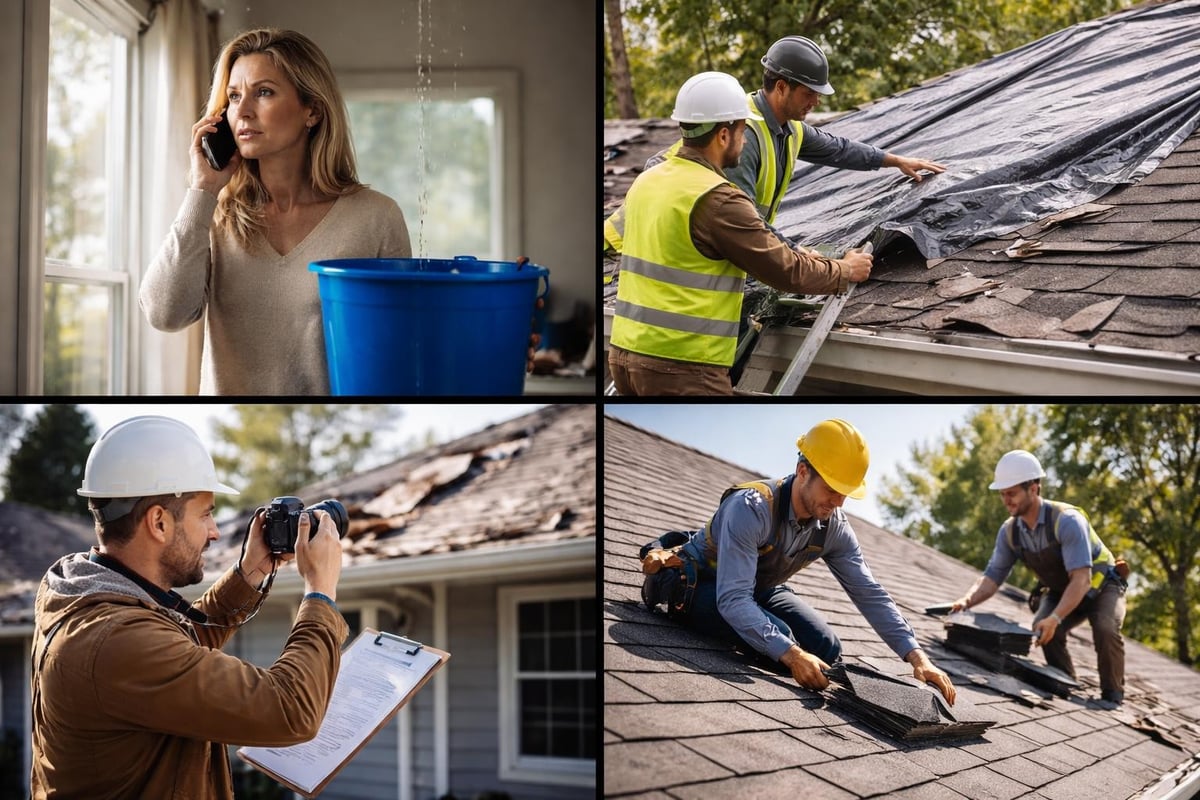
Texas weather creates frequent roofing emergencies. Quality contractors maintain 24/7 response capabilities, particularly during storm seasons when immediate action prevents secondary damage.
Emergency services include:
- Same-day leak repairs to stop active water intrusion
- Emergency tarping and temporary weatherproofing
- Rapid damage assessment following severe weather
- Coordination with insurance adjusters for expedited claims
The ability to respond quickly to roofing emergencies separates professional operations from seasonal contractors who lack the infrastructure for urgent repairs. For Fort Worth property owners specifically, access to emergency roof repair services with same-day response capabilities provides critical protection when storms strike unexpectedly.
Insurance Claim Support
Texas experiences some of the nation's highest rates of weather-related insurance claims. Professional roofing companies invest in detailed documentation processes that support successful claim outcomes.
Property owners benefit from contractors who understand insurance requirements and provide thorough damage assessments. This expertise proves particularly valuable when navigating roofing insurance claims after hail storms or wind events that affect entire neighborhoods.
Distinguishing Quality Contractors from Storm Chasers
The Texas roofing market attracts both established professionals and transient operators who follow storm patterns. Recognizing the differences protects property owners from substandard work and potential fraud.
Warning Signs of Unreliable Contractors
Storm chasers typically appear after major weather events, offering deals that seem too good to pass up. These operators often lack permanent facilities, use subcontractors exclusively, and disappear when warranty issues arise.
Red flags to avoid:
- Out-of-state license plates on company vehicles
- Pressure tactics requiring immediate decisions
- Offers to waive insurance deductibles (illegal in Texas)
- No physical business address or local references
- Requests for full payment before work begins
- Inability to provide proof of insurance
Characteristics of Established Professionals
Reputable roofing companies maintain permanent facilities, employ in-house crews, and build long-term relationships within their service areas. These contractors view each project as an opportunity to earn future referrals rather than a one-time transaction.
| Storm Chasers | Professional Companies |
|---|---|
| Temporary local presence | Permanent facilities and offices |
| Subcontracted crews | In-house trained employees |
| High-pressure sales tactics | Consultative approach with options |
| Limited warranty terms | Comprehensive labor warranties |
| Disappear after payment | Ongoing customer service |
Material Selection and System Expertise
Texas climate demands careful material selection tailored to regional conditions. Quality roofing companies in Texas maintain manufacturer certifications across multiple roofing systems, enabling them to recommend optimal solutions rather than pushing a single product line.
Residential Roofing Materials
Asphalt shingles dominate the Texas residential market due to cost-effectiveness and proven performance. However, metal roofing gains popularity for its longevity and energy efficiency, particularly in areas with intense sun exposure.
Common residential options:
- Impact-resistant asphalt shingles: Class 4 ratings for hail protection
- Architectural shingles: Enhanced aesthetics with improved wind resistance
- Metal roofing panels: Long-term durability with reflective coatings
- Tile roofing: Limited to specific architectural styles, excellent longevity
- Synthetic slate: Modern alternative offering traditional appearance
Commercial Roofing Systems
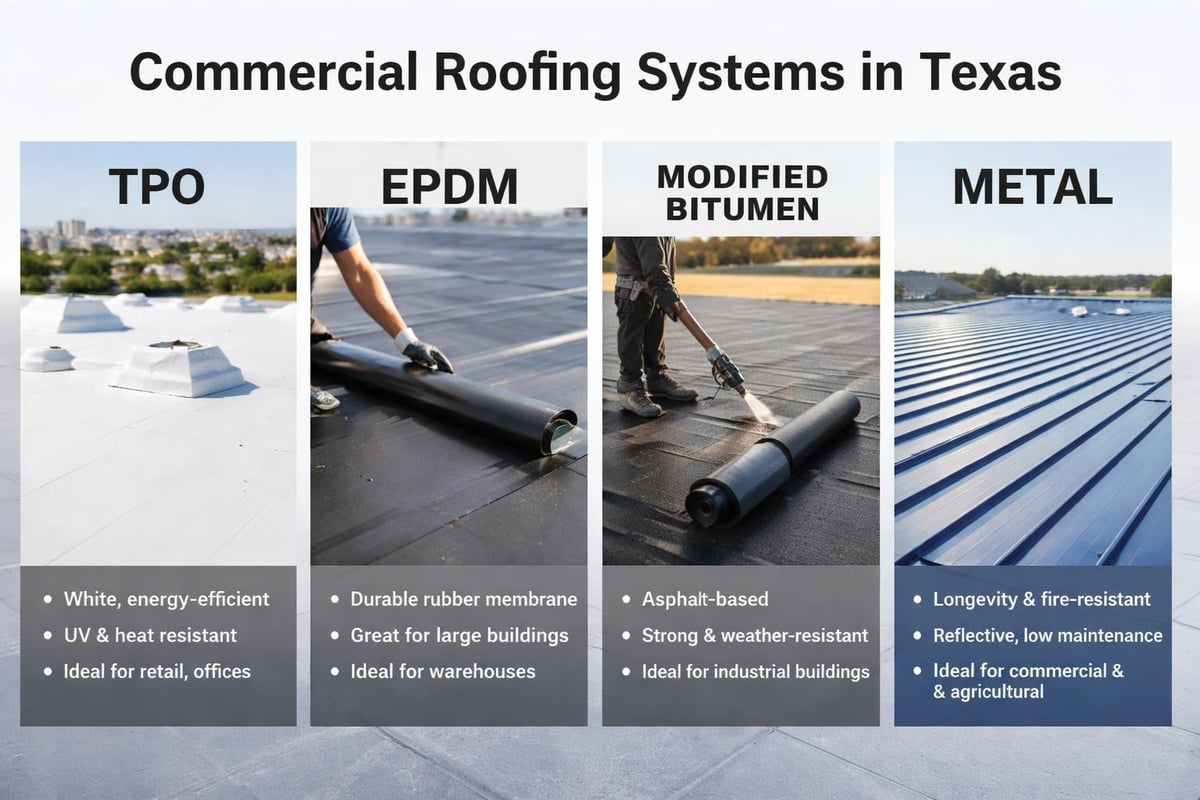
Commercial properties require different approaches based on building design, occupancy type, and budget parameters. Low-slope and flat roofing systems predominate in Texas commercial construction.
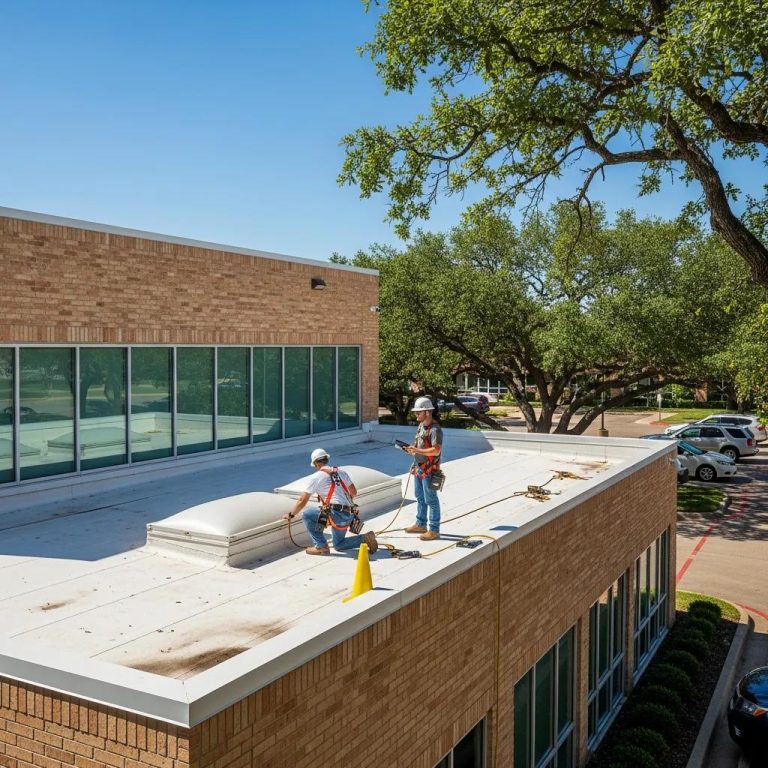
Texas commercial roofing applications typically involve TPO, EPDM, modified bitumen, or built-up roofing systems, each offering distinct advantages for specific building types and operational requirements.
The Value of In-House Crews Versus Subcontractors
The labor model employed by roofing companies directly impacts project quality, accountability, and long-term warranty reliability. Understanding this distinction helps property owners make informed contractor selections.
Benefits of Direct Employment
Companies that employ their own crews maintain consistent quality control, ensure proper training, and provide reliable warranty service. Direct employment enables better project management, clearer communication, and accountability throughout the installation process.
Advantages include:
- Standardized installation techniques across all projects
- Direct oversight of safety protocols and workmanship
- Consistent crew availability for warranty service
- Clear chain of accountability when issues arise
- Better job site management and cleanliness
Risks Associated with Subcontractor Models
While subcontracting remains common in construction, it introduces variables that can affect project outcomes. Quality varies between subcontractor crews, communication becomes fragmented, and warranty responsibility may become unclear when problems develop months or years after installation.
Documentation and Project Transparency
Professional roofing companies provide detailed documentation throughout every project phase. This transparency builds trust, supports insurance claims, and creates clear records for future reference.
Inspection and Assessment Reports
Comprehensive roof inspections include photographic documentation, written condition assessments, and clear recommendations prioritized by urgency. Quality contractors distinguish between immediate safety concerns, necessary repairs, and future maintenance considerations.
Thorough inspection reports contain:
- Detailed condition assessment with supporting photographs
- Specific identification of damaged or worn components
- Clear repair versus replacement recommendations
- Accurate material quantity calculations
- Cost estimates broken down by scope element
- Timeline projections for recommended work
Project Documentation Standards
From initial estimate through final completion, professional contractors maintain detailed records. This documentation proves invaluable for insurance claims, warranty activation, and future service needs.
Property owners should expect regular photo updates during installation, daily progress reports for commercial projects, and comprehensive completion documentation including warranty information and maintenance recommendations.
Warranty Structures and Long-Term Support
Warranty terms reveal contractor confidence in their work quality. Understanding the difference between manufacturer material warranties and contractor labor warranties helps property owners evaluate total protection.
Manufacturer Material Warranties
Roofing material manufacturers provide warranties ranging from 20 years to lifetime coverage, depending on product line and quality tier. However, these warranties typically cover only material defects, not installation failures or consequential damages.
Contractor Labor Warranties
Labor warranties protect against installation defects and workmanship failures. Quality roofing companies in Texas offer substantial labor warranties, often ranging from five to ten years, demonstrating confidence in their installation standards.
| Warranty Component | Typical Coverage | What's Protected |
|---|---|---|
| Manufacturer Material | 20-50+ years | Manufacturing defects only |
| Contractor Labor | 5-10 years | Installation workmanship |
| System Warranty | 10-30 years | Full system performance |
Extended system warranties require certified installation by approved contractors following specific manufacturer protocols. These comprehensive warranties provide the highest level of protection but require premium materials and certified installation teams.
Regional Considerations Within Texas
Texas's geographic diversity creates distinct regional roofing challenges. Contractors with deep local experience understand these variations and adjust their approaches accordingly.
North Texas Hail Belt
The Dallas-Fort Worth corridor experiences frequent severe hail storms, creating consistent demand for impact-resistant materials and rapid storm response capabilities. Contractors in this region must excel at insurance claim documentation and maintain relationships with major insurance carriers.
Gulf Coast Wind and Moisture
Coastal properties face hurricane-force winds, salt air corrosion, and high humidity levels. Roofing systems require enhanced wind resistance ratings, corrosion-resistant fasteners, and moisture management strategies.
West Texas Wind and Sun
Extreme temperature swings, intense UV exposure, and persistent winds characterize West Texas conditions. Reflective coatings, reinforced edge details, and thermal expansion considerations become critical for long-term performance.
Central Texas Growth Corridors
Austin and San Antonio experience rapid construction growth, creating demand for new construction roofing expertise alongside storm repair capabilities. Contractors in these markets must balance production efficiency with quality control as project volumes increase.
Evaluating Contractor Communication and Responsiveness
Communication quality often predicts overall project satisfaction. Professional roofing companies establish clear communication protocols, provide multiple contact methods, and respond promptly to inquiries and concerns.
Initial Contact Through Project Completion
From the first phone call through final walkthrough, responsive contractors maintain consistent communication. Property owners should evaluate how quickly contractors return calls, whether they answer questions thoroughly, and how clearly they explain technical concepts.
Communication excellence indicators:
- Same-day response to initial inquiries
- Detailed written proposals with clear scope definitions
- Regular project updates without requiring follow-up calls
- Proactive notification of schedule changes or concerns
- Post-completion follow-up to ensure satisfaction
Insurance and Bonding Requirements
Adequate insurance protection safeguards property owners from liability exposure and ensures financial resources exist to address problems. Comprehensive coverage indicates professional operations with staying power.
Essential Insurance Coverage
All reputable roofing companies maintain general liability insurance protecting against property damage and bodily injury claims. Workers' compensation coverage protects property owners from liability if crew members suffer injuries on-site.
Minimum coverage recommendations:
- General liability: $1-2 million per occurrence
- Workers' compensation: State-mandated coverage for all employees
- Commercial auto: Coverage for all company vehicles
- Umbrella policy: Additional protection above primary policies
For large commercial projects, performance bonds provide additional security by guaranteeing project completion even if the contractor experiences financial difficulties.
Making the Final Selection
After researching options, verifying credentials, and conducting interviews, property owners face the final contractor selection. This decision should balance multiple factors rather than focusing solely on price.
Evaluation Matrix
Creating a structured comparison helps clarify the best choice when multiple qualified contractors submit proposals. Consider total value rather than lowest cost.
| Evaluation Factor | Weight | Contractor A | Contractor B | Contractor C |
|---|---|---|---|---|
| Price Competitiveness | 20% | Score | Score | Score |
| Warranty Terms | 15% | Score | Score | Score |
| Communication Quality | 15% | Score | Score | Score |
| Experience/References | 20% | Score | Score | Score |
| Insurance Coverage | 10% | Score | Score | Score |
| Timeline/Availability | 10% | Score | Score | Score |
| Material Quality | 10% | Score | Score | Score |
The Role of References and Portfolio Review
Past performance predicts future results. Quality contractors readily provide references from recent projects involving similar scope and building types. Speaking with previous clients reveals insights about communication, problem-solving, and post-completion support that proposals cannot capture.
Reviewing completed project portfolios demonstrates technical capability and attention to detail. Look for clean installations, proper flashing details, and professional worksite management in photographic documentation.
Selecting from among roofing companies in Texas requires careful evaluation of credentials, communication, and craftsmanship standards. The right contractor brings technical expertise, comprehensive insurance protection, and proven local experience that translates into long-term roof performance. Texcore Construction delivers exactly this combination for Fort Worth property owners through in-house crews, transparent documentation, and five-year labor warranties backed by decades of commercial and residential roofing expertise. Whether you need emergency storm repairs or are planning a complete reroof, our team provides the accountability and craftsmanship that protect your investment.