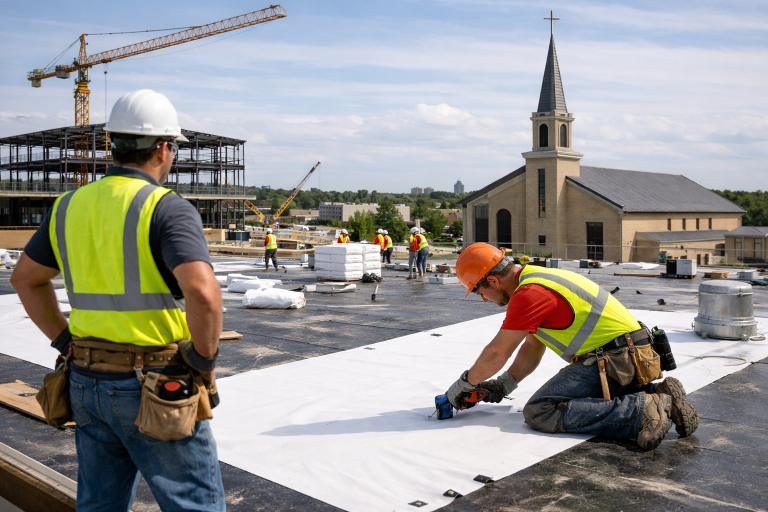
Understanding Flat Roof Systems
Flat roofs are a popular choice for both commercial and residential buildings due to their practicality and cost-effectiveness. Unlike sloped roofs, flat roofs provide a level surface that can be utilized for various purposes, such as rooftop gardens, HVAC installations, and solar panels.
There are several types of flat roof systems, including built-up roofing (BUR), modified bitumen, and single-ply membranes. Each system has its advantages and ideal applications, making it essential for property owners to choose the right option based on their specific needs and local climate conditions.
Benefits of Flat Roofing for Commercial Properties
Flat roofing offers numerous benefits for commercial properties, including enhanced energy efficiency and easier access for maintenance. The level surface allows for better insulation options, which can significantly reduce heating and cooling costs over time.
Additionally, flat roofs can be designed to accommodate various installations, such as green roofs or solar panels, further improving energy efficiency and sustainability. This versatility makes flat roofing an attractive option for businesses looking to optimize their operational costs.
Choosing the Right Contractor for Your Flat Roof Project
Selecting a qualified contractor is crucial for ensuring the success of your flat roof installation or repair. Look for contractors with experience in flat roofing systems and a solid reputation in the industry to guarantee quality workmanship.
It’s also essential to verify their credentials, including licenses and insurance, and to ask for references or examples of previous work. A reliable contractor will provide a detailed estimate and be transparent about the materials and techniques used in the construction process.
Common Flat Roof Issues and Maintenance Tips
Flat roofs can encounter specific issues such as pooling water, leaks, and membrane damage. Regular maintenance is key to extending the lifespan of your flat roof and preventing costly repairs.
Property owners should conduct routine inspections, clear debris from the roof surface, and ensure proper drainage systems are in place. Additionally, addressing minor repairs promptly can prevent more significant problems from developing over time.