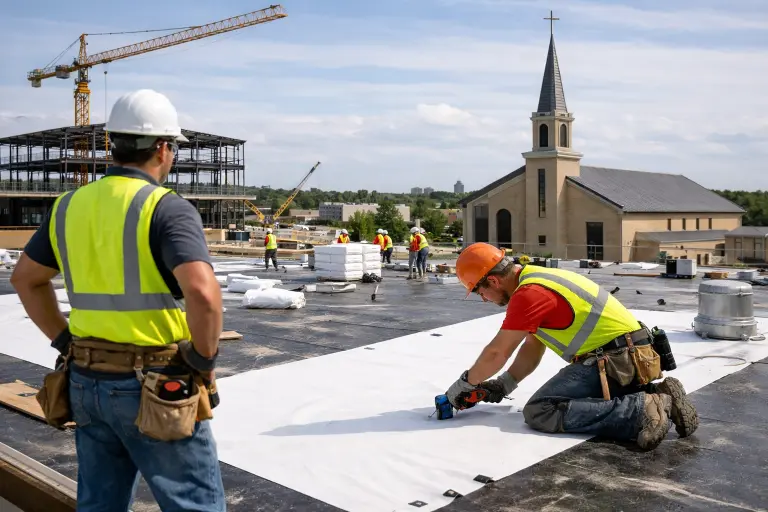
Importance of Specialized Roofing for Large Commercial Facilities
Specialized roofing systems are essential for large commercial facilities due to their unique structural and operational demands. Unlike residential roofing, commercial roofs must support heavy equipment, withstand inclement weather, and provide energy efficiency, making the choice of materials and design critical.
For instance, a flat roof system with proper insulation can significantly reduce energy costs while ensuring compliance with local building codes. Additionally, specialized roofing solutions can enhance the lifespan of the roof, minimizing maintenance and replacement costs over time, which is vital for large-scale operations.
Key Considerations When Choosing a Roofing Contractor
Selecting the right roofing contractor is paramount for the success of any large commercial roofing project. Factors such as experience, expertise in commercial roofing systems, and a solid reputation in the industry should be top priorities for facility managers and developers.
For example, contractors with a proven track record in handling large projects will likely understand the complexities involved, from securing necessary permits to managing timelines effectively. Checking references and past project portfolios can provide insight into a contractor's reliability and quality of work.
Energy Efficiency in Commercial Roofing Solutions
Energy efficiency is a critical aspect of modern commercial roofing solutions, directly impacting operational costs and sustainability. Advanced roofing materials and technologies, such as reflective coatings and green roofs, can help reduce energy consumption and enhance the overall performance of large facilities.
Implementing energy-efficient roofing can lead to significant savings on heating and cooling costs. For instance, reflective roofs can lower indoor temperatures, reducing the need for air conditioning during hot months, while green roofs can provide insulation and manage stormwater runoff effectively.
Compliance and Safety Standards in Commercial Roofing
Compliance with safety and building standards is crucial in commercial roofing projects to ensure the safety of the structure and its occupants. Roofing contractors must be well-versed in local regulations and industry standards to avoid potential legal issues and ensure the structural integrity of the building.
For example, adhering to OSHA regulations and local building codes helps mitigate risks during installation and maintenance. Additionally, ensuring that the roofing system meets fire safety standards is essential for protecting large facilities from potential hazards.
Importance of Specialized Roofing for Large Commercial Facilities
Specialized roofing systems are essential for large commercial facilities due to their unique structural and operational demands. Unlike residential roofing, commercial roofs must support heavy equipment, withstand inclement weather, and provide energy efficiency, making the choice of materials and design critical.
For instance, a flat roof system with proper insulation can significantly reduce energy costs while ensuring compliance with local building codes. Additionally, specialized roofing solutions can enhance the lifespan of the roof, minimizing maintenance and replacement costs over time, which is vital for large-scale operations.
Key Considerations When Choosing a Roofing Contractor
Selecting the right roofing contractor is paramount for the success of any large commercial roofing project. Factors such as experience, expertise in commercial roofing systems, and a solid reputation in the industry should be top priorities for facility managers and developers.
For example, contractors with a proven track record in handling large projects will likely understand the complexities involved, from securing necessary permits to managing timelines effectively. Checking references and past project portfolios can provide insight into a contractor's reliability and quality of work.
Energy Efficiency in Commercial Roofing Solutions
Energy efficiency is a critical aspect of modern commercial roofing solutions, directly impacting operational costs and sustainability. Advanced roofing materials and technologies, such as reflective coatings and green roofs, can help reduce energy consumption and enhance the overall performance of large facilities.
Implementing energy-efficient roofing can lead to significant savings on heating and cooling costs. For instance, reflective roofs can lower indoor temperatures, reducing the need for air conditioning during hot months, while green roofs can provide insulation and manage stormwater runoff effectively.
Compliance and Safety Standards in Commercial Roofing
Compliance with safety and building standards is crucial in commercial roofing projects to ensure the safety of the structure and its occupants. Roofing contractors must be well-versed in local regulations and industry standards to avoid potential legal issues and ensure the structural integrity of the building.
For example, adhering to OSHA regulations and local building codes helps mitigate risks during installation and maintenance. Additionally, ensuring that the roofing system meets fire safety standards is essential for protecting large facilities from potential hazards.