Certified Roofing Contractors: What You Should Know
When it comes to protecting your property investment, choosing the right roofing professional can mean the difference between a roof that lasts decades and one that fails prematurely. Certified roofing contractors bring verifiable credentials, industry-specific training, and accountability standards that separate them from unlicensed operators. Understanding what certification means, how to verify it, and why it matters will help you make informed decisions that protect both your property and your budget. Whether you're planning a full replacement or addressing storm damage, working with properly certified professionals ensures quality workmanship backed by legitimate warranties and insurance protections.
Understanding Roofing Contractor Certification
Certification in the roofing industry represents more than just a business license. It demonstrates a contractor's commitment to professional standards, ongoing education, and adherence to building codes and manufacturer specifications. The National Roofing Contractors Association establishes many of these industry standards that certified professionals must follow.
What Certification Actually Means
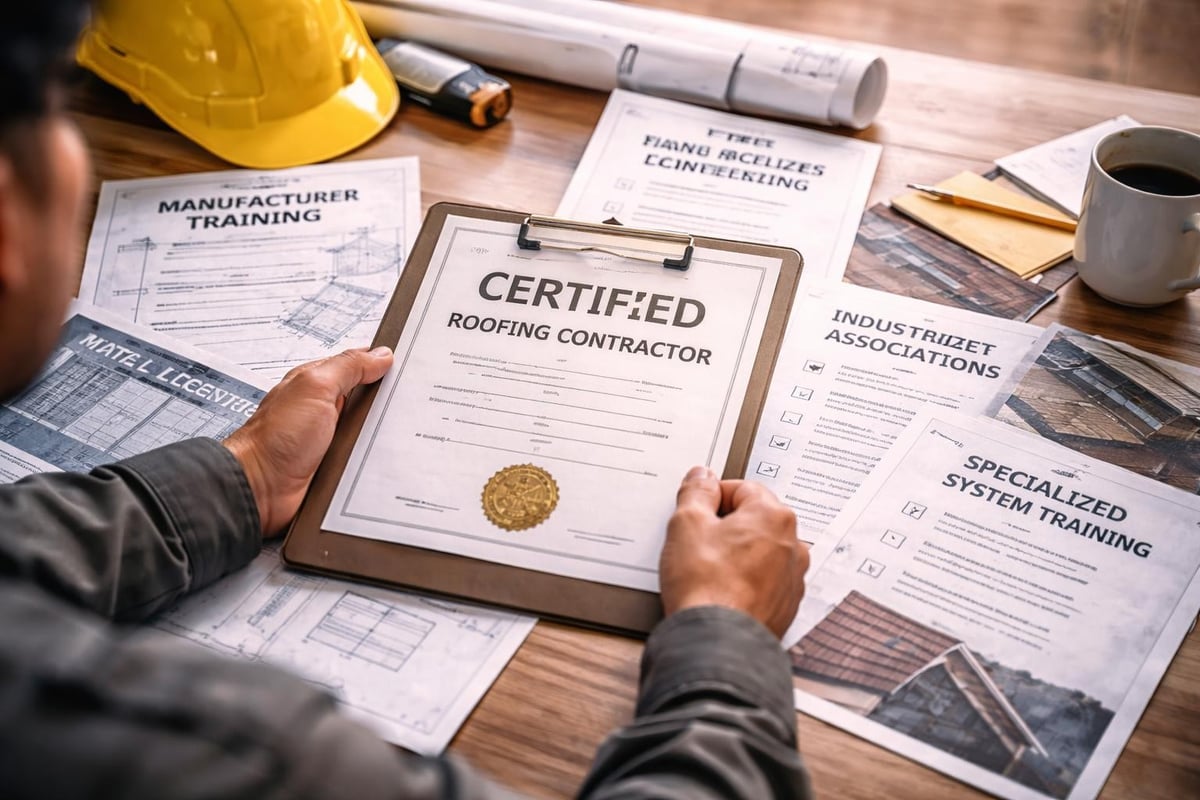
Certified roofing contractors have completed specific training programs, passed competency examinations, and maintain current credentials with recognized industry organizations. These certifications verify knowledge of proper installation techniques, safety protocols, and material specifications that directly impact roof performance and longevity.
Different certification levels exist within the roofing industry:
- Manufacturer certifications authorize contractors to install specific roofing systems according to strict guidelines
- Trade association credentials from organizations like the NRCA confirm professional standards and ethical practices
- State licensing requirements ensure contractors meet legal standards for construction work
- Specialized certifications for commercial systems, steep-slope applications, or restoration work
The distinction between certified and registered contractors varies by state, with Florida’s roofing regulations providing clear examples of how jurisdictions define these categories differently.
Why Certification Status Matters for Property Owners
Working with certified roofing contractors protects you in multiple ways. First, manufacturer warranties often require installation by certified contractors to remain valid. Second, certified professionals carry proper insurance coverage that protects you from liability if accidents occur during your project. Third, certification demonstrates accountability to professional organizations that can mediate disputes or address complaints.
Certified contractors also stay current with evolving building codes, new roofing technologies, and best practices for weather resistance. This ongoing education directly benefits your project through improved installation quality and material selection appropriate for your climate and building type.
| Benefit Category | What You Gain | Why It Matters |
|---|---|---|
| Warranty Protection | Full manufacturer coverage | Prevents costly claim denials |
| Legal Compliance | Permitted work meeting codes | Avoids inspection failures and fines |
| Insurance Coverage | Liability and workers' comp | Protects your assets from claims |
| Quality Standards | Verified installation methods | Extends roof lifespan and performance |
Verifying Contractor Credentials and Certifications
Due diligence in credential verification protects you from fraudulent operators and ensures you're working with legitimate professionals. The National Roof Certification and Inspection Association provides resources for understanding what credentials to look for and how to verify them.
Essential Documents Every Contractor Should Provide
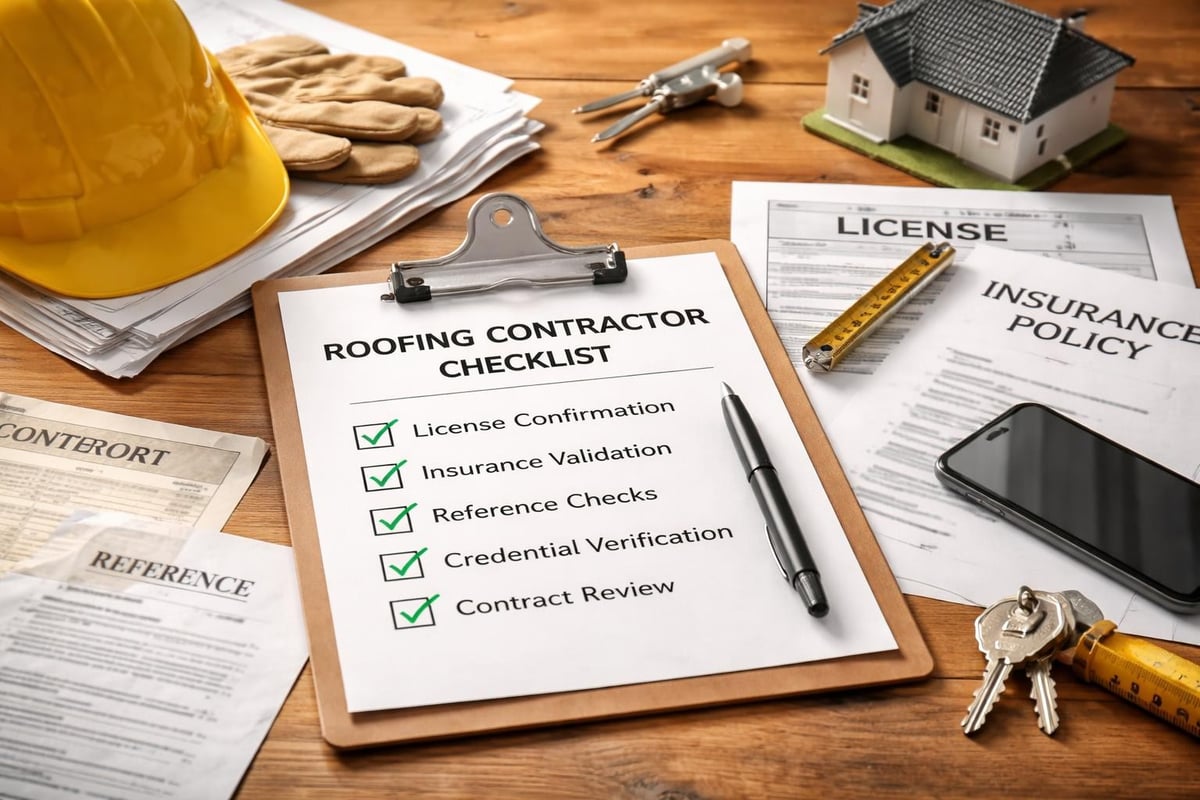
Before signing any contract, request copies of all relevant certifications, licenses, and insurance policies. Legitimate certified roofing contractors willingly provide this documentation and expect you to verify it independently.
Required documentation includes:
- Current state contractor license with verification number
- General liability insurance certificate naming minimum coverage amounts
- Workers' compensation insurance for all crew members
- Manufacturer certifications for the roofing systems they'll install
- Business entity registration and tax identification
Never accept expired documents or verbal assurances that paperwork is "being renewed." Contact insurance providers directly using phone numbers from their websites, not numbers printed on certificates, to confirm active coverage.
How to Conduct Independent Verification
Most states maintain online databases where you can verify contractor licenses and check for complaints or disciplinary actions. Search your state's contractor licensing board website and enter the license number provided by your contractor.
For manufacturer certifications, contact the roofing material manufacturer directly. Companies like GAF, Owens Corning, and CertainTeed maintain contractor locator tools on their websites where you can confirm a contractor's certified status and training level.
The American Roofing Contractors Organization accredits top contractors who meet rigorous standards, providing another verification resource for property owners evaluating potential contractors.
Key Differences Between Certified and Unlicensed Contractors
The gap between certified roofing contractors and unlicensed operators extends beyond paperwork. These differences affect project outcomes, legal protections, and your recourse if problems arise. When evaluating contractors for roof repair or replacement projects, understanding these distinctions helps you avoid costly mistakes.
Quality Control and Workmanship Standards
Certified contractors follow manufacturer installation guidelines that specify everything from substrate preparation to fastener patterns and sealant application. These detailed requirements exist because roofing performance depends on precise installation methods that unlicensed contractors often ignore or don't understand.
Quality control advantages with certified contractors:
- Detailed knowledge of proper ventilation requirements
- Understanding of flashing installation at penetrations and transitions
- Adherence to warranty-required installation specifications
- Use of appropriate materials for your climate and roof design
- Proper safety equipment and fall protection systems
Unlicensed operators frequently skip critical steps, use incorrect materials, or employ installation shortcuts that void warranties and lead to premature failure. While their initial quotes may appear lower, the true cost becomes apparent when leaks develop or manufacturers deny warranty claims.
Insurance and Liability Protection
This difference carries the most serious financial implications for property owners. Certified roofing contractors maintain comprehensive general liability and workers' compensation insurance that protects you if crew members are injured or property damage occurs during your project.
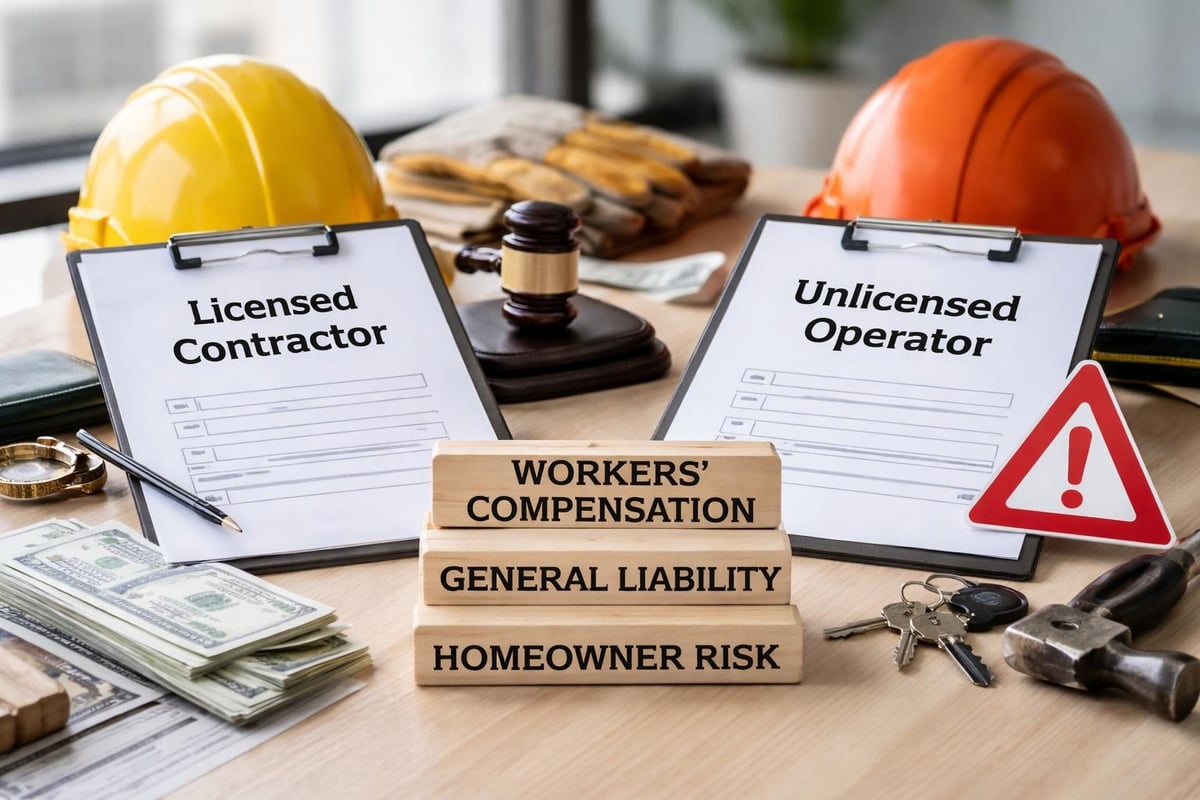
Without proper insurance, you become personally liable for medical expenses if a worker falls from your roof or for damage if materials fall onto a neighbor's property. Unlicensed contractors rarely carry adequate coverage, and homeowners' insurance policies typically exclude coverage for contractor-related injuries on your property.
When natural disasters strike the Fort Worth area, the distinction between certified professionals and storm chasers becomes particularly important for insurance claim support and quality restoration work.
Professional Associations and Industry Standards
Trade associations establish the benchmarks that separate qualified certified roofing contractors from general construction workers who occasionally perform roofing. These organizations develop technical standards, ethical guidelines, and continuing education requirements that elevate the entire industry.
Major Roofing Industry Organizations
The National Roofing Contractors Association provides comprehensive resources for both contractors and property owners, including technical manuals, safety programs, and contractor selection guidelines. NRCA membership requires contractors to maintain proper licensing, insurance, and ethical business practices.
Other significant organizations include the Roofing Contractors Association of Texas (RCAT), which focuses on state-specific regulations and local market conditions, and specialized groups for commercial roofing, metal roofing, and restoration contractors.
Membership alone doesn't guarantee quality, but contractors who invest in association membership typically demonstrate greater commitment to professional standards than those operating independently without industry connections.
Continuing Education and Training Requirements
Roofing technology evolves constantly, with new materials, installation techniques, and building code requirements emerging regularly. Certified roofing contractors participate in ongoing training to maintain their certifications and stay current with industry developments.
Annual training topics include:
- New roofing membrane technologies and installation methods
- Updated building code requirements for wind and fire resistance
- Advanced flashing techniques for complex roof geometries
- Energy-efficient roofing systems and cool roof technologies
- Safety protocol updates and fall protection requirements
This continuous learning directly benefits your project through improved installation quality and knowledge of the most effective solutions for your specific roofing challenges.
Financial and Warranty Considerations
The financial implications of choosing certified roofing contractors extend well beyond the initial project cost. Long-term value depends on warranty protection, material performance, and the contractor's ability to honor commitments years after installation.
Understanding Warranty Coverage Differences
Roofing warranties come in two distinct types: manufacturer material warranties and contractor labor warranties. Both require proper installation by certified contractors to remain valid and enforceable.
| Warranty Type | Coverage Period | What's Protected | Requirements for Validity |
|---|---|---|---|
| Manufacturer Material | 20-50 years | Defective shingles or membranes | Installation by certified contractor |
| Contractor Labor | 1-10 years | Installation errors and leaks | Licensed, insured contractor |
| Enhanced System | 25-50 years | Materials and labor combined | Certified installer, registered system |
Enhanced or "golden pledge" warranties require contractors to meet the highest certification levels and register each installation with the manufacturer. These comprehensive warranties provide the strongest protection but cost more upfront due to additional materials and stricter installation requirements.
For commercial properties, understanding the differences between various flat roofing systems and their warranty terms becomes essential when evaluating flat roof maintenance and replacement options.
Cost Versus Value Analysis
Certified roofing contractors typically charge 10-20% more than unlicensed operators, but this premium delivers measurable value through warranty protection, proper insurance coverage, and quality workmanship. The National Roof Certification and Inspection Association guide emphasizes evaluating total project value rather than focusing solely on initial price.
Value considerations beyond the quote:
- Valid warranties that protect your investment for decades
- Insurance coverage that shields you from liability claims
- Proper ventilation that prevents premature shingle failure
- Code-compliant installation that passes building inspections
- Contractor accountability through licensing boards and associations
The lowest bid often signals corner-cutting, substandard materials, or lack of proper insurance. When a roof fails prematurely and the contractor has disappeared or won't return calls, the savings evaporate and replacement costs fall entirely on you.
Red Flags and Warning Signs to Avoid
Recognizing warning signs helps you identify contractors who misrepresent their credentials or operate outside industry standards. These red flags appear during initial conversations, quote presentations, and contract negotiations.
Common Deceptive Practices
Storm chasers and unlicensed operators employ predictable tactics designed to pressure quick decisions and avoid scrutiny of their credentials. They create artificial urgency, offer unusually low prices, and discourage you from getting multiple quotes or checking references.
Warning signs of problematic contractors:
- Requests for large upfront deposits exceeding 10-20% of project cost
- Pressure to sign contracts immediately before "special pricing" expires
- Reluctance to provide proof of insurance or contractor license
- Door-to-door solicitation immediately following severe weather
- Offers to waive insurance deductibles or inflate claim amounts
- No physical business address or local references
- Plans to use leftover materials from another job for discounted pricing
Legitimate certified roofing contractors maintain permanent offices, provide detailed written estimates, and encourage you to verify their credentials independently. They understand that quality work speaks for itself and don't pressure rushed decisions.
Questions to Ask During Contractor Interviews
Prepare specific questions that reveal a contractor's knowledge, experience, and professionalism. How they answer tells you as much as what they say, with qualified contractors providing detailed, confident responses while unqualified operators offer vague or evasive answers.
Critical interview questions:
- How long have you held your contractor license in this state?
- Which manufacturer certifications do you currently maintain?
- What insurance coverage limits do you carry, and can I see current certificates?
- Will you obtain all required permits and schedule inspections?
- Who will perform the actual work-your employees or subcontractors?
- What warranty do you provide on labor and installation?
- How do you handle communication and site supervision during projects?
- Can you provide references from projects completed in the past year?
Pay attention to whether contractors ask questions about your roof, drainage patterns, attic ventilation, and previous issues. Qualified professionals gather information before recommending solutions, while unqualified operators push standard solutions regardless of your specific situation.
The Role of In-House Crews Versus Subcontractors
How certified roofing contractors staff their projects significantly impacts quality control, accountability, and project consistency. The distinction between companies using in-house employees versus those hiring subcontractors affects every aspect of your roofing experience.
Benefits of Direct Employment Models
Contractors who employ their own crews maintain direct control over training, quality standards, and customer service. These companies invest in workforce development, safety equipment, and specialized tools that subcontractor-based models typically avoid.
Advantages of in-house installation teams:
- Consistent quality across all projects with standardized methods
- Direct accountability to company management for workmanship
- Better communication between office staff and field crews
- Workers' compensation coverage protecting homeowners from liability
- Ongoing training and certification for all crew members
- Familiarity with company standards and customer service expectations
Subcontractor-based models create accountability gaps where the hiring contractor blames installation issues on subcontractors who may no longer work for them. This structure makes warranty claims and service callbacks more difficult to resolve.
Quality Control and Project Supervision
Companies with in-house crews assign dedicated project managers who supervise installations, conduct quality inspections, and serve as your primary contact throughout the project. This oversight ensures crews follow manufacturer specifications and company standards at every project phase.
Subcontractor models often lack meaningful supervision, with the general contractor visiting sites only at project start and completion. This absence of oversight increases the likelihood of installation errors, safety violations, and customer service problems that damage your property and experience.
For commercial properties requiring specialized systems, having experienced in-house teams familiar with flat roof repair techniques ensures consistent quality and faster response times when issues arise.
Documentation and Communication Standards
Professional certified roofing contractors maintain detailed documentation throughout every project phase, from initial inspection through final completion. This documentation protects both parties and provides the records needed for warranty claims, insurance purposes, and future maintenance planning.
Pre-Project Documentation Requirements
Before starting work, qualified contractors provide comprehensive written estimates detailing all materials, labor, permits, and project specifications. These documents should identify specific product brands, color selections, ventilation components, and any structural repairs needed.
Essential pre-project documents include:
- Detailed written estimate with itemized costs and material specifications
- Proof of current insurance coverage with your project address listed
- Material manufacturer warranties and labor warranty terms
- Project timeline with start date, duration, and completion schedule
- Payment schedule tied to project milestones, not arbitrary dates
- Permit numbers and inspection requirements for your jurisdiction
Vague estimates listing only total costs without material details or specifications indicate unprofessional operations. Legitimate contractors provide transparency that allows you to compare proposals accurately and understand exactly what you're purchasing.
Progress Updates and Final Documentation
Throughout the project, professional contractors document work with photographs, material receipts, and inspection reports. This record-keeping proves valuable for warranty claims and provides future contractors or property buyers with installation history.
Upon completion, expect to receive:
- Final inspection certificates from building departments
- Manufacturer warranty registration confirmation
- Material invoice copies showing products used
- Before and after photographs of all work areas
- Care and maintenance instructions for your new roof
- Contact information for future service needs
Keep these documents with your property records, as they'll be needed for insurance claims, warranty service, and eventual property sales. The Roof Repair Authority directory can help you locate certified contractors who maintain these professional documentation standards.
Making Your Final Selection Decision
After researching credentials, interviewing contractors, and reviewing proposals, you'll need to evaluate all factors to select the best certified roofing contractor for your project. This decision balances cost, qualifications, communication quality, and overall confidence in the contractor's ability to deliver results.
Comparing Multiple Qualified Contractors
Request written proposals from at least three certified roofing contractors to establish fair market pricing and compare approaches to your project. Evaluate proposals on equal terms by ensuring each contractor inspects your roof and quotes identical specifications.
| Evaluation Factor | What to Compare | Decision Weight |
|---|---|---|
| Licensing & Insurance | Current, adequate coverage | Critical – disqualify if inadequate |
| Experience | Years in business, similar projects | High – prefer 5+ years locally |
| References | Recent customer feedback, photos | High – contact at least three |
| Communication | Responsiveness, clarity, professionalism | Medium – indicates service quality |
| Price | Total cost for identical specifications | Medium – neither lowest nor highest |
| Warranty | Labor coverage period and terms | High – longer coverage preferred |
The middle-priced proposal from a well-established contractor with strong references typically offers the best value. Extremely low bids often indicate missing insurance, substandard materials, or installation shortcuts that lead to problems.
Trust Your Instincts About Professionalism
Beyond credentials and pricing, consider your comfort level with each contractor's communication style and professionalism. You'll work closely with this company for weeks or months, and their responsiveness during the sales process predicts how they'll handle questions or concerns during your project.
Contractors who return calls promptly, explain technical details clearly, and demonstrate genuine interest in solving your roofing problems typically deliver better overall experiences than those who seem rushed, dismissive, or more interested in closing sales than understanding your needs.
When evaluating options for commercial roofing projects, consider contractors who demonstrate experience with your specific building type and roofing system requirements.
Selecting certified roofing contractors with verified credentials, proper insurance, and established track records protects your property investment and ensures quality results backed by legitimate warranties. The due diligence required to verify certifications, check references, and compare proposals pays dividends through decades of reliable roof performance. When you need roofing services backed by in-house crews, comprehensive documentation, and a five-year labor warranty, Texcore Construction delivers the certified expertise and accountability that Fort Worth property owners depend on for lasting results.