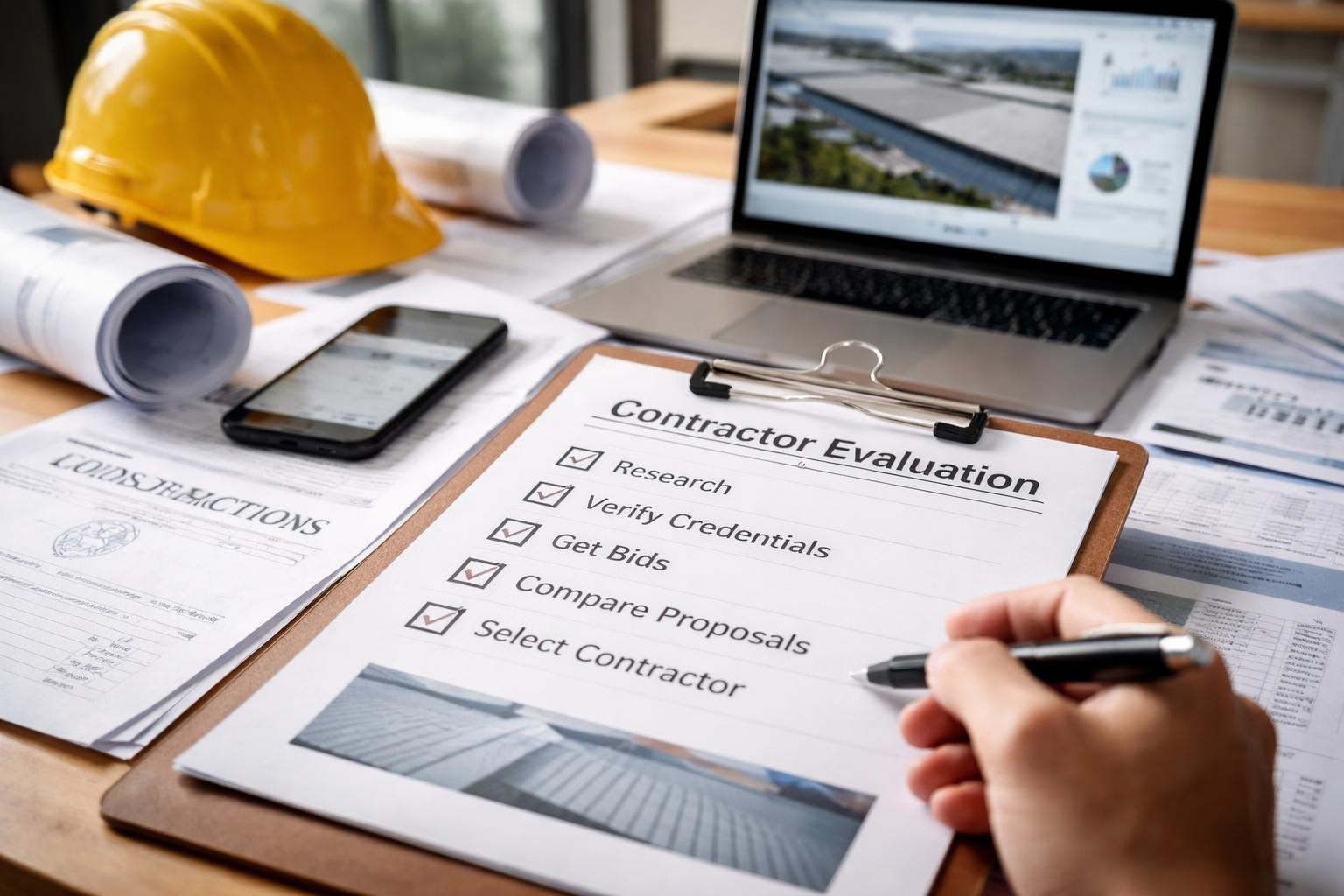
Commercial Metal Roofing Contractors Guide
Selecting the right commercial metal roofing contractors can determine whether your roofing investment delivers decades of protection or becomes a costly liability. With metal roofing systems representing a significant capital expenditure for commercial properties, property owners and facility managers need to understand what separates qualified professionals from general contractors attempting to expand their service offerings. The commercial metal roofing industry requires specialized knowledge, manufacturer certifications, and installation expertise that differs substantially from residential work or other commercial roofing types. This comprehensive guide helps you evaluate contractors, ask the right questions, and make informed decisions that protect your building and budget.
Understanding Commercial Metal Roofing Expertise
Commercial metal roofing contractors must possess specific qualifications that extend beyond general roofing experience. The installation of standing seam panels, structural metal systems, and architectural metal roofs demands precision in panel alignment, seam integrity, and thermal movement accommodation that impacts long-term performance.
Certification and Training Requirements
Manufacturer certifications represent the foundation of contractor credibility in metal roofing. Leading manufacturers like Berridge, MBCI, and Petersen require contractors to complete training programs covering product specifications, installation techniques, and warranty compliance before authorizing them to install their systems. These certifications ensure contractors understand critical details like proper fastener spacing, panel overlap requirements, and sealant application methods.
Key certifications to verify include:
- Manufacturer-specific installation credentials
- OSHA safety compliance documentation
- State and local contractor licensing
- Insurance coverage including general liability and workers' compensation
- Metal Construction Association membership
According to Sheffield Metals’ commercial roofing overview, the specification and bidding process for commercial metal projects requires contractors to demonstrate both technical knowledge and project management capabilities that residential-focused companies often lack.
Commercial vs. Residential Metal Roofing Distinctions
The differences between residential and commercial metal roofing projects extend far beyond scale. Commercial installations typically involve larger panel widths, different seam configurations, and integration with complex mechanical systems, skylights, and rooftop equipment. Understanding these six key differences helps property managers evaluate whether a contractor possesses relevant commercial experience or simply residential credentials.
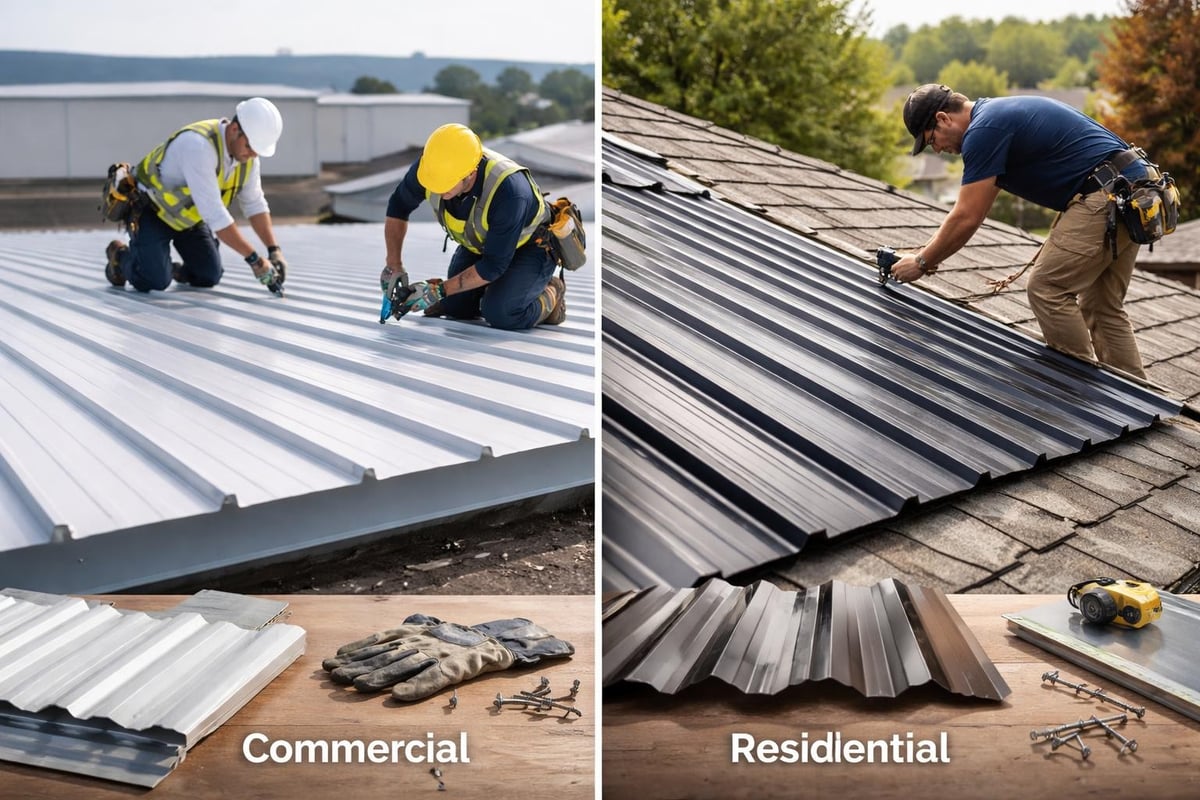
Commercial projects demand stricter engineering requirements, detailed submittal processes, and coordination with architects and general contractors. The warranty structures differ significantly, with commercial systems often requiring specific maintenance protocols and documentation that residential warranties do not mandate.
Evaluating Contractor Qualifications and Experience
Property owners should approach contractor selection with the same rigor applied to other major capital projects. The evaluation process should examine both technical capabilities and business practices that indicate reliability and accountability.
Portfolio Assessment and Project References
Request detailed documentation of completed commercial metal roofing projects similar in scope and complexity to your planned installation. Quality contractors maintain comprehensive portfolios including project photos, square footage details, system types installed, and client contact information for references.
Essential portfolio elements:
- Projects completed within the past three years
- Building types matching your facility (warehouse, office, retail, industrial)
- Metal roofing systems identical or similar to your planned installation
- Documentation of challenging installations successfully completed
- Long-term performance data from previous clients
Contact at least three references and ask specific questions about timeline adherence, communication quality, problem-solving ability, and post-installation service. Many property managers find that storm damage repair projects reveal contractor capabilities under pressure, making storm-related references particularly valuable.
In-House Crews vs. Subcontractor Models
The contractor's workforce structure significantly impacts project quality, timeline reliability, and accountability. Companies employing in-house installation crews maintain direct control over training, quality standards, and work site conduct. Contractors relying heavily on subcontractors introduce additional variables that can compromise consistency and complicate warranty enforcement.
| Workforce Model | Quality Control | Schedule Reliability | Warranty Clarity | Communication |
|---|---|---|---|---|
| In-House Crews | Direct supervision ensures consistent standards | High – dedicated teams committed to company timeline | Clear – single entity responsible | Streamlined through one company |
| Subcontractor-Heavy | Variable – dependent on subcontractor standards | Lower – competing priorities affect availability | Complex – multiple parties involved | Fragmented across multiple entities |
| Hybrid Model | Mixed – requires strong oversight | Moderate – flexibility with some inconsistency | Requires clear agreements | Requires coordination |
Contractors like those specializing in Commercial Roofing Systems who maintain in-house crews can respond more quickly to warranty issues and deliver more predictable results across multiple projects.
Critical Questions to Ask Potential Contractors
The interview process should reveal not only what contractors know but how they approach problem-solving, communication, and client education. Sophisticated commercial metal roofing contractors welcome detailed questioning because it demonstrates your commitment to project success.
Technical Capability Assessment
Ask contractors to explain their approach to specific challenges your building presents. Roof pitch, drainage requirements, thermal expansion management, and integration with existing building systems all require thoughtful solutions based on engineering principles and field experience.
Technical questions that reveal expertise:
- How do you address thermal movement in large metal roof expanses?
- What underlayment systems do you recommend for our specific roof pitch and climate?
- How will you integrate new metal roofing with our HVAC units and exhaust systems?
- What fastener specifications will you use and why?
- How do you ensure proper panel alignment across large roof sections?
Quality contractors provide detailed answers referencing specific products, installation techniques, and manufacturer specifications. Vague responses or reluctance to discuss technical details indicate insufficient expertise for complex commercial installations.
Project Management and Communication Protocols
Understanding how contractors manage projects, communicate progress, and handle unexpected challenges reveals their organizational maturity and client service orientation. Best practices for commercial roofing installations emphasize the importance of systematic project management in delivering successful outcomes.
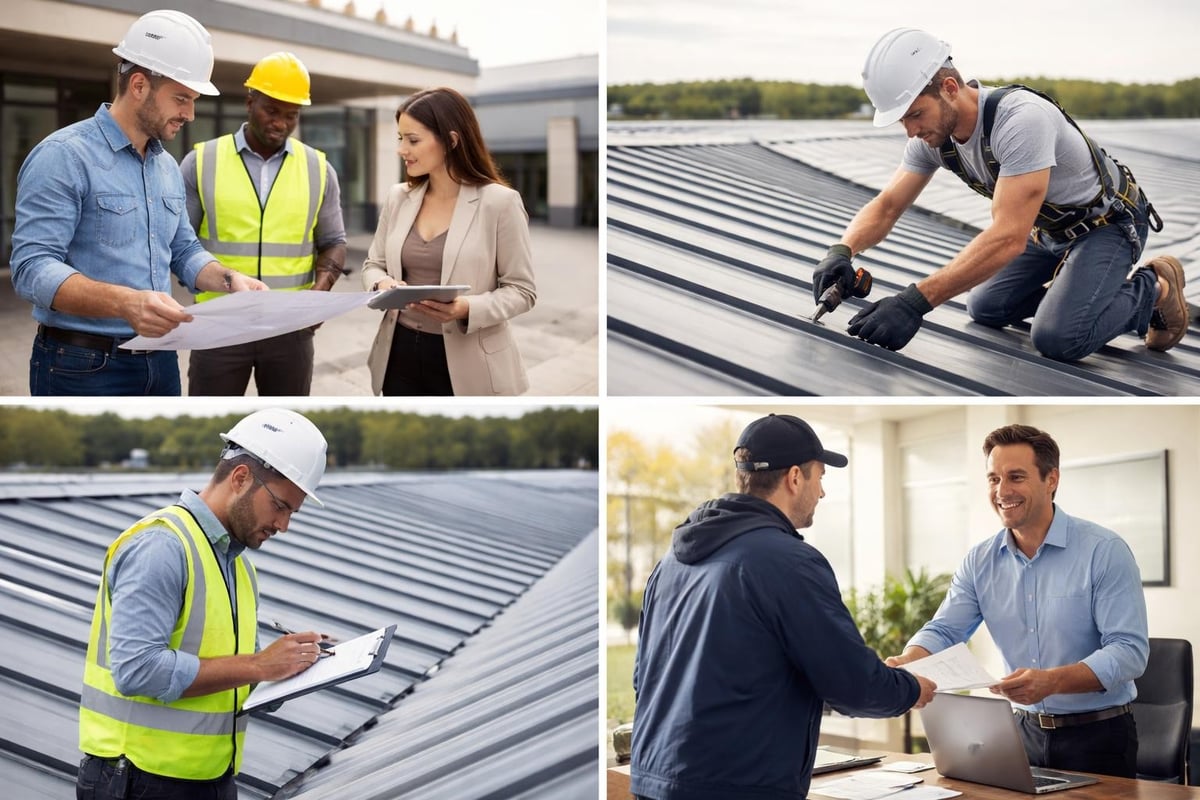
Request information about their project management approach including scheduling methodology, daily progress reporting, change order procedures, and quality control checkpoints. Contractors should provide written communication protocols specifying who you contact for different issues, how quickly they respond to concerns, and their process for documenting project milestones.
Understanding Warranties and Long-Term Support
Commercial metal roofing warranties involve multiple layers of coverage from different entities, and understanding what each warranty covers determines your actual protection level.
Manufacturer vs. Contractor Warranty Coverage
Material warranties from metal panel manufacturers typically cover coating performance, substrate integrity, and weathertightness for periods ranging from 20 to 40 years depending on the system selected. These warranties protect against manufacturing defects but exclude installation errors, improper maintenance, and damage from external sources.
Contractor workmanship warranties cover installation quality, including leak-free performance resulting from proper panel attachment, seam formation, and flashing integration. Comprehensive guides to commercial metal roofing emphasize that contractor warranties typically range from one to ten years, with longer warranties indicating greater confidence in installation quality.
Key warranty considerations:
- Warranty transfer provisions if you sell the property
- Required maintenance activities that maintain warranty validity
- Response time commitments for warranty claims
- Coverage exclusions and limitations
- Financial stability of warranty provider
Some commercial metal roofing contractors offer extended labor warranties backed by insurance policies that guarantee coverage even if the contractor ceases operations. This protection proves particularly valuable for building owners planning long-term ownership.
Maintenance Requirements and Service Agreements
Metal roofing systems require minimal maintenance compared to other commercial roofing types, but neglecting routine inspections and minor repairs can void warranties and accelerate deterioration. FoxHaven Roofing’s maintenance guide outlines essential maintenance tasks that preserve system performance and warranty coverage.
Quality contractors offer maintenance service agreements providing scheduled inspections, minor repairs, and detailed condition documentation. These agreements typically include semi-annual or annual roof inspections, gutter cleaning, fastener tightening, sealant renewal, and comprehensive photo documentation suitable for insurance and warranty purposes.
Cost Considerations and Bidding Process
Commercial metal roofing represents a significant investment with costs varying based on system type, building complexity, and contractor expertise. Understanding what drives pricing helps property owners evaluate bids and identify potential quality issues hidden in unusually low proposals.
Factors Affecting Project Pricing
Metal roofing costs reflect material selection, labor requirements, project accessibility, and contractor overhead. Standing seam systems cost more than through-fastened panels but deliver superior weathertightness and longevity. Complex roof geometries, extensive penetrations, and difficult access increase labor hours and equipment requirements.
Primary cost drivers include:
- Metal panel type and gauge thickness
- Coating system and color selection
- Roof area and building height
- Existing roof removal and disposal requirements
- Insulation and underlayment specifications
- Flashing complexity and custom fabrication needs
- Project timeline and scheduling constraints
Be cautious of bids significantly below the average. Unrealistically low pricing often indicates inexperience, inferior materials, inadequate insurance coverage, or plans to cut corners during installation. McElroy Metal’s analysis of what makes effective commercial metal roofing emphasizes that proper system selection and quality installation deliver far better value than minimal upfront cost.
Comparing Proposals Effectively
Request itemized proposals breaking down material costs, labor expenses, equipment rental, permits, and disposal fees. This transparency allows meaningful comparison between contractors and helps identify where price differences originate.
| Proposal Component | What to Verify | Red Flags |
|---|---|---|
| Material Specifications | Match project requirements exactly | Generic descriptions, unspecified brands |
| Labor Hours | Reasonable for project scope | Extremely low estimates suggesting rushed work |
| Warranty Terms | Clear duration and coverage | Vague language, verbal-only promises |
| Timeline | Realistic with milestone dates | No schedule or unrealistic completion claims |
| Payment Schedule | Tied to project completion stages | Large upfront deposits, backend-heavy |
Some property owners working with facilities across multiple locations find value in understanding different regional approaches, such as those used by contractors providing Denton roofing services alongside Fort Worth operations, which can reveal consistency in standards and pricing.
Safety Standards and Job Site Management
Commercial roofing ranks among the most hazardous construction activities, making contractor safety practices a critical evaluation criterion. Proper safety protocols protect workers, minimize liability exposure, and often correlate with overall quality and professionalism.
OSHA Compliance and Safety Programs
Qualified commercial metal roofing contractors maintain comprehensive safety programs meeting or exceeding OSHA requirements for fall protection, personal protective equipment, and hazard communication. Request documentation of their safety record including OSHA 300 logs, experience modification rate (EMR), and safety training certifications for crew members.
Contractors with EMR ratings below 1.0 demonstrate better-than-average safety performance, indicating strong safety culture and effective risk management. High EMR ratings signal frequent accidents and potential liability concerns for property owners.
Essential safety documentation:
- Written fall protection plan specific to your project
- Equipment inspection records for scaffolding, lifts, and safety gear
- Crew safety training certificates
- Site-specific safety plan addressing your building's unique hazards
- Emergency response procedures
Installation practices from experienced contractors demonstrate how systematic safety approaches integrate with quality workmanship to deliver superior results while protecting personnel.
Site Cleanliness and Property Protection
Professional contractors maintain clean, organized work sites that minimize disruption to building operations and protect landscaping, vehicles, and building components from damage. Daily cleanup, designated material storage areas, and careful debris removal distinguish quality contractors from those taking shortcuts.
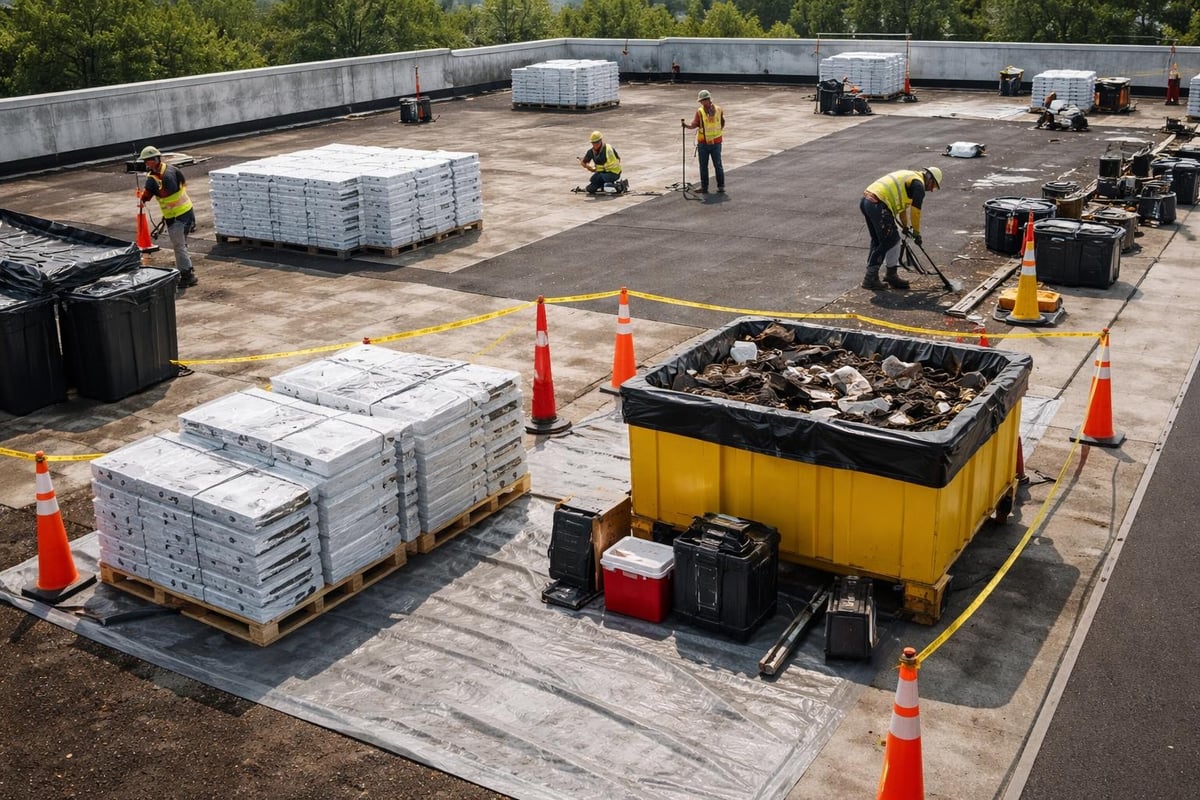
Discuss their approach to protecting building entries, landscaping, parking areas, and tenant spaces from construction debris and potential damage. Quality contractors use protective coverings, magnetic sweepers for metal scrap collection, and designated access routes that minimize impact on business operations.
Insurance and Liability Protection
Comprehensive insurance coverage protects property owners from financial liability if accidents, property damage, or defective work occurs during or after installation. Verifying adequate coverage before signing contracts prevents costly surprises.
Required Coverage Types
Commercial metal roofing contractors should maintain several insurance policies protecting different risk categories. General liability insurance covers property damage and bodily injury resulting from contractor operations. Workers' compensation protects employees injured on the job and shields property owners from employee injury claims.
Minimum insurance requirements:
- General Liability: $2,000,000 aggregate minimum
- Workers' Compensation: Statutory limits for all employees
- Automobile Liability: $1,000,000 for company vehicles
- Umbrella Policy: Additional $2,000,000+ coverage for catastrophic events
- Completed Operations Coverage: Protection after project completion
Request certificates of insurance directly from the contractor's insurance carrier, not just from the contractor. Certificates should name your property as an additional insured and include policy expiration dates ensuring coverage throughout the project duration.
Lien Waiver Procedures
Establish clear lien waiver procedures before starting work to prevent subcontractors or suppliers from filing mechanics liens against your property if payment disputes arise. Conditional lien waivers upon progress payments and unconditional final waivers upon project completion protect property owners from claims by parties they never contracted with directly.
Quality contractors provide lien waivers from all material suppliers and subcontractors (if any) with each payment request, demonstrating they maintain current accounts and pay their obligations promptly. This documentation proves particularly important for property owners concerned about protecting their assets from third-party claims.
Evaluating Contractor Business Practices
Financial stability, professional reputation, and ethical business practices indicate whether commercial metal roofing contractors will stand behind their work years after installation. Several research methods reveal contractor reliability beyond what sales presentations disclose.
Financial Stability Assessment
Contractors must remain in business throughout your warranty period to honor commitments, making financial health a critical selection factor. While contractors typically resist sharing detailed financial information, several indicators reveal stability without requiring access to proprietary data.
Request bank references, bonding capacity information, and supplier references. Contractors maintaining strong banking relationships and bonding capacity demonstrate financial stability sufficient to complete large projects. Suppliers willing to provide references typically indicate contractors pay accounts promptly and maintain professional relationships.
Online Reputation and Industry Standing
Research contractor reputations through Better Business Bureau ratings, Google reviews, and industry association memberships. Look for patterns in customer feedback rather than isolated complaints, as even excellent contractors occasionally encounter dissatisfied clients.
Professional association memberships in organizations like the Metal Construction Association, National Roofing Contractors Association, or regional contractor groups indicate commitment to industry standards and professional development. Breaking into and succeeding in commercial metal roofing requires dedication to ongoing education and relationship building that association involvement demonstrates.
Check state licensing boards for complaints, disciplinary actions, or license suspensions. Even resolved complaints reveal how contractors handle disputes and whether patterns of problematic behavior exist.
Geographic Considerations and Local Expertise
Commercial metal roofing contractors serving specific regions develop expertise with local climate challenges, building codes, and permitting processes that contractors from distant locations may lack. This local knowledge impacts system design, material selection, and installation techniques.
Climate-Specific Design Requirements
Metal roofing systems must account for wind loads, snow accumulation, thermal cycling, and precipitation patterns specific to your region. Contractors familiar with North Texas climate understand proper slope requirements for adequate drainage during severe thunderstorms, wind resistance specifications for tornado-prone areas, and thermal movement accommodation for extreme temperature swings.
Local building codes incorporate these climate factors into minimum standards, but experienced contractors often exceed code minimums based on field experience with actual weather events. For property owners managing facilities after significant weather events, contractors experienced with emergency storm response procedures bring valuable perspective to designing resilient systems.
Permit Navigation and Code Compliance
Contractors regularly working within specific jurisdictions understand local permitting requirements, inspection protocols, and building official preferences that streamline approval processes. This familiarity prevents project delays and ensures installations meet all regulatory requirements without costly modifications.
Request information about their permitting success rate, typical approval timelines, and relationships with local building departments. Contractors should handle all permitting responsibilities, coordinate required inspections, and provide you with approved permit documentation and final inspection certificates.
Making the Final Selection Decision
After evaluating multiple commercial metal roofing contractors through the criteria discussed throughout this guide, synthesize the information to make an informed decision balancing cost, quality, and risk factors.
Creating a Contractor Scorecard
Develop a weighted scoring system evaluating contractors across categories most important to your project. Technical expertise, safety record, warranty terms, and communication quality typically deserve higher weighting than factors like office location or company size.
Sample evaluation categories and weights:
- Technical expertise and certifications (25%)
- Relevant project experience (20%)
- Warranty coverage and terms (15%)
- Safety record and insurance (15%)
- Communication and professionalism (10%)
- Pricing competitiveness (10%)
- References and reputation (5%)
This systematic approach removes emotion from the decision and creates defensible justification if you must explain your selection to stakeholders, board members, or investment partners.
Trust Your Instincts on Cultural Fit
Beyond objective qualifications, consider whether the contractor's communication style, responsiveness, and approach to problem-solving align with your expectations. Projects spanning weeks or months require regular interaction, and personality conflicts can complicate even technically successful installations.
Contractors who listen carefully to your concerns, explain options clearly without condescension, and demonstrate genuine interest in understanding your building's specific challenges typically deliver better overall experiences. The best commercial metal roofing contractors view themselves as partners in protecting your asset rather than simply vendors executing transactions.
Selecting qualified commercial metal roofing contractors requires thorough evaluation of technical capabilities, business practices, and long-term support commitments. When you need a Fort Worth roofing partner who combines specialized expertise with in-house crews, transparent communication, and accountability backed by comprehensive warranties, Texcore Construction delivers the craftsmanship and reliability your commercial property deserves.