
Commercial Roofing Company Near Me: Local Selection Guide
Finding a reliable commercial roofing company near me requires more than a quick online search and a phone call. Your commercial roof represents a significant investment that protects your assets, inventory, and operations. The difference between a qualified local contractor and an inexperienced one can mean thousands of dollars in unnecessary repairs, business interruptions, and potential liability issues. This guide walks you through the essential criteria for evaluating local commercial roofing companies, understanding what sets quality contractors apart, and making an informed decision that protects your property for decades to come.
What Makes a Commercial Roofing Company Truly Local
Geographic proximity matters more in commercial roofing than many property owners realize. A genuinely local commercial roofing company maintains physical office space, warehouse facilities, and crew staging areas within your region. This infrastructure enables rapid emergency response, efficient project scheduling, and accountability that extends beyond project completion.
Local presence indicators include:
- Physical office address with regular business hours
- Local phone numbers rather than national call centers
- Warehouse storage for materials and equipment
- Service trucks visible in your area
- Community involvement and local references
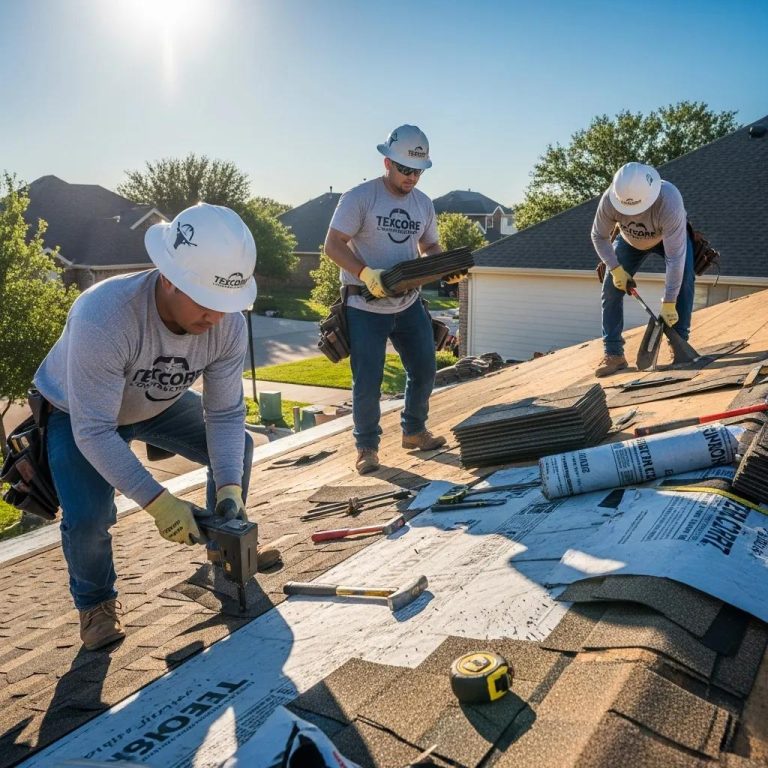
When you search for a commercial roofing company near me, verify that the contractor actually operates from your area rather than sending crews from distant locations. Texcore Construction maintains its operations in Fort Worth, allowing same-day response for emergency repairs and consistent crew availability for scheduled projects.
Response Time and Availability
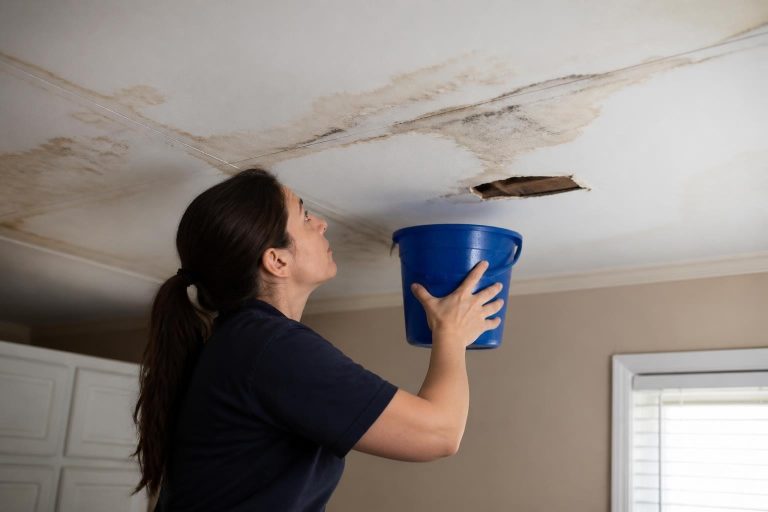
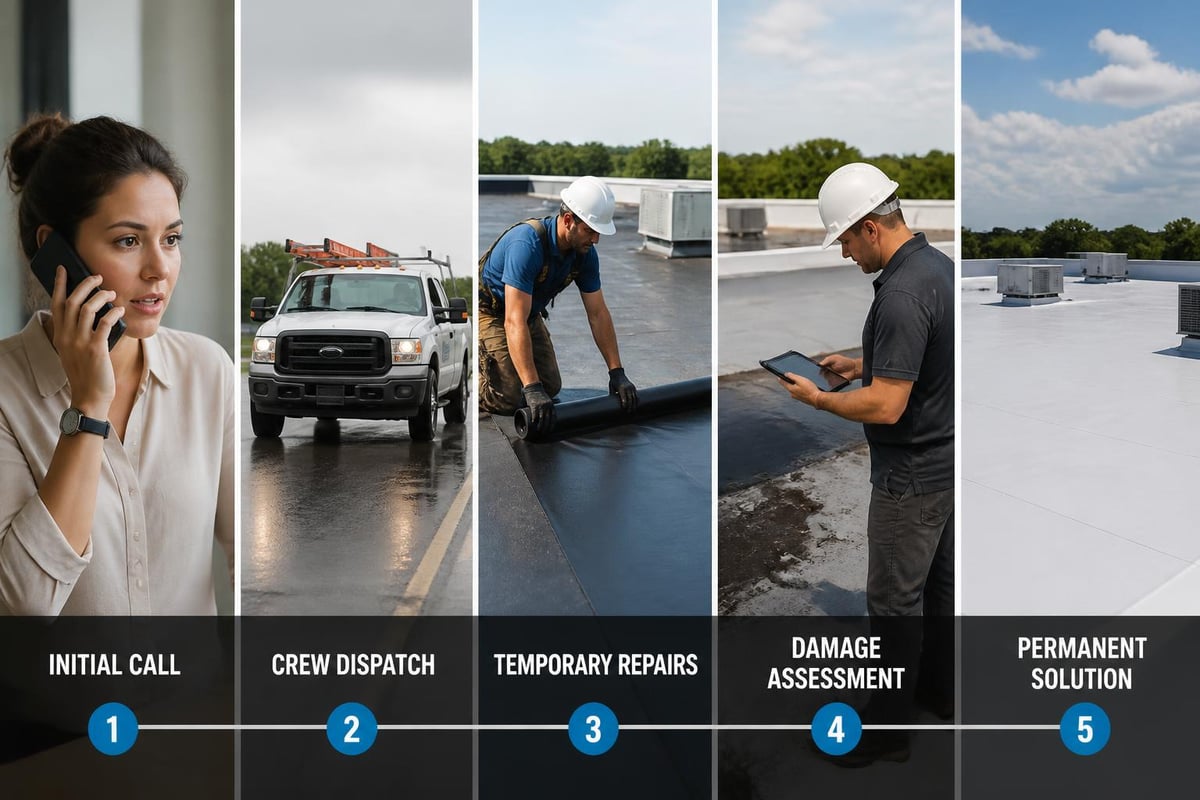
Commercial roof emergencies do not wait for convenient business hours. Active leaks can damage inventory, disrupt operations, and create safety hazards within minutes. A truly local contractor can mobilize crews quickly because they operate from nearby facilities.
Test response time during your initial contact. How quickly does the company return calls? Can they schedule inspections within 24 to 48 hours? Do they offer emergency services outside regular business hours? These answers reveal operational capacity and commitment to client needs.
Credentials and Qualifications That Matter
Not all roofing licenses carry equal weight. Commercial roofing demands specialized knowledge, equipment, and experience that residential contractors may lack. When evaluating a commercial roofing company near me, verify credentials that demonstrate competence with commercial systems.
| Credential Type | Why It Matters | Verification Method |
|---|---|---|
| State Contractor License | Legal requirement, bonding protection | State licensing board website |
| Liability Insurance | Protects your property from damage claims | Request certificate of insurance |
| Workers Compensation | Covers crew injuries on your property | Direct certificate from insurer |
| Manufacturer Certifications | Training on specific roofing systems | Manufacturer verification portals |
| Safety Training Documentation | Reduces workplace accidents | Request OSHA compliance records |
Manufacturer certifications deserve special attention. Companies like GAF, Firestone, and Carlisle only certify contractors who complete rigorous training programs and meet quality standards. These certifications often unlock extended warranty options unavailable through non-certified installers.
In-House Crews Versus Subcontractors
The subcontractor model introduces quality control challenges and communication gaps. When a commercial roofing company near me uses in-house crews exclusively, you gain direct accountability, consistent workmanship standards, and simplified communication throughout the project.
Advantages of in-house crews:
- Consistent training and quality standards
- Direct supervision by company management
- Familiarity with company procedures and expectations
- Better job site cleanliness and professionalism
- Clear chain of responsibility for warranty claims
Ask potential contractors directly: "Will your own employees perform this work, or do you use subcontractors?" The answer reveals operational structure and quality control capacity.
Commercial Roofing Systems and Material Expertise
Commercial properties utilize roofing systems fundamentally different from residential applications. Low-slope and flat roofs require specialized materials, installation techniques, and maintenance approaches. A qualified commercial roofing company near me demonstrates expertise across multiple system types.
Understanding various commercial roofing materials helps you evaluate contractor knowledge during consultations. Listen for specific technical details rather than vague generalities.
Common Commercial Roofing Systems
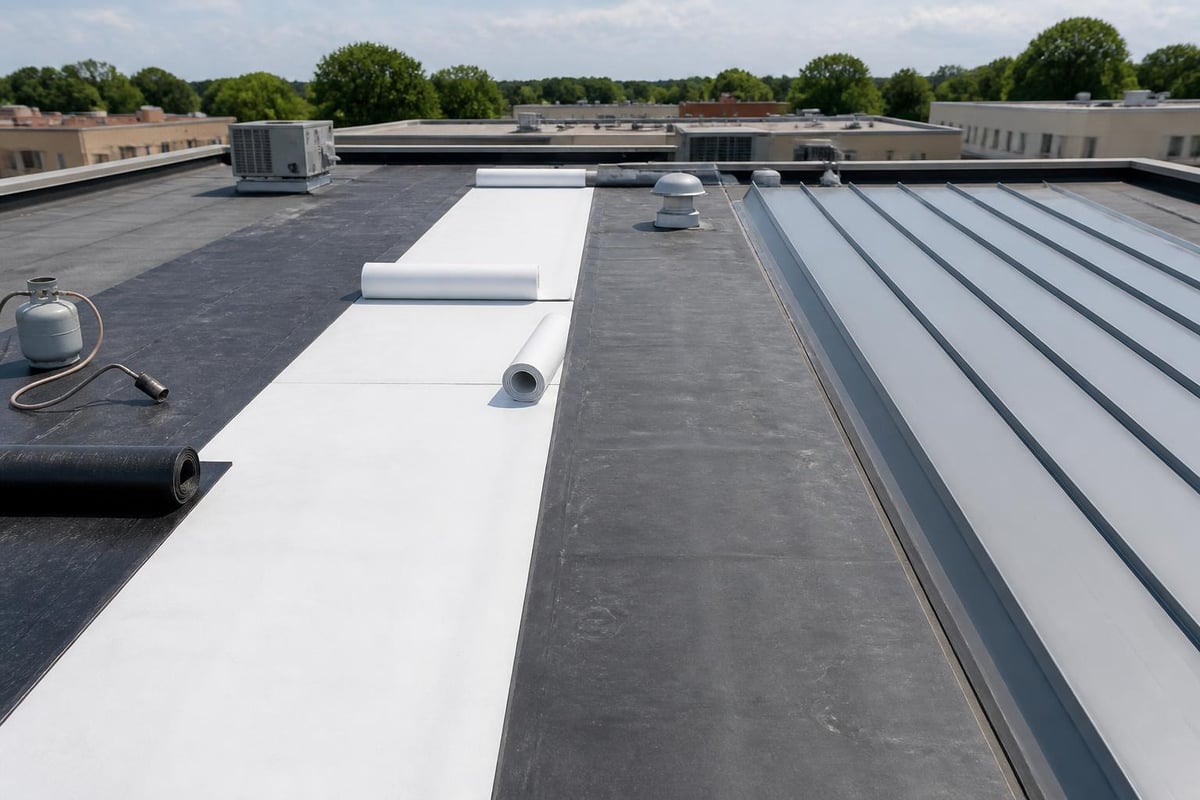
- TPO (Thermoplastic Polyolefin): Heat-welded seams, energy-efficient white surface, moderate cost
- EPDM (Rubber Membrane): Durable, cost-effective, excellent weather resistance
- Modified Bitumen: Self-adhering or torch-applied, good for variable climates
- Built-Up Roofing (BUR): Multiple layers of tar and gravel, traditional system
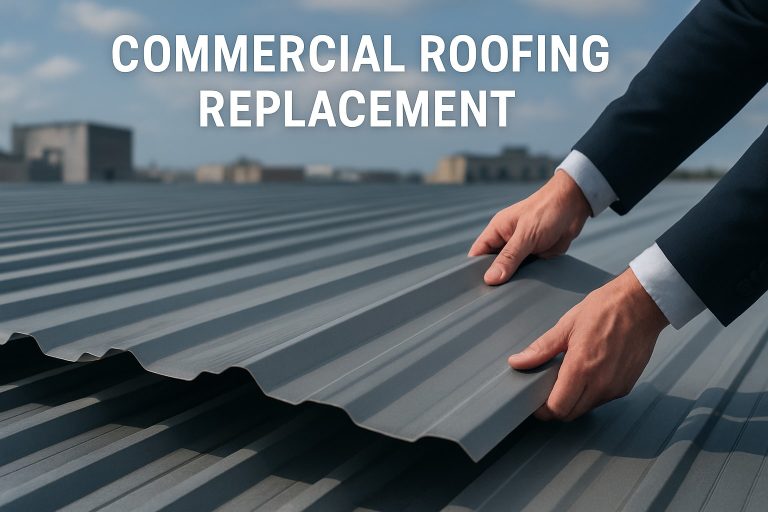
- Metal Roofing: Standing seam or corrugated panels, long lifespan
- PVC: Chemical resistance, heat-welded seams, premium pricing
Each system suits specific building types, budgets, and performance requirements. Contractors should explain why they recommend particular systems for your property rather than defaulting to a single solution for every project.
Evaluating Experience and Project History
Years in business provide useful context, but project portfolio reveals actual capability. When researching a commercial roofing company near me, request examples of projects similar to yours in scope, system type, and building use.
Portfolio evaluation criteria:
- Building types: office, retail, industrial, warehouse, institutional
- System types: flat, low-slope, metal, specialty applications
- Project scales: small repairs to complete replacements
- Complexity: multi-building campuses, occupied buildings, historical properties
Review references from projects completed within the past two years. Recent references reflect current crew quality, communication practices, and project management capabilities. Top construction companies maintain consistent standards across all projects regardless of size.
Questions to Ask References
Contact references directly rather than relying solely on written testimonials. Ask specific questions about their experience:
- Did the crew arrive as scheduled each day?
- How did the contractor handle unexpected issues?
- Was the job site kept clean and safe?
- Did the final cost match the initial estimate?
- How responsive was the company after project completion?
- Would you hire them again for future work?
Listen for hesitation or qualified answers that might indicate problems. Enthusiastic, specific responses suggest genuinely positive experiences.
Insurance Claim Support and Documentation
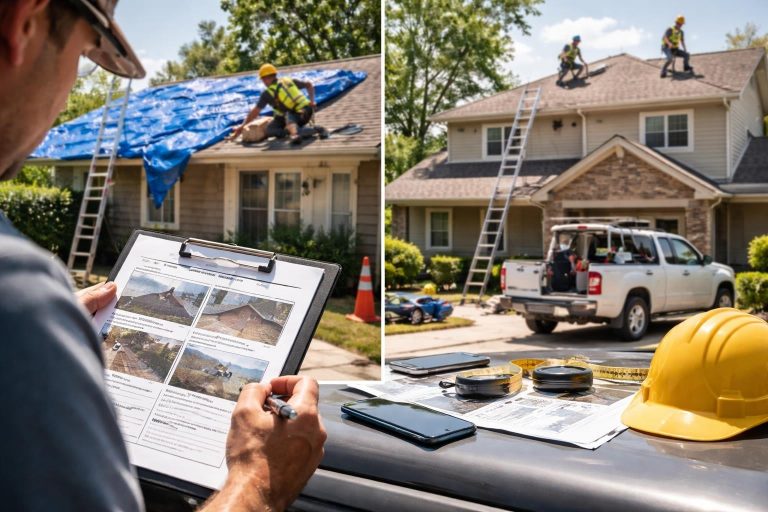
Storm damage often necessitates insurance claims that require detailed documentation and adjuster coordination. A commercial roofing company near me with claims experience streamlines the process and supporting your insurance claim with thorough documentation approval.
Look for contractors who provide comprehensive roofing insurance claims support including damage documentation, scope preparation, and adjuster meetings. This expertise proves invaluable during the claims process.
| Documentation Element | Purpose | Best Practice |
|---|---|---|
| Photographic Evidence | Visual proof of damage extent | Time-stamped, high-resolution images from multiple angles |
| Detailed Measurements | Quantify affected areas | Precise square footage calculations with diagrams |
| Material Specifications | Define replacement requirements | Manufacturer names, model numbers, color codes |
| Code Compliance Notes | Justify necessary upgrades | Reference current building codes and requirements |
| Comparative Estimates | Support reasonable pricing | Detailed line-item breakdowns |
Professional documentation increases claim approval likelihood and ensures adequate coverage for proper repairs. Companies experienced with best practices for commercial roofing installations understand what insurance adjusters require.
Warranty Protection and Long-Term Support
Warranty terms vary dramatically between contractors. When comparing a commercial roofing company near me against competitors, examine both material warranties from manufacturers and labor warranties from the contractor.
Material warranties typically range from 10 to 30 years depending on the system and manufacturer. These warranties cover defects in the roofing materials themselves but exclude installation errors.
Labor warranties protect against installation defects and workmanship issues. Quality contractors offer labor warranties spanning 5 to 10 years, demonstrating confidence in their crews' abilities.
Warranty Red Flags
- Warranties shorter than industry standards (less than 5 years labor)
- Vague language about what is covered
- Requirements that void coverage easily
- Lack of written warranty documentation
- Manufacturer warranties without proper certification
Verify that warranty claims go directly to the local company rather than a national headquarters. Local accountability ensures faster response when issues arise.
Pricing Structure and Payment Terms
Transparent pricing builds trust and prevents disputes. A professional commercial roofing company near me provides detailed estimates breaking down labor, materials, permits, disposal, and other costs separately.
Complete estimates should include:
- Roof area calculations with methodology explained
- Material specifications with quantities
- Labor costs itemized by task
- Permit and inspection fees
- Waste disposal and dumpster costs
- Project timeline with milestones
- Payment schedule tied to completion stages
- Warranty terms clearly stated
Avoid contractors who pressure immediate decisions or require large upfront deposits before work begins. Legitimate companies understand that property owners need time to review estimates and compare options. Understanding commercial roofing material durability helps you evaluate whether pricing aligns with material quality.
Payment Schedule Best Practices
- Initial deposit: 10-25% upon contract signing
- Material delivery: 25-35% when materials arrive on site
- Midpoint payment: 25-35% at project halfway point
- Final payment: Remaining balance upon completion and inspection
Never pay the full amount before work completes. Final payment leverage ensures the contractor addresses any punch list items and completes all agreed-upon work.
Safety Standards and Job Site Management
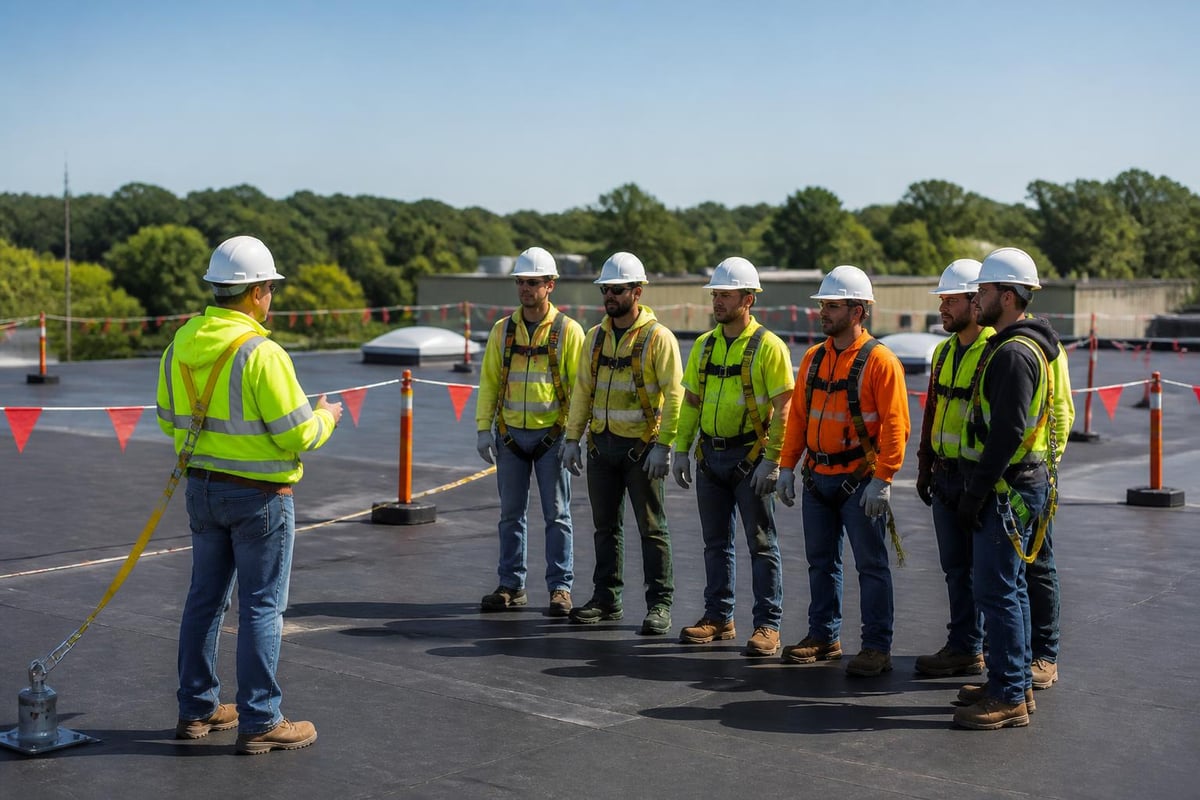
Commercial roofing involves significant safety risks. OSHA regulations govern fall protection, hazard communication, and other safety protocols. A responsible commercial roofing company near me maintains rigorous safety programs that protect both workers and your property.
Safety program indicators:
- Written safety policies provided upon request
- Regular crew safety training documentation
- Fall protection equipment visible on job sites
- Proper signage and barriers around work areas
- Daily safety briefings before work begins
- Incident reporting procedures
Ask about the company's Experience Modification Rate (EMR). This insurance metric reflects workplace safety performance. EMR below 1.0 indicates better-than-average safety records, while ratings above 1.0 suggest higher incident rates.
Job Site Cleanliness
Professional crews maintain organized, clean work areas throughout projects. Daily cleanup prevents debris accumulation, reduces trip hazards, and demonstrates respect for your property. Specify cleanup expectations in the contract, including:
- Daily debris removal from work areas
- Magnetic sweeps for metal fasteners
- Protected pathways for building access
- Covered materials and equipment overnight
- Final site restoration upon completion
Messy job sites indicate poor management and increase liability risks. Companies committed to industrial roofing standards understand that cleanliness reflects professionalism.
Communication and Project Management
Clear communication prevents misunderstandings and keeps projects on schedule. Evaluate how potential contractors communicate during initial interactions. Responsiveness, clarity, and professionalism during the sales process typically continue throughout the project.
Effective communication includes:
- Single point of contact throughout the project
- Regular progress updates without prompting
- Immediate notification of unexpected issues
- Written documentation of changes or additions
- Accessibility during business hours
- Post-project follow-up
Establish communication preferences in the contract. Specify update frequency, preferred contact methods, and response time expectations for questions or concerns.
Project Timeline Transparency
Realistic timelines account for weather, material availability, and crew scheduling. When a commercial roofing company near me provides a timeline, ask about contingency plans for delays. Professional contractors build buffer time into schedules and communicate promptly when adjustments become necessary.
Understand that weather significantly impacts roofing work. Rain, high winds, and extreme temperatures halt work for safety and quality reasons. Contractors cannot control weather but should communicate how conditions affect your project schedule.
Technology and Modern Tools
Advanced technology improves accuracy, efficiency, and documentation quality. Progressive commercial roofing companies invest in tools that deliver better results for clients.
| Technology | Application | Client Benefits |
|---|---|---|
| Drone inspections | Roof condition assessment | Safer, faster, more comprehensive damage documentation |
| Infrared imaging | Moisture detection | Identifies hidden leaks without destructive testing |
| Digital estimating software | Precise measurements | Accurate material calculations, reduced waste |
| Project management platforms | Schedule tracking | Real-time updates, document sharing |
| GPS fleet tracking | Crew location | Accurate arrival time estimates |
While technology enhances service delivery, it complements rather than replaces skilled craftsmanship. The best contractors balance modern tools with experienced crews who understand proper installation techniques.
Environmental Considerations and Energy Efficiency
Sustainable roofing choices reduce environmental impact while lowering operating costs. When selecting a commercial roofing company near me, discuss options for improving your building's energy performance.
Energy-efficient roofing strategies:
- Cool roof coatings that reflect solar heat
- Adequate insulation upgrades during replacement
- Reflective membrane colors (white TPO or PVC)
- Vegetative roof systems for specific applications
- Solar panel integration planning
Energy-efficient roofing systems reduce HVAC loads, qualifying for utility rebates and tax incentives in some cases. Knowledgeable contractors identify opportunities to maximize both environmental and financial returns.
Maintenance Programs and Ongoing Support
Preventive maintenance extends roof lifespan and prevents minor issues from becoming major failures. A comprehensive commercial roofing company near me offers maintenance programs tailored to your specific roofing system and building use.
Maintenance program components:
- Biannual inspections (spring and fall)
- Debris removal and drain clearing
- Sealant inspection and touch-ups
- Membrane condition assessment
- Flashing and penetration checks
- Detailed photo documentation
- Prioritized repair recommendations
Regular maintenance catches problems early when repairs cost less and prevent interior damage. Companies offering professional roof inspection services provide the documentation needed for warranty compliance and insurance requirements.
Maintenance Contract Considerations
Review maintenance agreements carefully before signing. Understand what services are included, how often inspections occur, and whether minor repairs are covered or billed separately. Clarify response time for maintenance calls and emergency situations.
Maintenance contracts should reduce surprises rather than lock you into unnecessary services. Flexible programs that scale with your needs demonstrate customer-focused thinking.
Making Your Final Decision
After researching multiple contractors, comparing estimates, and checking references, trust both objective criteria and subjective impressions. The right commercial roofing company near me combines technical competence with responsive service and transparent business practices.
Decision-making framework:
- Verify credentials and insurance coverage completely
- Confirm in-house crews rather than subcontractors
- Review detailed project portfolios with similar work
- Examine warranty terms for both materials and labor
- Assess communication quality and responsiveness
- Compare detailed estimates line by line
- Check recent references thoroughly
- Evaluate safety programs and job site practices
Avoid choosing based solely on the lowest bid. Extremely low pricing often indicates corner-cutting, inexperienced crews, or inferior materials. Mid-range pricing from established contractors typically delivers the best value combination of quality, service, and warranty protection.
Selecting the right commercial roofing contractor protects your property investment and ensures reliable performance for decades. Focus on credentials, experience, communication, and warranty protection rather than simply accepting the lowest bid. Texcore Construction serves Fort Worth property owners with in-house crews, same-day emergency response, and comprehensive commercial roofing solutions backed by detailed documentation and five-year labor warranties. Contact us today to schedule your roof inspection and receive a transparent assessment of your commercial roofing needs.