
Top 10 Roofing Materials for Texas Construction Projects
Choosing the right construction roofing system determines how well a structure performs in Texas weather and how long it holds up under commercial or residential loads. Whether the project involves new construction, retrofitting, or commercial expansion, roofing material selection directly affects structural durability, energy efficiency, insurance outcomes, and long-term operating costs.
This guide breaks down ten of the most widely used construction roofing materials, with a focus on which systems perform best in the Fort Worth area.
Why Roofing Material Selection Matters
A construction roofing system must align with the structure, climate, and long-term expectations of the building owner. Material selection influences:
- Structural engineering requirements
- Weight and load distribution
- Texas-specific climate challenges
- Energy efficiency and insulation goals
- Repair and maintenance costs
- Insurance considerations
- Expected lifespan
A misaligned material choice leads to premature failures, moisture intrusion, and expensive property damage. A well-chosen construction roofing system increases performance and protects the investment for decades.
The Top Roofing Materials Used Today
1. Asphalt Shingle Roofing
Asphalt shingles remain the most common roofing material in residential construction due to cost and ease of installation.
Pros
- Budget-friendly
- Fast installation
- Wide color and design options
Cons
- Shorter lifespan
- Vulnerable to hail and wind
- Limited commercial use
Best For: Standard residential construction roofing.
2. Architectural Laminated Shingles
Dimensional shingles offer a step up in appearance and performance, making them popular in modern Texas residential builds.
Pros
- Better wind resistance
- Longer lifespan
- Improved visual depth and curb appeal
Cons
- Higher cost than 3-tab shingles
- Still vulnerable in severe hail
Best For: Higher-end residential construction roofing projects.
3. Metal Roofing
Metal is widely used across residential, agricultural, light commercial, and industrial applications due to its durability and heat resistance.
Pros
- Lifespan of 40 to 70+ years
- Strong hail and wind resistance
- Reflective coatings reduce cooling costs
- Lightweight yet durable
Cons
- Higher upfront cost
- Requires skilled installation
Best For: Residential upgrades, barndominiums, shops, commercial structures, and long-term construction roofing solutions.
4. Standing Seam Metal Systems
This premium metal system uses concealed fasteners, improving durability and reducing leak points.
Pros
- Excellent water and wind resistance
- Clean, modern architectural appearance
- Strong performance in extreme weather
Cons
- Higher cost
- Technical installation requirements
Best For: Commercial, industrial, and high-end residential construction roofing.
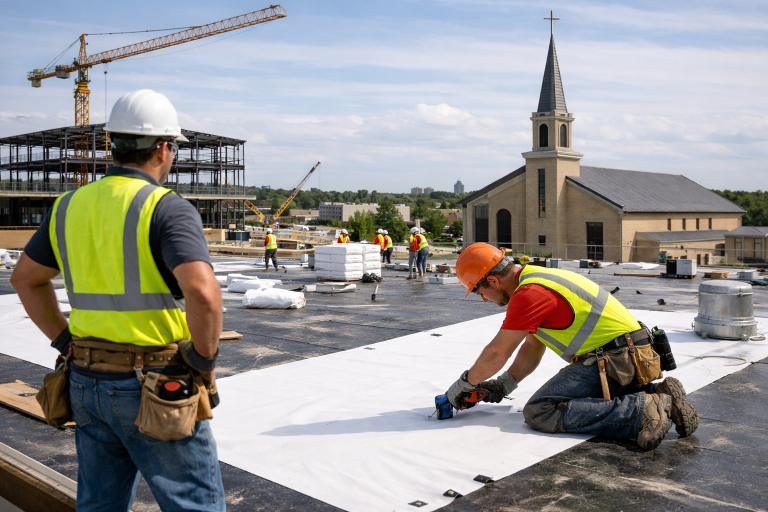
5. Commercial TPO Roofing
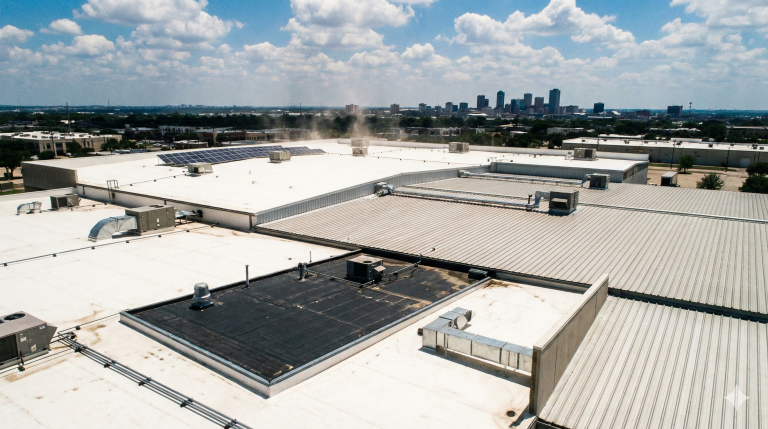
TPO dominates the commercial roofing market across North Texas because of its energy efficiency and cost effectiveness.
Pros
- Reflective, energy-efficient membrane
- Heat-welded seams reduce leak risk
- Cost-effective for large structures
Cons
- Prone to punctures without walk pads
- Quality varies between manufacturers
Best For: Retail centers, warehouses, office buildings, and multifamily construction roofing projects.
6. PVC Roofing for Industrial and Commercial Construction
PVC is a durable single-ply membrane engineered for challenging environments.
Pros
- High chemical and grease resistance
- Excellent heat performance
- Welded seams for durability
Cons
- More expensive than TPO
- Potential shrinkage if installed incorrectly
Best For: Restaurants, factories, industrial facilities, and buildings exposed to oils or chemicals.
7. Modified Bitumen Roofing in Construction Applications
A multi-layer commercial system with a long performance track record.
Pros
- High puncture resistance
- Durable waterproofing
- Good cold-weather flexibility
Cons
- Installation often requires open flame
- Heavier than single-ply systems
- Lower energy efficiency unless coated
Best For: Older buildings, multifamily housing, and retrofits requiring strong waterproofing.
8. Clay or Concrete Tile Roofing
Tile roofing provides exceptional longevity and a distinct architectural style.
Pros
- 50 to 100+ year lifespan
- Excellent fire resistance
- Performs well in hot climates
Cons
- Heavy material requiring reinforced framing
- Higher material and installation cost
- Fragile under foot traffic
Best For: Custom homes, Mediterranean and Spanish-style construction, and high-end residential projects.
9. Wood Shingles and Shakes
A premium aesthetic option with higher maintenance requirements.
Pros
- Natural, high-end appearance
- Good insulation properties
Cons
- Vulnerable to moisture, mold, and insects
- High maintenance
- Insurance restrictions in some Texas counties
Best For: Specific residential architectural styles requiring natural materials.
Slate Roofing: Luxury, Durability & Fire Resistance
Slate is considered a top-tier luxury roofing material due to longevity and appearance.
Pros
- 75 to 100+ year lifespan
- Fire-resistant
- Timeless natural stone look
Cons
- Extremely heavy
- Very expensive
- Requires specialized installers
Best For: Historic restorations, luxury construction, and premium residential projects.
Choosing the Right Roofing Material
Selecting the correct construction roofing material depends on:
- Roof slope
- Structural load capacity
- Budget and lifespan goals
- Exposure to Texas hail, UV, and wind
- Maintenance expectations
- Insurance requirements
- Whether the structure is residential, commercial, or industrial
In the Fort Worth area, laminated shingles, metal roofing, TPO, and modified bitumen remain the most widely used systems due to performance in local weather conditions.
For construction roofing projects requiring material recommendations, Texcore provides guidance based on engineering requirements, site conditions, and real-world Texas performance data.