Roof Hail Damage Versus Wind Damage: Key Differences 2026
Severe storms are becoming more frequent, leaving property owners in 2026 with big questions and even bigger bills. When damage appears, is it the result of roof hail damage or wind? Understanding this distinction is crucial for getting repairs done right and ensuring insurance claims are successful. In this guide, you will learn how hail and wind impact roofing materials, how to spot the signs, and what steps to take if your roof is affected. Avoid costly mistakes by learning what really sets these threats apart and discover how to protect your investment.
Understanding Roof Damage: Hail vs. Wind
Severe weather events are a growing concern, with property owners increasingly facing the costly consequences of roof hail damage and wind-related destruction. Knowing how these forces differ is crucial for protecting your investment, making informed repair decisions, and ensuring successful insurance claims.
The Science Behind Hail and Wind Damage
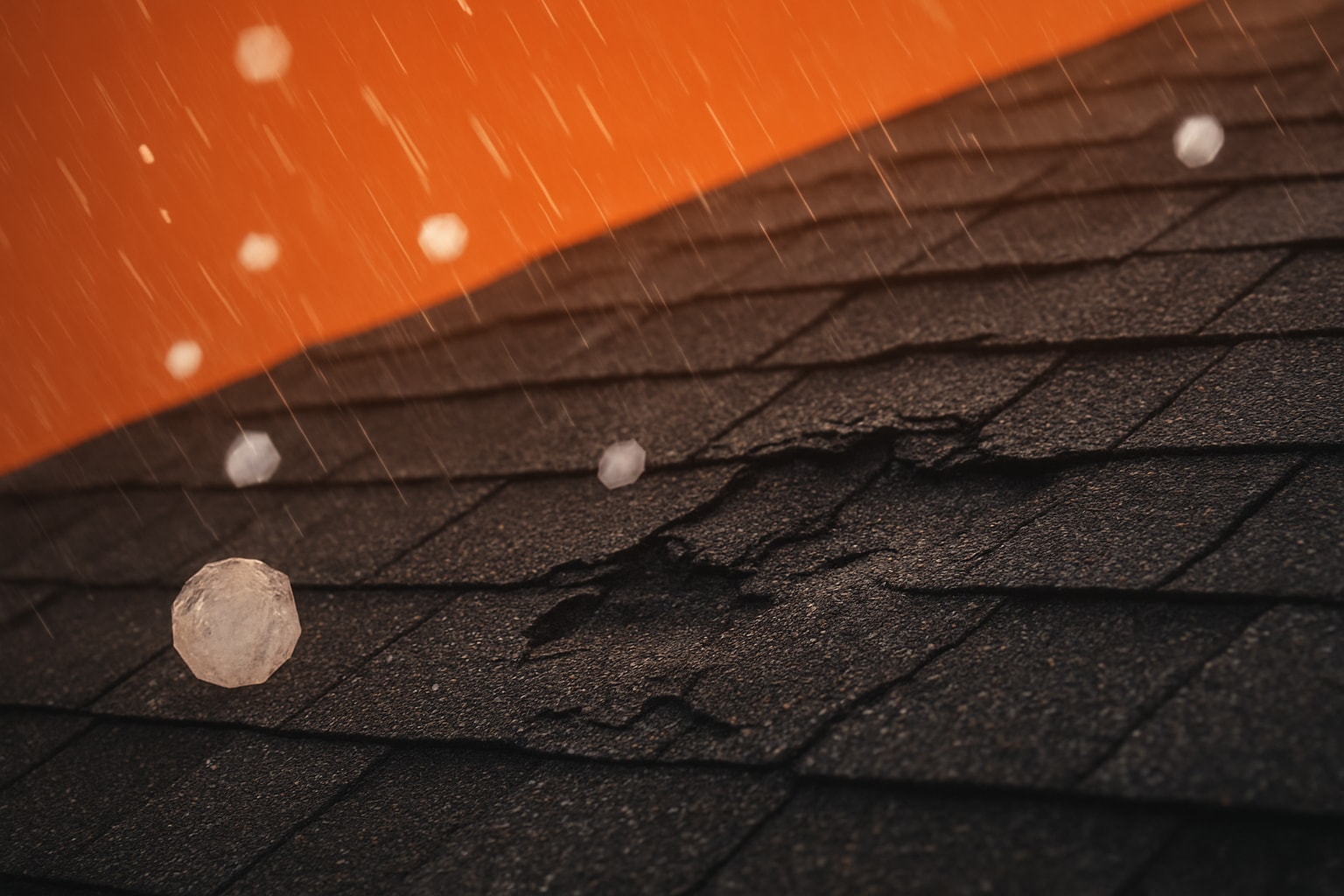
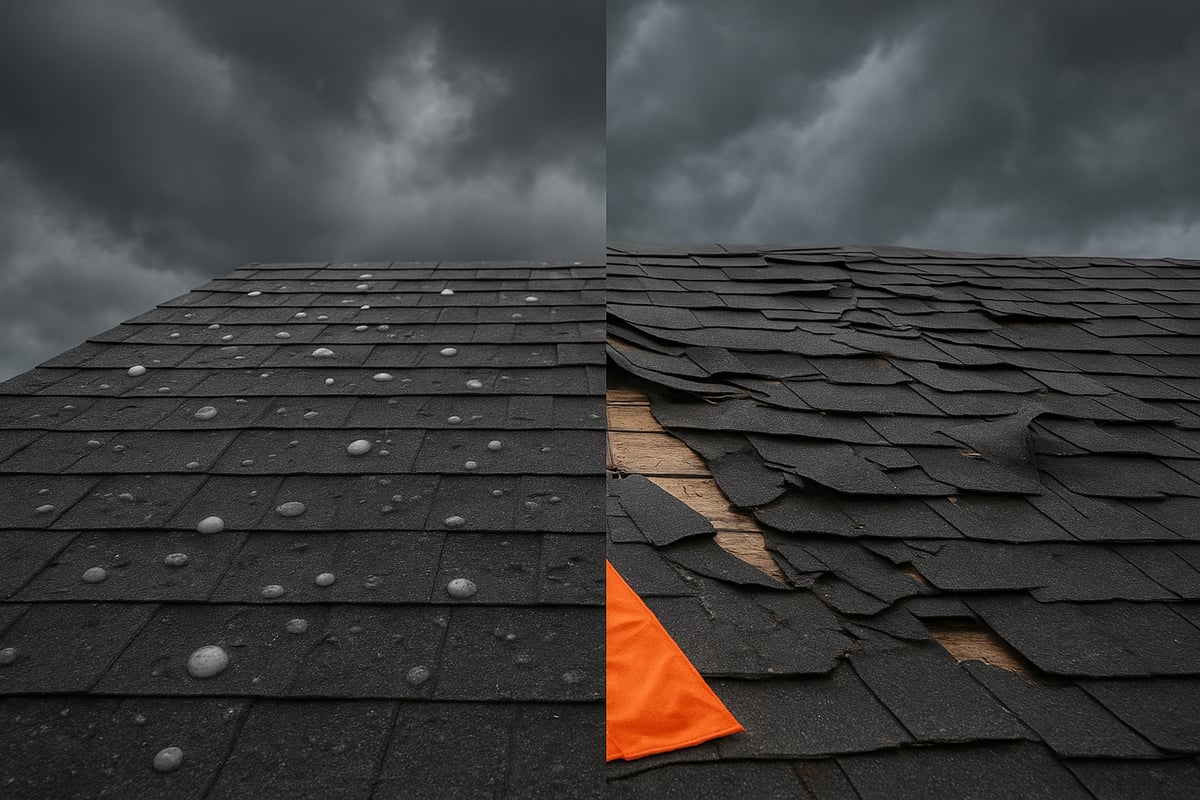
Both hailstorms and wind events can cause significant roof hail damage, but they do so in distinct ways. Hail forms when updrafts in thunderstorms carry raindrops upward, where they freeze into solid balls of ice. These hailstones then fall at high speeds, striking roofs with tremendous force. Wind damage, on the other hand, results from powerful gusts that lift, tear, or remove roofing materials.
The frequency and severity of roof hail damage have been rising, with annual property losses exceeding $1 billion in the United States. Hail is especially common in regions like the central plains, known as "Hail Alley," while wind damage is more prevalent in tornado and hurricane zones.
The impact of hail on a roof depends on the size, density, and velocity of the hailstones. For example, pea-sized hail may cause minor surface marks, while softball-sized hail can puncture or shatter roofing materials. Wind events are measured by speed and direction, with gusts over 120 mph capable of stripping shingles and exposing the underlayment.
Roofing material plays a major role in vulnerability. Older or poorly maintained roofs are more likely to suffer serious roof hail damage or be compromised by wind. Structural features, such as roof pitch and nearby barriers like trees or buildings, can help reduce the impact by deflecting or absorbing some of the force.
Understanding these scientific differences is the first step toward accurate identification. For more on how these types of damage manifest differently, see this Wind vs. Hail Damage Identification guide.
Immediate and Long-Term Risks
The aftermath of roof hail damage or wind damage can be immediate and obvious, or it may remain hidden for months. Visible signs include cracked shingles, missing tiles, or dented metal panels. However, many issues lurk beneath the surface, such as compromised underlayment, small leaks, or weakened roof decks.
Ignoring early signs of damage increases the risk of leaks, mold growth, and even structural failure. Homeowners may spend anywhere from $375 to $7,500 on hail repairs, while wind can result in total shingle loss and higher replacement costs.
Insurance complications often arise when the cause of damage is unclear or misidentified. Prompt and accurate detection of roof hail damage helps prevent disputes, supports successful claims, and ensures the long-term health of your roof.
Ultimately, acting quickly after a storm is essential. Early identification and professional inspection will protect your property from escalating risks and financial setbacks.
How to Identify Hail Damage on Your Roof
Recognizing roof hail damage quickly can make the difference between a straightforward repair and costly, extensive restoration. Many homeowners struggle to tell if their roof has suffered from hail or simply shows signs of age. Knowing what to look for by material type is the first step.
Signs of Hail Damage by Roofing Material
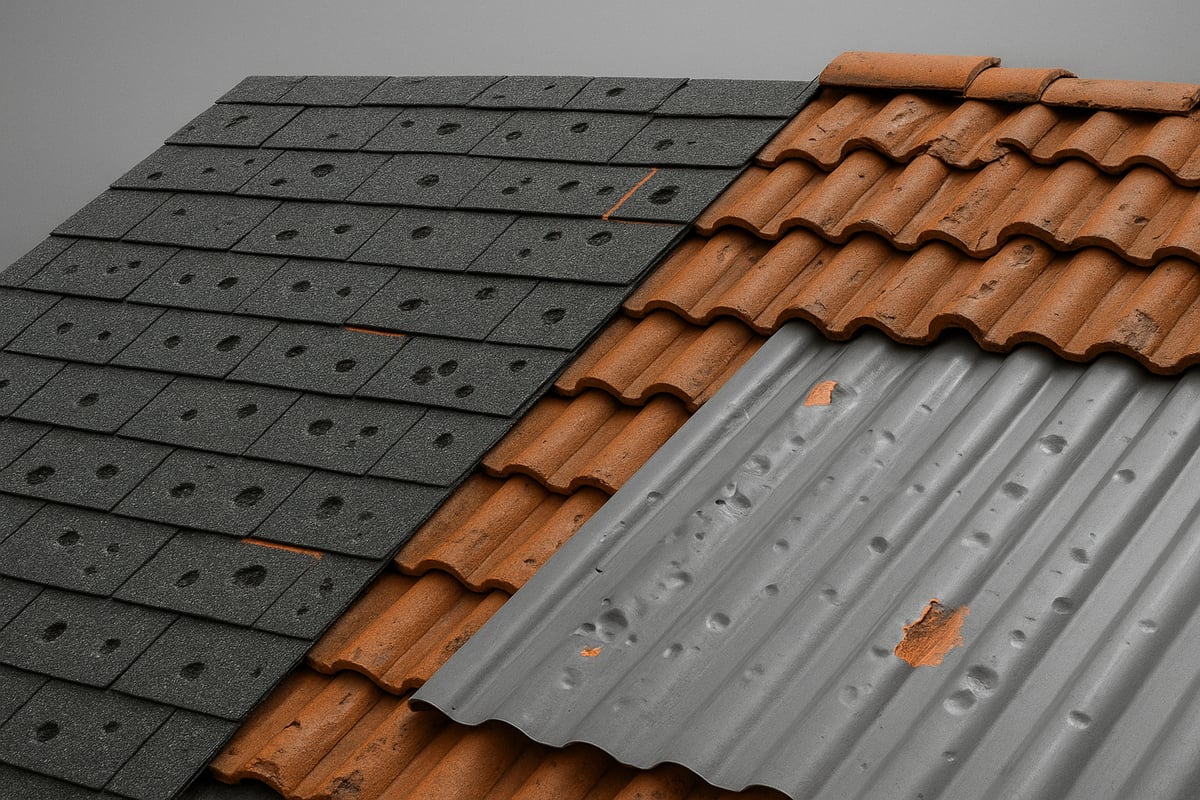
Hail impacts each roofing material in unique ways. For asphalt shingles, look for random black divots, areas where granules are missing, shiny exposed asphalt, and soft spots that feel bruised when pressed. These marks often appear scattered rather than in a pattern. Wood shingles or shakes will show sharp splits with a fresh orange or brown hue, impact dents, and minimal edge wear.
Clay and concrete tiles may have chips, cracks, or shattered sections exposing the underlayment beneath. Metal roofs typically exhibit dents, loss of protective coating, and, rarely, punctures if the hailstones are exceptionally large. The randomness of roof hail damage is a key identifier, while wind or other causes tend to show more uniformity. For a deeper dive into how hail affects various materials and the role of hailstone size, see Hail Damage Impact on Roofs.
Factors That Influence Hail Damage Severity
The severity of roof hail damage depends on several variables. Hailstone size is crucial: pea-sized hail may do little, but golf ball or softball-sized hail can cause significant destruction. The density and shape of hailstones, combined with the wind speed and direction during the storm, further influence the extent of the impact.
A roof’s age and overall condition also matter. Older, brittle materials are more susceptible to dents, cracks, and granule loss. Barriers such as nearby trees or adjacent buildings can shield parts of the roof, resulting in uneven damage. The resilience of the building material itself plays a major role—metal and impact-resistant shingles generally withstand hail better than traditional asphalt or wood. Each of these factors can determine whether roof hail damage is minor or severe, making close inspection essential after any significant storm.
Common Mistakes: Hail Damage vs. Wear and Tear
Many property owners mistakenly identify normal wear and tear as roof hail damage. Blistering, cracking, granule loss, flaking, and algae growth can all mimic the appearance of hail impacts. Manufacturing defects or improper installation may also create marks that look like hail strikes but are unrelated to severe weather.
Another common error is overlooking subtle signs or assuming all visible marks are from a recent storm. Only a professional inspection can reliably distinguish between actual roof hail damage and other issues. Roofing experts use their training to spot the difference, ensuring that insurance claims are based on accurate, documented evidence. If you are unsure, always consult a licensed roofer to avoid costly misdiagnosis and to protect your roof’s long-term health.
How to Identify Wind Damage on Your Roof
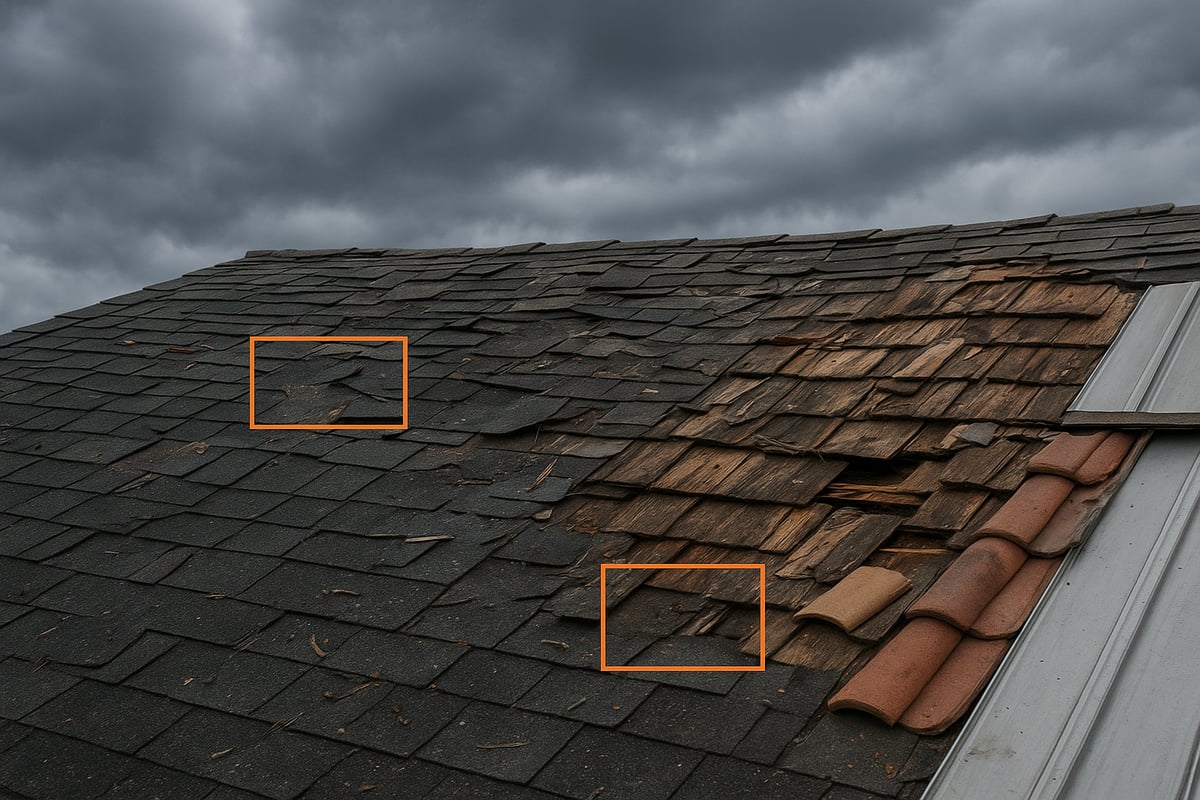
When severe storms strike, wind can wreak havoc on your roof, often leaving damage that is subtle yet costly. Accurately distinguishing wind-related issues from roof hail damage ensures you receive the right repairs and insurance support. Let’s break down the key signs of wind damage, how it differs from roof hail damage, and what to look for after a storm.
Signs of Wind Damage by Roofing Material
Different roofing materials respond uniquely to high winds. Identifying these signs early can prevent further complications.
| Roofing Material | Common Wind Damage Signs |
|---|---|
| Asphalt Shingles | Missing shingles, lifted edges, creased tabs |
| Wood Shakes/Shingles | Dislodged shakes, uneven rows, splintering |
| Clay/Concrete Tiles | Slipped tiles, broken corners |
| Metal Roofs | Loose panels, bent flashing, exposed fasteners |
Wind can strip asphalt shingles away, leaving bare spots that expose the underlayment. Wood shakes may become loose or splintered, making water intrusion likely. Clay or concrete tiles can shift or break, while metal roofs might show lifted panels or bent flashing. Watch for these changes right after a storm to differentiate from typical roof hail damage.
Patterns and Severity of Wind Damage
Wind damage often follows a clear directional path. You might notice missing or damaged roofing materials concentrated along one side, typically aligned with the storm’s wind flow. Unlike roof hail damage, which appears random, wind issues are more uniform.
Edges and ridges are especially vulnerable since wind pressure is highest there. High winds can also force rain beneath shingles, causing leaks that remain hidden until water stains appear inside. For more detailed information on how wind affects different roofing systems, see Wind Damage Effects on Roofs.
Understanding these patterns makes it easier to identify wind damage and prevent misdiagnosis as roof hail damage.
Hidden Dangers of Wind Damage
Not all wind damage is visible from the ground. Beneath the surface, high winds can loosen fasteners or compromise the roof deck and underlayment. Over time, this hidden damage escalates, leading to larger issues.
Fastener failure might start small, but it can spread, creating gaps for water intrusion. Moisture can then seep into insulation, causing mold and reducing energy efficiency. These risks are often overlooked, especially when compared to more obvious roof hail damage.
Prompt professional inspection is vital to uncover these less visible threats and maintain your roof’s long-term integrity.
Example Scenarios
Consider a 120 mph windstorm tearing through a neighborhood. Asphalt shingles are ripped away, leaving underlayment exposed. In tornado-prone regions, repeated wind events can cause cumulative damage, with each storm weakening the roof further.
In another scenario, clay tiles may be blown off in rows, while metal panels could lift along the roof’s edge. These patterns point to wind rather than roof hail damage, which tends to create random impact marks.
Recognizing these scenarios helps you act quickly, reducing repair costs and avoiding complications with insurance claims.
Comparing Hail and Wind Damage: Key Differences
Understanding the nuances between roof hail damage and wind damage is critical for effective repairs and insurance success. While both hazards can leave your home exposed, their effects, patterns, and long-term risks differ in ways every property owner should know.
Damage Patterns and Visual Clues
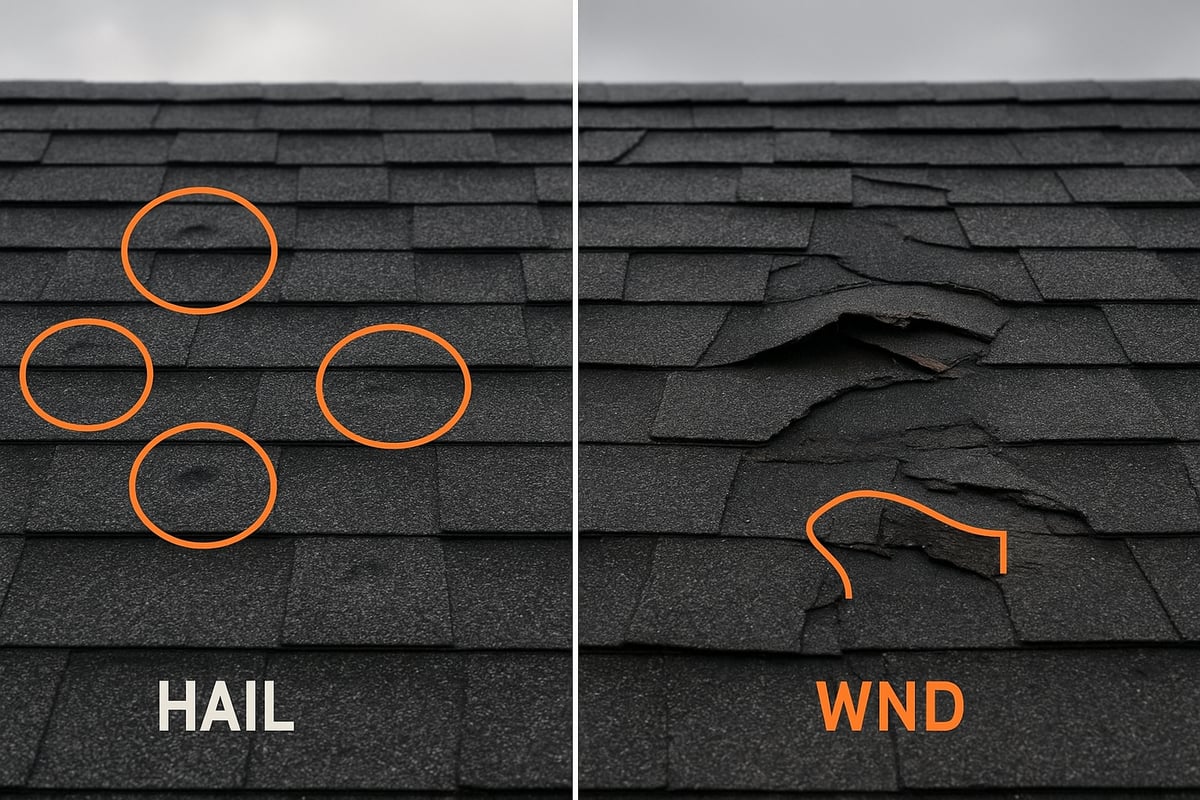
Roof hail damage and wind damage leave distinct marks that set them apart. Hail strikes roofs with random, circular impacts, often bruising shingles and causing granule loss. In contrast, wind damage typically follows a directional pattern, stripping or lifting shingles along the wind’s path.
The table below summarizes their visual differences:
| Feature | Roof Hail Damage | Wind Damage |
|---|---|---|
| Pattern | Random, scattered | Directional, aligned |
| Shingle Effect | Bruises, divots, granule loss | Missing, curled, or lifted |
| Tile Effect | Cracking, chipping | Displacement, broken corners |
| Metal Roofs | Dents, coating loss | Panels lifted or bent |
Spotting these clues early helps prevent further issues. For example, random black marks on shingles often signal roof hail damage, while uniform rows of missing shingles point to wind.
Material-Specific Differences
Different roofing materials react uniquely to each hazard. Asphalt shingles exposed to roof hail damage may show soft bruises, black spots, or granule loss with no clear pattern. Wind damage, however, causes these shingles to curl, crease, or disappear entirely, especially along edges and ridges.
Wood shakes may split sharply from hail, while wind can dislodge or splinter them. Clay and concrete tiles may crack under hail impacts, but wind usually slides or lifts whole tiles out of place. Metal roofs, though resistant, can exhibit dents from roof hail damage or loose panels after strong winds.
Knowing how your specific roof type responds to each threat helps guide both repairs and insurance documentation.
Impact on Roof Longevity and Safety
Roof hail damage and wind damage both threaten the lifespan and safety of your roof, but in different ways. Hail can cause immediate leaks or weaken shingle integrity, leading to slow deterioration over time. Even if leaks do not appear right away, bruised areas from hail may develop into water entry points months later.
Wind damage often results in progressive failure. Once shingles or tiles are lifted or dislodged, each subsequent storm increases the risk of leaks and underlying structural compromise. Ignoring early signs of wind or roof hail damage can void manufacturer warranties or lead to denied insurance claims.
Prompt identification and repair are essential to protect your investment and avoid escalating repair costs.
Insurance Implications
Insurance coverage for roof hail damage and wind damage is not always the same. Many policies have different deductibles and coverage terms for each type of peril. Insurers require precise documentation, including photos, inspection reports, and storm dates, to approve claims.
Disputes often arise over the cause of damage, making accurate identification vital. If roof hail damage is mistaken for wind, or vice versa, your claim may be delayed or denied. For step-by-step guidance on navigating these challenges, see the Roofing insurance claims in Fort Worth resource.
Staying organized and proactive during the claims process increases your chances of a favorable outcome.
Real-World Data and Statistics
The financial impact of roof hail damage and wind damage is substantial. Hail causes over $1 billion in property damage across the United States each year, with homeowners spending an average of $375 to $7,500 on repairs. Wind damage is a leading reason for insurance claims, especially in hurricane and tornado-prone regions.
Claim success rates often depend on timely inspections and thorough documentation. Both types of damage can result in significant out-of-pocket expenses if not addressed quickly. By understanding the key differences between roof hail damage and wind damage, you can better protect your property, finances, and peace of mind.
Professional Roof Inspections: Why Expertise Matters
Severe storms can leave your roof vulnerable to hidden threats. When it comes to roof hail damage, relying on a licensed professional for inspection is crucial for both safety and financial peace of mind.
A professional inspection provides an objective assessment that insurance companies trust. Licensed roofers know how to spot subtle signs of roof hail damage, from bruised shingles to granule loss. Their expertise ensures damage is accurately identified, which is essential for a successful claim and preventing future leaks or mold growth.
DIY inspections often miss critical issues. Homeowners may overlook hidden roof hail damage or confuse it with normal aging. This can lead to denied insurance claims or, worse, undetected structural problems. Safety is another concern, as climbing onto a storm-damaged roof can be hazardous without proper training or equipment.
Professional roofers use advanced technology to enhance their evaluations. Tools like drones allow for safe, comprehensive views of hard-to-reach areas. Moisture meters detect water intrusion invisible to the naked eye. Detailed photo documentation and inspection reports provide clear proof of roof hail damage, supporting insurance claims and repair decisions.
Inspection frequency matters. Experts recommend scheduling a thorough inspection after any major storm, especially if you suspect roof hail damage. In North Texas, Emergency roof repair Fort Worth services from Texcore Construction offer same-day emergency repairs, full reroofs, and insurance claim support. Their licensed, in-house crews deliver consistent quality, while detailed reports help you make informed choices. With over 2,500 roofs repaired or replaced since 2020, Texcore is recognized for rapid response, craftsmanship, and a five-year labor warranty. Free, no-obligation inspections are available for property owners affected by severe weather.
Steps to Take After Suspecting Roof Damage
Severe weather can leave your property vulnerable, making it crucial to act quickly if you suspect roof hail damage or wind-related issues. Taking immediate, informed steps helps protect your home, supports successful insurance claims, and prevents further complications.
Immediate Actions for Homeowners and Property Managers
Your safety comes first. Never climb onto the roof if it appears unstable or there are downed power lines nearby.
Begin with a visual inspection from the ground. Look for missing shingles, obvious impact marks, or debris that may signal roof hail damage. Use binoculars if needed.
Document any visible damage immediately. Take clear photos from several angles, noting the date, time, and details about the storm event. This documentation is essential for future roof hail damage insurance claims.
- Avoid walking on the roof if you see sagging or wet areas.
- Protect your property by covering active leaks with tarps.
- Move valuables away from affected areas inside your home.
When and How to Contact a Professional
If you suspect roof hail damage, contact a licensed roofing contractor as soon as possible. Signs that require urgent attention include visible leaks, missing roofing materials, or any sign of structural sagging.
Choose a roofer with strong local reviews and proper accreditation. Ask if they offer emergency inspections and if they are experienced in identifying both roof hail damage and wind-related issues.
Timely inspection is vital. Some insurance policies have strict deadlines for reporting damage, so acting quickly can make the difference between a successful claim and a denial.
Navigating the Insurance Claims Process
Notify your insurance company promptly after finding roof hail damage. Provide your initial documentation, including photos and notes about the storm.
Schedule a professional roof inspection to obtain a detailed report and repair estimate. Understanding your policy terms—such as deductibles, exclusions, and claim requirements—is crucial. For comprehensive guidance, refer to this Roof replacement insurance claim guide, which offers step-by-step advice for filing claims related to roof hail damage or wind events.
If the cause of damage is disputed, be prepared to advocate for a fair assessment. Professional documentation and timely action can strengthen your case.
Preventing Further Damage and Future Loss
After roof hail damage, take steps to minimize additional harm. Temporary repairs, like tarping or sealing leaks, help prevent water intrusion and mold growth.
Schedule full repairs or a roof replacement as recommended by your contractor. Consider upgrading to impact-resistant materials or wind-rated systems to reduce future risks.
Regular roof maintenance and professional inspections after storms are key to long-term protection. Preventive actions now can save you from costly repairs and insurance headaches later.
Example Timeline
- Day 1: Severe storm causes visible roof hail damage. Homeowner documents damage and covers leaks.
- Day 2–3: Professional inspection is scheduled and emergency repairs are performed.
- Day 3–7: Insurance claim is filed, adjuster visits the property, and full repairs or replacement are scheduled.
Staying organized and proactive throughout the process ensures your roof is restored quickly and your insurance claim proceeds smoothly.
Prevention and Roof Resilience: Protecting Against Hail and Wind
Protecting your home from roof hail damage and wind starts with proactive choices. By investing in the right materials and ongoing maintenance, you can minimize storm impacts and avoid costly repairs. Let us explore how you can build a resilient roof and safeguard your property for the long term.
Choosing the Right Materials for Your Region
Selecting roofing materials designed for your local climate is essential in preventing roof hail damage and wind-related issues. Impact-resistant shingles, such as Class 4 asphalt, offer superior protection against hailstones. Stone-coated metal roofing is another strong choice, with durability against both hail and high winds. Reinforced clay or concrete tiles can also provide enhanced resistance if properly installed.
Consider the following table when comparing roofing materials for resilience:
| Material | Hail Resistance | Wind Resistance | Lifespan |
|---|---|---|---|
| Impact-Resistant Shingle | Excellent | Good | 30+ years |
| Metal Roofing | Excellent | Excellent | 40–70 years |
| Reinforced Tile | Good | Good | 50+ years |
Building codes and material ratings vary by region. Always check for UL or FM ratings relevant to roof hail damage and wind. The shape and slope of your roof, along with installation quality, also influence resilience.
Maintenance and Preparation Tips
Routine maintenance is a key defense against roof hail damage. Schedule inspections at least twice a year and after every major storm. Clean gutters and downspouts to prevent water buildup, and keep the roof surface free of debris. Trim overhanging branches to reduce the risk of impact from falling limbs.
Take these additional steps to prepare for severe weather:
- Secure loose outdoor items that could become projectiles.
- Inspect and reinforce flashing and fasteners.
- Install storm shutters or protective barriers if you live in a high-risk area.
By following these practices, you increase your roof’s ability to withstand both hail and wind events.
Long-Term Financial Benefits
Investing in prevention measures for roof hail damage can pay off in multiple ways. Upgrading to impact-resistant materials may lower your insurance premiums and reduce the frequency of repairs or replacements. Metal roofs, for instance, can recoup up to 85.9% of their installation costs and even lower household cooling bills by as much as 25%.
For homeowners navigating insurance, understanding your policy and staying proactive is vital. You can find valuable roof repair insurance tips to help streamline the claims process and avoid costly mistakes. Preventive upgrades and regular maintenance can also boost your property value over time.
Community and Regional Resources
Staying informed and connected to local resources is another key aspect of preventing roof hail damage. Sign up for weather alerts to receive timely storm warnings. Review storm preparedness guides provided by your municipality or insurance company to ensure you are ready for severe events.
Professional organizations and trusted contractors can offer ongoing support, from inspections to emergency repairs. Engaging with these resources helps you stay ahead of risks and protect your investment year-round.
After reading about the key differences between hail and wind damage, you know just how important it is to get the cause right for your roof’s long-term health and your insurance claim’s success. If you suspect your property has been hit by a recent storm, don’t leave things to chance. Let a trusted professional give you a clear, honest assessment. You deserve to feel confident about your next steps—whether it’s repairs, a claim, or peace of mind that your roof is safe and sound.
Schedule Your Free Certified Roof Inspection