Design Roofing: Planning Systems That Perform
Design roofing requires far more than selecting materials from a catalog and scheduling installation. Every roof system begins with intentional design decisions that determine performance, longevity, and cost-effectiveness for decades. Whether planning a commercial flat roof for a warehouse or a residential asphalt shingle system for a family home, the design phase establishes drainage patterns, material compatibility, structural adequacy, and weatherproofing strategies that either prevent problems or create expensive failures. Property owners and facility managers who understand design roofing principles can make informed decisions, ask better questions, and partner with contractors who deliver systems built on sound engineering rather than shortcuts.
Foundation Principles of Design Roofing
Effective design roofing starts with understanding the fundamental forces every roof system must resist. Wind uplift, thermal expansion, water accumulation, and structural loads create constant stress that materials must handle without failure.
Load Calculations and Structural Integration
Every roof design begins with accurate load calculations that account for dead loads (the roof system itself), live loads (maintenance personnel and equipment), snow loads, and wind loads specific to the building's location and height. The Roofing Practices Manual provides comprehensive guidelines on how structural considerations integrate with material selection and attachment methods.
Critical load factors include:
- Dead load weights varying by material (asphalt shingles average 2-4 pounds per square foot, while modified bitumen systems can exceed 10 pounds per square foot)
- Live loads determined by roof accessibility and equipment placement
- Snow loads calculated from historical weather data and roof geometry
- Wind uplift forces that increase exponentially with building height and roof edge proximity
Structural integration extends beyond load-bearing capacity to include attachment methods, deck compatibility, and thermal movement accommodation. Metal roofing systems, for example, require specialized fastening patterns and expansion joint details that accommodate thermal movement exceeding several inches across large roof areas.

Drainage Engineering and Water Management
Design roofing demands meticulous drainage planning that eliminates standing water and directs precipitation away from vulnerable building components. The National Roofing Contractors Association emphasizes that design standards must address positive drainage as a fundamental requirement, not an optional consideration.
Proper drainage design specifies slope requirements (minimum 1/4 inch per foot for most flat roofs), gutter and downspout sizing, overflow scupper placement, and emergency drainage paths that activate when primary systems become blocked. For flat roof repair projects, drainage deficiencies often represent the root cause requiring correction beyond simple patching.
| Drainage Component | Design Specification | Common Failure Point |
|---|---|---|
| Primary slope | 1/4" per foot minimum | Inadequate structural deflection allowance |
| Gutter capacity | Based on roof area and rainfall intensity | Undersized for actual precipitation events |
| Overflow scuppers | Required every 20 feet of perimeter | Missing or positioned above water level |
| Interior drains | Minimum two per roof section | Insufficient quantity for roof area |
Material Selection and System Compatibility
Design roofing requires matching material properties to building use, climate conditions, and performance expectations. No single roofing material excels in every application, making informed selection essential.
Commercial Roofing System Options
Commercial buildings typically utilize low-slope or flat roofing systems engineered for large uninterrupted expanses. TPO (thermoplastic polyolefin), EPDM (ethylene propylene diene monomer), modified bitumen, and built-up roofing each offer distinct advantages depending on building characteristics.
TPO systems provide excellent heat reflectivity and weld-seam strength, making them ideal for buildings where cooling costs dominate energy consumption. EPDM systems deliver proven longevity and puncture resistance suitable for roofs with regular foot traffic. Modified bitumen combines traditional asphalt technology with modern polymer enhancements for superior flexibility in temperature extremes.
Engineering considerations outlined in metal roofing system design resources demonstrate how standing seam metal roofs provide unmatched durability for industrial applications, with properly designed systems lasting 40-60 years with minimal maintenance.
Residential Roofing Design Considerations
Residential design roofing typically focuses on steep-slope systems that shed water rapidly while complementing architectural aesthetics. Asphalt shingles dominate the residential market due to cost-effectiveness and ease of installation, but metal, tile, and slate options provide alternatives for specific performance requirements.
The design process for residential roofs must account for attic ventilation integration, ice dam prevention in cold climates, and wind resistance appropriate to local exposure. Comprehensive roofing design principles developed through architectural research emphasize that successful residential systems balance appearance, performance, and maintenance accessibility.
Proper ventilation design prevents moisture accumulation that deteriorates decking and insulation while reducing cooling loads during summer months. Ridge vents, soffit vents, and gable vents must be sized and positioned to create continuous airflow without creating wind-driven rain entry points.
Weatherproofing Details and Penetration Management
The most carefully selected roofing materials fail without proper detailing at terminations, penetrations, and transitions. Design roofing excellence appears in flashing details, edge treatments, and penetration seals that prevent water intrusion at vulnerable points.
Flashing Systems and Transitions
Every roof plane change, wall intersection, and penetration requires flashing designed specifically for that condition. Base flashings, counterflashings, step flashings, and through-wall flashings each serve distinct purposes within the weatherproofing system.
Chimney flashings illustrate the complexity of proper detail design. Effective chimney weatherproofing requires base flashing soldered or sealed to the roof membrane, step flashing integrated with roofing courses, counterflashing embedded in masonry joints, and cricket structures that divert water around the upstream chimney face. Projects in areas like Dallas roofing frequently encounter detail failures where simplified installation methods compromise long-term performance.
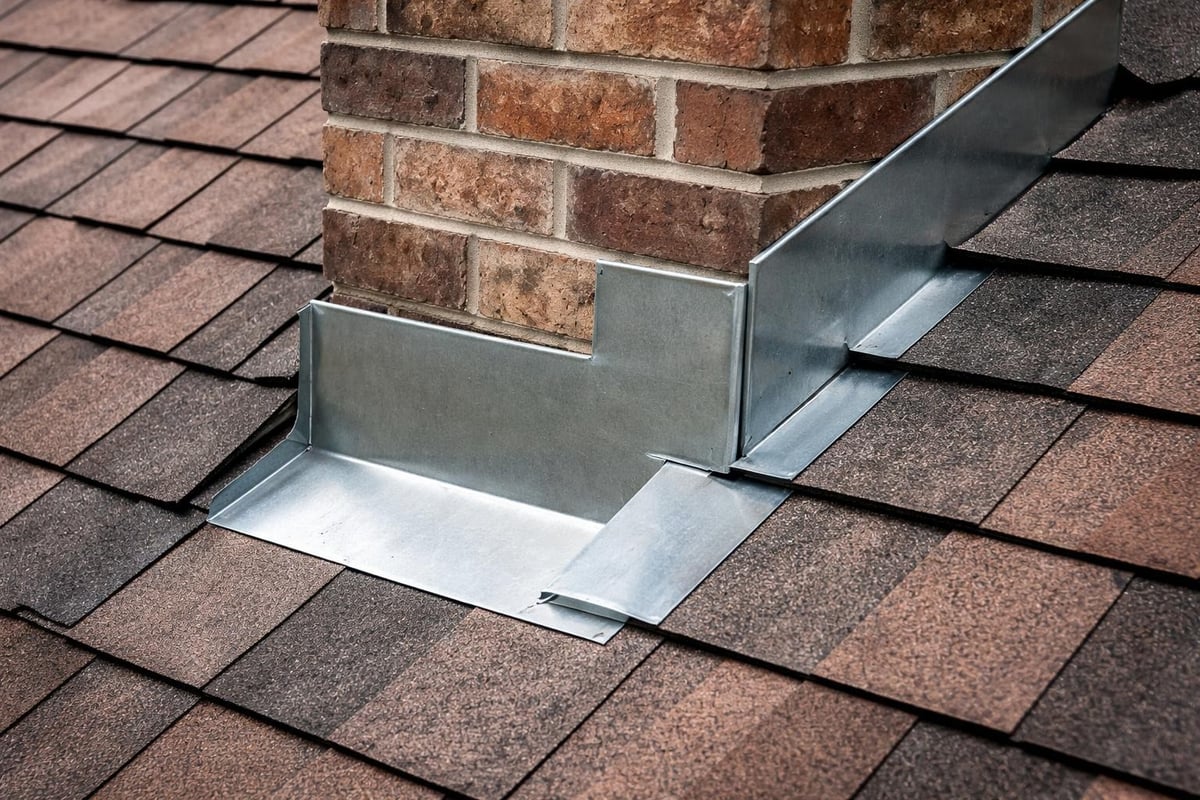
Pipe penetrations, mechanical equipment curbs, and rooftop access hatches each demand purpose-designed flashing assemblies that accommodate thermal movement, maintain membrane continuity, and provide accessible inspection points. The roof tiling design guide provides detailed specifications for integrating flashings with tile roofing systems where improper execution creates hidden water entry points.
Edge Details and Perimeter Protection
Roof edges experience the highest wind loads and the most severe weathering, making edge detail design critical for system performance. Drip edges, gravel stops, fascia caps, and parapet copings must resist uplift forces while directing water away from building facades.
Essential edge design components include:
- Drip edge extending beyond fascia boards to prevent water wicking back to roof decking
- Ice and water shield membranes protecting vulnerable eave areas
- Mechanical attachment frequencies doubled at roof perimeters compared to field areas
- Coping attachment systems designed for thermal movement without fastener failure
- Sealant joints sized appropriately for expected material expansion and contraction
Energy Efficiency and Environmental Performance
Modern design roofing increasingly incorporates energy efficiency and environmental sustainability as primary design criteria alongside weatherproofing and durability. Reflective roofing materials, insulation integration, and renewable energy accommodation represent standard considerations rather than premium upgrades.
Cool Roofing and Thermal Performance
Cool roofing technologies reduce building cooling loads by reflecting solar radiation rather than absorbing it as heat. Light-colored TPO and PVC membranes, reflective coatings, and metal roofing with specialized finishes can reflect 60-80% of solar energy, substantially reducing surface temperatures compared to traditional dark-colored materials.
The Center for Environmental Innovation in Roofing conducts research demonstrating that cool roofs reduce urban heat island effects while cutting air conditioning costs by 10-30% in warm climates. Design specifications should include Solar Reflectance Index (SRI) values and thermal emittance ratings that quantify cooling performance.
| Roofing Material | Solar Reflectance | Thermal Emittance | Surface Temp Reduction |
|---|---|---|---|
| White TPO | 0.80-0.85 | 0.90 | 50-70°F |
| Light-colored metal | 0.60-0.70 | 0.85 | 40-50°F |
| Cool asphalt shingles | 0.25-0.40 | 0.90 | 15-25°F |
| Traditional dark shingles | 0.05-0.15 | 0.90 | Baseline |
Insulation Integration and Condensation Control
Design roofing for energy efficiency requires coordinating roofing membranes with insulation layers and vapor control strategies. Inadequate insulation wastes energy, while improperly designed vapor barriers trap moisture that deteriorates materials and supports mold growth.
Effective insulation design specifies R-values appropriate to climate zone requirements, positions vapor retarders on the warm side of insulation assemblies, and ensures continuous insulation coverage without thermal bridging through structural members. Building codes increasingly mandate minimum R-values, but optimal design often exceeds code minimums to maximize energy savings and occupant comfort.
Installation Standards and Quality Assurance
Even perfectly designed roofing systems fail when installation deviates from specifications. Design roofing must include quality control protocols, inspection checkpoints, and installation standards that ensure field conditions match design intent.
Manufacturer Specifications and Warranty Compliance
Roofing material manufacturers provide detailed installation instructions that must be followed precisely to maintain warranty coverage. These specifications address substrate preparation, fastener types and spacing, seam overlap dimensions, and environmental conditions during installation.
Professional residential roofing services recognize that warranty protection depends on documented compliance with manufacturer requirements throughout installation. Photographs, daily reports, and third-party inspections create verification records that protect property owners if premature failures occur.
Documentation and As-Built Records
Comprehensive design roofing includes documentation protocols that record actual installed conditions, not just design intentions. As-built drawings showing drain locations, insulation depths, fastening patterns, and detail modifications provide invaluable information for future maintenance, repairs, and eventual replacement.
Critical documentation elements include:
- Photographs of deck conditions before membrane installation
- Records of insulation types, thicknesses, and R-values actually installed
- Fastener density verification at field areas, perimeters, and corners
- Membrane thickness measurements and seam testing results
- Warranty certificates with clearly defined coverage terms and exclusions
Common Design Failures and Prevention Strategies
Understanding frequent design roofing failures helps property owners and contractors avoid repeating expensive mistakes. Many failures stem from inadequate initial design rather than installation errors or material defects.
Inadequate Drainage and Ponding Water
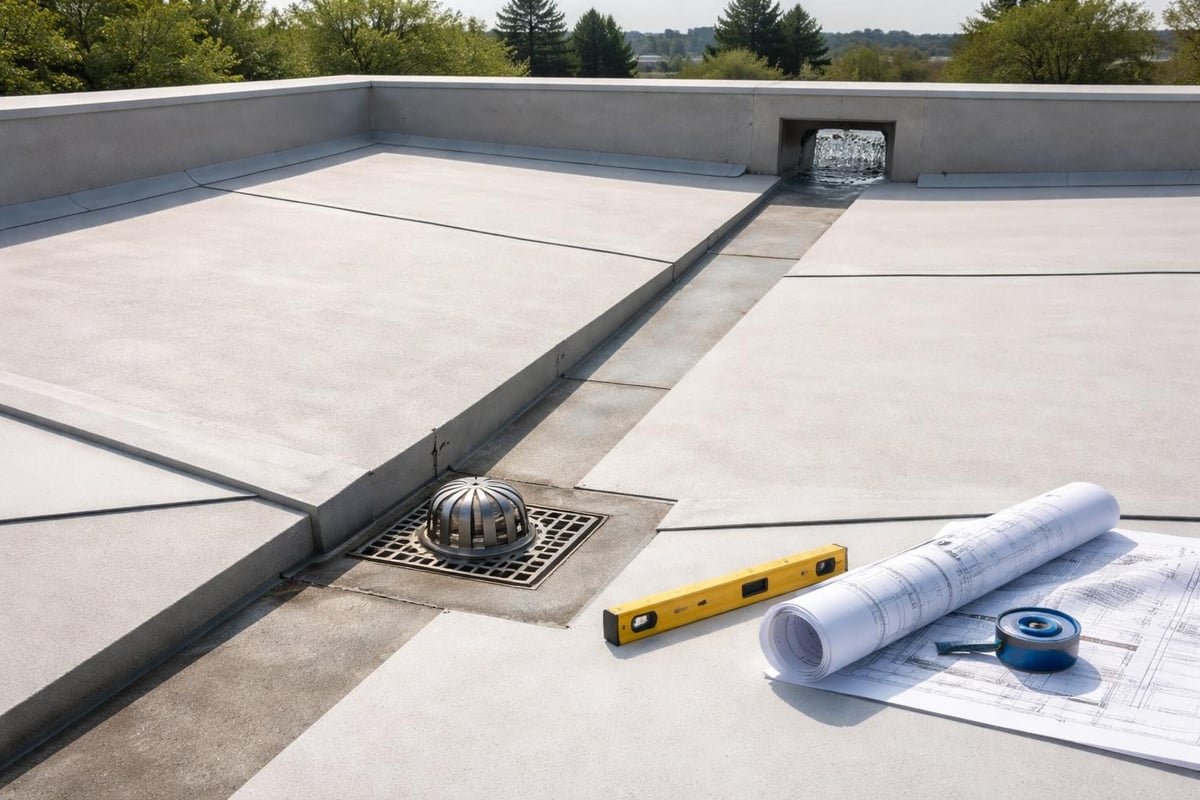
Ponding water (standing water remaining more than 48 hours after precipitation) represents the most common design failure in low-slope roofing. Inadequate slope, structural deflection under load, and compression of insulation materials all contribute to drainage problems that accelerate membrane deterioration.
Prevention requires specifying adequate slope during design, calculating expected structural deflection, and using non-compressible insulation products below drainage pathways. Tapered insulation systems create positive drainage toward drains and scuppers even when structural decks lack designed slope. Insights from Buildings.com roofing considerations emphasize proactive drainage design as essential for long-term performance.
Thermal Movement and Detail Failures
Roofing materials expand and contract with temperature changes, creating stress at restraint points. Metal roofing can experience several inches of movement across large roof expanses, while even membrane roofing systems undergo dimensional changes that stress seams and penetrations.
Design solutions include expansion joints at appropriate intervals, floating fastener systems that permit movement, and flexible sealants at material transitions. Fixed penetrations through membranes require specially designed boots or pitch pans that accommodate movement without tearing or separation.
Regional Considerations for Design Roofing
Climate conditions, weather patterns, and local building codes create regional variations in design roofing requirements. What performs excellently in dry southwestern climates may fail rapidly in humid coastal environments or freeze-thaw cycles of northern regions.
Wind Resistance in Severe Weather Zones
Fort Worth and North Texas experience severe thunderstorms, occasional tornadoes, and high straight-line winds that test roofing system attachment. Design specifications must address wind uplift resistance through appropriate fastener types, spacing, and edge reinforcement. Areas like Grapevine roofing encounter similar wind exposure requiring enhanced attachment specifications.
The Metal Building Manufacturers Association publishes design standards for metal roofing systems that specify uplift ratings and attachment methods for various wind zones. Proper design roofing in severe weather areas often requires professional wind load calculations specific to building height, roof geometry, and surrounding terrain.
Hail Impact Resistance
Hail damage represents a significant concern in Texas and throughout the Great Plains region. Design roofing for hail-prone areas should specify impact-resistant materials tested and rated according to UL 2218 standards. Class 4 impact resistance (the highest rating) indicates materials that withstand impacts from 2-inch diameter steel balls dropped from 20 feet without cracking or tearing.
Impact-resistant shingles, modified SBS polymer membranes, and certain metal roofing profiles provide superior hail resistance compared to standard materials. When severe weather strikes, having detailed roof inspection records from before storm events supports insurance claims by documenting new damage versus pre-existing conditions.
Professional Design Services and Contractor Selection
Design roofing expertise distinguishes professional contractors from commodity installers. Comprehensive design services include site evaluation, material recommendations based on building-specific conditions, detail development for complex situations, and ongoing support through installation and warranty periods.
Evaluating Design Capabilities
Property owners should evaluate contractors based on their design capabilities, not just installation pricing. Questions about drainage calculations, wind load analysis, detail drawings for penetrations, and quality control protocols reveal whether contractors approach projects systematically or rely on standard practices regardless of project-specific requirements.
Experienced contractors maintain relationships with material manufacturers' technical representatives who provide design assistance for complex projects. They understand when to engage structural engineers for load analysis and when standard details suffice. Projects spanning areas like McKinney roofing and Carrollton roofing benefit from contractors familiar with local code requirements and inspection standards.
In-House Crews Versus Subcontractor Networks
Design intent translates to installed performance only when installation crews understand specifications and possess skills to execute complex details. Contractors using in-house crews maintain better quality control and accountability compared to those coordinating multiple subcontractors with varying skill levels.
Direct employment relationships enable comprehensive training on manufacturer specifications, company quality standards, and project-specific requirements. Communication flows directly from designers through project managers to installation crews without interpretation gaps that create errors. When issues arise, in-house crews can immediately adapt under direct supervision rather than waiting for subcontractor coordination.
Design roofing transforms buildings from weather-vulnerable structures into protected environments that perform reliably for decades. Property owners who understand design principles can partner effectively with contractors, make informed material selections, and ensure installations match engineered specifications. Whether planning new construction, major reroofing projects, or addressing chronic performance problems, success begins with comprehensive design that accounts for structural loads, drainage requirements, weatherproofing details, and long-term durability. Texcore Construction delivers design roofing expertise backed by in-house licensed crews, detailed documentation, and transparent recommendations that help Fort Worth property owners make confident decisions about their roofing investments.