
How to Find Reliable Flat Roofers Near You
Searching for "flat roofers near me" reflects an urgent need, whether you're dealing with a leak, planning a replacement, or maintaining a commercial property. Flat roofs demand specialized knowledge that differs significantly from pitched residential roofing. The right contractor understands drainage systems, membrane types, and proper installation techniques that prevent costly failures. Finding qualified professionals in your area requires more than reading online reviews-it demands understanding what separates competent flat roofers from those who will leave you with recurring problems and voided warranties.
Understanding Flat Roof Systems and Why Expertise Matters
Flat roofing encompasses several distinct membrane systems, each requiring specific installation methods and maintenance protocols. TPO (thermoplastic polyolefin) roofs use heat-welded seams that create watertight bonds when installed correctly. EPDM (ethylene propylene diene monomer) rubber roofing relies on adhesive or mechanical fastening. Modified bitumen systems combine asphalt with reinforcing fabrics, applied through torch-down or cold-adhesive methods.
When searching for flat roofers near me, verify that candidates have extensive experience with your specific roof type. A contractor skilled in residential shingle work may lack the specialized knowledge flat systems demand.
Common Flat Roof Materials and Their Requirements
| Material | Typical Lifespan | Installation Method | Best Application |
|---|---|---|---|
| TPO | 15-20 years | Heat-welded seams | Commercial buildings |
| EPDM | 20-25 years | Adhesive/mechanical | Low-slope applications |
| Modified Bitumen | 12-20 years | Torch-down/cold applied | Durability-focused projects |
| PVC | 20-30 years | Heat-welded | Chemical exposure areas |
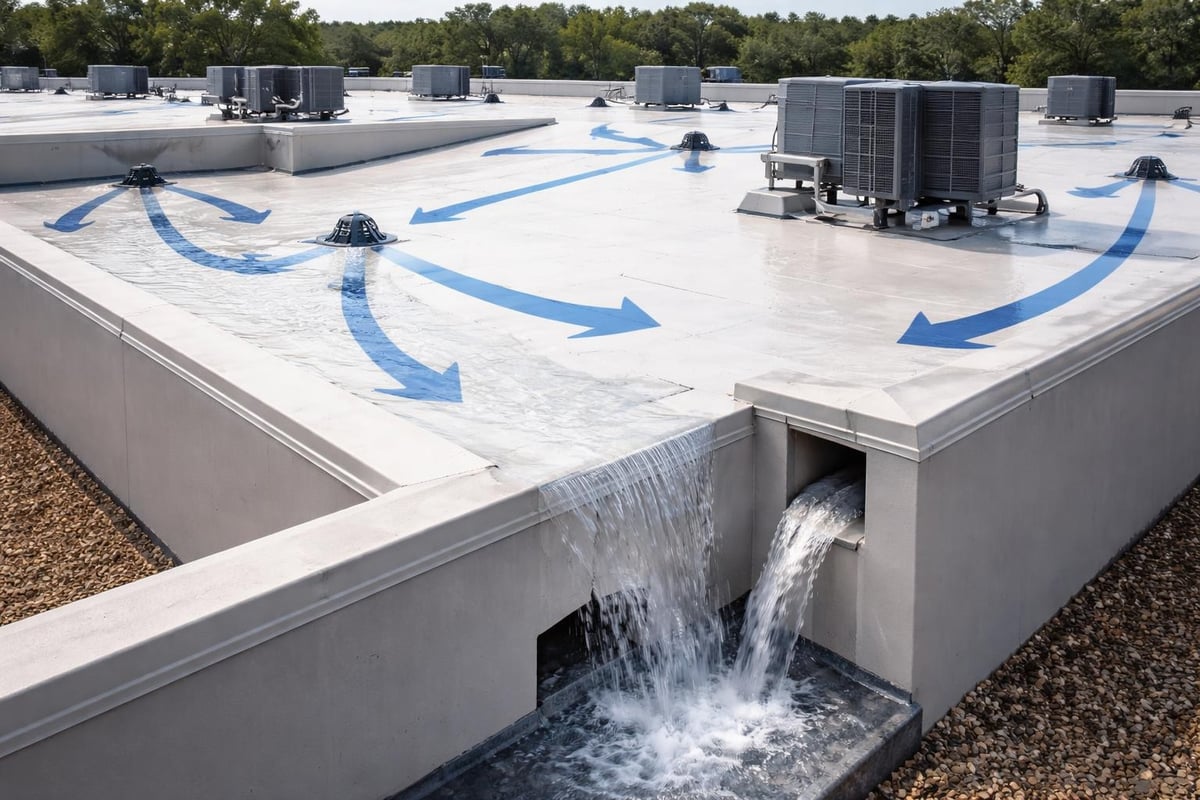
The minimum slope requirements for flat roofs directly impact drainage performance. Despite the name, truly flat roofs create ponding water issues. Proper installations incorporate slight slopes-typically one-quarter inch per foot-directing water toward drains and scuppers.
Essential Questions to Ask When Evaluating Flat Roofers
Before committing to any contractor, establish their qualifications through targeted questions that reveal their expertise level and business practices.
Licensing and Insurance Verification
Start by confirming proper licensing for your state and municipality. Commercial flat roofing often requires additional certifications beyond basic contractor licenses. Request proof of:
- General liability insurance covering property damage during work
- Workers compensation protecting you from liability if crew members are injured
- Manufacturer certifications showing authorized installer status for specific membrane systems
Valid insurance protects property owners from financial exposure if accidents occur. When evaluating flat roofers near me, ask for certificate of insurance documents you can verify directly with their carrier.
Experience With Your Roof Type
Generic roofing experience doesn't translate to flat roof competency. Ask specific questions about their background:
- How many flat roof projects have you completed in the past year?
- What percentage of your business focuses on flat roofing versus pitched roofs?
- Which membrane systems do you most commonly install?
- Can you provide references for similar projects in my area?
Specialists who primarily handle flat roofs understand nuances that occasional installers miss. They recognize signs of substrate damage, know how to properly flash penetrations, and understand thermal movement considerations.
Red Flags That Signal Unqualified Contractors
Certain warning signs indicate contractors you should avoid, regardless of how competitive their pricing appears.
Subcontractor reliance creates accountability gaps. Companies that farm out work to subcontractors can't guarantee crew training, quality standards, or consistent communication. Direct employees mean unified accountability from start to finish.
Pressure tactics demanding immediate deposits or same-day decisions suggest desperation rather than confidence. Professional contractors provide detailed written estimates and allow time for review.
Vague warranties without specific coverage terms leave you unprotected. Quality flat roofers offer clear labor warranties separate from manufacturer material guarantees-typically five to ten years on workmanship.
Warning Signs Checklist
- No physical business address or local presence
- Unwillingness to provide proof of insurance
- Estimates lacking detailed scope of work
- Requests for full payment upfront
- No manufacturer certifications for proposed materials
- Poor communication during initial contact
When searching for flat roofers near me, prioritize contractors with established local reputations over unknown entities offering suspiciously low prices.
The Importance of Proper Documentation and Detailed Estimates
Professional flat roofers provide comprehensive documentation that protects both parties and ensures project clarity. Detailed scopes of work specify membrane types, insulation R-values, fastening patterns, flashing details, and drainage improvements.
Quality estimates break down costs by category:
- Tear-off and disposal
- Substrate repairs
- Insulation installation
- Membrane and adhesives
- Flashing and penetrations
- Cleanup and site protection
This transparency lets you compare proposals accurately rather than choosing based solely on bottom-line numbers. Commercial Roofing Systems installations require particularly detailed documentation given their complexity and scale.
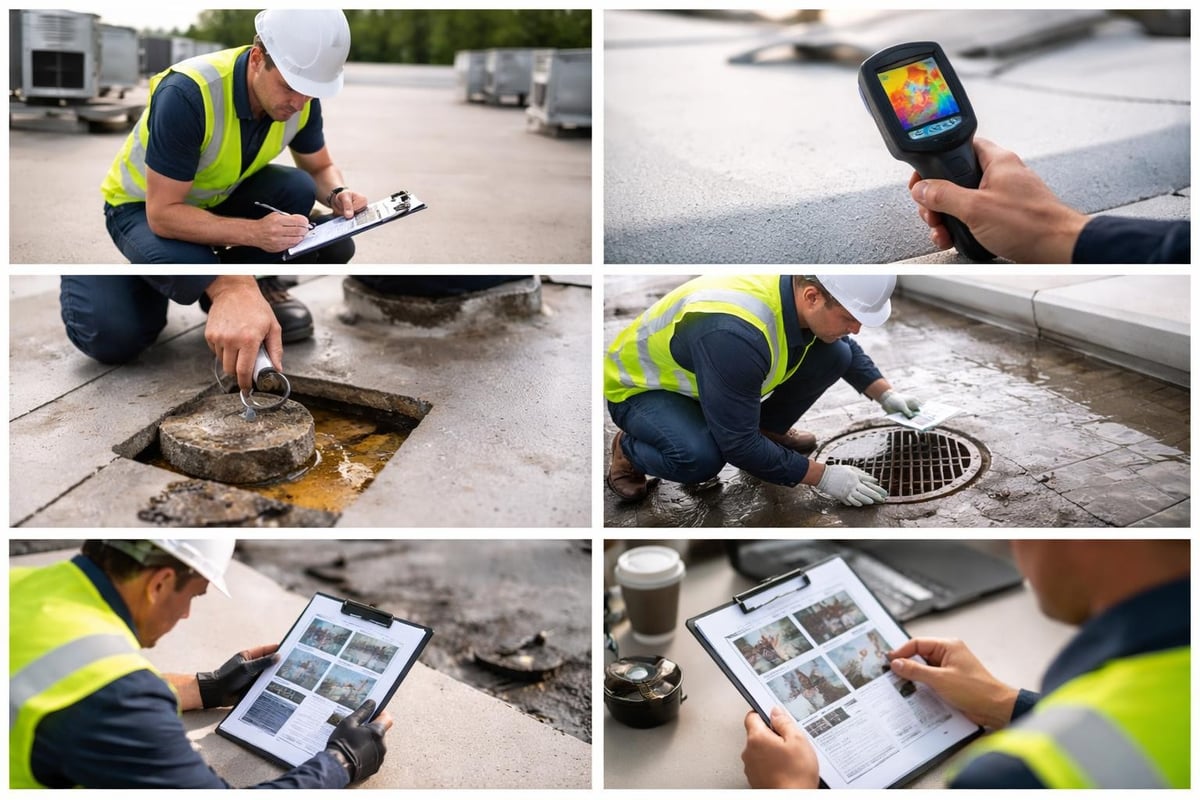
Photo Documentation Standards
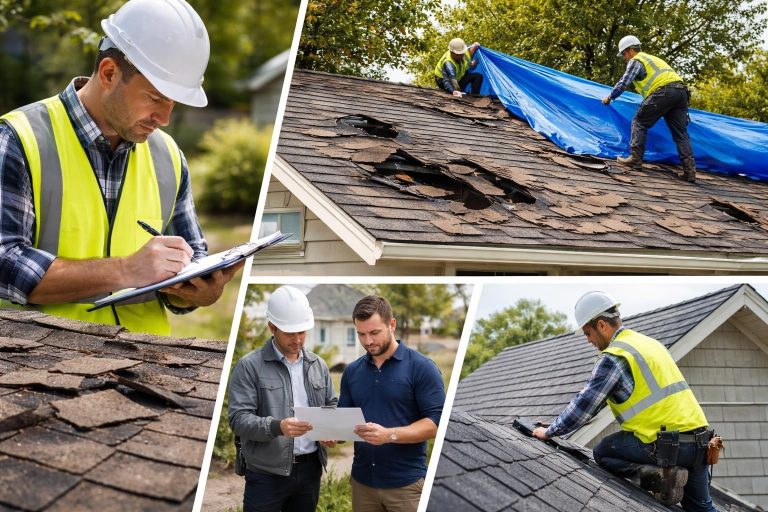
Reputable contractors document existing conditions before starting work. Pre-project photos protect you from liability claims and provide baseline references. Post-completion documentation shows quality assurance and supports warranty claims if issues arise later.
Request that contractors include:
- Overall roof condition images
- Close-ups of problem areas
- Substrate conditions after tear-off
- Installation progress at critical stages
- Completed work from multiple angles
This visual record proves invaluable for insurance claims, building sales, or future maintenance planning.
Evaluating Response Times and Emergency Capabilities
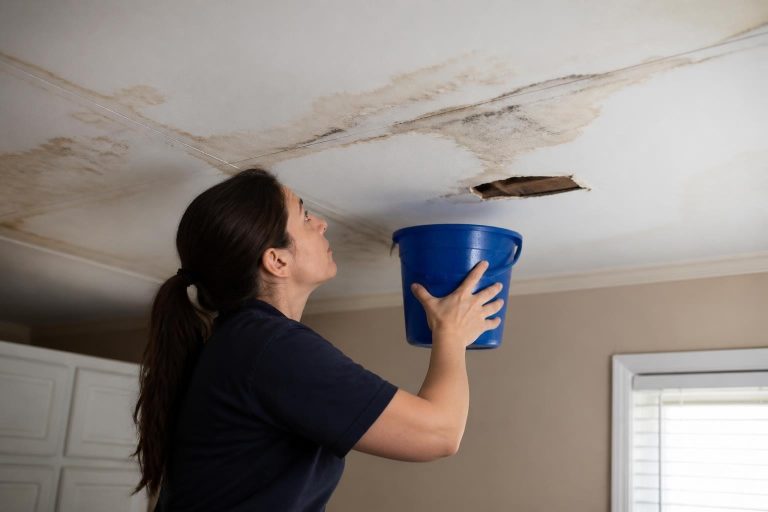
Flat roof leaks demand immediate attention. Water intrusion damages ceiling systems, inventory, equipment, and building structures within hours. When vetting flat roofers near me, assess their emergency response capabilities.
Ask about typical response times for urgent repairs. Professional commercial roofers often provide same-day service for active leaks. Weekend and after-hours availability matters for businesses that can't wait until Monday morning.
Emergency protocols should include:
- Direct emergency phone numbers
- Defined response time commitments
- Temporary protection methods (tarping, emergency patching)
- Clear communication about permanent repair scheduling
Companies maintaining in-house crews respond faster than those coordinating subcontractor availability. Emergency roof repair services exemplify the importance of rapid response when protecting property from ongoing water damage.
Maintenance Programs and Long-Term Partnerships
Reactive repairs cost significantly more than proactive maintenance. The best flat roofers offer preventive maintenance programs that extend roof lifespan and catch small problems before they become expensive emergencies.
Typical Maintenance Program Components
| Service | Frequency | Purpose |
|---|---|---|
| Visual inspections | Quarterly | Identify early deterioration |
| Drain cleaning | Bi-annual | Prevent water backup |
| Minor repairs | As needed | Address issues immediately |
| Detailed reports | After each visit | Track roof condition trends |
Regular flat roof maintenance prevents the most common failure modes: ponding water, membrane shrinkage, and flashing deterioration. Establishing ongoing relationships with contractors who know your specific roof creates continuity and accountability.
Many property managers search for flat roofers near me during crises, then forget about their roofs until the next emergency. Planned maintenance programs reverse this reactive cycle.
Understanding Warranties and What They Actually Cover
Flat roof warranties create confusion because they involve two separate protections: manufacturer material warranties and contractor labor warranties.
Manufacturer warranties cover material defects-membrane failures, adhesive problems, or manufacturing flaws. These typically run 10-30 years depending on the product tier. However, they often contain exclusions for improper installation, inadequate maintenance, or unauthorized repairs.
Labor warranties protect against installation defects. Quality contractors back their workmanship for five to ten years, covering seam failures, improper flashing, and other installation-related issues.
Critical Warranty Considerations
- Warranties require proper installation by certified contractors
- Most become void without regular maintenance documentation
- Coverage terms differ dramatically between manufacturers
- Transferability matters if you sell the property
- Some warranties require specific inspection intervals
When comparing flat roofers near me, don't assume all warranties offer equal protection. Read actual warranty documents, not marketing summaries, before making decisions.
Local Building Codes and Permit Requirements
Professional flat roofers navigate local building codes and secure necessary permits. Code compliance protects property values and ensures insurance coverage remains valid.
Fort Worth and surrounding municipalities enforce specific requirements for:
- Fire ratings appropriate to building occupancy
- Wind uplift resistance based on local wind zones
- Insulation R-values meeting energy codes
- Drainage system specifications
Permit fees represent small percentages of total project costs. Contractors who suggest skipping permits to "save money" expose you to serious risks. Code enforcement can require complete removal of unpermitted work, and insurance claims may be denied for non-compliant installations.
Florida’s commercial flat roof regulations illustrate how regional requirements vary. While Fort Worth codes differ, the principle remains: local expertise matters when ensuring compliant installations.
Insurance Claim Support and Storm Damage Documentation
Texas weather subjects flat roofs to hail, high winds, and severe storms. When damage occurs, having contractors experienced in insurance claim documentation proves invaluable.
Qualified contractors assist by:
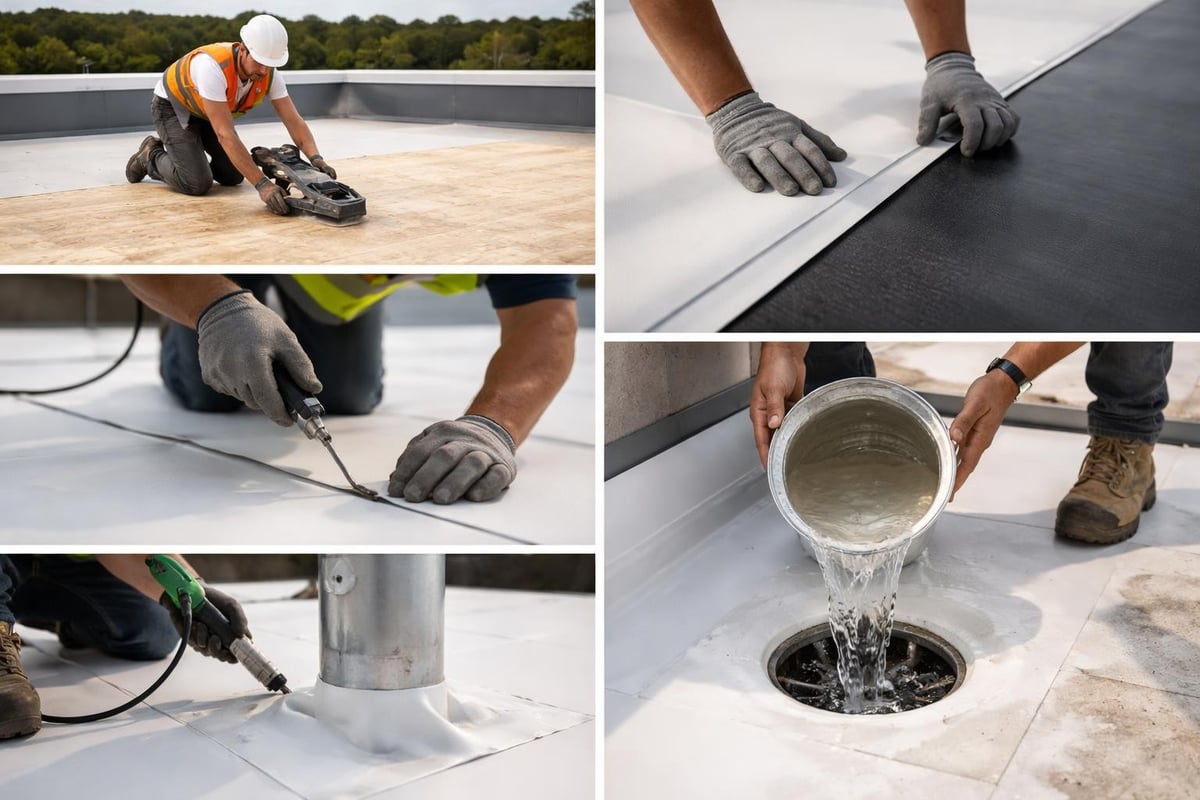
- Conducting thorough damage assessments
- Photographing all affected areas
- Preparing detailed repair estimates
- Meeting with insurance adjusters
- Advocating for complete repairs versus partial patches
Insurance companies sometimes authorize minimal repairs when full replacement better serves long-term interests. Experienced contractors present evidence supporting appropriate scopes of work, supporting your insurance claim with thorough documentation while maintaining professional relationships with adjusters.
Storm Damage Evaluation Process
- Initial emergency response stops active leaks and prevents further damage
- Comprehensive inspection documents all storm impacts
- Detailed estimate preparation includes all necessary repairs
- Adjuster meeting coordination ensures proper damage recognition
- Final scope agreement balances coverage with building needs
When searching for flat roofers near me after storm events, prioritize contractors with proven insurance claim track records.
In-House Crews Versus Subcontractor Models
The contractor-subcontractor distinction significantly impacts project quality, accountability, and communication. Companies using in-house crews maintain direct control over:
- Worker training and certification levels
- Quality standards and installation methods
- Project scheduling and timeline commitments
- Job site cleanliness and professionalism
- Direct communication channels
Subcontractor models introduce variables the hiring contractor can't fully control. Different crews may have varying skill levels, work habits, and attention to detail. When problems arise, determining responsibility becomes complicated.
Choosing the right roofing contractor often comes down to this fundamental business model difference. Ask directly whether proposed crews are employees or subcontractors.
Comparing Local Options and Making Final Decisions
After identifying qualified candidates, compare them systematically rather than focusing solely on price.
Contractor Comparison Matrix
| Criteria | Weight | Contractor A | Contractor B | Contractor C |
|---|---|---|---|---|
| Experience with roof type | High | Years/projects | Years/projects | Years/projects |
| Insurance/licensing | Critical | Verified/not | Verified/not | Verified/not |
| Emergency response | Medium | Hours | Hours | Hours |
| Labor warranty | High | Years | Years | Years |
| Price | Medium | $ amount | $ amount | $ amount |
This structured approach prevents emotional decisions based on personality or sales pressure. The lowest bid from unqualified contractors often becomes the most expensive choice when factoring in callbacks, repairs, and eventual replacement.
Fort Worth property owners benefit from concentrated roofing industry presence. Multiple qualified options exist when searching for flat roofers near me, making thorough evaluation both possible and necessary.
Specialized Considerations for Different Property Types
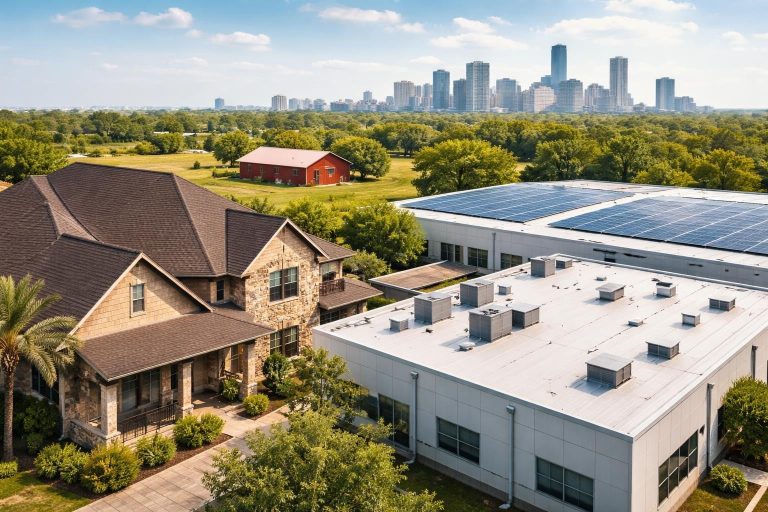
Residential, commercial, and industrial properties present unique flat roofing challenges.
Residential flat roofs often cover portions of modern homes-garages, additions, or architectural features. Homeowners need contractors who respect landscaping, coordinate with occupied spaces, and maintain clean job sites. Residential roofing services require different communication styles and scheduling flexibility than commercial work.
Commercial properties prioritize minimal business disruption. Retail centers, office buildings, and restaurants can't shut down for weeks during roof replacement. Contractors must coordinate after-hours work, phase projects strategically, and protect occupied spaces from dust and debris.
Industrial facilities involve specialized challenges: chemical exposure, extreme temperatures, heavy equipment loads, and complex penetrations. Warehouse and manufacturing roofs demand contractors experienced with these demanding environments.
When evaluating flat roofers near me, match contractor specialization to your property type.
The Role of Manufacturer Certifications and Training
Major roofing membrane manufacturers maintain contractor certification programs ensuring installers meet specific standards. GAF, Johns Manville, Firestone, and Carlisle each require training, testing, and quality commitments from certified contractors.
Benefits of manufacturer-certified installers include:
- Access to extended warranty programs
- Latest installation technique training
- Technical support for complex details
- Quality assurance inspections
- Materials procurement advantages
These certifications matter particularly for commercial projects where enhanced warranties provide valuable asset protection. Maintaining flat roofs properly often requires understanding manufacturer-specific requirements that certified contractors know intimately.
Non-certified contractors can still produce quality work, but certification demonstrates commitment to ongoing education and industry standards.
Project Timeline Expectations and Scheduling Realities
Realistic timeline expectations prevent frustration during flat roof projects. Multiple factors influence scheduling:
Weather dependency affects flat roofing more than pitched roof work. Membrane adhesives require specific temperature ranges. Rain stops progress immediately. Wind prevents safe material handling. Professional contractors build weather contingencies into schedules rather than making unrealistic promises.
Material procurement timelines vary by product availability. Custom colors, specialty membranes, or large quantities may require lead times from manufacturers. Emergency repairs use stock materials, but planned replacements benefit from optimal product selection.
Permit processing adds days or weeks depending on municipal workload and project complexity. Contractors familiar with local building departments navigate this process efficiently.
Typical Project Duration Ranges
- Small residential flat roof: 2-4 days
- Medium commercial roof: 1-2 weeks
- Large industrial facility: 3-6 weeks
- Emergency leak repair: Same-day to 48 hours
When vetting flat roofers near me, ask about current backlog and realistic start dates rather than accepting promises that sound too good to verify.
Finding qualified flat roofers requires evaluating expertise, business practices, and long-term support capabilities beyond initial pricing. The right contractor brings specialized knowledge, proper documentation, and accountability that protects your investment for decades. Texcore Construction delivers expert flat roofing solutions throughout Fort Worth with in-house crews, same-day emergency response, and comprehensive project management from inspection through completion. Whether addressing urgent leaks or planning complete roof replacement, our insured professionals provide the transparency and craftsmanship your property deserves.