Storm Roofing: Protecting Your Property and Your Investment
Storm damage represents one of the most significant threats to commercial and residential roofs across North Texas, where severe weather events bring high winds, hail, and heavy rainfall throughout the year. Storm roofing encompasses everything from immediate emergency response and damage assessment to comprehensive repair strategies and insurance claim navigation. Understanding how to protect your roof before severe weather strikes, respond effectively when damage occurs, and work with experienced contractors ensures your property remains protected and your investment secure. Property owners who recognize the warning signs and take proactive measures consistently achieve better outcomes, lower repair costs, and faster claim resolutions.
Understanding Storm Roofing and Its Critical Importance
Storm roofing differs fundamentally from routine maintenance or planned replacement projects. The immediate nature of weather-related damage demands rapid response, thorough documentation, and specialized knowledge of how different roofing systems respond to severe weather impacts.
What Defines Storm Roofing
The term storm roofing covers the full spectrum of services required when severe weather damages roofing systems. This includes emergency tarping to prevent further water intrusion, detailed damage assessment, structural evaluation, insurance documentation, repair planning, and complete restoration.
Key components of comprehensive storm roofing services include:
- Immediate emergency response within hours of the weather event
- Thorough damage assessment covering visible and hidden issues
- Complete photographic and written documentation for insurance purposes
- Coordination with insurance adjusters and claims specialists
- Strategic repair planning that addresses both immediate and underlying problems
- Quality restoration using materials that match or exceed original specifications
Wind events present unique challenges because damage often appears subtle initially but compromises roof integrity significantly. Understanding wind damage to shingles helps property owners recognize when professional assessment becomes necessary, even when obvious signs like missing shingles aren't immediately visible.

Why Storm Response Speed Matters
Every hour that passes after storm damage occurs increases the risk of secondary damage. Water infiltration spreads rapidly through roofing layers, insulation, and structural components, turning what might have been a straightforward repair into a major restoration project.
Property owners in the Fort Worth area face specific challenges during storm season. The region experiences severe thunderstorms with straight-line winds, rotating supercells producing large hail, and intense rainfall that can overwhelm compromised drainage systems. Contractors who understand these regional weather patterns and maintain 24/7 availability provide crucial protection when minutes count.
| Response Timeline | Primary Damage | Secondary Damage Risk | Typical Cost Impact |
|---|---|---|---|
| 0-24 hours | Storm impact only | Minimal | Baseline |
| 24-72 hours | Initial water intrusion | Moderate | 15-30% increase |
| 3-7 days | Spreading moisture damage | High | 40-60% increase |
| 1-2 weeks | Structural compromise | Severe | 100%+ increase |
Identifying Storm Damage Across Roofing Systems
Different roofing materials exhibit distinct failure patterns under storm conditions. Recognizing these patterns enables property owners to communicate effectively with contractors and insurance adjusters about the nature and extent of damage.
Residential Roofing Storm Damage
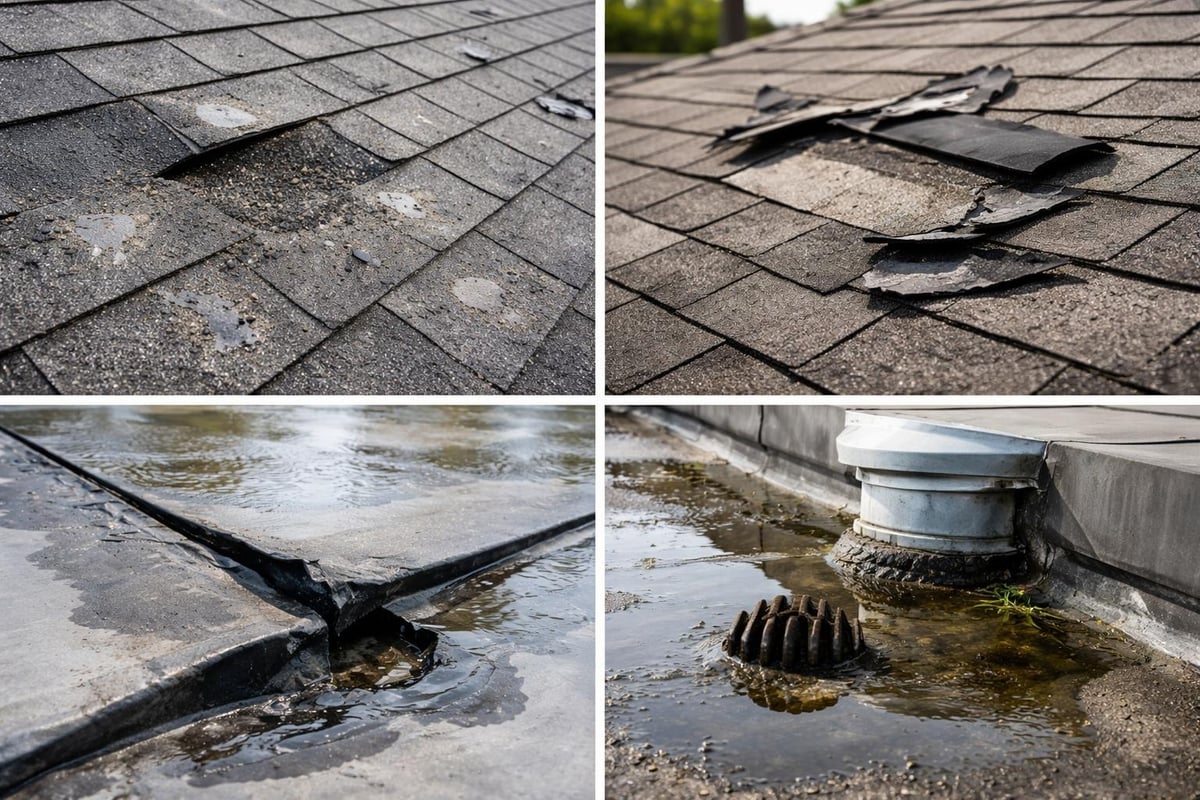
Asphalt shingle roofs dominate residential construction throughout Fort Worth, and these systems show specific damage signatures after severe weather. Hail impact creates bruising that compromises the protective granule layer, while wind uplift tears shingles at the nail line or removes them entirely.
Common residential storm damage indicators include:
- Missing or partially lifted shingles exposing underlayment
- Granule loss creating bare spots on shingle surfaces
- Cracked or fractured shingles from hail impact
- Damaged or displaced ridge caps along roof peaks
- Compromised flashing around chimneys, vents, and valleys
- Dented or damaged gutters, downspouts, and metal components
The relationship between storm damage and necessary repairs depends heavily on damage extent, roof age, and existing condition prior to the weather event. Some situations require isolated repairs while others necessitate full replacement to ensure long-term performance.
Commercial Roofing System Vulnerabilities
Commercial properties typically feature flat or low-slope roofing systems using TPO, EPDM, modified bitumen, or built-up roofing. These systems face different storm challenges than residential sloped roofs, with ponding water, membrane punctures, and seam failures representing primary concerns.
Storm impacts on commercial roofing systems:
- Membrane damage from hail impact creating punctures or bruising that compromises waterproofing
- Seam separation where wind uplift pulls bonded or mechanically fastened seams apart
- Fastener withdrawal allowing membrane sections to lift and tear in high winds
- Flashing failures at roof edges, penetrations, and transitions between roof areas
- Equipment damage to HVAC units, vent stacks, and rooftop mechanical systems
- Drainage blockages from debris accumulation preventing proper water evacuation
Understanding commercial roof coating applications provides context for how preventive measures can reduce storm vulnerability, though existing coatings may also sustain damage requiring evaluation and restoration.
Pre-Storm Preparation and Prevention
Proactive storm preparation significantly reduces damage severity and repair costs. Property owners who invest in prevention consistently experience better outcomes when severe weather strikes, and preparing your roof for storm season should become part of annual maintenance planning.
Professional Pre-Season Inspections
Scheduling comprehensive roof inspections before storm season identifies existing vulnerabilities that weather events will exploit. Experienced inspectors evaluate structural integrity, material condition, drainage performance, and detail work quality to develop targeted reinforcement recommendations.
A thorough pre-storm inspection addresses these critical areas:
- Shingle or membrane adhesion strength and potential lifting points
- Flashing integrity around all penetrations and transitions
- Fastener security and proper installation depth
- Drainage system capacity and flow patterns
- Tree proximity and overhanging branch risks
- Previous repair quality and remaining service life
Many property owners discover that addressing minor issues identified during inspection prevents major storm damage. A few hundred dollars spent on preventive repairs often saves thousands in emergency restoration costs and reduces insurance claim frequency.
Reinforcement Strategies for Storm Resistance
Modern storm roofing incorporates specific design and installation techniques that enhance weather resistance. Property owners planning roof replacement should prioritize storm-resistant roof design recommendations that address wind uplift, hail impact resistance, and water infiltration prevention.
| Reinforcement Method | Primary Benefit | Best Application | Typical Cost Premium |
|---|---|---|---|
| Enhanced fastener patterns | Wind uplift resistance | High-exposure areas | 5-10% |
| Impact-resistant shingles | Hail damage prevention | Hail-prone regions | 10-15% |
| Ice and water shield | Water intrusion protection | Valleys, eaves, penetrations | 8-12% |
| Sealed ridge systems | Wind-driven rain resistance | All sloped roofs | 3-5% |
Emergency Response and Damage Control
When storm damage occurs, immediate action prevents secondary problems and protects property value. Understanding proper emergency response procedures helps property owners make informed decisions during stressful situations.
Immediate Post-Storm Actions
The minutes and hours immediately following a severe weather event represent a critical window for damage control. Property owners should conduct a safe preliminary assessment from ground level, looking for obvious damage signs like missing materials, visible holes, or active leaks.
Critical first steps after storm damage:
- Document the date, time, and nature of the weather event
- Photograph visible damage from safe vantage points
- Place containers to catch active leaks and protect interior spaces
- Contact emergency roofing services for immediate temporary repairs
- Notify your insurance company to begin the claims process
- Avoid allowing unknown contractors access to your property
Professional emergency roof repair services provide rapid response to stabilize damage and prevent water intrusion while comprehensive assessment and repair planning proceed. Experienced contractors arrive equipped with tarping materials, temporary patching supplies, and documentation tools to address immediate threats.
Temporary Protection Measures
Emergency tarping represents the most common temporary protection method after significant storm damage. Professional installation requires specific techniques to ensure tarps remain secure during subsequent weather events while avoiding additional roof damage from improper fastening methods.
Quality emergency tarping includes these essential elements:
- Heavy-duty tarps sized appropriately for damage extent
- Proper anchoring that doesn't create new penetration points
- Overlap sufficient to prevent water infiltration at seams
- Weighted or secured edges that resist wind uplift
- Clear documentation of temporary measures for insurance purposes
Navigating the Insurance Claims Process
Storm roofing projects often involve insurance claims, and understanding the claims process helps property owners achieve fair settlements that fully cover necessary repairs. Best practices for roof storm damage repair emphasize thorough documentation and clear communication with all parties.
Documentation Requirements for Successful Claims
Insurance adjusters require specific documentation to evaluate storm damage claims accurately. Property owners who provide comprehensive evidence consistently receive faster claim processing and more complete coverage than those submitting minimal documentation.
Essential documentation components include:
- Dated photographs showing pre-storm roof condition when available
- Comprehensive post-storm damage photography from multiple angles
- Written descriptions of damage locations and characteristics
- Contractor inspection reports with detailed findings
- Material and labor cost estimates from licensed roofing professionals
- Correspondence timeline with insurance company representatives
Many property owners benefit from contractor assistance during the claims process, as experienced roofing companies understand adjuster requirements and can provide the technical documentation needed for claim approval. When dealing with insurance claims for roof damage, working with contractors who specialize in claim support often results in more favorable outcomes.
Working with Insurance Adjusters
The relationship between property owners, contractors, and insurance adjusters significantly impacts claim outcomes. Professional roofing companies meet with adjusters on-site to ensure all damage receives proper evaluation and that repair scopes accurately reflect necessary work.
Quality contractors provide these claims support services:
- On-site meetings with insurance adjusters to review damage
- Detailed scope of work documentation matching adjuster requirements
- Supplemental damage identification after initial adjuster visits
- Material specification verification ensuring approved replacements
- Timeline coordination between claim approval and repair scheduling
Selecting Qualified Storm Roofing Contractors
The contractor selection decision represents one of the most important choices property owners make during storm recovery. The period following major weather events brings an influx of contractors to affected areas, including both qualified professionals and opportunistic operators seeking quick profits through substandard work.
Warning Signs of Storm Chasing Contractors
Storm chasers follow severe weather patterns, offering immediate repairs at attractive prices but often delivering poor workmanship, using inferior materials, and disappearing before warranty issues emerge. Property owners should recognize common warning signs and avoid contractors exhibiting these characteristics.
Red flags indicating potential storm chasing operations:
- Out-of-state licensing with no established local presence
- Pressure tactics demanding immediate commitment or deposit
- Offers to waive insurance deductibles or inflate claim amounts
- Inability to provide local references from previous customers
- Lack of proper licensing, insurance, or bonding documentation
- Unwillingness to provide detailed written contracts and warranties
Success strategies during storm season emphasize that reputable contractors maintain consistent quality standards regardless of demand volume, refusing to compromise workmanship or customer service during busy periods.
Evaluating Contractor Qualifications
Qualified storm roofing contractors demonstrate specific capabilities that ensure successful project outcomes. Property owners should verify credentials, assess experience levels, and evaluate business practices before making selection decisions.
| Qualification Category | Key Verification Points | Why It Matters |
|---|---|---|
| Licensing | Current state and local licenses, specialty certifications | Legal compliance, technical competency |
| Insurance | General liability, workers compensation, completed operations | Financial protection, risk transfer |
| Experience | Years in business, storm-specific project history | Technical expertise, problem-solving capability |
| Warranty | Labor and material coverage terms, transferability | Long-term protection, quality confidence |
| Processes | In-house crews vs. subcontractors, quality control systems | Consistency, accountability, communication |

Repair vs. Replacement Decision Factors
Storm damage severity varies significantly, and determining whether repair or replacement represents the appropriate response requires careful analysis. Multiple factors influence this decision, including damage extent, roof age, insurance coverage, and long-term performance considerations.
When Repairs Provide Adequate Solutions
Isolated damage affecting limited roof areas often allows for effective repairs that restore full functionality without complete replacement. Modern repair techniques and materials enable contractors to address specific damage zones while preserving surrounding undamaged sections.
Repairs make sense when these conditions exist:
- Damage affects less than 25-30% of total roof area
- Surrounding materials remain in good condition with adequate remaining life
- Matching materials are available for seamless integration
- Structural components show no compromise requiring extensive work
- Insurance coverage supports repair approach based on damage assessment
Understanding wind damage roof repair options helps property owners evaluate whether targeted repairs will deliver the performance and longevity needed for their specific situation and budget parameters.
Indicators That Replacement Is Necessary
Certain damage patterns and roof conditions indicate that repair attempts will prove inadequate, leaving property owners vulnerable to recurring problems and ongoing maintenance costs. Full replacement provides the most cost-effective long-term solution when these factors apply.
Replacement becomes necessary when:
- Storm damage exceeds 30-40% of total roof area
- Existing roof age approaches or exceeds expected service life
- Previous repairs indicate systemic performance issues
- Matching materials are unavailable due to product discontinuation
- Insurance coverage supports replacement based on damage extent
- Building use changes require enhanced performance specifications
Long-Term Storm Roofing Performance
Quality storm roofing work extends beyond immediate damage repair to establish roofing systems capable of withstanding future weather events. Property owners should evaluate contractor recommendations based on long-term performance potential rather than focusing exclusively on initial project costs.
Material Selection for Storm Resistance
Modern roofing materials offer varying levels of storm resistance, with specific products engineered to withstand high winds, hail impact, and severe weather conditions. Making informed material selections during storm restoration projects enhances future protection and potentially reduces insurance premiums.
Impact-resistant shingles carry Class 4 ratings from Underwriters Laboratories, indicating superior performance during standardized hail impact testing. These products cost marginally more than standard shingles but provide significantly enhanced protection in hail-prone regions like North Texas.
Commercial properties benefit from mechanically fastened membrane systems that resist wind uplift better than fully adhered alternatives in high-exposure locations. The complexities of storm damage roofing require contractors to match material specifications to specific building characteristics, exposure conditions, and performance requirements.
Maintenance Programs for Storm Readiness
Ongoing maintenance programs keep roofing systems storm-ready by addressing minor issues before they become major vulnerabilities. Property owners who invest in regular professional maintenance experience fewer emergency repairs, longer roof service life, and lower total ownership costs.
Effective maintenance programs include:
- Semi-annual professional inspections before and after storm season
- Immediate attention to identified issues preventing damage escalation
- Drainage system cleaning ensuring proper water evacuation
- Flashing and penetration sealing maintaining waterproof integrity
- Documentation creating detailed condition history supporting insurance claims
Advanced Storm Roofing Considerations
Sophisticated property owners recognize that storm roofing encompasses more than reactive damage response. Strategic planning, advanced technologies, and comprehensive risk management create resilient roofing systems that minimize storm vulnerability while optimizing insurance coverage and property value.
Building Code Compliance and Upgrades
Storm damage repairs must comply with current building codes, which often exceed requirements in place when existing roofs were originally installed. Code updates typically reflect improved understanding of storm resistance and incorporate lessons learned from previous weather events.
Common code-related upgrades during storm restoration include:
- Enhanced fastener schedules for improved wind resistance
- Upgraded underlayment specifications for better waterproofing
- Improved flashing details at vulnerable transition points
- Updated drainage requirements preventing water accumulation
- Reinforced edge details resisting wind uplift forces
Property owners should understand that bringing damaged sections into code compliance during repairs often triggers requirements to upgrade adjacent areas, potentially expanding project scope beyond the immediate damage zone.
Technology Integration in Storm Response
Modern contractors leverage technology throughout the storm roofing process, from initial damage assessment through final quality verification. Drone photography, thermal imaging, moisture mapping, and digital documentation systems enhance accuracy while reducing assessment time and improving insurance claim support.
| Technology | Application | Primary Benefit |
|---|---|---|
| Drone imaging | Damage assessment, progress documentation | Safety, thoroughness, visual evidence |
| Thermal cameras | Hidden moisture detection, insulation evaluation | Early problem identification, comprehensive scope |
| Moisture meters | Saturation mapping, drying verification | Structural protection, mold prevention |
| Project management software | Scheduling, communication, documentation | Transparency, accountability, efficiency |
Storm roofing demands immediate response, technical expertise, and comprehensive understanding of damage assessment, insurance processes, and restoration best practices. Property owners who recognize damage quickly, document thoroughly, and select qualified contractors protect their investments while minimizing disruption and cost. Whether you're facing active storm damage or preparing for severe weather season, Texcore Construction delivers the rapid response, detailed documentation, and quality craftsmanship Fort Worth property owners need to weather any storm with confidence.