Hail Roof Repair: Assessment, Process, and Insurance
Hailstorms can transform a perfectly functional roof into a liability within minutes. For Fort Worth property owners, understanding the complete hail roof repair process is essential for protecting your investment, managing insurance claims effectively, and making informed decisions about repair versus replacement. Whether you're dealing with fresh damage from last week's storm or discovering older impacts during routine maintenance, knowing how to assess damage, work with contractors, and navigate the insurance landscape ensures you get the quality restoration your property deserves without unnecessary delays or expenses.
Understanding Hail Damage to Roofing Systems
Hail damage manifests differently depending on roofing material, hail size, wind conditions, and the age of your roof. Asphalt shingles typically show circular bruising, granule loss in impact zones, and exposed fiberglass mat in severe cases. These impacts compromise the shingle's waterproofing ability and accelerate aging.
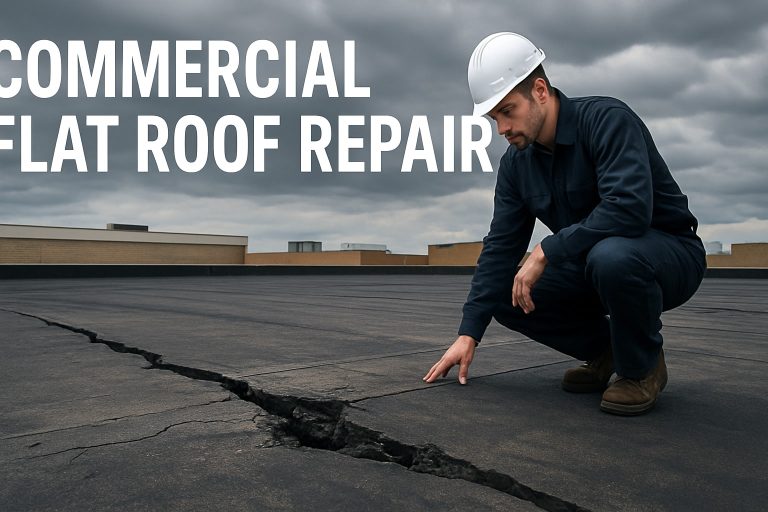
Metal roofing systems display denting that varies with panel thickness and coating type. While cosmetic dents may not immediately threaten performance, severe impacts can crack protective coatings or compromise panel integrity. TPO and EPDM membranes on commercial flat roofs may show punctures, surface crazing, or weakened seams after significant hail events.
Immediate vs. Long-Term Damage Indicators
Not all hail damage reveals itself immediately. Fresh impacts are often easier to identify through visible bruising and displaced granules. However, old hail damage can remain hidden for months or years, only becoming apparent when leaks develop or routine inspections reveal accelerated deterioration.
Property owners should look for these warning signs:
- Granules collecting in gutters and downspouts
- Circular or oval dents on metal flashing, vents, and roof penetrations
- Soft spots or bruising on asphalt shingles
- Cracked or missing pieces of roofing material
- Water stains on interior ceilings following storms
The timing of your inspection matters significantly. Hail reports provide critical data about storm intensity, hail size distribution, and wind patterns that help contractors assess likely damage patterns even before climbing onto your roof.
The Professional Hail Roof Repair Assessment Process
Professional hail damage assessments follow systematic protocols that insurance companies recognize and respect. Understanding this process helps property owners know what to expect and ensures nothing gets overlooked during inspection.
Initial Visual Documentation
Licensed contractors begin with ground-level observations, photographing visible damage to gutters, siding, vents, and other exposed components. This establishes the storm's impact pattern before anyone sets foot on the roof. Comprehensive documentation at this stage strengthens insurance claims and provides baseline evidence.
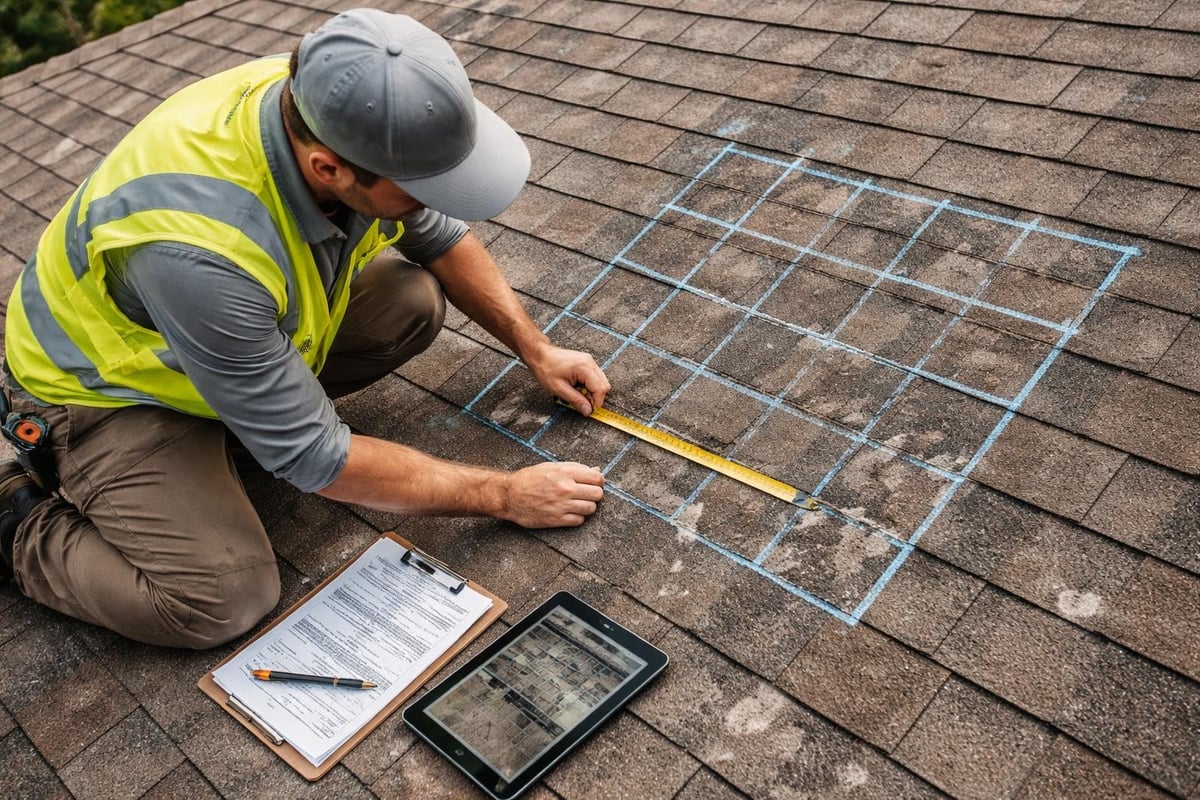
Roof-level inspection involves grid-pattern searches across all roof planes, with particular attention to south and west-facing slopes that typically receive the most severe impacts in Fort Worth's storm patterns. Performing thorough hail damage inspections requires measuring impact density per 10×10 foot section, documenting granule loss percentages, and identifying functional versus cosmetic damage.
Measurement and Classification Standards
Insurance adjusters and contractors use standardized measurement protocols when evaluating hail roof repair needs:
| Damage Level | Characteristics | Typical Action |
|---|---|---|
| Minor | <5% impact density, superficial granule loss | Monitor and document |
| Moderate | 5-8% impact density, visible bruising, limited exposure | Targeted repairs or replacement consideration |
| Severe | >8% impact density, mat exposure, functional compromise | Full replacement recommended |
Professional contractors provide detailed reports including damage location maps, close-up photography, and repair scope recommendations. This documentation becomes crucial when working with insurance companies, particularly for complex claims or disputed coverage.
Hail Roof Repair vs. Replacement Decisions
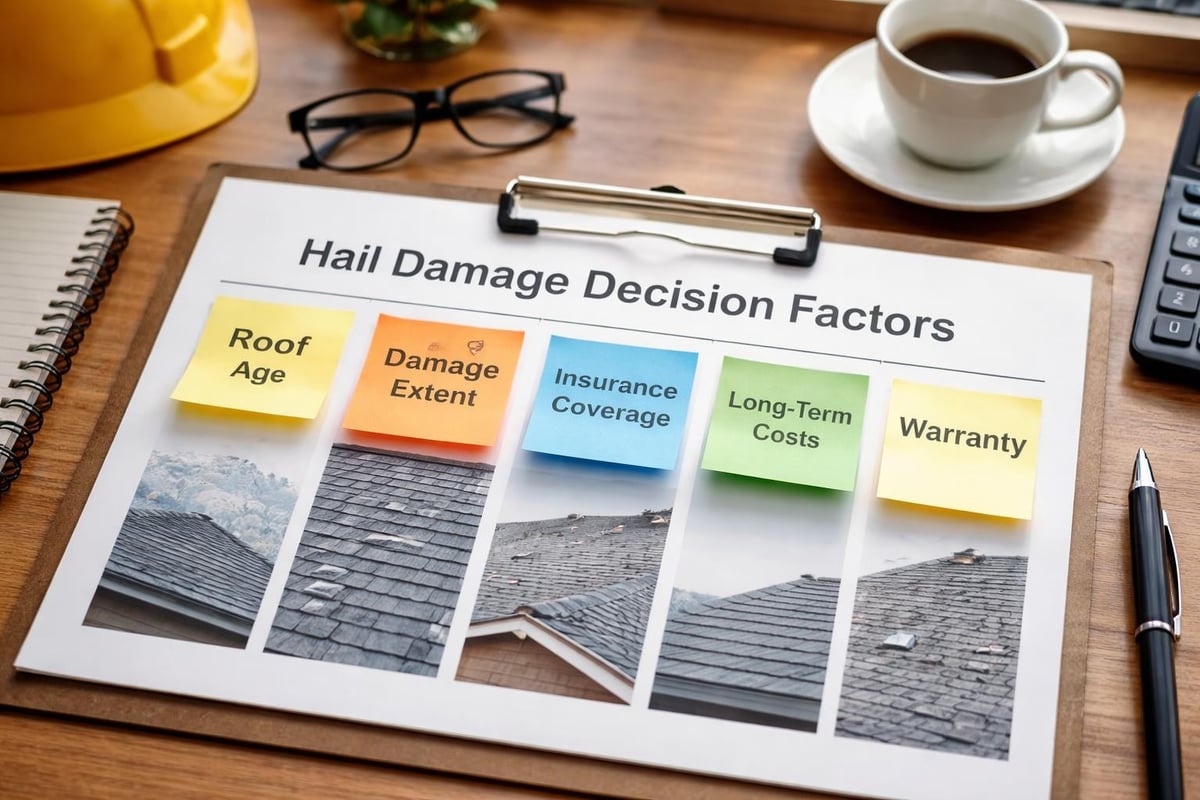
Not every hail-damaged roof requires complete replacement. The repair versus replacement decision depends on multiple factors that property owners should understand before committing to a specific course of action.
Concentrated damage in limited areas often qualifies for targeted repairs. If hail impacts primarily affected one slope or section, skilled contractors can replace affected shingles, repair flashing, and restore weatherproofing without disturbing the entire roof system. This approach works best on newer roofs with minimal pre-existing wear.
Widespread damage across multiple roof planes typically necessitates full replacement. When impact density exceeds insurance thresholds or when the roof already showed age-related deterioration, attempting repairs often proves costlier long-term than complete replacement. Additionally, many manufacturers void warranties if partial repairs mix new materials with aged components.
Age and Pre-Existing Condition Considerations
A ten-year-old roof with hail damage presents different considerations than a twenty-year-old system. Insurance companies factor in depreciation when calculating claim payouts, but they also recognize that severely damaged aging roofs pose higher failure risks if only patched.
Fort Worth property owners should consider:
- Remaining useful life before hail impact
- Warranty status and transferability
- Energy efficiency improvements available with new systems
- Long-term maintenance costs of repair versus replacement
The professional roof repair services you choose should provide honest assessments that prioritize your building's long-term protection over maximizing project size.
Working Through the Insurance Claims Process
Insurance claims for hail roof repair involve specific procedures and timelines that significantly impact outcomes. Understanding these processes helps property owners maximize coverage while avoiding common pitfalls that lead to claim denials or reduced payouts.
Notification and Documentation Requirements
Most policies require storm damage notification within specific timeframes, typically 60 to 90 days from the date of loss. However, proving the exact storm date for hail damage can be challenging, especially when impacts aren't immediately visible. This is where hail reports become invaluable documentation tools that establish storm occurrence, intensity, and geographic coverage.
Before the adjuster arrives, property owners should:
- Document all visible damage with photographs and video
- Collect fallen debris, displaced shingles, or damaged components
- Note any interior water damage or staining
- Obtain professional contractor assessments
- Review policy coverage limits and deductibles
Insurance adjusters conduct their own inspections, but having independent professional documentation strengthens your position. Roofing insurance claims assistance ensures you have expert advocacy throughout this process, particularly when disputes arise about damage extent or repair necessity.
Common Claim Challenges and Solutions
Insurance companies sometimes minimize hail damage or attribute deterioration to age rather than storm impact. Professional contractors familiar with insurance protocols can identify these tactics and provide counter-documentation that supports legitimate claims.
| Challenge | Insurance Position | Property Owner Response |
|---|---|---|
| Age depreciation | Reduced payout based on roof age | Document pre-storm condition, demonstrate functional damage |
| Cosmetic vs. Functional | Deny claims for appearance-only damage | Prove granule loss compromises waterproofing |
| Multiple storm events | Unclear which storm caused damage | Use dated hail reports and inspection timelines |
| Scope disagreement | Limit repairs to visible damage only | Provide comprehensive testing of hidden damage |
Understanding when filing makes financial sense depends on damage extent relative to your deductible. Minor repairs costing less than your deductible shouldn't trigger claims that could affect future premiums. However, significant damage warranting full replacement justifies the claim filing regardless of deductible amount.
The Hail Roof Repair Implementation Process
Once you've decided on repair scope and secured insurance approval, the actual hail roof repair work follows systematic phases designed to restore your roof's protective function while maintaining quality standards.
Pre-Construction Planning and Scheduling
Reputable contractors provide detailed project timelines, crew assignments, and daily work schedules before starting. In-house crews ensure consistency and accountability throughout the project, eliminating the communication gaps and quality variations common with subcontractor-dependent companies.
Material procurement happens before tear-off begins. This includes:
- Matching existing shingle colors and styles for partial repairs
- Ordering underlayment, flashing, and ventilation components
- Arranging dumpster placement and debris management
- Coordinating material delivery with work schedule
Fort Worth weather patterns influence scheduling decisions. Spring and fall offer optimal conditions, while summer heat requires adjusted work hours and additional crew breaks. Winter projects face temperature limitations for shingle sealing and adhesive performance.
Execution Standards and Quality Controls
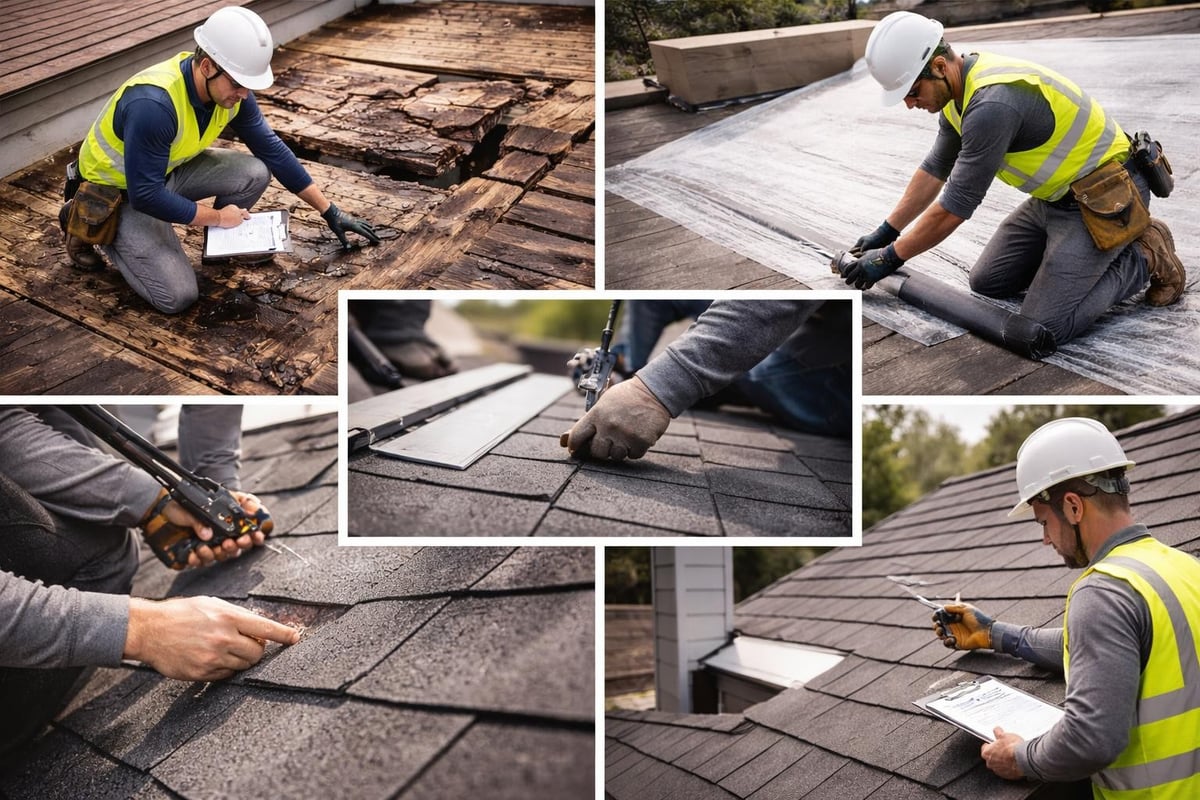
From damage assessment through final repair, professional contractors follow industry best practices that ensure long-term performance. The tear-off phase requires careful removal of damaged materials without disturbing sound decking underneath. Roof deck inspection reveals hidden damage from moisture intrusion or impact force.
Installation proceeds systematically across roof sections with multiple quality checkpoints:
- Underlayment application with proper overlap and fastening
- Drip edge and starter strip installation for edge protection
- Shingle placement following manufacturer specifications
- Valley and flashing integration at all transitions
- Ridge cap and ventilation installation for system completion
Every crew member should understand their role in maintaining clean work sites and protecting landscaping, HVAC equipment, and building features. Professional companies conduct daily cleanup and final detailed inspections before considering the project complete.
Material Selection for Hail-Resistant Performance
Property owners replacing roofs after hail damage often consider upgrading to more impact-resistant materials. Understanding available options and their performance characteristics helps make informed decisions that provide better protection against future storms.
Impact Rating Systems and Certifications
The UL 2218 standard classifies roofing materials by impact resistance on a Class 1 through Class 4 scale. Class 4 represents the highest impact resistance, withstanding two-inch steel ball drops from twelve feet without damage. Many insurance companies offer premium discounts for Class 4 rated materials, offsetting the higher initial investment.
Common hail-resistant options include:
- Impact-resistant asphalt shingles with modified asphalt and reinforced mats
- Metal roofing systems in steel, aluminum, or copper with varying gauge thicknesses
- Synthetic slate and shake products engineered for impact absorption
- Clay and concrete tile with inherent density and strength
Each material presents different cost, aesthetic, and performance profiles. Metal roofing, for example, shows dents but rarely fails functionally from hail impact. Modified asphalt shingles may cost 10-20% more than standard products but deliver significantly better storm performance.
Warranty and Long-Term Value Considerations
Upgrading to impact-resistant materials during hail roof repair provides opportunities to secure enhanced warranties covering both materials and workmanship. Manufacturer warranties on Class 4 shingles often extend to fifty years, while labor warranties from quality contractors provide five to ten years of coverage.
The total value equation includes:
- Insurance premium savings over roof lifespan
- Reduced repair frequency from future storms
- Enhanced property value and marketability
- Energy efficiency improvements with modern materials
- Extended service life compared to standard products
Fort Worth property owners should calculate these long-term benefits against the upfront cost difference when deciding between standard replacement and upgraded impact-resistant systems. Understanding roofing warranties helps evaluate which coverage best protects your investment.
Preventing Future Hail Damage and Maintenance
Even the most impact-resistant roof requires ongoing attention to maintain optimal performance. Post-repair maintenance and proactive measures reduce the likelihood of severe damage from future hailstorms.
Regular Inspection Schedules
Professional roof inspections should occur at least annually, with additional assessments following significant weather events. Seasonal inspections before spring storm season and after fall weather patterns help identify minor issues before they escalate into major problems.
Property owners can conduct basic visual checks from ground level:
- Scan for missing, cracked, or curling shingles
- Check gutters for excessive granule accumulation
- Examine flashing around chimneys and vents
- Look for sagging or uneven roof planes
- Note any interior signs of moisture intrusion
These observations don't replace professional assessments but help identify urgent signs requiring immediate attention between scheduled inspections.
Proactive Maintenance Strategies
Beyond inspections, several maintenance activities extend roof life and improve storm resistance:
| Activity | Frequency | Benefit |
|---|---|---|
| Gutter cleaning | Twice yearly | Prevents water backup and ice damming |
| Tree trimming | As needed | Reduces falling branch damage risk |
| Attic ventilation check | Annually | Prevents premature material aging |
| Sealant inspection | Every 2-3 years | Maintains flashing and penetration integrity |
| Debris removal | After storms | Prevents moisture retention and deterioration |
Preparing your property for hail season includes verifying insurance coverage adequacy, updating documentation of roof condition, and establishing relationships with trusted contractors before storm season arrives. This preparation accelerates response when damage occurs.
Selecting the Right Hail Roof Repair Contractor
The contractor you choose for hail roof repair directly impacts project quality, timeline reliability, and insurance claim success. Understanding what separates professional companies from storm chasers and opportunistic operators protects your investment and ensures lasting results.
Credentials and Local Presence Verification
Licensed, insured contractors with established local presence demonstrate commitment to quality and accountability. Verify credentials including:
- Current contractor licenses for your jurisdiction
- General liability and workers' compensation insurance
- Manufacturer certifications for materials being installed
- Better Business Bureau ratings and complaint history
- Local references from recent similar projects
Storm chasers without permanent local facilities disappear when warranty issues arise. Companies with physical offices, local crews, and established reputations stake their future business on satisfying current clients.
Red Flags and Warning Signs
Several contractor behaviors signal potential problems:
- Requesting full payment before starting work
- Offering to waive insurance deductibles
- Providing vague or incomplete written estimates
- Pressuring immediate decisions without inspection
- Using unmarked vehicles or temporary signage
- Lacking verifiable local references
Professional contractors provide detailed written proposals, transparent pricing, clear timelines, and comprehensive warranty information. They encourage property owners to verify credentials, compare quotes, and make informed decisions without high-pressure tactics.
Companies using in-house crews rather than subcontractors maintain better quality control and communication throughout projects. This structure ensures the people you meet during estimates are the same crews performing your work, eliminating the accountability gaps common with subcontractor-dependent operations.
Cost Factors and Budget Planning
Understanding hail roof repair costs helps property owners set realistic expectations and identify fair pricing. Multiple variables influence total project expenses beyond simple square footage calculations.
Price Components and Variables
Complete hail roof repair costs include several distinct elements:
- Materials: Shingles, underlayment, flashing, fasteners, and accessories
- Labor: Tear-off, installation, cleanup, and project management
- Disposal: Dumpster rental and debris hauling
- Permits: Local building department fees and inspections
- Upgrades: Ventilation improvements, decking repairs, or material enhancements
Roof complexity significantly impacts labor costs. Simple gable roofs install faster than multi-plane hip roofs with valleys, dormers, and multiple penetrations. Steep slopes require additional safety equipment and slower installation pace, increasing labor hours.
Geographic location affects both material and labor pricing. Fort Worth market rates reflect local competition, seasonal demand fluctuations, and regional material availability. Prices typically peak during busy spring and summer seasons when demand exceeds contractor capacity.
Insurance Coverage and Out-of-Pocket Expenses
Understanding your insurance policy's coverage limits and exclusions helps forecast actual costs versus claim reimbursements. Recoverable depreciation policies initially pay actual cash value minus depreciation, then reimburse depreciation amounts after work completion and final invoice submission.
| Coverage Type | Initial Payment | Final Payment | Property Owner Cost |
|---|---|---|---|
| Replacement cost | ACV minus deductible | Depreciation after completion | Deductible only |
| Actual cash value | Depreciated value minus deductible | None | Deductible plus depreciation |
| Limited coverage | Percentage of replacement cost | None | Deductible plus coverage gap |
Some policies include code upgrade coverage that pays for improvements required to meet current building codes. Others exclude this coverage, leaving property owners responsible for mandatory upgrades like enhanced ventilation or deck replacement beyond storm damage.
Working with contractors experienced in insurance claim processes ensures accurate documentation and maximizes reimbursement. They understand what insurers require for claim approval and how to present repair scopes that justify full coverage without unnecessary additions.
Timeline Expectations for Hail Roof Repair Projects
Realistic timeline expectations prevent frustration and help property owners plan around construction disruptions. Multiple factors influence how quickly hail roof repair progresses from initial damage to completed restoration.
From Storm to Completion Phases
The complete timeline spans several distinct phases:
- Damage assessment and documentation (1-3 days)
- Insurance claim filing and adjuster inspection (1-3 weeks)
- Claim approval and payment processing (2-6 weeks)
- Contractor selection and contract execution (1-2 weeks)
- Material ordering and delivery coordination (1-3 weeks)
- Installation and completion (1-5 days for residential, longer for commercial)
These timeframes overlap in practice. Professional contractors begin material ordering upon contract signing, even before insurance finalizes payment. This parallel processing accelerates project start dates once claim approval arrives.
Seasonal demand dramatically impacts timelines. Spring hailstorms create backlog situations where contractors schedule projects weeks or months out. Property owners who act quickly after storms secure earlier completion dates than those who delay assessments and contractor engagement.
Weather and Unforeseen Delay Factors
Fort Worth weather patterns introduce unpredictable variables. Rain delays halt work immediately, as roofing installation requires dry conditions for proper adhesive activation and material performance. Temperature extremes also affect scheduling, with most manufacturers prohibiting shingle installation below specific temperature thresholds.
Hidden damage discovered during tear-off extends timelines. Deck rot, structural issues, or extensive water damage require repairs before new roofing installation proceeds. Quality contractors address these issues immediately rather than covering problems that compromise new roof performance.
Material availability occasionally delays projects when specific colors, styles, or specialty components face manufacturing or shipping delays. Ordering materials early and maintaining communication with suppliers minimizes these disruptions. Contractors should notify property owners immediately when delivery delays threaten scheduled start dates.
Hail roof repair requires systematic assessment, informed decision-making, proper insurance navigation, and skilled execution to restore your property's protection effectively. Understanding damage patterns, repair versus replacement considerations, material options, and contractor selection criteria empowers Fort Worth property owners to make choices that deliver lasting value and performance. When storm damage strikes your residential or commercial property, Texcore Construction provides the expertise, documentation accuracy, and in-house craftsmanship needed to restore your roof with speed and reliability. Our licensed crews deliver transparent assessments, comprehensive insurance support, and quality workmanship backed by five-year labor warranties, ensuring your property receives the protection it deserves.