Industrial Roofing Contractors: Selection Guide
Selecting the right industrial roofing contractors represents one of the most critical decisions for facility managers, property owners, and industrial operations leaders. Unlike residential or standard commercial projects, industrial roofing demands specialized expertise, advanced equipment, and crews capable of managing large-scale installations across warehouses, manufacturing plants, distribution centers, and processing facilities. The consequences of poor contractor selection extend far beyond budget overruns, potentially resulting in production disruptions, inventory damage, safety violations, and premature roof failure. Understanding what separates qualified industrial roofing contractors from general roofers helps property stakeholders make informed decisions that protect both their physical assets and operational continuity.
Understanding Industrial Roofing Requirements
Industrial facilities present unique roofing challenges that distinguish them from other property types. These structures typically feature expansive roof areas measuring tens of thousands of square feet, often supporting heavy mechanical equipment, ventilation systems, and specialized drainage requirements.
Industrial roofs must accommodate:
- High thermal cycling from manufacturing processes
- Chemical exposure from industrial operations
- Concentrated load points from equipment
- Complex penetration arrays for utilities
- Stringent safety and compliance standards
The scale alone demands contractors with substantial resources, bonding capacity, and project management capabilities. Industrial roofing contractors must coordinate work around active production schedules, often requiring night or weekend installations to minimize operational disruption.
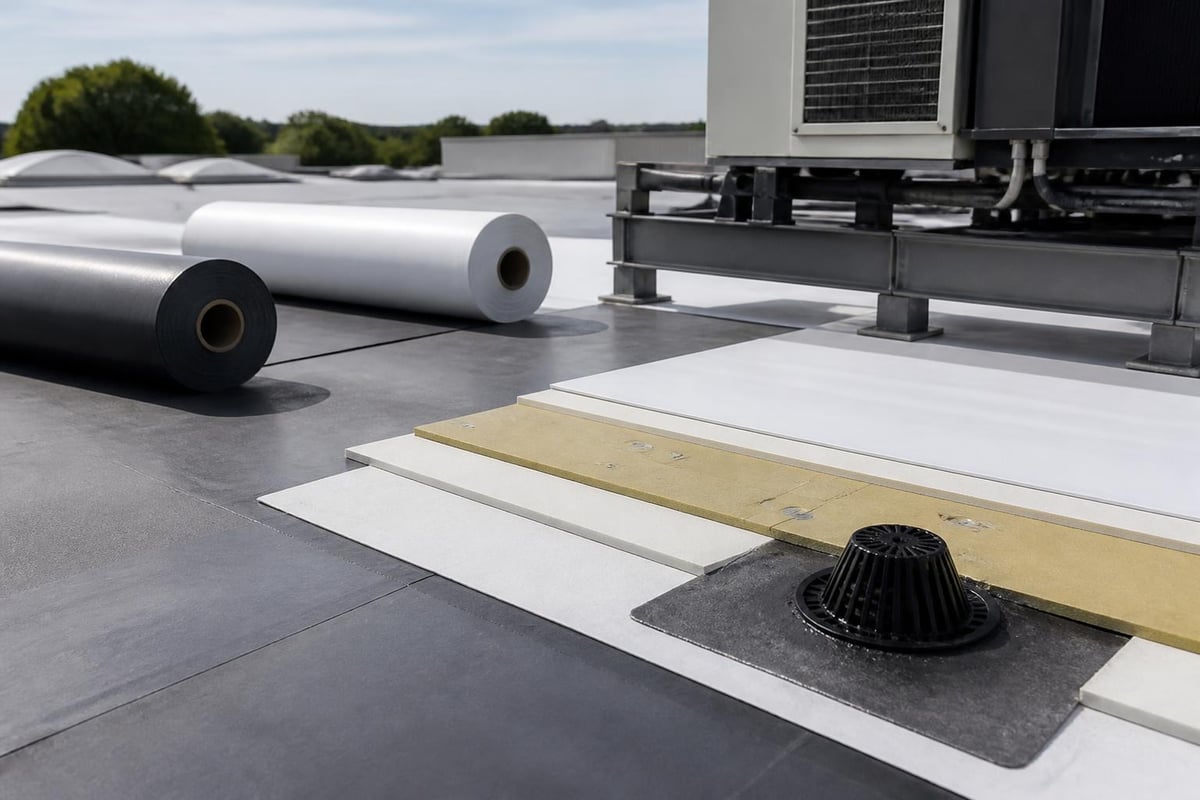
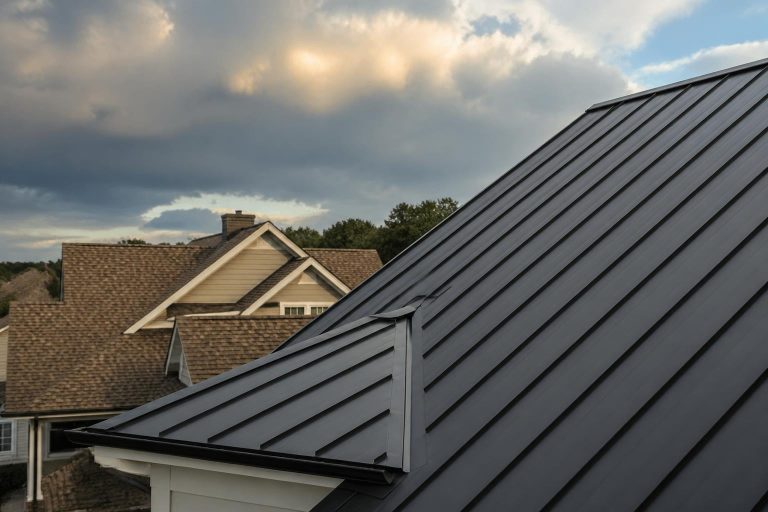
Material selection for industrial applications differs significantly from standard commercial work. Various industrial roofing systems offer distinct advantages depending on building use, environmental conditions, and performance requirements. Single-ply membranes like TPO and EPDM provide excellent waterproofing for lower-slope applications, while standing seam metal systems deliver superior durability for facilities requiring long service life with minimal maintenance.
Specialized System Knowledge
Qualified industrial roofing contractors demonstrate deep understanding of system-specific installation requirements. Modified bitumen applications demand proper torch technique and seam integrity. Spray polyurethane foam installations require precise climate control and application thickness. Built-up roofing systems need careful ply sequencing and flood coat application.
Each system type carries distinct warranty requirements, manufacturer certifications, and quality control protocols. Contractors lacking proper credentials or installation experience may void manufacturer warranties, leaving property owners exposed to premature failure without recourse.
Evaluating Contractor Qualifications
The contractor selection process begins with rigorous qualification assessment. Industrial projects demand higher capability thresholds than residential or light commercial work, making thorough vetting essential.
| Qualification Category | Minimum Requirements | Why It Matters |
|---|---|---|
| Licensing & Insurance | State contractor license, $2M+ liability coverage, workers' compensation | Protects against liability exposure and ensures regulatory compliance |
| Experience | 5+ years industrial-specific work, project portfolio | Demonstrates capability with similar scale and complexity |
| Financial Stability | Bonding capacity, credit references, financial statements | Ensures project completion without payment or performance issues |
| Safety Record | OSHA compliance, EMR rating <1.0, safety training program | Reduces accident risk and potential project shutdowns |
Experience specifically with industrial applications matters more than general roofing experience. A contractor with 20 years of residential shingle installation offers little relevant expertise for a 200,000-square-foot warehouse reroof using thermoplastic membrane systems.
Request detailed project references from similar facilities. Contact those references directly and ask specific questions about schedule adherence, communication quality, safety performance, and post-installation support. References should include facility managers or property owners, not just general contractors who may have limited insight into actual performance.
In-House Crews vs. Subcontractor Models
The crew structure employed by industrial roofing contractors significantly impacts project quality, schedule reliability, and accountability. Many roofing companies operate primarily as project brokers, subcontracting actual installation work to independent crews with varying skill levels and no direct employment relationship.
This subcontractor model introduces multiple quality and reliability concerns. The general contractor exercises limited control over crew training, safety compliance, and workmanship standards. Communication chains lengthen, making issue resolution slower and less effective. Crew availability becomes unpredictable, often delaying projects when subcontractors prioritize other work.
In-house crew advantages include:
- Consistent training and quality standards
- Direct accountability to project specifications
- Better communication and problem-solving
- Predictable scheduling and availability
- Enhanced safety culture and oversight
Contractors employing dedicated in-house teams maintain better control over every project phase. They invest in ongoing crew training, provide consistent safety oversight, and build institutional knowledge about specific building types and system requirements. For industrial properties where production disruption carries substantial cost, this reliability delivers measurable value.
When evaluating contractors, ask specifically about crew composition. Request information about employment status, training programs, safety certifications, and average crew tenure. High turnover rates or heavy subcontractor reliance signal potential quality and reliability concerns.
Safety Standards and Compliance
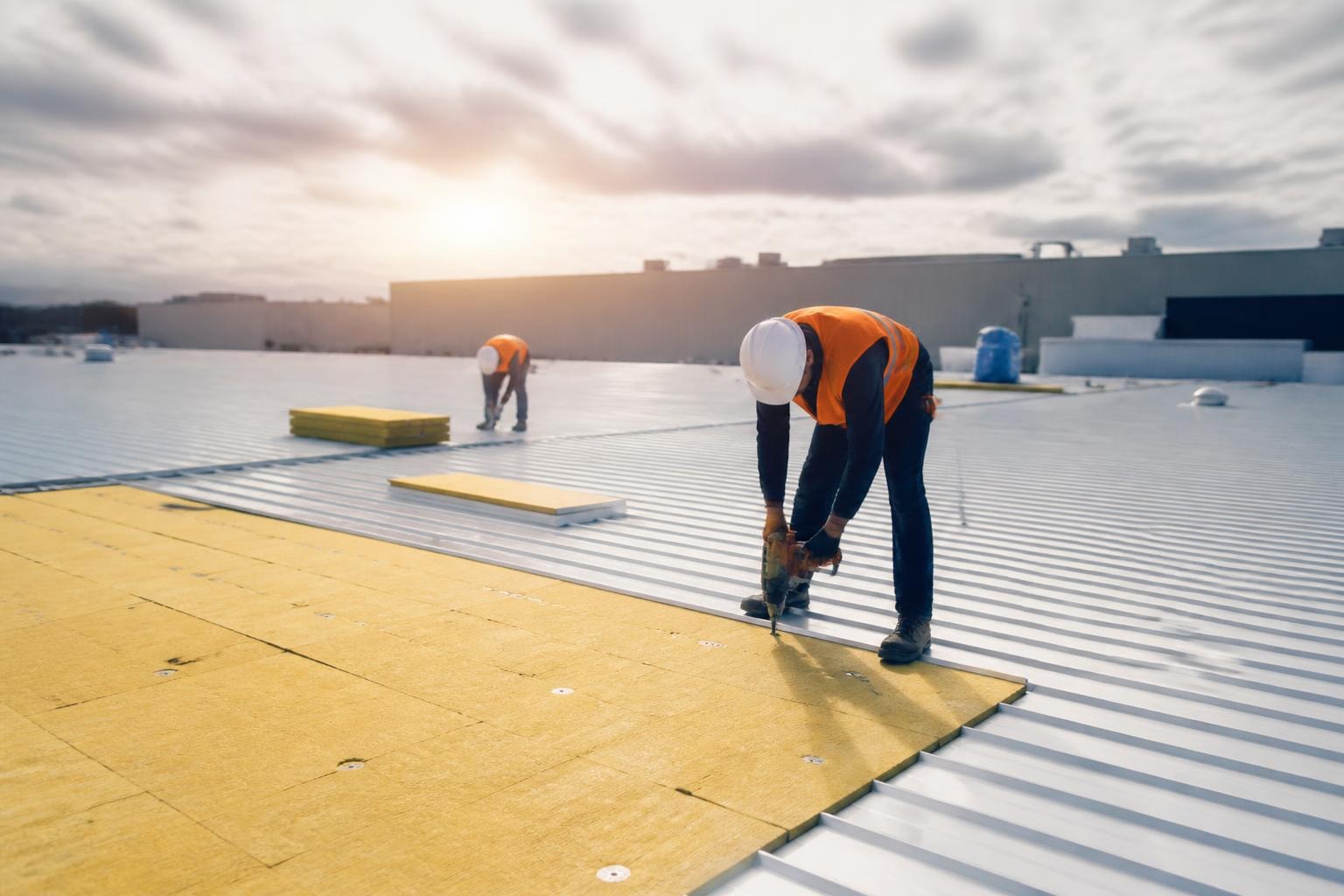
Industrial roofing work involves significant fall hazards, hot work operations, and coordination with active facility operations. Safety performance separates professional industrial roofing contractors from those unprepared for large-scale commercial work.
Review the contractor's Experience Modification Rate (EMR), a metric calculated by insurance carriers based on claims history. EMR below 1.0 indicates better-than-average safety performance, while ratings above 1.0 suggest elevated accident rates. Top-tier industrial contractors typically maintain EMR ratings between 0.7 and 0.9.
Comprehensive safety programs include documented procedures for fall protection, hot work permits, confined space entry, hazardous material handling, and emergency response. Contractors should conduct regular toolbox talks, maintain equipment inspection logs, and require crew certifications for specialized operations.
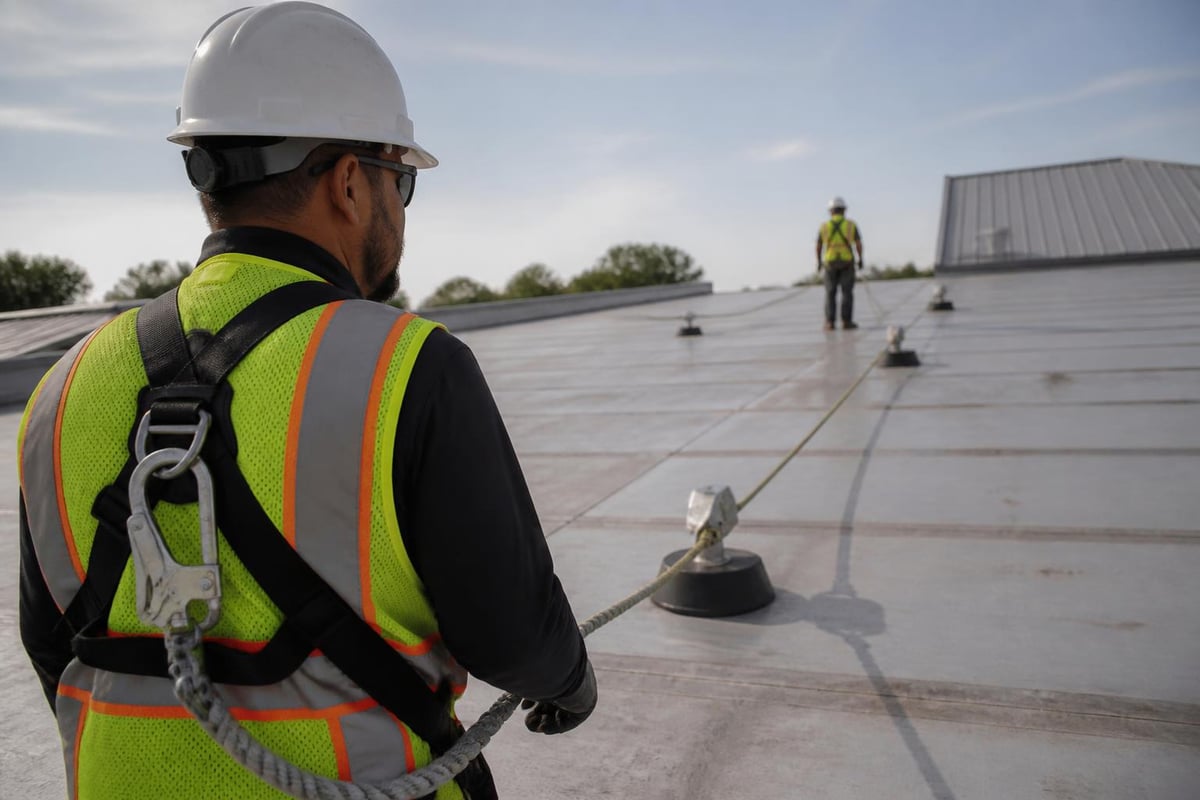
OSHA compliance and safety best practices protect both workers and property owners from liability exposure. Contractors who cut corners on safety create substantial risk for facility operators, potentially triggering OSHA citations, work stoppages, or serious injury claims that impact property insurance rates and operational continuity.
Project-Specific Safety Planning
Qualified contractors develop customized safety plans for each project, addressing site-specific hazards and facility requirements. Manufacturing plants may require hot work permits, chemical exposure protocols, or restricted access zones around sensitive equipment. Distribution centers often mandate specific loading dock procedures, forklift interaction rules, and material staging requirements.
The safety plan should be documented, shared with facility management before work begins, and reviewed with all crew members. Daily safety briefings help address changing conditions and reinforce proper procedures throughout the project duration.
Project Management and Communication
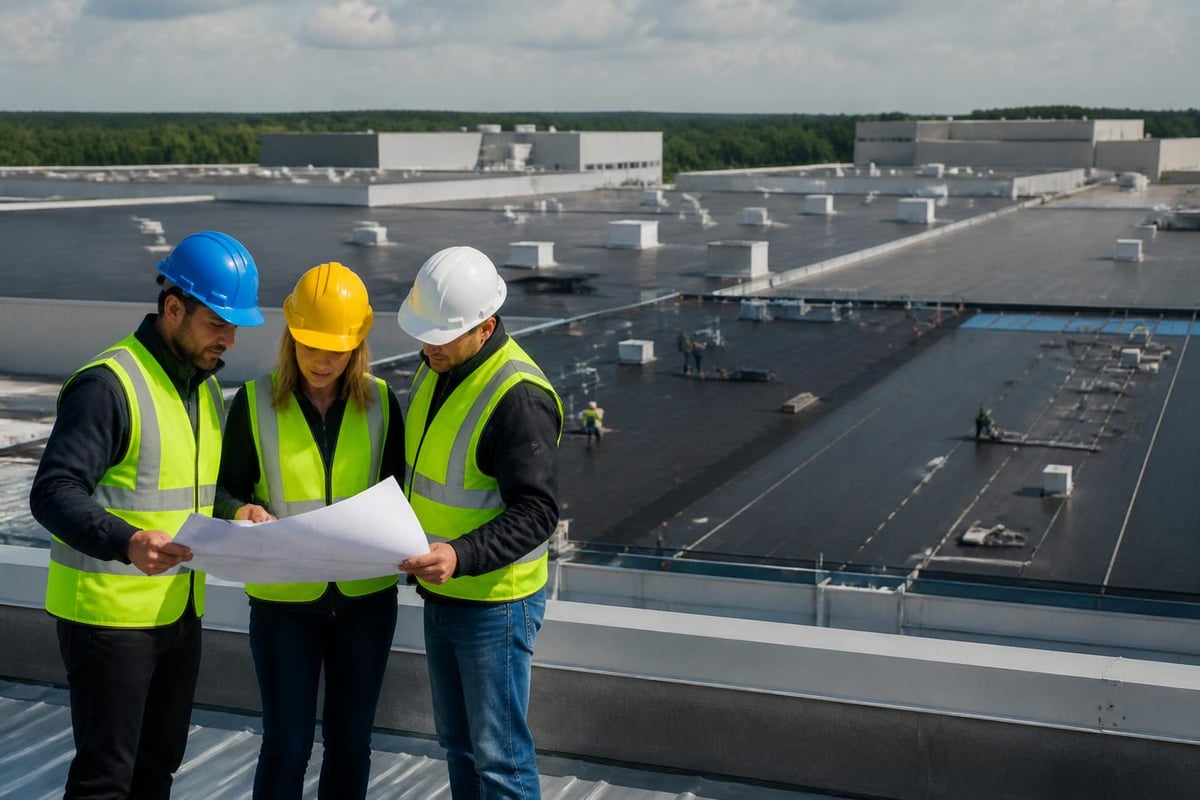
Large-scale industrial projects demand sophisticated project management capabilities. Unlike residential work where a single crew completes installation in days, industrial reroofs may span weeks or months, involving multiple crews, complex material logistics, and careful coordination with facility operations.
Professional industrial roofing contractors assign dedicated project managers who serve as the primary facility contact. This individual coordinates scheduling, manages change orders, addresses issues promptly, and provides regular progress updates. Clear communication prevents surprises and helps facility managers plan around roofing activities.
Effective project management includes:
- Detailed pre-construction meetings covering schedule, staging, access, and facility requirements
- Daily progress reports documenting completed work and any emerging issues
- Proactive weather monitoring and schedule adjustment protocols
- Systematic material delivery coordination to minimize site congestion
- Regular quality inspections with documented results
- Comprehensive closeout documentation including warranties and O&M manuals
Contractors should provide detailed scopes of work that specify exact materials, installation methods, quality standards, and acceptance criteria. Vague proposals create opportunities for disputes and make project oversight difficult. Comprehensive documentation protects both parties and establishes clear performance expectations.
For facilities requiring expert roofing for warehouses, distribution centers, and manufacturing facilities, working with contractors who maintain detailed project records ensures transparency and facilitates informed decision-making throughout the construction process.
Material Selection and System Design
Industrial roofing contractors should provide expert guidance on material selection based on building use, environmental conditions, budget parameters, and performance objectives. Different industrial applications demand different roofing approaches.
| Application Type | Recommended Systems | Key Considerations |
|---|---|---|
| Cold Storage | Spray foam, mechanically-attached single-ply | Extreme thermal cycling, condensation control, high insulation values |
| Manufacturing | TPO, EPDM, modified bitumen | Chemical resistance, hot work compatibility, maintenance access |
| Distribution Centers | TPO, standing seam metal | Large spans, equipment loads, long service life requirements |
| Processing Facilities | PVC, stainless steel | Chemical exposure, washdown requirements, strict hygiene standards |
Understanding various industrial roofing material options helps property owners evaluate contractor recommendations and make informed decisions. Contractors pushing specific systems without considering building-specific requirements may prioritize their own installation preferences over optimal performance.
Energy efficiency increasingly influences industrial roofing decisions. Cool roofing systems reduce heat absorption, lowering cooling costs for climate-controlled facilities. Some regions offer utility rebates or tax incentives for high-reflectance roofing materials, creating opportunities for life-cycle cost savings that offset higher initial investment.
Warranty Considerations
Industrial roofing warranties typically include both material warranties from manufacturers and workmanship warranties from contractors. Material warranties range from 10 to 30 years depending on system type and quality tier. Contractor labor warranties typically span 1 to 10 years.
Understanding warranty terms and exclusions proves critical. Some warranties require regular maintenance performed by certified contractors. Others exclude damage from specific causes like ponding water, chemical exposure, or mechanical impacts. Warranty transferability affects property value if ownership changes during the coverage period.
Reputable industrial roofing contractors help navigate warranty options, explaining coverage differences and recommending appropriate warranty levels based on facility use and ownership plans. They maintain manufacturer certifications required for extended warranty eligibility and document installation quality to support warranty claims if issues arise.
Cost Structures and Bidding Processes
Industrial roofing represents a substantial capital investment, making cost evaluation an important selection factor. However, focusing exclusively on lowest price often produces poor long-term value. The cheapest bid frequently comes from undercapitalized contractors who cut corners on materials, safety, or installation quality.
Professional industrial roofing contractors provide detailed, itemized proposals that break costs into material, labor, and ancillary categories. This transparency allows meaningful comparison between bids and helps identify where cost differences originate. A significantly lower bid may reflect inferior materials, reduced crew size extending project duration, or exclusion of necessary scope items.
Comprehensive bids should include:
- Complete material specifications with brand names and quality grades
- Detailed labor breakdown showing crew size and estimated duration
- Site preparation and protection requirements
- Waste disposal and recycling fees
- Equipment and crane costs if required
- Project management and supervision
- Warranty coverage details
- Payment schedule tied to completion milestones
Request clarification on any ambiguous proposal language. Terms like "or equal" for materials should specify exact equivalency criteria. Allowances for unknown conditions should define triggers for additional charges. Clear proposals prevent disputes and establish accountability.
Maintenance Planning and Long-Term Support
The contractor relationship should extend beyond installation completion. Proactive industrial roof maintenance significantly extends service life and prevents minor issues from escalating into costly failures. Industrial roofing contractors offering comprehensive maintenance programs provide better long-term value than those focused solely on installation revenue.
Quality maintenance programs include biannual inspections covering membrane condition, flashing integrity, drainage performance, and penetration sealing. Contractors document findings with photos and written reports, recommending repairs before problems worsen. This proactive approach prevents emergency situations and helps budget for planned repairs.
Some industrial roofing contractors offer preventive maintenance contracts that include regular inspections, minor repairs, and priority emergency response. These programs ensure consistent attention to roof condition and establish relationships that facilitate quick response when urgent issues arise. Contractors familiar with specific roof systems and building configurations resolve problems more efficiently than new contractors learning the facility during a crisis.
Emergency response capability matters for industrial facilities where roof leaks can damage inventory, disrupt production, or create safety hazards. Contractors should provide clear emergency contact procedures and guaranteed response timeframes. Understanding their capacity to mobilize crews quickly and temporarily secure active leaks helps evaluate their suitability for mission-critical facilities.
For property managers overseeing multiple facilities, working with commercial roof solutions providers who service entire portfolios creates consistency and simplifies vendor management across locations.
Insurance and Claims Support
Industrial roof damage from storms, hail, or other insured events requires specialized documentation and claims support. Experienced industrial roofing contractors understand insurance processes and provide detailed damage assessments that support claim approval and appropriate settlement amounts.
Contractors should document damage comprehensively with photos, measurements, and written descriptions meeting insurance adjuster requirements. They help property owners understand policy coverage, deductible application, and claim submission procedures. Some roofing contractors provide detailed documentation packages that support the adjuster review process.
Understanding the roofing insurance claims process helps property owners maximize legitimate coverage while avoiding claim denials from inadequate documentation or improper repair approaches. Professional contractors protect client interests throughout the claims process, advocating for appropriate scope inclusion and quality repair standards.
Regional Expertise and Local Knowledge
Industrial roofing contractors with established regional presence understand local climate conditions, building code requirements, and material performance characteristics specific to the area. This knowledge influences material recommendations, installation techniques, and maintenance approaches.
Texas facilities face intense UV exposure, severe thunderstorms with large hail, and dramatic temperature swings. These conditions demand roofing systems engineered for thermal cycling, impact resistance, and sustained heat exposure. Contractors experienced with regional conditions recommend appropriate materials and installation methods that address local challenges.
Local contractors also maintain relationships with regional material suppliers, enabling faster material sourcing and competitive pricing. They understand permitting procedures, inspection requirements, and code enforcement patterns that vary by jurisdiction. This familiarity streamlines project execution and prevents regulatory compliance issues.
Established regional contractors typically invest in their local reputation through quality work and customer service. They maintain accessible offices, employ local crews, and depend on repeat business and referrals. This accountability creates incentives for quality performance that national firms parachuting into markets for single projects may lack.
Making the Final Selection
After evaluating qualifications, reviewing proposals, and checking references, final contractor selection should weigh multiple factors beyond price alone. Consider the contractor's communication style, responsiveness, and willingness to address questions thoroughly. Projects spanning weeks or months require contractors who communicate proactively and solve problems collaboratively.
Trust your assessment of the contractor's professionalism, expertise, and commitment to quality. Contractors who rush through proposal presentations, provide vague answers, or pressure immediate decisions may prioritize transaction speed over project success. Professional industrial roofing contractors invest time in understanding facility requirements, explaining options clearly, and developing customized solutions.
Review contract terms carefully before signing. Contracts should specify project scope, material specifications, schedule, payment terms, warranty coverage, and dispute resolution procedures. Legal review of contracts for large industrial projects protects against unfavorable terms or ambiguous language that could create liability exposure.
Verify all licensing, insurance, and bonding documentation directly with issuing entities rather than relying solely on contractor-provided certificates. Confirm coverage amounts meet project requirements and policies remain current throughout the planned work duration.
Selecting qualified industrial roofing contractors requires thorough evaluation of technical capabilities, safety performance, project management expertise, and long-term support commitment. Property owners who invest time in proper contractor selection protect their facilities with quality roofing systems installed by accountable professionals. When you need experienced industrial roofing contractors for your Fort Worth facility, Texcore Construction delivers expert installations with in-house crews, comprehensive safety protocols, and transparent project management backed by our five-year labor warranty. Contact our team to discuss your industrial roofing requirements and receive a detailed assessment tailored to your facility's specific needs.