
Metal Roofing Installation Companies: What to Expect
Metal roofing has become a strategic investment for commercial property managers and facility owners across North Texas, offering durability that can span five decades when installed correctly. The difference between a metal roof that performs for 20 years versus one that lasts 50 years often comes down to installation quality, not material grade. Selecting metal roofing installation companies requires understanding technical capabilities, crew qualifications, and installation protocols that separate contractors who deliver long-term performance from those who simply fasten panels to a roof deck.
What Distinguishes Professional Metal Roofing Installation Companies
Professional metal roofing installation requires specialized knowledge that extends far beyond basic carpentry or general roofing experience. Thermal movement management, proper fastener torque specifications, and standing seam engagement protocols represent just a fraction of the technical considerations that impact roof longevity.
Crew Training and Certification Standards
The best metal roofing installation companies invest heavily in ongoing crew education and manufacturer-specific certifications. These certifications verify that installation teams understand:
- Panel handling procedures that prevent edge damage and coating scratches
- Fastener placement patterns specific to each panel profile and substrate type
- Flashing fabrication techniques for penetrations, valleys, and transitions
- Tool calibration requirements for seaming machines and fastener drivers
Many property owners assume all roofing contractors possess equivalent metal installation capabilities. This assumption creates significant risk. A crew trained exclusively on asphalt shingle installation lacks the technical foundation for proper metal panel attachment, thermal expansion management, and seam engagement.
In-House Crews Versus Subcontractor Networks
Installation consistency depends heavily on crew structure. Companies that maintain dedicated, in-house installation teams deliver superior quality control compared to contractors who subcontract metal installation to third-party crews.
| Crew Structure | Quality Control | Training Consistency | Accountability |
|---|---|---|---|
| In-House Teams | Direct oversight on every project | Standardized protocols across all jobs | Single point of contact |
| Subcontractor Network | Varies by subcontractor availability | Inconsistent between different crews | Multiple layers of responsibility |
| Hybrid Model | Mixed results depending on project | Training standards may differ | Unclear responsibility chain |
When evaluating metal roofing installation companies, request details about crew employment status. Ask whether the same team that completes your inspection will perform the installation, or if work gets assigned to available subcontractors.
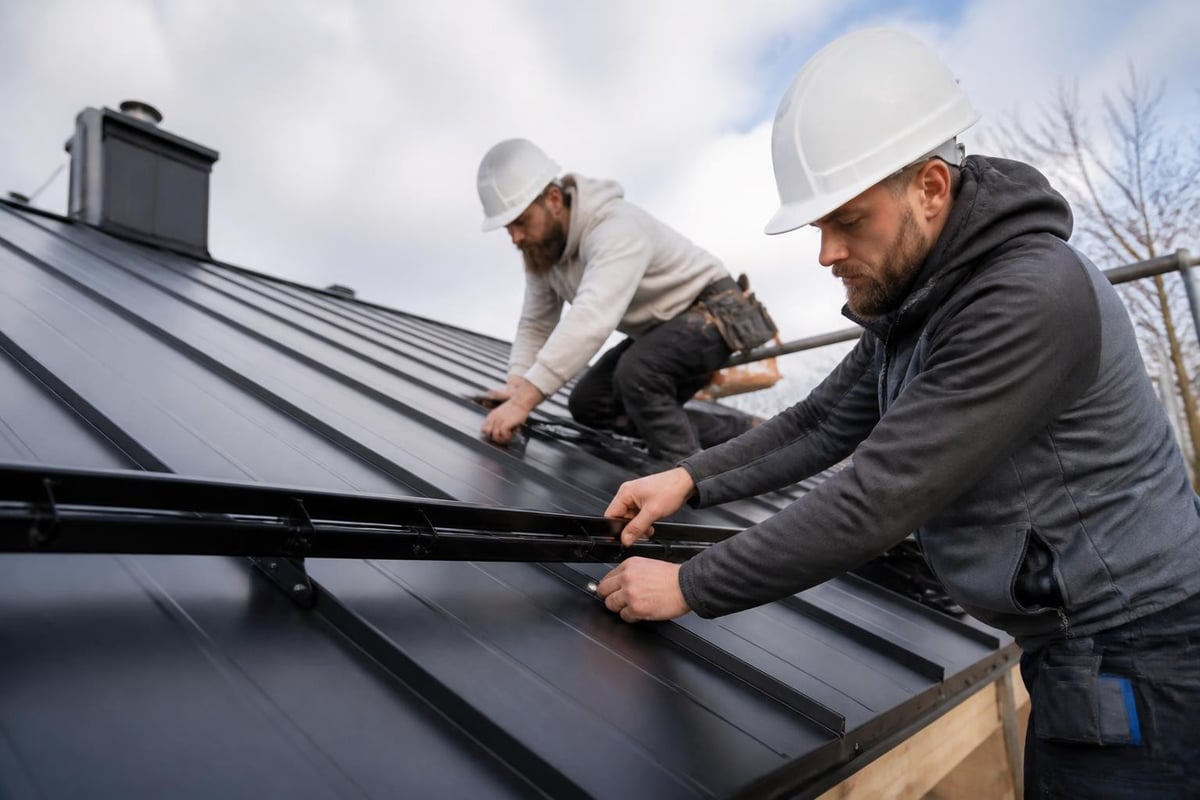
Critical Installation Details That Define Roof Longevity
Five critical installation details separate exceptional metal roofing installation companies from mediocre ones: clip spacing precision, thermal expansion provisions, seam engagement depth, flashing technique, and fastener specification compliance.
Clip Spacing and Thermal Movement
Standing seam metal roofing panels expand and contract with temperature fluctuations. A single 40-foot panel can move up to three-quarters of an inch between summer and winter temperature extremes in North Texas. Qualified installation companies calculate clip spacing based on panel length, material type, and expected temperature range.
Improper clip spacing creates several failure modes:
- Panel buckling during high-temperature expansion
- Fastener pull-through during contraction cycles
- Seam separation at panel ends
- Accelerated coating degradation at stress points
Professional installers space clips according to manufacturer specifications, which typically range from 18 to 24 inches on center depending on panel profile and building location. Companies that modify spacing to reduce material costs or accelerate installation compromise long-term performance.
Fastener Specification and Installation Protocol
Exposed fastener metal roofing systems depend entirely on fastener quality and installation precision. Each fastener creates a potential water intrusion point, making proper installation non-negotiable.
The proper techniques for screwing metal roofing include:
- Fastener selection based on panel gauge, substrate type, and environmental exposure
- Pre-drilling pilot holes for specific panel profiles and thicknesses
- Torque calibration to compress washers without over-tightening
- Placement verification to ensure fasteners hit structural members
- Perpendicular alignment to prevent washer deformation and premature seal failure
Reputable metal roofing installation companies use calibrated screw guns with adjustable torque settings and depth limiters. Crews that rely on standard impact drivers without torque control consistently over-tighten or under-tighten fasteners, creating immediate leak risks.
Installation Process Transparency and Documentation
Professional metal roofing installation companies provide detailed documentation at every project phase, from initial assessment through final inspection. This documentation protects property owners and establishes clear accountability for installation quality.
Pre-Installation Assessment and Planning
Before any panel installation begins, qualified contractors complete comprehensive roof deck evaluations and develop detailed installation plans. This phase identifies:
- Structural capacity verification for additional dead load from metal panels and insulation
- Deck condition assessment to locate and address damaged sheathing or framing
- Ventilation requirements specific to metal roofing systems
- Penetration mapping for HVAC units, exhaust vents, and utility runs
Companies that skip pre-installation assessments encounter mid-project complications that delay completion and increase costs. Discovering inadequate deck attachment or damaged sheathing after panel delivery creates expensive change orders and scheduling conflicts.
Material Verification and Storage Protocols
Metal roofing installation requires careful material handling from delivery through final panel placement. Professional installation companies implement strict protocols for:
- Verifying panel quantities, profiles, and colors against purchase orders
- Inspecting panels for shipping damage before signing delivery receipts
- Storing panels on elevated racks with proper spacing to prevent moisture contact
- Protecting panel coatings from foot traffic and tool contact during installation
Material damage during storage or installation voids manufacturer warranties and creates premature failure points. Companies that stack panels directly on roof decks or allow crews to walk on finished panels demonstrate insufficient quality control.
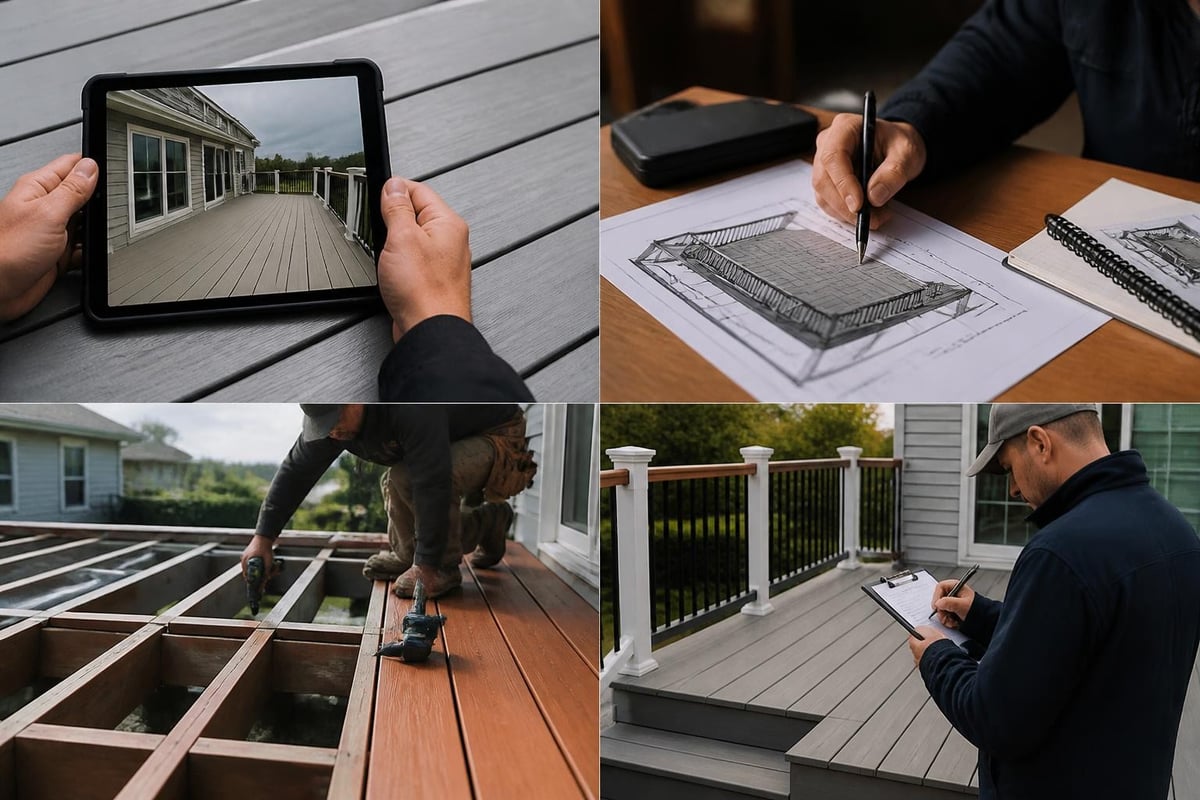
Installation Methods for Different Metal Roofing Systems
Metal roofing installation companies must demonstrate proficiency across multiple panel types and attachment systems. Standing seam, exposed fastener, and structural panel systems each require distinct installation approaches.
Standing Seam Installation Requirements
Standing seam systems represent the premium segment of metal roofing, offering superior weather protection and thermal performance when installed correctly. Installation techniques for standing seam systems demand precise seam engagement and clip attachment.
Critical standing seam installation steps include:
- Underlayment installation with proper overlap and fastener patterns
- Starter strip alignment verified with stringlines for panel straightness
- Clip attachment at calculated spacing intervals to structural members
- Panel placement with consistent overhang at eaves and rake edges
- Seam engagement using calibrated seaming machines for uniform closure
- End cap installation with proper sealant application and fastener placement
Installation companies should provide seaming machine calibration records and demonstrate proper tool maintenance. Worn seaming rollers or improperly adjusted machines create inconsistent seam engagement that compromises weather resistance.
Exposed Fastener System Techniques
Exposed fastener metal roofing offers cost advantages for warehouse facilities, agricultural buildings, and budget-constrained commercial projects. While these systems cost less than standing seam alternatives, installation quality remains equally critical.
| Installation Factor | Standing Seam | Exposed Fastener | Structural Panel |
|---|---|---|---|
| Fastener Count per Square | 0 (concealed clips) | 80-120 depending on profile | 60-100 depending on application |
| Thermal Movement Accommodation | Floating clip system | Limited by fastener rigidity | Panel profile dependent |
| Weather Seal Method | Capillary break at seam | Washer compression at each fastener | Overlapping panel design |
| Installation Speed | Slower due to seaming | Faster direct attachment | Medium complexity |
Exposed fastener installation demands consistent fastener torque across thousands of attachment points. Companies that lack torque-calibrated tools or proper crew training create leak risks at every fastener location.
Evaluating Company Qualifications and Project References
Selecting metal roofing installation companies requires evaluating credentials beyond basic contractor licensing. In Texas, roofing contractors do not require state licensure, making manufacturer certifications and project references particularly important.
Manufacturer Certification Verification
Leading metal panel manufacturers offer installer certification programs that verify technical competency and installation protocol adherence. These certifications enable contractors to:
- Provide extended manufacturer warranties beyond standard coverage
- Access technical support for complex installation details
- Receive advance notice of product updates and installation requirement changes
- Participate in continuing education programs
Request documentation of current manufacturer certifications from any company bidding your metal roofing project. Expired certifications or inability to provide certification documentation indicates insufficient manufacturer relationships.
Project Portfolio Analysis
Comprehensive project portfolios reveal installation company capabilities across different building types, panel systems, and project scales. When reviewing portfolios, focus on:
- Building type similarity to your facility regarding size, occupancy, and structural design
- Panel system variety demonstrating proficiency beyond single-product installation
- Project complexity including challenging details like multiple roof planes or extensive penetrations
- Completion timeline showing ability to meet schedule requirements
Companies that specialize exclusively in residential metal roofing may lack the crew depth and equipment necessary for large commercial projects. Conversely, contractors focused solely on industrial warehouse installations might not deliver the detail work required for architectural standing seam applications.
Safety Protocols and Job Site Management
Professional metal roofing installation companies implement comprehensive safety measures during installation that protect both workers and building occupants. Safety performance directly correlates with installation quality, as companies with strong safety cultures typically maintain higher overall standards.
Fall Protection and Height Safety Equipment
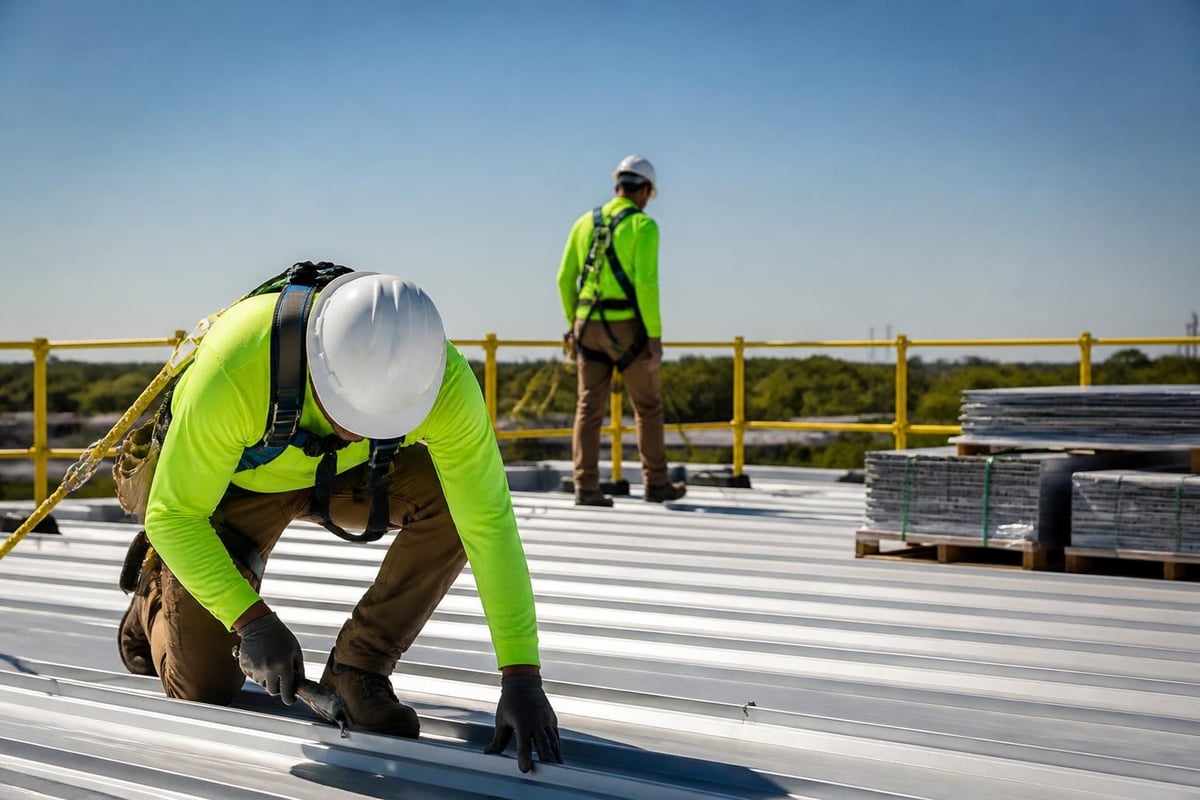
Metal panel installation requires crews to work at significant heights while manipulating large, unwieldy materials. Qualified companies provide:
- Personal fall arrest systems with proper anchor points and equipment inspection schedules
- Guardrail systems for roof perimeter protection during multi-day installations
- Safety netting beneath work areas when guardrails cannot be installed
- Ladder safety equipment including stabilizers and standoff brackets
Request safety program documentation including crew training records, equipment inspection logs, and OSHA compliance history. Companies that cannot provide this documentation expose property owners to liability risks.
Job Site Cleanliness and Material Management
Metal roofing installation generates sharp debris including metal shavings, fastener packaging, and cut panel sections. Professional installation companies maintain clean job sites through:
- Daily debris removal from roof surfaces and ground areas
- Magnetic sweepers to collect metal shavings and dropped fasteners
- Designated material staging areas to prevent damage and trip hazards
- Proper disposal containers for different material types
- Final inspection sweeps before project completion
Job site cleanliness reflects overall company professionalism and attention to detail. Companies that leave messy job sites typically demonstrate similar carelessness in installation quality.
Weather Considerations and Installation Timing
Metal roofing installation companies must account for weather impacts on installation quality and schedule. Temperature, precipitation, and wind conditions all affect installation procedures and material performance.
Temperature-Dependent Installation Protocols
Panel expansion coefficients vary with installation temperature, requiring experienced crews to adjust attachment methods based on current conditions. Installing panels during extreme heat or cold creates dimensional challenges.
Temperature-specific considerations include:
- Adjusting clip spacing for panels installed above or below manufacturer-specified temperature ranges
- Modifying seam engagement pressure for cold-weather installations
- Accounting for panel length changes between morning and afternoon installation periods
- Scheduling sealant application during appropriate temperature windows
Qualified metal roofing installation companies monitor job site temperatures and postpone installation activities when conditions fall outside acceptable ranges. Companies that push forward regardless of weather conditions compromise long-term performance.
Precipitation Management During Installation
Unlike asphalt shingle roofing, metal panel installation cannot proceed during active precipitation. Moisture trapped beneath panels creates corrosion risks and compromises underlayment adhesion. Professional contractors:
- Schedule installation during favorable weather windows
- Maintain weatherproof sections during multi-day projects
- Deploy temporary protection for incomplete areas when unexpected weather arrives
- Verify complete moisture removal before closing roof sections
For property owners dealing with existing roof damage, companies like Texcore Construction provide detailed storm and hail damage documentation that supports insurance claim submissions while maintaining project timelines.
Warranty Coverage and Long-Term Performance Guarantees
Metal roofing installation companies vary significantly in warranty offerings, from limited material-only coverage to comprehensive labor and performance guarantees. Understanding warranty structures protects property owners from future installation defects.
Material Versus Labor Warranty Components
Metal panel manufacturers typically provide 25 to 50-year warranties covering paint finish and substrate perforation. These manufacturer warranties do not cover installation defects, which fall under contractor labor warranties.
Professional installation companies offer minimum five-year labor warranties covering:
- Fastener leaks and attachment failures
- Seam separation or improper engagement
- Flashing leaks at penetrations and transitions
- Panel buckling from improper clip spacing
Companies offering only one or two-year labor warranties demonstrate insufficient confidence in installation quality. Extended labor warranties indicate commitment to proper installation protocols and long-term customer relationships.
Performance Guarantee Specifics
Beyond basic warranty coverage, leading metal roofing installation companies provide specific performance guarantees addressing:
| Guarantee Type | Coverage Scope | Typical Duration | Response Commitment |
|---|---|---|---|
| Leak-Free Performance | Any water intrusion from installation defects | 5-10 years | Same-day response for active leaks |
| Finish Integrity | Paint or coating failures from installation damage | Manufacturer term | Replacement of affected panels |
| Structural Performance | Panel attachment and wind uplift resistance | Labor warranty period | Emergency repair within 24 hours |
| Accessories and Trim | Flashing, ridge caps, and trim component failures | Labor warranty period | Scheduled repair within one week |
Request written warranty documentation before project commencement. Verbal guarantees provide no protection when installation defects appear years after completion.
Cost Structure and Pricing Transparency
Understanding how metal roofing installation companies structure pricing helps property owners evaluate bids and identify potential quality concerns. Exceptionally low bids typically indicate corners cut in materials, labor, or installation protocols.
Itemized Versus Lump-Sum Pricing
Transparent metal roofing installation companies provide itemized pricing that breaks down:
- Material costs separated by panel type, fasteners, underlayment, and trim components
- Labor costs with square footage rates or daily crew charges
- Equipment expenses for specialized tools, lifts, and safety equipment
- Permit and inspection fees required by local jurisdictions
- Warranty coverage costs for extended labor guarantees
Lump-sum pricing without detailed breakdowns prevents property owners from understanding where their investment goes and makes bid comparison difficult.
Hidden Cost Factors
Several factors impact final project costs beyond basic installation:
- Deck repair requirements discovered during tear-off
- Additional insulation needed to meet current energy codes
- Structural reinforcement for heavier metal panel systems
- Access limitations requiring special equipment or extended timelines
- Disposal fees for existing roofing materials
Professional companies conduct thorough inspections before bidding and include contingency provisions for reasonable unknowns. Companies providing fixed bids without comprehensive assessments often request change orders mid-project.
Communication Protocols and Project Management
Metal roofing installation companies should establish clear communication protocols before project commencement. Effective communication prevents misunderstandings, manages expectations, and ensures timely problem resolution.
Project Timeline Development
Detailed project timelines identify critical milestones and dependencies that affect completion dates. Professional installation companies develop timelines showing:
- Material procurement periods from order placement through delivery
- Weather windows required for different installation phases
- Crew scheduling with specific team assignments and shift details
- Inspection points where work pauses for quality verification
- Substantial completion date when building weatherproofing is achieved
Companies that provide vague completion estimates or refuse to commit to detailed schedules often lack the project management capabilities necessary for complex installations.
Progress Documentation and Reporting
Regular progress documentation keeps property owners informed and creates permanent installation records. Leading metal roofing installation companies provide:
- Daily progress photos showing completed work areas
- Weekly status reports updating timeline and identifying any concerns
- Material delivery documentation verifying quantities and product specifications
- Quality control inspection reports at critical installation milestones
- Final completion documentation including warranty certificates and care instructions
This documentation proves particularly valuable when submitting insurance claims for roof damage or conducting future maintenance assessments.
Regional Experience and Local Knowledge
Metal roofing installation requirements vary by geographic location based on climate conditions, building codes, and typical weather patterns. Companies with deep regional experience understand North Texas-specific challenges.
Climate-Specific Installation Modifications
North Texas presents unique challenges for metal roofing installations:
- High summer temperatures requiring expanded thermal movement provisions
- Severe hail exposure demanding impact-resistant panel profiles and proper substrate preparation
- Extreme wind events necessitating enhanced attachment patterns and edge details
- Freeze-thaw cycles requiring careful sealant selection and application timing
Metal roofing installation companies from other regions may lack familiarity with these local conditions, leading to inappropriate material selections or installation modifications.
Building Code Compliance and Permit Processing
Local building departments maintain specific requirements for metal roofing installations. Experienced regional contractors understand:
- Required wind uplift ratings for different building zones
- Fire resistance classifications for various occupancy types
- Energy code compliance through proper insulation and thermal break details
- Permit application procedures and inspection scheduling
Companies unfamiliar with Fort Worth area building departments often encounter permitting delays that extend project timelines and increase costs.
Selecting qualified metal roofing installation companies requires evaluating technical capabilities, crew structure, safety protocols, and regional experience that extend far beyond basic price comparison. Professional installation determines whether your metal roof investment delivers decades of reliable performance or requires premature replacement. Texcore Construction combines manufacturer-certified in-house crews, comprehensive documentation practices, and deep North Texas experience to deliver commercial and residential metal roofing installations backed by five-year labor warranties and transparent communication from inspection through completion.