Roof Leakage Repairing: Expert Guide to Detection & Fixes
Roof leaks represent one of the most urgent and potentially damaging issues property owners face, threatening structural integrity, interior finishes, and occupant safety. Whether water appears as a small ceiling stain or cascades through multiple floors during a storm, addressing roof leakage repairing promptly prevents exponential damage costs and protects your investment. Understanding the detection methods, repair techniques, and preventative strategies enables property owners to make informed decisions when water intrusion threatens their buildings. This comprehensive guide explores professional approaches to identifying leak sources, executing effective repairs, and maintaining roofing systems that stand the test of time.
Understanding Common Roof Leak Sources
Roof leaks rarely originate directly above the visible water damage inside a building. Water follows the path of least resistance, traveling along rafters, insulation, and structural components before manifesting as interior stains or drips. This characteristic makes accurate leak detection one of the most challenging aspects of roof leakage repairing.
Penetration points account for the majority of roof leaks. These include:
- Plumbing vents and pipe boots
- HVAC equipment curbs and supports
- Chimney flashings and counterflashings
- Skylights and light tubes
- Roof-mounted exhaust fans
Valley areas where two roof planes intersect create natural water channels that experience concentrated flow during precipitation events. When valley metal corrodes, shifts, or develops poor seams, water infiltrates beneath the roofing material. Similarly, step flashing along walls and dormer intersections fails when individual pieces separate, allowing water to bypass the protective barrier.
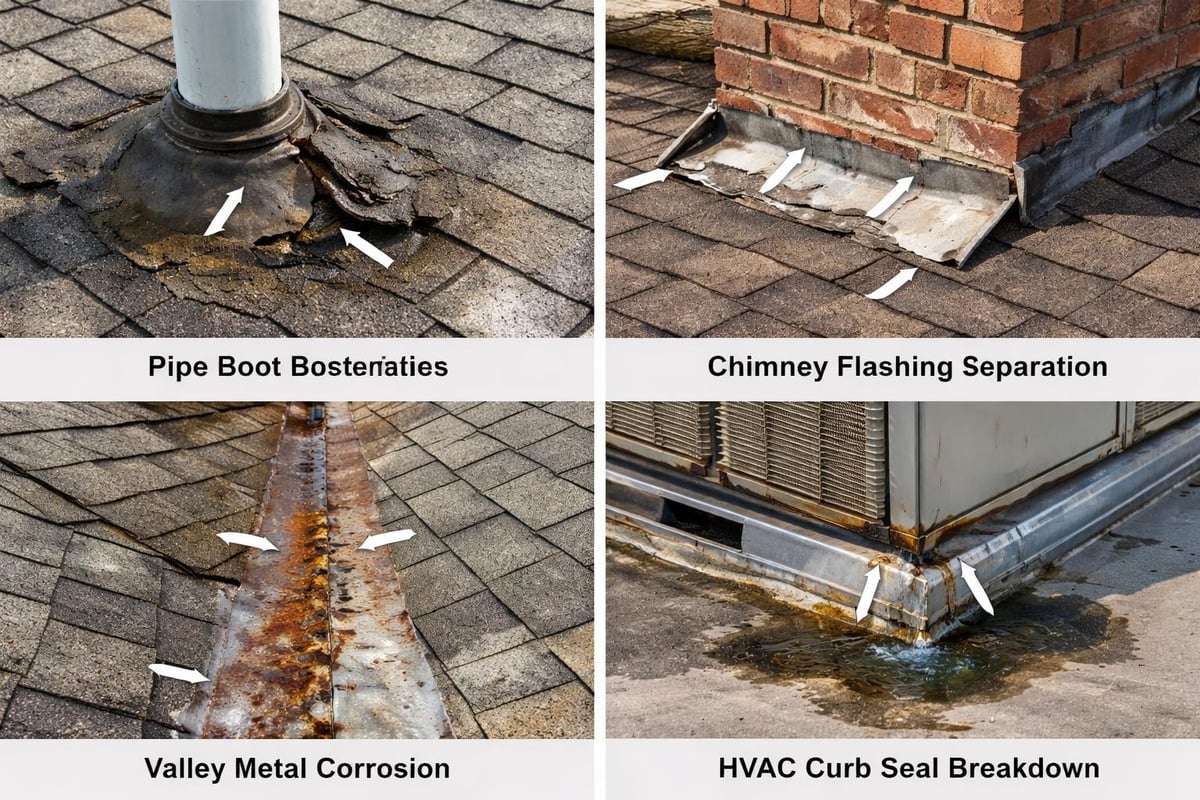
Low-slope and flat commercial roofs develop leaks through different mechanisms than residential pitched roofs. Ponding water areas, membrane seam failures, and base flashing deficiencies dominate commercial roof leakage repairing scenarios. According to professional roof failure investigation methods, systematic evaluation of these common failure points provides the foundation for accurate leak diagnosis.
Material-Specific Failure Patterns
Different roofing materials exhibit characteristic failure modes that inform repair strategies. Asphalt shingles develop leaks primarily through:
- Wind-lifted tabs exposing underlayment
- Cracked or missing shingles from impact damage
- Granule loss leading to accelerated deterioration
- Improperly driven or corroded fasteners
Metal roofing systems typically leak at fastener locations, panel seams, or transition flashings rather than through the metal panels themselves. The fastener holes provide direct pathways for water when gaskets compress, screws back out, or thermal expansion creates movement.
Tile and slate roofs rely on overlapping layers for waterproofing, making underlayment the actual waterproofing membrane. When underlayment fails beneath intact tiles, roof leakage repairing requires careful tile removal, underlayment replacement, and tile reinstallation without breakage.
| Roofing Material | Primary Leak Locations | Typical Lifespan | Repair Complexity |
|---|---|---|---|
| Asphalt Shingles | Valleys, penetrations, edges | 15-30 years | Moderate |
| Metal Panels | Fasteners, seams, transitions | 30-50 years | Low to Moderate |
| TPO/EPDM Membrane | Seams, flashings, penetrations | 15-25 years | Moderate |
| Tile/Slate | Underlayment, flashings | 50-100+ years | High |
Professional Leak Detection Methods
Accurate leak identification separates successful roof leakage repairing from wasteful trial-and-error approaches. Professional contractors employ multiple detection techniques, often combining methods for comprehensive analysis.
Visual inspection remains the foundation of leak detection. Trained technicians examine roofing materials for obvious damage, checking penetration flashings, valley conditions, and membrane seams. Interior inspections from attic spaces reveal water staining patterns, tracking moisture paths back toward potential entry points. Advanced detection techniques extend beyond basic visual assessment to pinpoint elusive leak sources.
Water testing provides definitive confirmation when leak locations remain uncertain. Systematic water application using garden hoses recreates precipitation conditions while observers monitor interior spaces. This method requires patience, starting below suspected leak areas and progressively moving upward to isolate the exact entry point.
Infrared thermography identifies moisture trapped within roofing assemblies by detecting temperature differentials. Wet insulation appears cooler than dry areas during daytime heating or retains heat differently during evening cooling. This non-invasive technology proves particularly valuable for large commercial roofs where visual inspection alone cannot identify all compromised areas.
Documentation and Assessment Protocols
Thorough documentation supports effective roof leakage repairing and provides valuable records for property management and insurance purposes. Professional contractors photograph damage conditions, measure affected areas, and create detailed reports describing findings.
The assessment process includes:
- Exterior roof condition evaluation
- Interior damage extent documentation
- Structural impact analysis
- Moisture meter readings
- Repair scope development
Moisture meters quantify water content in building materials, distinguishing between active leaks and residual moisture from previous events. This data informs whether immediate roof leakage repairing addresses current intrusion or if dried materials simply show historical water damage requiring cosmetic restoration.
Understanding whether leaks occur during every rain event, only during wind-driven precipitation, or exclusively during heavy downpours provides diagnostic clues. Intermittent leaks often indicate marginal flashing details overwhelmed by specific weather conditions rather than catastrophic roofing failures.
Repair Techniques for Different Roof Systems
Effective roof leakage repairing matches repair methods to specific roofing systems, leak causes, and damage extent. Step-by-step repair approaches provide frameworks, but experienced contractors adapt techniques to site-specific conditions.
Shingle Roof Repairs
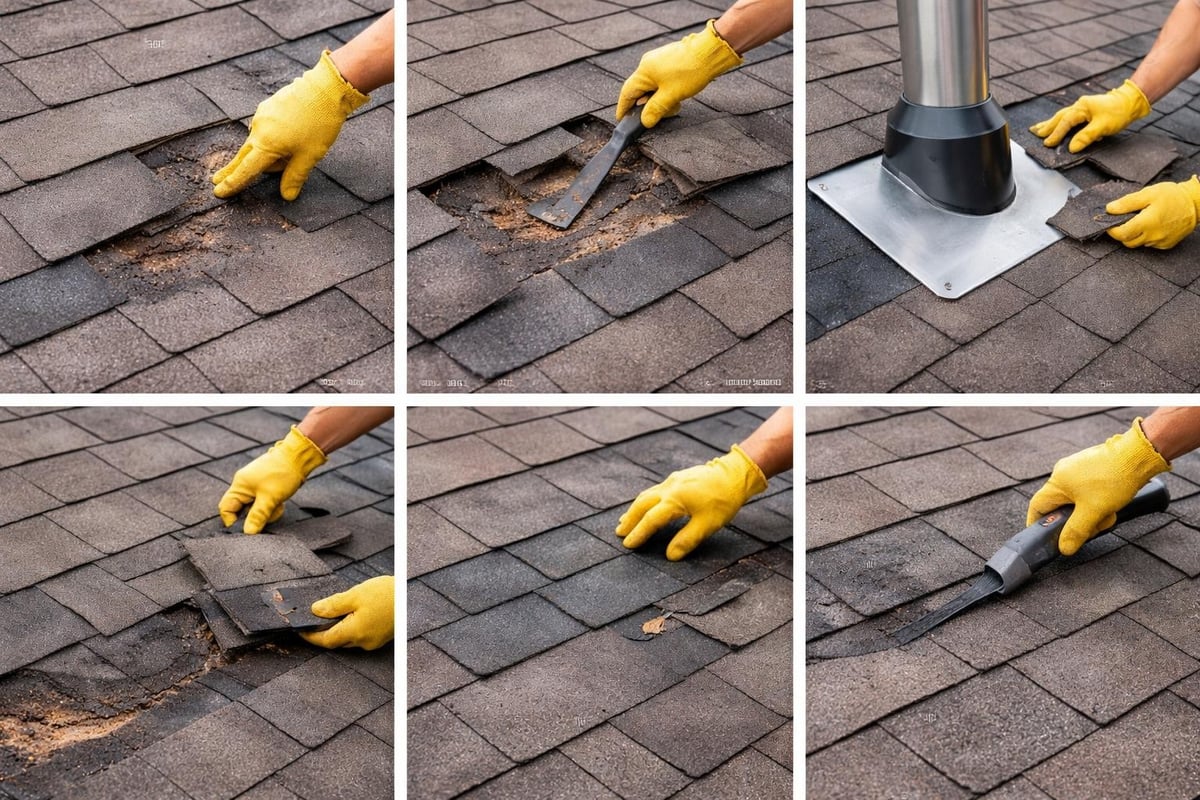
Asphalt shingle roof leakage repairing typically involves targeted shingle replacement, flashing repairs, or valley reconstruction. For isolated damaged shingles, replacement maintains roof integrity without extensive work:
- Remove damaged shingles by lifting overlapping courses
- Extract old fasteners and clean substrate
- Install new shingles matching existing color and style
- Seal tabs and fasteners according to manufacturer specifications
- Verify proper overlap and alignment
Flashing repairs require more extensive work since flashings integrate with multiple roofing layers. Chimney reflashing involves removing adjacent shingles, installing new step and counterflashing, and reinstalling roofing materials with proper overlap sequences.
Valley repair complexity depends on valley construction type. Open metal valleys require complete valley metal replacement when corroded, including underlying valley underlayment. Woven or closed-cut valleys need careful shingle removal extending well beyond damaged areas to ensure waterproof reconstruction.
Commercial Flat Roof Solutions
Low-slope commercial roof leakage repairing addresses membrane failures, seam separations, and flashing deficiencies unique to these systems. Single-ply membranes like TPO and EPDM utilize different repair approaches than built-up or modified bitumen roofs.
For TPO and EPDM membranes, repairs involve:
- Cleaning repair areas with approved primers
- Cutting patches extending beyond damaged zones
- Applying membrane adhesive or heat-welding seams
- Rolling patches to ensure complete bonding
- Verifying seam integrity through pull testing
Built-up roof (BUR) repairs require hot asphalt application, making them more complex and weather-dependent. Modified bitumen systems accept torch-applied or cold-adhesive patches depending on original installation methods. Property managers seeking commercial roofing repair guidance benefit from understanding these system-specific requirements.
Metal roof leakage repairing focuses on fastener renewal, sealant replacement, and panel repairs. Many metal roof leaks resolve through simple fastener tightening and gasket replacement rather than extensive panel work. When panels sustain damage, patch panels install over compromised areas using lap sealants and matching fastener patterns.
Preventative Maintenance Programs
Proactive maintenance dramatically reduces emergency roof leakage repairing needs while extending roofing system lifespan. Regular inspection and maintenance protocols catch small issues before they escalate into major failures.
Biannual inspections identify emerging problems during spring and fall periods. These inspections examine:
- Flashing conditions at all penetrations
- Sealant integrity around curbs and transitions
- Debris accumulation in valleys and drains
- Fastener tightness and gasket compression
- Surface wear patterns and material deterioration
Seasonal maintenance tasks preserve roofing system performance. Gutter cleaning prevents water backup under roof edges. Debris removal from valleys and flat roof areas eliminates moisture retention that accelerates material breakdown. Tree trimming reduces impact damage from falling branches and minimizes leaf accumulation.
Documentation from routine maintenance creates valuable historical records. Tracking repair locations, material conditions, and inspection findings enables informed decisions about repair-versus-replacement timing. This data proves particularly valuable for insurance claim documentation when storm damage occurs.
Critical Detail Monitoring
Certain roof details require heightened attention during maintenance inspections. Penetration flashings seal around pipes, vents, and equipment but deteriorate faster than surrounding roofing materials due to differential movement and sun exposure. Annual flashing inspections with prompt sealant renewal prevent the majority of penetration-related roof leakage repairing needs.
Transitional flashings where roofs meet walls, parapets, or adjacent structures experience mechanical stress from thermal expansion. These details benefit from semi-annual verification that counterflashings remain properly embedded, step flashings maintain proper overlap, and sealants show no cracking or separation.
| Maintenance Task | Frequency | Impact on Leak Prevention |
|---|---|---|
| Gutter Cleaning | Quarterly | High |
| Penetration Flashing Inspection | Annually | Very High |
| Sealant Renewal | Every 3-5 years | High |
| Debris Removal | After storms | Moderate to High |
| Professional Inspection | Bi-annually | Very High |
Emergency Response Procedures
When active leaks occur, immediate response minimizes interior damage while permanent roof leakage repairing proceeds. Property owners should understand temporary mitigation steps and when professional emergency services become necessary.
Interior protection takes priority during active leaks. Moving valuables from affected areas, placing collection containers under drips, and covering furniture with plastic sheeting limits damage. Documenting damage through photographs supports insurance claims and repair estimates.
Temporary roof coverings provide short-term weather protection. Heavy-duty tarps secured with sandbags or lumber battens keep water out until proper repairs occur. However, improper tarp installation sometimes causes additional damage through fastener penetrations or trapped moisture, making professional emergency response preferable when feasible.
Professional emergency roof leakage repairing services offer rapid response that balances temporary protection with permanent solutions. In-house crews can assess damage severity, implement immediate waterproofing, and schedule comprehensive repairs without delays inherent in subcontractor coordination. For critical situations, emergency roofing resources provide guidance on rapid response options.
Storm Damage Assessment
Severe weather events create widespread roof damage requiring systematic assessment. Post-storm roof inspections identify compromised areas before leaks develop, enabling proactive repairs rather than reactive emergency response.
Wind damage manifests through lifted shingles, displaced flashings, and impact damage from flying debris. Hail creates bruising in asphalt shingles, dents in metal roofing, and cracks in tile products. Professional inspection distinguishes between cosmetic damage and functional failures requiring immediate roof leakage repairing attention.
Insurance claim support becomes critical after major storm events. Detailed documentation, accurate damage assessment, and proper scope development ensure appropriate claim settlements. Understanding roofing insurance claim processes helps property owners navigate restoration efficiently.
Material Selection and Quality Standards
Successful roof leakage repairing extends beyond immediate fixes to include material selection that ensures longevity. Using quality materials matched to specific applications prevents premature repair failures.
Flashing materials must resist corrosion while maintaining flexibility through thermal cycles. Galvanized steel provides economical performance for many applications, while copper and stainless steel deliver superior longevity in demanding environments. Aluminum flashings suit certain coastal applications but require careful compatibility assessment with dissimilar metals.
Sealant selection significantly impacts repair durability. General-purpose caulks fail rapidly in roof environments exposed to UV radiation, temperature extremes, and constant moisture. Professional-grade polyurethane, silicone, or butyl sealants formulated for roofing applications provide necessary performance. Quality material guidance emphasizes matching products to specific substrates and exposure conditions.
Underlayment choices affect repair quality when roof leakage repairing involves material removal. Self-adhering modified bitumen underlayments provide superior waterproofing compared to standard felt papers, particularly around penetrations and in valleys. Synthetic underlayments offer tear resistance and longer exposure ratings during extended projects.
Installation Standards and Workmanship
Even quality materials fail when improperly installed. Proper roof leakage repairing follows manufacturer installation guidelines and industry best practices to ensure warranty compliance and performance reliability.
Fastener placement, quantity, and type must match specifications for each roofing material. Over-driven fasteners crush substrates and compromise waterproofing. Under-driven fasteners allow material movement and premature failure. Proper fastener selection ensures corrosion resistance and holding power throughout the repair's service life.
Overlap dimensions at flashings, shingles, and membrane seams create the redundant protection that prevents leaks. Insufficient overlaps provide direct water entry paths. Excessive overlaps sometimes create bulges that disrupt drainage or create stress concentrations. Following proven leak detection and repair methods ensures installations meet professional standards.
Working with Professional Contractors
Selecting qualified contractors for roof leakage repairing protects property owners from substandard work, safety incidents, and warranty issues. Understanding contractor evaluation criteria enables informed hiring decisions.
Licensing and insurance verification provides fundamental protection. Licensed contractors demonstrate minimum competency through examination and continuing education. Comprehensive general liability and workers' compensation insurance protects property owners from liability when accidents occur.
In-house crew operations ensure consistent quality and accountability compared to subcontractor-dependent business models. Companies maintaining dedicated employees control training, equipment quality, and workmanship standards. This approach eliminates coordination delays and miscommunication that plague projects involving multiple subcontracted trades.
Detailed documentation separates professional operations from inadequate contractors. Comprehensive inspection reports, accurate scopes of work, and transparent recommendations enable informed decisions. Photographic documentation, moisture readings, and written assessments create records supporting immediate repairs and long-term planning.
Warranty Coverage and Service Commitments
Labor warranties demonstrate contractor confidence in workmanship quality. Extended labor warranties covering five years or more indicate companies committed to long-term performance rather than short-term profits. These warranties complement manufacturer material warranties to provide comprehensive protection.
Response time commitments matter particularly for commercial properties where roof leaks disrupt operations. Same-day service capabilities for emergency situations minimize business interruption and prevent cascading damage. Clear communication protocols ensure property managers receive timely updates throughout roof leakage repairing projects.
Project completion standards extend beyond functional repairs to include site cleanliness and final verification. Professional contractors remove debris, protect landscaping, and verify waterproofing through final inspections. Comprehensive roofing service approaches deliver complete solutions rather than minimum compliance with repair scopes.
Long-Term Performance Optimization
Strategic roof leakage repairing considers not just immediate fixes but long-term system performance. Understanding repair-versus-replacement economics guides decisions that optimize building lifecycle costs.
Isolated repairs make financial sense when overall roof condition remains sound. However, when repairs become frequent or affect large percentages of roofing area, full replacement often provides better value. Professional assessments quantify remaining service life, helping owners time major investments appropriately.
System upgrades during roof leakage repairing enhance performance beyond original specifications. Improved ventilation addresses moisture issues contributing to material deterioration. Enhanced insulation reduces energy costs while protecting roofing materials from extreme temperature fluctuations. Upgrading flashing details during repairs prevents future failures at these critical locations.
Preventative treatments extend service life between major interventions. Roof coatings renew surface protection on aged materials, reflecting UV radiation and sealing minor surface cracks. These treatments prove particularly cost-effective for commercial flat roofs approaching mid-life, postponing replacement while maintaining waterproofing integrity.
Budget planning for roofing lifecycle costs enables proactive rather than reactive management. Establishing replacement reserves prevents financial stress when roofs reach end-of-life. Regular inspections and minor repairs funded from operational budgets minimize emergency expenditures and extend intervals between major capital investments.
Effective roof leakage repairing combines accurate detection, appropriate repair techniques, and preventative maintenance to protect buildings from water intrusion damage. Whether addressing emergency leaks or planning comprehensive roof restoration, informed decision-making ensures lasting results. For Fort Worth property owners seeking responsive, professional roofing solutions backed by in-house crews and transparent communication, Texcore Construction delivers same-day emergency service, detailed assessments, and quality workmanship supported by comprehensive warranties.