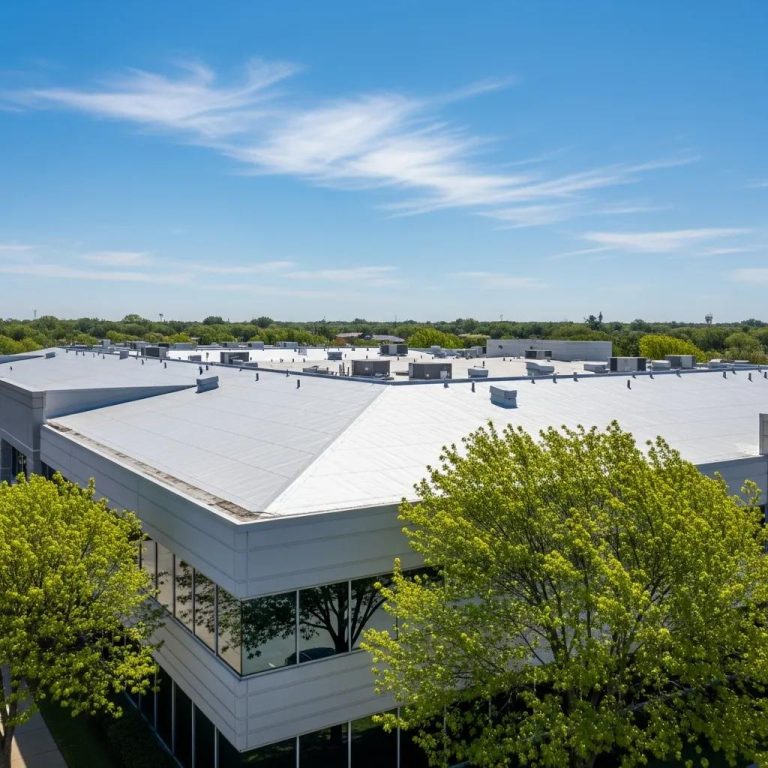
Spray Foam Roofing in Fort Worth: The Energy-Saving Commercial Roof Most Owners Overlook
Spray Foam Roofing in Fort Worth: The Energy-Saving Commercial Roof Most Owners Overlook
Spray foam roofing remains underutilised among commercial property owners in Fort Worth despite clear energy-saving advantages. The system delivers high-performance insulation and contributes to long-term cost reduction through lower energy use. This article examines the principal benefits of spray foam roofing, the installation sequence, typical costs, and how Texcore Construction supports roofing insurance claims. With this information, property owners can make informed decisions and improve their building’s energy efficiency.
Key Takeaways
- Spray foam roofing offers exceptional energy efficiency by maintaining consistent indoor temperatures in commercial buildings.
- The high R-value of spray foam insulation minimizes heat transfer, reducing heating and cooling energy needs.
- Spray foam roofing provides superior durability, resisting extreme weather, mold, mildew, and reducing leak risks.
- The installation process includes surface preparation, foam application, and protective coating for long-lasting performance.
- Typical installation costs range from $3.50 to $6.00 per square foot, with potential energy savings up to 30% annually.
- Texcore Construction assists with roofing insurance claims, helping property owners maximize coverage and simplify the claims process.
- Regular maintenance, including inspections, cleaning, and repairs, extends the lifespan and effectiveness of spray foam roofs.
- Texcore Construction offers comprehensive warranties, including a five-year labor warranty and manufacturer material guarantees.
What Are the Key Benefits of Spray Foam Roofing for Commercial Properties in Fort Worth?
Spray foam roofing delivers multiple advantages that suit commercial applications. Its principal benefit is superior thermal performance, which can produce measurable cost savings over time. The material helps maintain stable interior temperatures and reduces dependency on HVAC systems. Additionally, spray foam offers robust durability, providing a long-term solution that resists severe weather.
For Fort Worth property owners, spray foam also supports sustainability objectives. It reduces energy consumption and can be applied over existing roofs, which limits waste. Texcore Construction specializes in spray foam installation and provides the technical expertise required for reliable, energy-efficient outcomes.
How Does Spray Foam Roofing Enhance Energy Efficiency in Commercial Buildings?

Spray foam improves energy performance through its high R-value, which measures thermal resistance and reduces heat transfer. In summer, it limits heat gain; in winter, it helps retain interior warmth. The result is lower demand on heating and cooling systems.
Further research underscores the critical role of R-value in determining the effectiveness of spray foam insulation.
Thermal Performance & R-Value of Spray Foam Roof Insulation
The thermal resistance characteristics of thicker closed-cell spray polyurethane foam can require greater and more costly foam thicknesses to achieve a specified R-value. A realistic approach for testing the thermal insulation value of closed-cell spray polyurethane foam roof insulation, 2003
In addition, the continuous application of spray foam forms a monolithic membrane that reduces air leakage and improves the thermal envelope. By lowering HVAC consumption, businesses can realise meaningful reductions in energy bills, making spray foam a financially prudent option.
The comprehensive benefits of spray foam in creating a superior thermal envelope are well documented.
Spray Foam for Energy Savings & Building Insulation
Heating and cooling represent a major household expense. Reducing these costs, saving energy, and improving indoor comfort are primary reasons to strengthen the building thermal envelope. Typical improvements include additional insulation, reduced air infiltration, and moisture control. This report describes the use of spray foam materials to insulate, seal, and manage moisture.
Spray Foam in Accessible Spaces: Best Practices and Case Studies for Retrofit in Mixed-Humid Climates, 2011
What Durability Advantages Does Spray Foam Roofing Offer Compared to Traditional Materials?
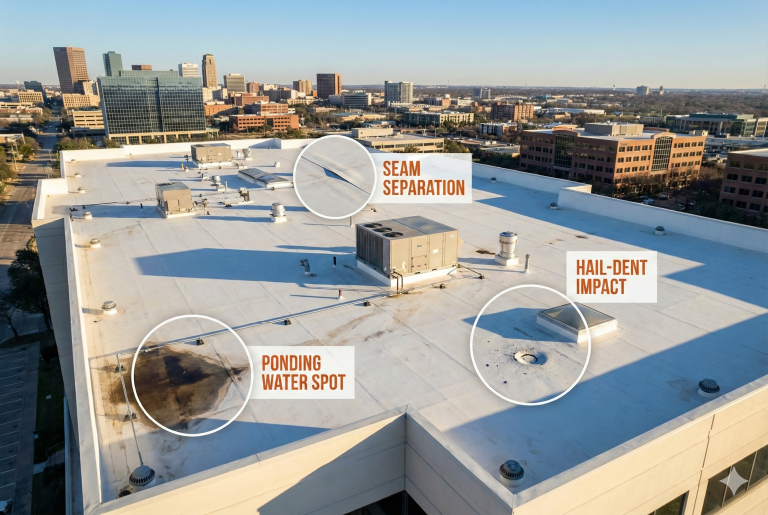
Relative to traditional roofing materials, spray foam provides enhanced durability. Its resilient composition tolerates severe weather events such as heavy rain, hail, and high winds. Because the foam creates a seamless layer, common failure points like seams and joints are eliminated, which reduces the likelihood of leaks.
Spray foam also resists mold and mildew, which can undermine other roofing systems. This durability extends service life and reduces the frequency and cost of repairs and replacements.
How Is Spray Foam Roofing Installed on Commercial Buildings in Fort Worth?
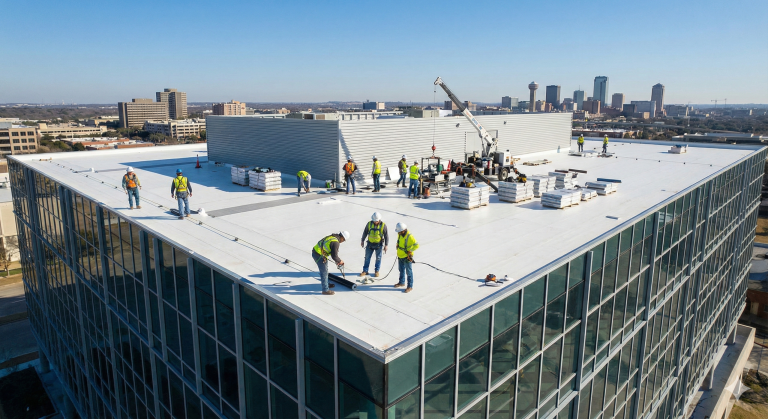
Installation follows a structured process designed to ensure performance and longevity. The work begins with a comprehensive inspection of the existing roof to evaluate condition and identify necessary preparations.
What Are the Step-by-Step Procedures for Spray Foam Roof Installation?
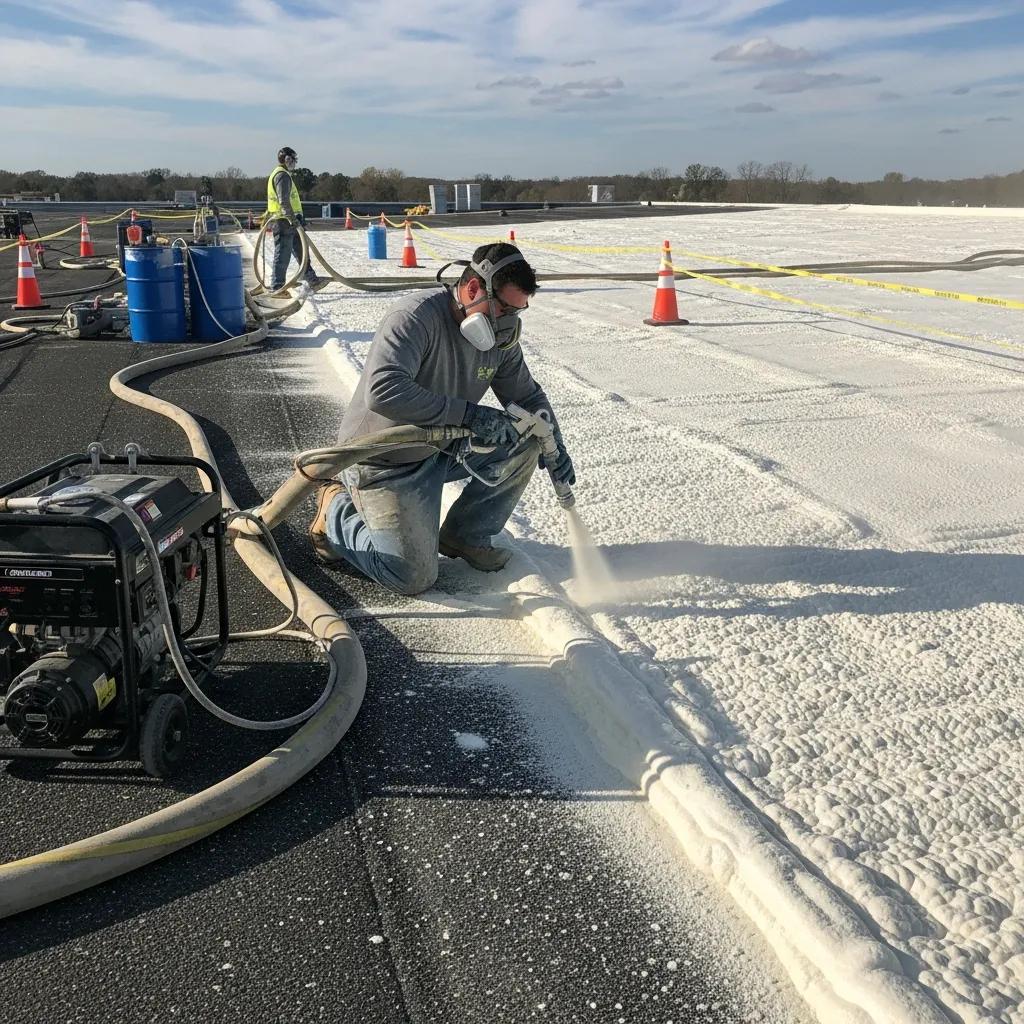
Typical installation stages include:
- Surface Preparation: Cleaning and repairing the existing roof surface to ensure proper adhesion.
- Application of Spray Foam: Using specialized equipment to apply the spray foam evenly across the roof surface.
- Coating Application: Once the foam has cured, a protective coating is applied to enhance durability and UV resistance.
This sequence ensures a quality installation while minimising disruption to building operations.
Long-term performance depends strongly on the quality of application and the coating material’s capability to resist climate and weather effects, as noted by various studies.
Evaluating Sprayed Polyurethane Foam (PUF) Roofing
This report documents a study evaluating sprayed polyurethane foam (PUF) roofing and protective coatings for reroofing at Army installations. Manufacturers, field applications, and literature were surveyed to identify advantages and disadvantages. The study concluded that service life depends on the applicator’s skill and the coating material’s ability to withstand climate and weather. PUF can be used as an alternative to conventional built-up roofing (BUR) for new roofs or to replace failed roofs.
Evaluation of Sprayed Polyurethane Foam Roofing and Protective Coatings, 1981
Which Local Regulations Affect Spray Foam Roofing Installation in Fort Worth?
Fort Worth enforces local regulations that affect spray foam installation, including building codes that specify acceptable materials, methods, and safety standards. Property owners should engage experienced contractors such as Texcore Construction to ensure the work meets all regulatory requirements and passes inspection.
What Are the Typical Costs and Financial Benefits of Spray Foam Roofing in Fort Worth?
Understanding cost implications is essential for commercial property owners. Although the initial investment may exceed that of some conventional roofing options, the long-term financial advantages frequently offset the upfront expense.
How Does Spray Foam Roofing Provide Long-Term Energy Savings?
Spray foam roofing reduces energy demand by improving insulation and sealing air leaks, which lowers utility costs. Studies indicate businesses can save up to 30% on energy expenses following installation, supporting the case for spray foam as a sound financial investment.
What Is the Average Installation Cost for Commercial Spray Foam Roofs in Fort Worth?
Average installation costs vary by roof size and complexity. Property owners should expect pricing in the range of $3.50 to $6.00 per square foot for spray foam roofing. When accounting for energy savings and reduced maintenance, spray foam often represents a cost-effective lifecycle solution.
The table summarises key cost factors for spray foam roofing and highlights the potential for long-term savings.
How Can Texcore Construction Assist with Roofing Insurance Claims in Fort Worth?
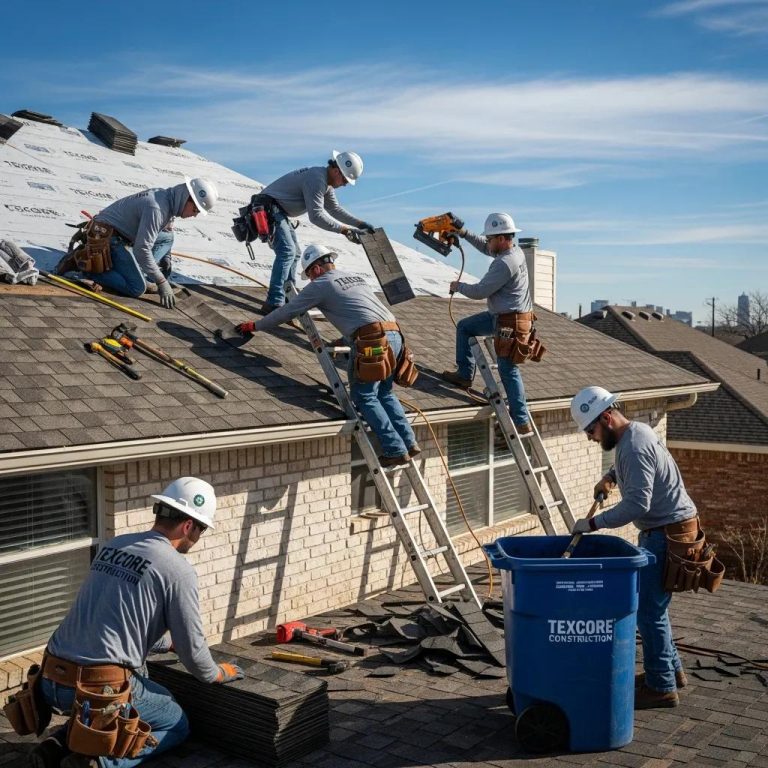
Navigating roofing insurance claims can be complex for property owners. Texcore Construction provides experienced support to help clients pursue appropriate coverage and navigate the claims process efficiently.
What Is the Process for Filing Roofing Insurance Claims with Texcore Construction?
The typical process for filing a roofing insurance claim with Texcore Construction includes:
- Initial Consultation: Discussing the damage and reviewing the insurance policy.
- Documentation: Collecting necessary documentation, including photos and estimates.
- Submission: Submitting the claim to the insurance company on behalf of the client.
This streamlined approach allows clients to focus on their operations while Texcore manages the claim details and communications.
How Does Insurance Claim Assistance Support Commercial Spray Foam Roofing Projects?
Insurance claim assistance helps property owners maximise recoverable funds for spray foam roofing projects. Texcore Construction applies industry knowledge to prepare accurate assessments and documentation, which increases the likelihood of a successful claim. This support reduces administrative burden and improves the overall upgrade experience.
What Maintenance and Longevity Considerations Should Commercial Property Owners Know?
Proper maintenance is essential to preserve the performance and service life of spray foam roofing. Regular upkeep helps identify and address issues before they escalate.
How Does Regular Maintenance Extend the Life of Spray Foam Roofs?
Regular maintenance tasks include:
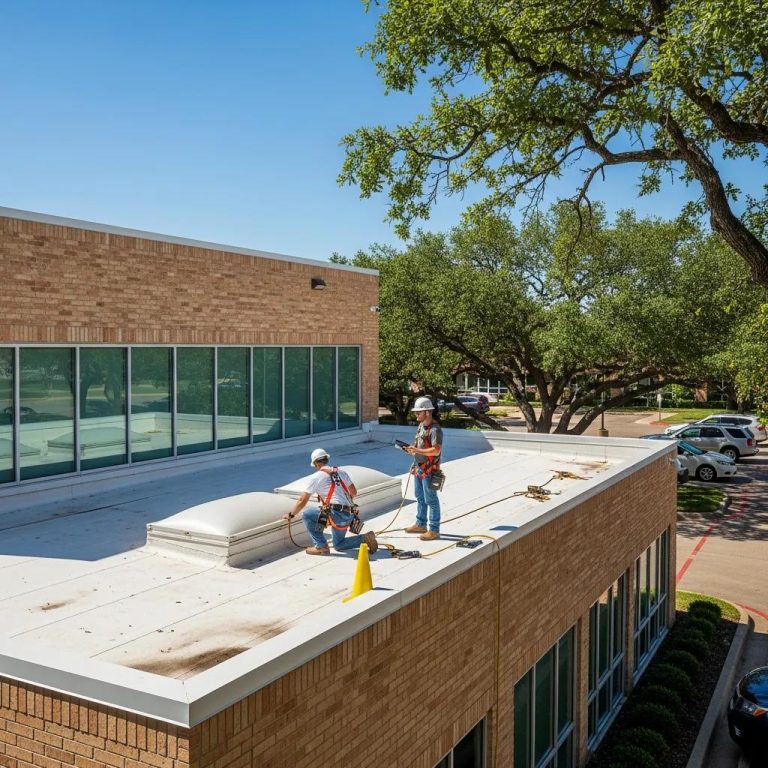
- Routine Inspections: Checking for signs of wear or damage.
- Cleaning: Removing debris and dirt that can affect performance.
- Repairs: Addressing any minor issues promptly to prevent further damage.
Adhering to a scheduled maintenance programme extends the roof’s service life and reduces the risk of costly repairs.
What Warranty and Guarantee Options Does Texcore Construction Provide?
Texcore Construction provides comprehensive warranty options for spray foam installations. Clients receive a five-year labour warranty for installation-related issues, supplemented by manufacturer material warranties that address defects and performance concerns.
To review available options, visit our services page for a detailed overview.
These warranty provisions reflect Texcore Construction’s commitment to quality and client satisfaction, positioning the company as a reliable partner for commercial roofing projects in Fort Worth.
Clients considering residential solutions should review our residential roofing services in Fort Worth.
For additional information on assistance with roofing insurance claims in Fort Worth, please contact our team.
For commercial roofing needs, including spray foam options, consider our commercial roofing services in Fort Worth.
Frequently Asked Questions
What is the lifespan of a spray foam roof?
Service life varies with installation quality, maintenance, and environmental exposure. Typically, a properly installed spray foam roof lasts between 20 and 50 years. Regular inspections and timely repairs can extend this range. Material quality and installer expertise are key determinants of long-term performance.
Can spray foam roofing be applied over existing roofs?
Yes. Spray foam roofing is commonly applied over existing roofs as an overlay, which can save time and reduce waste by avoiding a full tear-off. The existing roof must be assessed to confirm it can support the new system; a qualified contractor will evaluate roof integrity and recommend the appropriate approach.
How does spray foam roofing compare to other roofing materials in terms of cost?
Initial installation costs for spray foam may exceed those of some conventional materials, such as asphalt or metal. However, spray foam often delivers significant long-term savings through reduced energy use—studies report up to 30% savings—and lower repair and replacement frequency. When evaluated over the lifecycle, spray foam can be a cost-effective choice.
What are the environmental benefits of spray foam roofing?
Spray foam roofing offers environmental benefits by lowering energy consumption and associated greenhouse gas emissions for heating and cooling. Applying foam over existing roofs reduces construction waste. Many spray foam products also incorporate renewable components, which can further enhance sustainability outcomes.
Is spray foam roofing suitable for all types of commercial buildings?
Spray foam is versatile and appropriate for a range of commercial building types, including warehouses, retail facilities, and office buildings. It adapts well to flat and low-slope roofs and conforms to complex shapes. Suitability depends on specific building requirements, local regulations, and the condition of the existing roof; consultation with a professional contractor is recommended.
What should property owners know about the maintenance of spray foam roofs?
Effective maintenance includes scheduled inspections, periodic cleaning to remove debris, and prompt repair of minor damage. These actions preserve thermal performance and prevent issues such as moisture retention. Working with a qualified contractor ensures maintenance tasks are performed correctly and helps maximise the system’s lifespan and efficiency.
Conclusion
Selecting spray foam roofing for a commercial property in Fort Worth can yield measurable energy savings, improved durability, and long-term cost benefits. The system enhances insulation and supports sustainability by reducing energy consumption. Partnering with Texcore Construction ensures professional installation and assistance with roofing insurance claims. Contact Texcore to assess how spray foam can strengthen your building’s energy performance.