24/7 Emergency Roofing & Tarping in North Texas | Texcore Construction
Why Emergency Roofing Matters in North Texas
North Texas faces some of the most unpredictable and intense weather events in the country. From spring hailstorms and straight-line winds to tornadoes and flash flooding, homes and businesses in this region are under constant threat. When a roof is compromised during one of these events, waiting days for a fix is not an option. That’s where emergency roofing services step in — providing fast, temporary solutions that protect interiors, prevent further damage, and buy time for permanent repairs.
This guide explains what qualifies as an emergency, what actions you should take immediately after a storm, the role of tarping and other temporary repairs, and how to navigate roofing insurance claims. It also outlines the importance of choosing the right contractor and the differences between residential and commercial emergency roof work. Whether you’re a homeowner in Fort Worth or managing a large industrial property in North Texas, being prepared makes a difference. With a strong North Texas emergency roofing plan, you’re better equipped to act fast.
What Qualifies as a Roofing Emergency?
Not all damage requires a 2 a.m. call, but the following situations do:
Major Storm Damage
Severe storms with hail, wind, and flying debris can strip shingles, crack tiles, or tear open sections of your roof. If the underlying roof deck is exposed, moisture intrusion can begin immediately. This is where storm damage roof repair becomes urgent and often qualifies as an emergency roofing situation.
Fallen Trees or Debris Impact
A heavy limb crashing through a roof during a storm can collapse rafters and create immediate interior hazards. Impact points may not always be visible from the ground, but they often cause structural compromise.
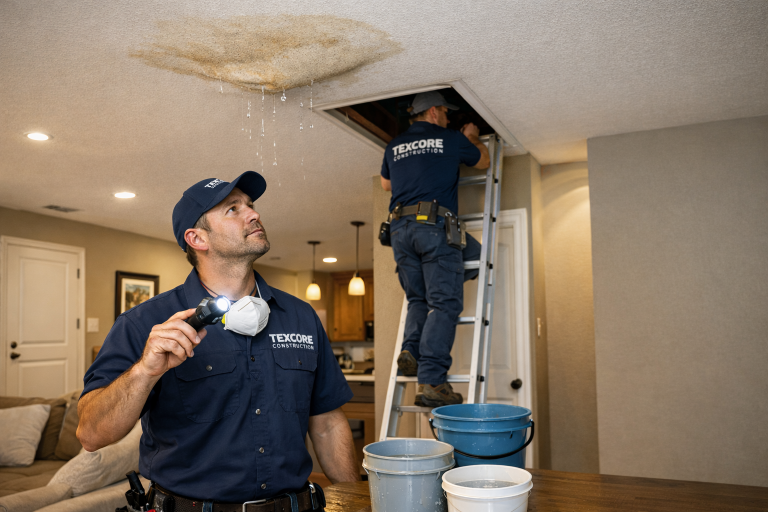
Active or Widespread Leaks
Water entering your home through multiple ceiling points or pooling near electrical components is dangerous. Even minor leaks can rapidly escalate, causing mold growth and rot if not quickly addressed. These scenarios demand urgent roof leak repair as part of a broader emergency roofing solution.
Missing Flashing or Shingles After High Winds
Wind-driven rain easily penetrates missing flashing at chimneys or valleys. If you notice exposed underlayment or blown-off shingles, your roof is vulnerable to secondary water damage.
Structural Movement or Sagging
Sagging roof lines, especially after a storm, may suggest load-bearing failures. These should be treated as emergencies and inspected by a qualified roofer immediately. Having a trusted emergency roofer Fort Worth on speed dial ensures fast evaluation and stabilization.
Immediate Steps to Take After Storm Damage
1. Ensure Safety First
Evacuate rooms with visible ceiling sagging, dripping water, or electrical hazards. Never walk on a potentially compromised roof. Secure children and pets away from affected areas.
2. Document the Damage Thoroughly
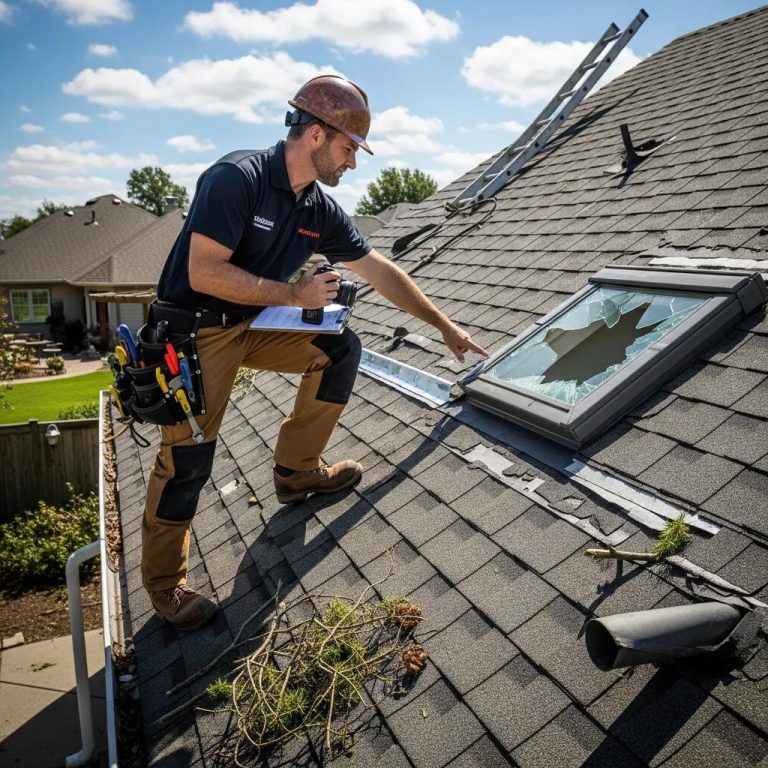
Use your phone to photograph interior leaks, external roof damage, debris, and any broken windows or skylights. Include time-stamped images and videos if possible.
3. Call a 24 Hour Emergency Roof Repair Service
Texcore Construction offers 24/7 emergency roofing throughout Fort Worth and greater North Texas. Calling quickly ensures early mitigation efforts like tarping and short-term patching, which protect your property. If you’re searching for 24 hour emergency roof repair near me, make sure the company is based locally and can respond quickly — not in days. A true emergency roof repair contractor should be onsite within hours, not days.
4. Mitigate Interior Damage
Use buckets or tarps inside to contain water and relocate furniture, electronics, or valuables. Cover hardwood floors with plastic sheeting. Shut off affected electrical circuits as needed.
5. Contact Your Insurance Provider
Most insurers expect immediate reporting and basic mitigation. Provide photos and written summaries. Ask about temporary accommodation coverage if the property is uninhabitable. A reputable emergency roofing company can help you navigate the claim with supporting documentation and inspection reports.
Tarping and Temporary Roof Repairs
Purpose of Tarping
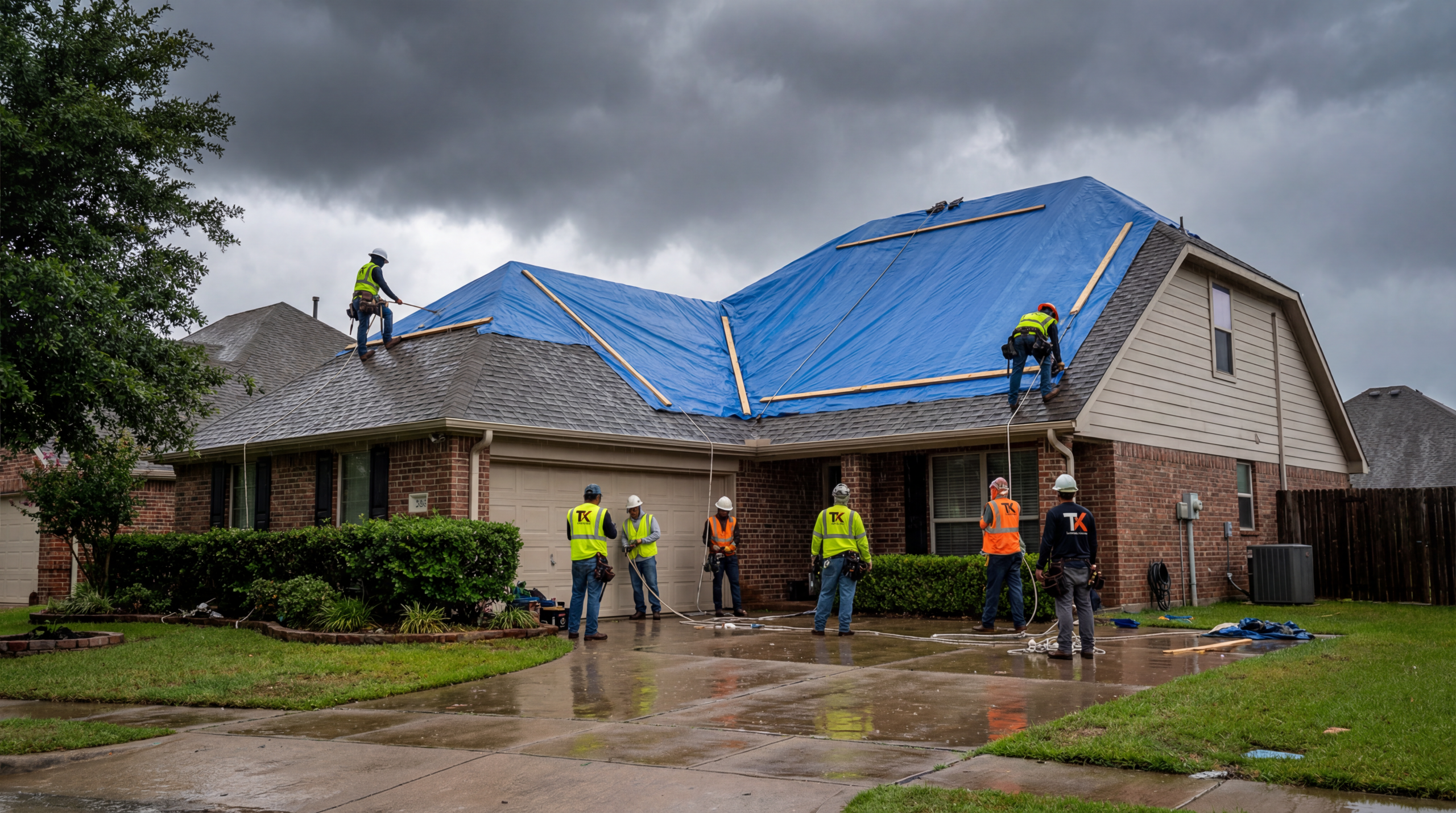
Tarping acts as a moisture barrier over exposed decking or damaged roof segments. It prevents rain from infiltrating insulation, ceilings, drywall, and electrical systems. Professional roof tarping services are critical to minimizing damage while waiting on a full repair or roof replacement.
How Professionals Tarp a Roof
- Heavy-duty, UV-resistant tarps are used, secured with 2x4s or fasteners.
- The tarp must extend beyond the damaged area to ensure coverage.
- Anchoring must prevent lift in high winds, especially on pitched or flat roofs.
- Areas around chimneys, skylights, and vents require reinforced sealing.
Other Temporary Repairs
- Roofing cement and sealants can plug minor punctures or split seams.
- Damaged flashing may be temporarily reinforced with weather-resistant tape.
- Debris removal, gutter clearance, and temporary drainage redirection reduce load and pooling.
Temporary measures should be considered safe for days to a few weeks — not months. Prolonged exposure can break down tarps and exacerbate hidden issues. Using a temporary roof patch effectively is part of any sound emergency roofing protocol.
Emergency Roof Repair for Homes
Common Residential Roofing Emergencies
- Shingle loss exposing underlayment
- Leaks in attics or around skylights
- Tree limbs causing structural shifts
- Hail damage bruising asphalt shingles
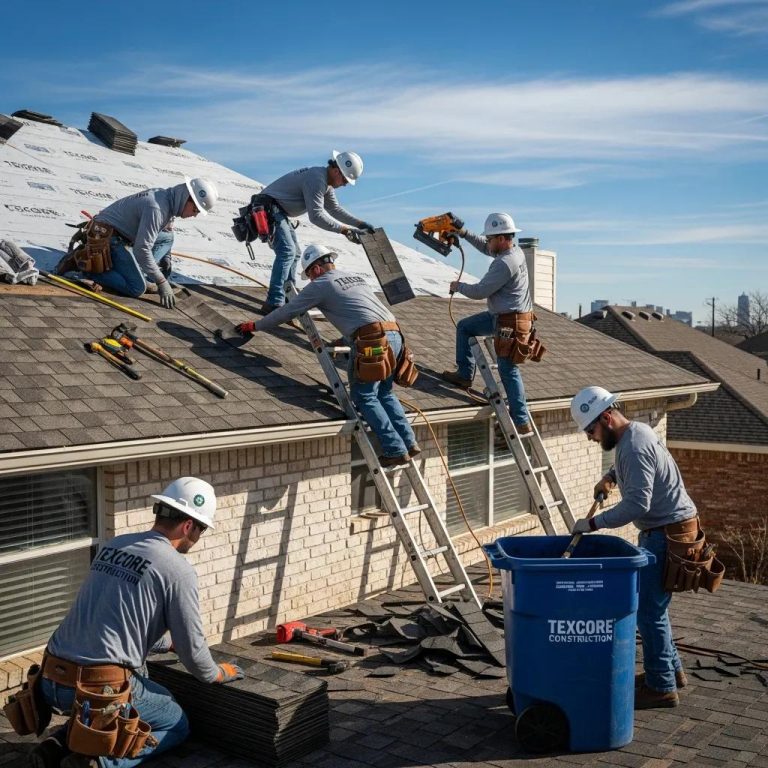
Texcore’s Residential Emergency Process
- Inspection and photo documentation
- Immediate tarp or patch deployment
- Water extraction and moisture assessment
- Proposal for permanent repair or replacement
- Insurance coordination and final resolution
Texcore also ensures residential roofing compliance with Texas building codes and HOA standards, which is especially important in suburban areas like Keller, Southlake, and Arlington.
After-Hours Response
Our crews respond 24/7, including weekends and holidays. Whether it’s a 2 a.m. hail event or Sunday storm, Texcore is available to stabilize and secure your home. If you’re Googling emergency roof repair near me, prioritize companies that back their availability with real, fast action. Our team has deep experience in managing hail damage roof emergency scenarios across North Texas neighborhoods.
Emergency Roof Repair for Commercial and Industrial Buildings
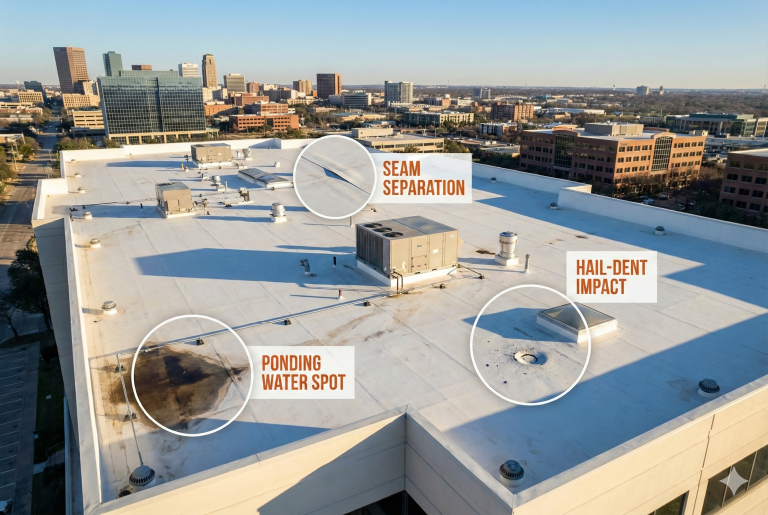
Common Commercial Roofing Issues
- TPO or EPDM membrane punctures from debris
- Blown-off panels on metal roofs
- Drainage failures leading to ponding
- HVAC-related roof penetrations leaking
Industrial Roofing Emergency Repair
Warehouses, factories, and distribution centers in areas like Grapevine, Irving, or the Fort Worth industrial zone face different risks than homes. Industrial roofing emergency repair often involves:
- Larger square footage
- Fire code and OSHA compliance
- Water-sensitive machinery inside
Texcore’s commercial division is trained to:
- Secure large areas using weighted tarps or ballast systems
- Protect inventory and internal assets from moisture
- Document damage for commercial property claims
- Stage equipment to begin full restoration quickly
Business Continuity
Emergency roof repairs for businesses minimize downtime. Temporary fixes are implemented rapidly, then scheduled around operations to avoid further disruption. Our emergency commercial roofing team works around-the-clock to ensure minimal business interruption. We are among the most reliable options for companies searching for emergency roofing help in North Texas.
Emergency Flat Roof Repair: Special Considerations
Flat roofs are common on commercial buildings and multifamily properties. When these fail, drainage is usually the first issue.
- Pooling water from clogged scuppers or blocked internal drains
- Membrane punctures from hail or debris
- Flashing separation at parapet walls
Texcore provides rapid emergency flat roof repair using reinforced patches, membrane welds, or ballasted tarps to prevent further water intrusion while planning a full replacement or recovery system. This type of emergency roofing calls for specialty materials and experienced crews familiar with low-slope systems.
Choosing the Right Emergency Roofing Contractor in North Texas
What to Look For
- Rapid Response: Must offer 24/7 availability
- Local Expertise: Understanding of Fort Worth code, insurers, and weather patterns
- Credentials: Fully insured, bonded, and experienced with both residential and commercial systems
- Warranties: Emergency repairs should include short-term labor guarantees
- Insurance Assistance: Must assist with inspections, adjuster coordination, and documentation
Avoid “storm chasers” who lack a local presence. Stick to a proven provider with a physical office and strong reviews across Tarrant County. When storms hit, a proven emergency roofer Fort Worth team is the most important contact you can have.
Insurance and Emergency Roof Repairs
Your Duties as a Policyholder
Texas insurers require you to mitigate further damage. Delays in calling a roofer may lead to denied claims. Choosing a certified emergency roofing provider shows you’ve taken appropriate action.
What’s Covered
- Sudden and accidental damage from wind, hail, or debris
- Emergency services like tarping and extraction
- Restoration to pre-loss condition (not upgrades)
What’s Not Covered
- Deferred maintenance or pre-existing leaks
- Upgrades not required by code
- Optional services not part of approved scope
Texcore provides:
- Photo and video evidence
- Repair estimates using Xactimate (industry standard)
- Direct adjuster communication on your behalf
Deductibles
Most North Texas homeowners carry 1%–2% wind/hail deductibles. Your insurer will subtract this from the payout, and proof of payment is usually required. In Texas, waiving deductibles is illegal.
Stay Ready: Emergency Roof Response Starts Before the Storm
You can’t predict when the next hailstorm or wind burst will hit, but you can prepare:
- Save Texcore Construction’s 24/7 emergency number now
- Stock plastic sheeting, buckets, and towels
- Understand your insurance policy and deductible
- Schedule annual inspections to reduce pre-existing damage denial risk
When a crisis hits, speed matters. A delayed response can cost you thousands in secondary interior repairs. Partnering with an experienced contractor like Texcore ensures that you get expert stabilization, documentation for claims, and long-term repair — all from one team, backed by a five-year labor roofing warranty. With emergency roofing needs in North Texas increasing due to frequent storm cycles, preparation is more important than ever.