Top Rated Roofers Near Me: Selection Guide
Finding reliable roofing contractors requires more than a quick internet search. Property owners face significant decisions when roof damage strikes or replacement becomes necessary, and the contractor you choose directly impacts your investment's longevity, safety, and overall cost. This comprehensive guide walks you through the essential criteria for identifying top rated roofers near me, examining credentials that matter, understanding warranty structures, and recognizing red flags that signal potential problems. Whether you manage commercial properties or own a residential home, these proven strategies help you make informed decisions that protect your property and budget.
Understanding What Makes Roofers Top Rated
Genuine top-rated status extends far beyond online star ratings. Professional roofing contractors earn their reputation through consistent performance, proper licensing, comprehensive insurance coverage, and verifiable track records with previous clients.
The most reliable contractors maintain active memberships with industry organizations such as The American Roofing Contractors Organization, which accredits only the top 10 percent of contractors nationwide. These memberships indicate commitment to ongoing education, adherence to industry standards, and accountability to professional ethics.
Licensing and Insurance Requirements
Valid licensing demonstrates that contractors meet state and local requirements for operating legally. Fort Worth roofing contractors must carry specific insurance policies that protect property owners from liability.
Essential coverage includes:
- General liability insurance
- Workers' compensation for all crew members
- Commercial auto insurance for company vehicles
- Property damage protection
Request certificates of insurance directly from the insurance provider rather than accepting copies from the contractor. This verification prevents fraud and ensures coverage remains active throughout your project.

In-House Crews Versus Subcontractor Models
The staffing model contractors use significantly affects project quality, timeline reliability, and accountability. Companies employing in-house crews maintain direct control over workmanship standards, safety protocols, and job site cleanliness.
Subcontractor-dependent models introduce variables beyond the primary contractor's control. Communication chains lengthen, quality becomes inconsistent, and warranty enforcement grows complicated when multiple parties share responsibility.
Evaluating Online Reviews and Ratings
Digital reviews provide valuable insights when analyzed critically. Savvy property owners look beyond simple star averages to examine review patterns, response quality, and specific project details mentioned by previous clients.
| Review Platform | Strengths | Considerations |
|---|---|---|
| Google Business | Location-verified reviews, high visibility | Cannot filter by project type |
| Better Business Bureau | Complaint resolution tracking | Smaller review volume |
| Angi (Angie's List) | Detailed project breakdowns | Paid membership may skew representation |
| Yelp | Extensive review filtering options | Algorithm sometimes hides legitimate reviews |
Search for reviews mentioning specific services relevant to your needs. When seeking roof repair contractors, prioritize feedback from clients who had similar repair work completed rather than full replacement testimonials.
Reading Between the Lines
Authentic reviews contain specific details about timeline, communication, problem-solving, and final results. Generic praise lacking concrete examples may indicate manufactured content.
Warning signs include:
- Multiple reviews posted on the same date
- Identical phrasing across different reviewers
- Reviews focusing solely on price without mentioning quality
- Absence of any negative feedback whatsoever
Professional contractors respond to negative reviews constructively, addressing concerns and offering solutions. Defensive or dismissive responses suggest poor customer service practices.
Verifying Credentials and Experience
Documentation verification separates legitimate professionals from unlicensed operators. The National Federation of Roofing Contractors emphasizes using accredited professionals to ensure quality and regulatory compliance.
Request documentation of manufacturer certifications for specific roofing systems. These certifications require contractors to complete training programs, maintain installation standards, and meet volume requirements that demonstrate ongoing expertise.
Years in Business and Local Presence
Longevity indicates stability, though newer companies with experienced leadership can deliver exceptional results. Investigate the principals' backgrounds, particularly their hands-on roofing experience before launching their current companies.
Local presence matters significantly for warranty service and emergency response. Contractors maintaining physical offices, warehouses, and equipment yards in your area demonstrate commitment to the community and accessibility for future service needs.
Understanding Warranty Structures
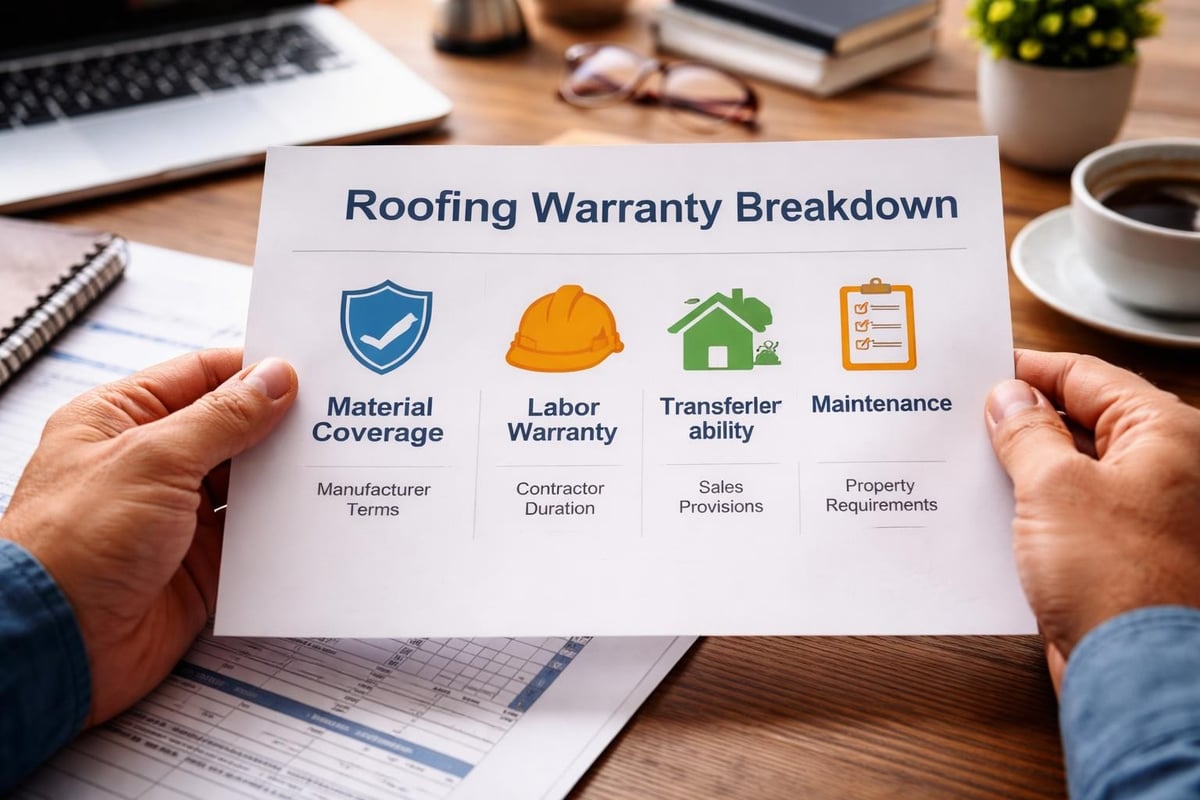
Comprehensive warranty protection involves both manufacturer coverage for materials and contractor guarantees for labor and installation. These separate warranties address different failure points and require clear documentation.
Manufacturer warranties typically cover:
- Material defects in shingles, membranes, or metal panels
- Specified performance standards for weatherproofing
- Varying durations based on product tier selection
- Specific installation requirement compliance
Labor warranties protect against workmanship failures, covering leaks resulting from improper installation, inadequate flashing, or fastener problems. Top rated roofers near me consistently offer minimum five-year labor warranties, with many extending coverage to ten years or longer.
Warranty Transfer and Cancellation Terms
Understand transfer provisions if you plan to sell your property. Some warranties transfer to new owners with minimal fees, adding value to your property. Others become void upon ownership change.
Read cancellation clauses carefully. Certain warranties require specific maintenance schedules, and failure to document routine inspections can void coverage despite paying premium prices for extended protection.
Comparing Estimates and Scope of Work
Professional estimates provide detailed breakdowns rather than single bottom-line figures. Comprehensive proposals specify materials by brand and model, outline surface preparation procedures, describe waste disposal methods, and establish clear timelines.
The National Roofing Contractors Association provides guidance on essential qualifications and considerations, particularly for commercial flat roofing projects where technical specifications become critical.
| Estimate Component | What to Verify | Red Flags |
|---|---|---|
| Material specifications | Exact product names and grades | Generic terms like "high-quality shingles" |
| Labor breakdown | Crew size and estimated duration | Vague "as needed" language |
| Preparation work | Deck inspection and repair allowances | No mention of substrate condition |
| Cleanup and disposal | Specific dumpster placement and removal | Assumption of owner responsibility |
| Payment schedule | Milestone-based installments | Large upfront deposits exceeding 10% |
Request clarification on any ambiguous language. Contractors should willingly explain technical terms and justify their approach to specific challenges your roof presents.
Identifying Lowball Bids
Suspiciously low estimates often indicate shortcuts in materials, inadequate insurance coverage, unlicensed workers, or plans to increase costs through change orders. Compare itemized proposals to identify where lower bids cut corners.
Quality contractors price competitively within a reasonable range. When one estimate falls 30 percent or more below others, investigate thoroughly before proceeding. Vents Magazine discusses critical factors for choosing contractors, including the importance of detailed pricing transparency.
Assessing Communication and Professionalism
Initial interactions predict how contractors will handle your project. Responsive communication, punctual appointments, and thorough documentation during the estimate phase indicate operational standards you can expect throughout the job.
Professional contractors arrive prepared with proper measuring tools, camera equipment for documentation, and tablet or clipboard systems for recording observations. They ask detailed questions about your concerns, timeline preferences, and budget parameters.
Documentation Practices
Top-tier contractors photograph existing conditions, document measurements, and provide written summaries of findings. This documentation becomes invaluable for insurance claims, warranty activation, and future reference.
Request sample project documentation from completed jobs. Quality contractors maintain organized records showing progression photos, material receipts, inspection reports, and final completion certificates.
Checking References and Completed Projects
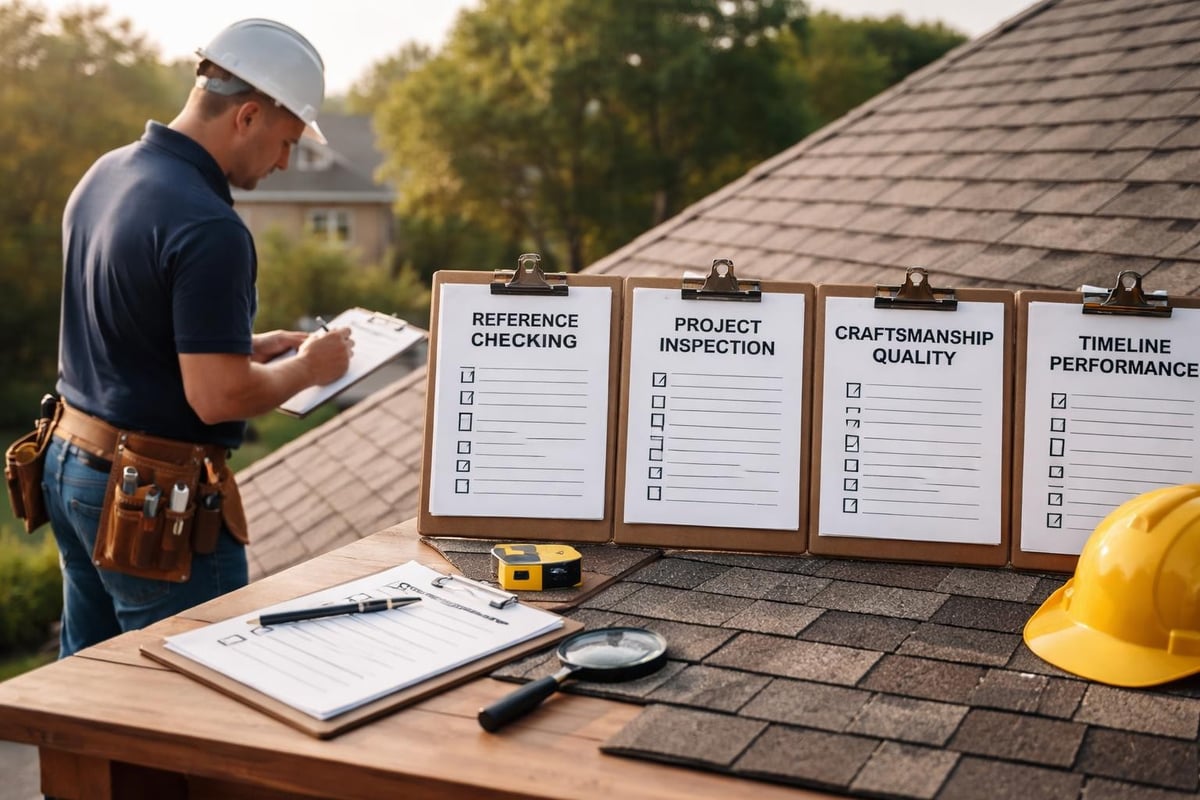
Direct conversations with previous clients reveal insights unavailable through online reviews. Prepare specific questions addressing your concerns about timeline reliability, problem-solving ability, site cleanliness, and overall satisfaction.
Essential reference questions:
- Did the project finish on schedule?
- How did the contractor handle unexpected issues?
- Were daily cleanup standards maintained?
- Did final costs match the estimate?
- How responsive was the contractor to questions?
- Would you hire them again?
Request references from projects completed within the past two years. Older references may not reflect current operational standards, particularly if the company has grown or changed ownership.
Viewing Completed Work
Physical inspection of completed projects provides perspective on craftsmanship quality. Examine flashing details, ridge cap installation, valley integration, and overall aesthetic consistency.
Look for properties similar to yours in age, style, and roofing material. Residential property owners should view completed homes rather than commercial buildings, as installation techniques and aesthetic priorities differ significantly.
Understanding Emergency Response Capabilities
Storm damage and sudden leaks require immediate attention to prevent interior damage and structural compromise. Contractors offering same-day emergency response demonstrate operational capacity and commitment to client protection.
Verify emergency availability directly rather than relying on website claims. Call after hours or on weekends to test actual response protocols. Legitimate emergency services answer calls promptly and dispatch crews quickly rather than scheduling standard appointments days later.
Evaluating Contract Terms and Conditions
Thorough contracts protect both parties by establishing clear expectations, payment schedules, and dispute resolution procedures. Never sign incomplete contracts missing start dates, completion timelines, or detailed material specifications.
Critical contract elements include:
- Complete scope of work with material specifications
- Total project cost with payment milestone definitions
- Start and substantial completion dates
- Change order procedures and pricing methodology
- Warranty terms for both labor and materials
- Cleanup and disposal responsibilities
- Permit acquisition and inspection coordination
- Dispute resolution and arbitration clauses
Review contracts with legal counsel when managing significant commercial projects. The investment in professional review prevents costly misunderstandings and provides recourse if disputes arise.
Payment Protection Strategies
Structure payments around completed milestones rather than calendar dates. Typical schedules include deposits at signing, payments at material delivery, mid-project completion, and final payment after inspection approval.
Avoid contractors demanding payment in full before project completion. Retain final payment until you verify all work meets contract specifications, cleanup is complete, and warranty documentation is provided.
Recognizing Red Flags and Avoiding Scams
Certain warning signs consistently appear in contractor fraud cases. Storm chasers appearing immediately after severe weather, contractors operating without local addresses, and companies unable to provide verifiable references present significant risks.
Sun Coast Roofing & Solar highlights the significance of verifying licenses, certifications, and seeking reviews and referrals to avoid problematic contractors.
Immediate disqualification factors:
- Requests for full payment upfront
- Resistance to providing insurance certificates
- Pressure tactics emphasizing limited-time offers
- Offers to waive insurance deductibles
- Inability to provide local references
- Lack of physical business location
- Proposals without detailed material specifications
Trust your instincts when interactions feel uncomfortable or rushed. Legitimate contractors respect your need for time to review proposals and consult with advisors.
Making Your Final Selection
After thorough research and comparison, final selection typically narrows to two or three qualified candidates. Schedule additional meetings to address remaining questions and clarify expectations before commitment.
Consider the complete package rather than focusing exclusively on price. A moderately higher bid from a contractor offering superior warranties, proven emergency response, and documented quality often delivers better long-term value than the lowest estimate.
Verify that your chosen contractor maintains proper maintenance service capabilities for ongoing care after installation. Relationships with contractors who provide inspection and minor repair services extend roof lifespan and maximize your investment.
Creating a Decision Matrix
Objective comparison becomes easier with structured evaluation. Rate each contractor across key criteria using consistent scoring.
| Evaluation Criteria | Weight | Contractor A | Contractor B | Contractor C |
|---|---|---|---|---|
| Licensing/Insurance | 25% | 95 | 100 | 85 |
| Experience/References | 20% | 90 | 85 | 95 |
| Warranty Terms | 15% | 85 | 90 | 80 |
| Communication Quality | 15% | 100 | 80 | 90 |
| Price Competitiveness | 15% | 80 | 95 | 70 |
| Emergency Availability | 10% | 95 | 70 | 85 |
This methodical approach removes emotional decision-making and creates defensible selection criteria when explaining choices to partners, boards, or family members involved in approval processes.
Preparing for Project Success
Once you select a contractor, clear communication and proper preparation ensure smooth execution. Establish primary contact persons, clarify communication preferences, and discuss logistics like parking, material delivery, and site access.
Document pre-existing conditions throughout your property. Photograph landscaping, siding, windows, and any items near the work zone. This documentation proves invaluable if disputes arise about damage during the project.
Understand your responsibilities outlined in the contract. Some agreements require you to provide electrical access, water supply, or secure outdoor items before crews arrive. Fulfilling these obligations prevents delays and demonstrates professional partnership.
Selecting top rated roofers near me demands thorough research, careful verification, and patient comparison of qualified candidates. By examining credentials, understanding warranty structures, and recognizing red flags, property owners protect their investments and ensure successful project outcomes. When you need professional roofing services backed by in-house crews, comprehensive warranties, and proven Fort Worth expertise, Texcore Construction delivers the accountability and craftsmanship that top-rated contractors provide. Contact us today for detailed inspections, transparent recommendations, and roofing solutions built to last.