Roofing Companies Fort Worth TX: How to Compare in 2026
Choosing between roofing companies fort worth tx property owners are considering is less about finding a name and more about knowing what to score. Fort Worth roofs take hail in the spring, triple-digit heat all summer, and the occasional ice event that stresses every seam and flashing point. A contractor who is fine in a mild climate can still be the wrong call here.
What follows is a comparison framework that applies whether you need residential work or commercial roofing services. It sets out eight criteria you can score any contractor against, the red flags that should end a conversation early, and the questions worth asking before you sign anything. At the end, we score Texcore Construction against the same eight so you can see what a filled-in answer looks like.
Use it to build your own shortlist. The point is that you leave with a decision you can defend, not a name someone handed you.
What Makes a Roofing Company Essential in Fort Worth, TX?
Comparing roofing companies fort worth tx requires more than picking a name from a list. Fort Worth’s climate brings specific challenges, from intense sun to sudden storms, which makes reliability and local knowledge matter more than they would elsewhere. Understanding what separates the better contractors from the rest saves time, money, and stress.
Why Insurance and Certifications Matter
When evaluating roofing companies fort worth tx, always verify insurance and manufacturer certifications. Texas does not issue a state roofing license, so there is no license number to check. That is why the other credentials carry more weight here than they do in states that license the trade. General liability and workers’ compensation insurance protect property owners and crews alike. Ask for the certificates directly from the insurer, not a photocopy from the contractor.
The Role of Local Knowledge and In-House Crews
Local knowledge is essential for roofing companies fort worth tx because of the region’s exposure to hail, wind, and extreme temperatures. In-house crews, rather than subcontractors, mean consistent workmanship and one accountable point of contact throughout the project. Crews who work in Fort Worth every week know the building codes, the permitting process, and the quirks of individual neighborhoods.
Fast Emergency Response: A Must for Fort Worth
Fort Worth’s severe weather means property owners need roofing companies fort worth tx that can respond quickly. Leading contractors answer calls any time and offer same-day assessments to stop further water damage after a storm. For urgent situations, emergency roof repair in Fort Worth covers what a genuine same-day response looks like. Fast response limits interior damage, which is usually the larger share of the cost after a storm.
Transparent Pricing and Documentation
Transparent pricing is a hallmark of a contractor worth hiring. Detailed written estimates, a clear breakdown of labor and materials, and open communication show you from the first visit how the rest of the job will go. Thorough documentation protects both sides: before-and-after photos, a written scope, a written warranty. If a storm claim is involved, that documentation is also what you hand to your own insurer.
The Value of Warranties and Ongoing Maintenance
Strong warranties and maintenance programs are a meaningful differentiator among roofing companies fort worth tx. Labor and material warranties determine what happens when something goes wrong two years from now. Ongoing maintenance extends a roof’s service life and catches small failures before they become interior damage. Clear communication, clean job sites, and enforced safety protocols round out the experience.
Industry Partnerships and Accreditations
Look for roofing companies fort worth tx with manufacturer partnerships and industry accreditations. Certifications such as GAF Master Elite or CertainTeed Select ShingleMaster require ongoing training and are checkable directly with the manufacturer. Combined with a verifiable local address and a real review history, they are among the few credentials in this trade that cannot simply be claimed.
8 Criteria to Compare Roofing Companies Fort Worth TX Property Owners Should Score
Rather than working from someone else’s ranking, score each contractor yourself against the eight criteria below. Every one includes what a strong answer looks like, the red flag that should give you pause, and a question to ask on the first call.
1. Insurance, Verified at Source
A contractor should carry both general liability and workers’ compensation coverage, and should be comfortable with you confirming it with the insurer directly.
- Strong answer: current certificates provided without hesitation, issued to your address on request.
- Red flag: an expired certificate, a screenshot, or a reason why you cannot call the carrier.
- Ask: “Can your insurer send a certificate of insurance naming my property?”
2. Manufacturer Certifications
Manufacturer programs require training and sustained volume, and they are the gateway to enhanced material warranties.
- Strong answer: named certifications you can look up on the manufacturer’s own contractor directory.
- Red flag: logos on a website with no certificate number and no directory listing.
- Ask: “Which manufacturer programs are you certified under, and can I find you in their directory?”
3. In-House Crews vs. Subcontractors
Who physically stands on your roof determines the quality you get and who is accountable for it afterward.
- Strong answer: employed crews, named on the job, with tenure the contractor can describe.
- Red flag: “we use a network of installers” with no names and no direct employment.
- Ask: “Are the people installing my roof your employees, and how long have they worked for you?”
4. Emergency Response Capacity
In a hail belt, the gap between the leak and the first repair is where most of the interior damage happens.
- Strong answer: a documented emergency response process, stocked trucks, and a realistic response window they will put in writing.
- Red flag: a website that promises nonstop service, then voicemail on a Saturday.
- Ask: “If I call at 6pm on a Sunday during a storm, what actually happens?”
5. Written Scope and Itemized Pricing
A number on a business card is not an estimate. The scope is what you are buying.
- Strong answer: line-item pricing tied to measurements, system type, and quantities, with exclusions stated.
- Red flag: a lump sum, a discount that expires today, or pressure to sign at the kitchen table.
- Ask: “What is excluded from this estimate, and what would trigger a change order?”
6. Photo Documentation
Documentation is the record of what was wrong, what was done, and what condition the roof was left in.
- Strong answer: a dated photo report of the existing conditions before work begins and of the completed work afterward.
- Red flag: a verbal description of damage you were never shown.
- Ask: “Will I receive a photo report I can keep, and does it cover conditions before and after?”
7. Warranty Terms You Can Read
There are two warranties on most roofs and they cover different failures. Get both in writing.
- Strong answer: a stated labor warranty term plus the manufacturer warranty the system qualifies for, with the conditions attached.
- Red flag: “lifetime” with no document, or a labor warranty that is described but never produced.
- Ask: “How long is your labor warranty, what voids it, and can I read the document before I sign?”
8. Local Presence and Track Record
Storm-chasing outfits arrive after hail and are gone before the first warranty call.
- Strong answer: a physical Fort Worth address, a review history that predates the last storm, and references on comparable buildings.
- Red flag: a PO box, out-of-state plates, a phone number that changes, or a company registered in the last few months.
- Ask: “Where is your office, and can I see two jobs like mine that you completed more than a year ago?”
Comparison Worksheet: Score Each Contractor Out of 8
| Criterion | Contractor A | Contractor B | Contractor C |
|---|---|---|---|
| Insurance verified at source | |||
| Manufacturer certifications | |||
| In-house crews | |||
| Emergency response | |||
| Written, itemized scope | |||
| Photo documentation | |||
| Warranty in writing | |||
| Local presence |
Print it, take it to each appointment, and fill it in while you are standing there. A contractor who scores well on six of eight and tells you plainly where the other two do not apply is usually a better bet than one who claims all eight without evidence.
A Worked Example: Scoring Texcore Construction
To show what a completed worksheet looks like, here is how Texcore Construction answers the same eight criteria. Apply the same standard to anyone else you are considering, and hold us to it too.
Insurance: insured in-house crews on every job; certificates available on request. Certifications: BBB accredited and a member of the North Texas Roofing Contractors Association, with manufacturer credentials including CertainTeed, GAF, GenFlex, Holcim, Owens Corning, and Versico. Crews: employed in-house, never subcontracted, with a core crew that has worked with owner Scott Creech for more than ten years.
Emergency response: calls answered any time, crews out 7 AM to 7 PM seven days a week, and same-day response on commercial leaks and trucks stocked to make a first-visit repair where possible. Scope and pricing: itemized, photo-backed estimates built from real measurements, with exclusions stated up front. Documentation: every project is photo-documented before and after; property owners keep the report and can submit it with their own insurance claim.
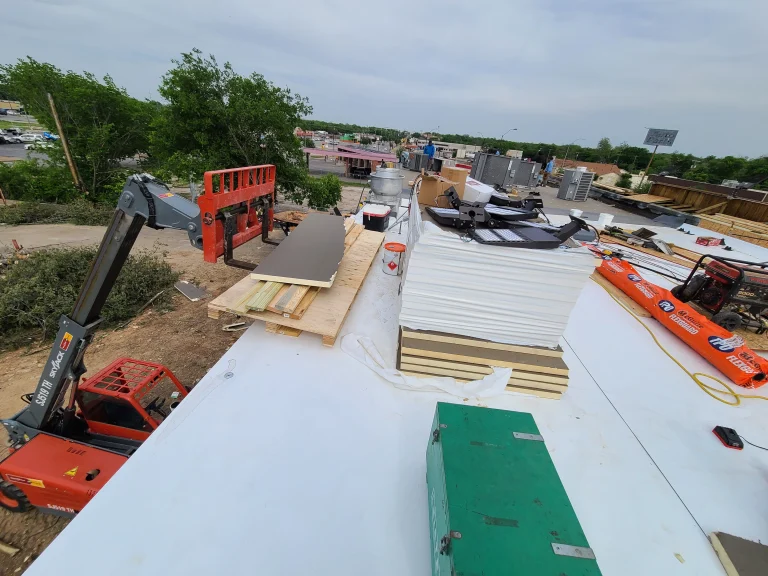
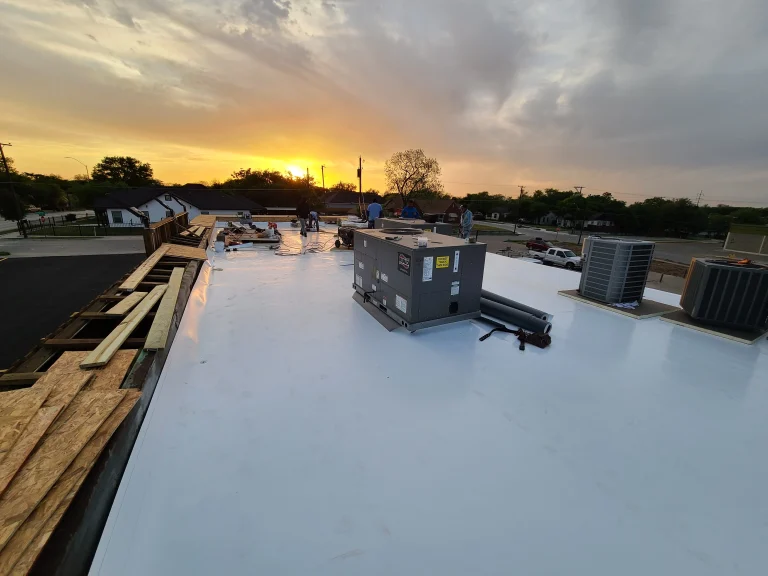
Warranty: a five-year labor warranty on every roofing project, alongside the manufacturer warranty the installed system qualifies for. Local presence: Fort Worth based since February 2020, at 4500 Mercantile Plaza Dr, Suite 350, Fort Worth, TX 76137, with hundreds of commercial roofs completed across North Texas.
Where we are a poor fit: property owners hunting the lowest sub-driven bid, and anyone who wants a roofer to handle or negotiate an insurance claim on their behalf. Texas law does not allow a roofing contractor to do that, and a contractor who offers to is worth walking away from. If you need commercial-specific criteria, the Fort Worth commercial roofing contractors guide goes deeper on flat and low-slope systems.
How to Choose the Right Roofing Company for Your Needs
Working through roofing companies fort worth tx can feel overwhelming, especially when your property’s integrity is on the line. With unpredictable weather and a crowded local market, knowing what to look for is the first step to a project that goes right.
Check Credentials and Reputation
Start with credentials. Reputable roofing companies fort worth tx should carry proper insurance and relevant manufacturer certifications. Texas does not require state licensing for roofers, though voluntary programs exist. The voluntary Texas roofing contractor licensing program explains what participation does and does not mean.
Reputation matters. Research online reviews, Better Business Bureau ratings, and client references. Look for consistent feedback on quality, professionalism, and follow-through. Check whether the review history predates the most recent hail event.
Assess Service Offerings and Communication
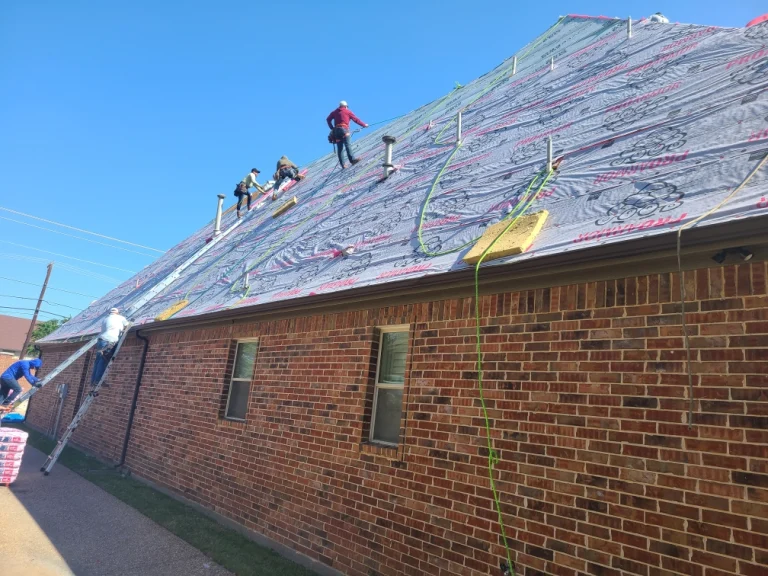
Not every contractor offers the same range across residential roofing and commercial systems. Assess whether a company handles emergency repairs, ongoing maintenance, and thorough storm damage documentation. In a storm-prone market those three capabilities do most of the work.
Clear, responsive communication is the other half. Better contractors provide detailed project documentation, regular updates, and realistic timelines, which is what prevents the misunderstandings that sour a project halfway through.
Understand Pricing, Warranties, and Partnerships
Ask for written estimates and a breakdown of costs. For context on what work should cost locally, this guide on roof replacement costs in Fort Worth sets a baseline before you compare bids.
Strong warranties signal confidence in workmanship and materials. Ask about manufacturer and labor warranties separately, along with any maintenance program that keeps the manufacturer warranty valid. Manufacturer certifications such as GAF Master Elite indicate ongoing training and product-specific standards.
Checklist: Vetting a Roofing Contractor
| Step | What to Check |
|---|---|
| Credentials | Insurance and manufacturer certifications |
| Reputation | BBB rating, online reviews, references |
| Services | Emergency repairs, storm damage documentation, maintenance |
| Communication | Detailed estimates, documentation, regular updates |
| Pricing & Warranties | Transparent quotes, warranty details |
| Partnerships | Manufacturer affiliations, industry accreditations |
Choosing among roofing companies fort worth tx is about more than price. Focus on verifiable credentials, transparency, and documented work to protect your home or business for years to come.
What to Expect During Your Roofing Project in Fort Worth
Once you have hired, knowing what to expect helps you plan. A well-run project is organized, documented, and largely uneventful.
Project Timeline and Key Stages
A typical project follows a structured sequence:
- Inspection: the contractor assesses the roof’s condition and photographs what they find.
- Estimate: you receive a detailed, written estimate setting out scope and costs.
- Scheduling: the company coordinates a start date around your access and occupancy needs.
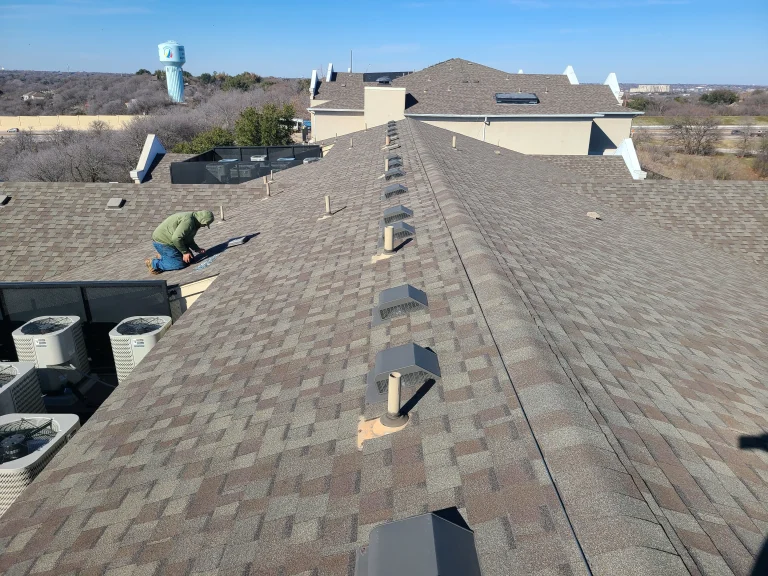
- Installation: crews complete repairs or replacement using manufacturer-approved materials.
- Cleanup: daily site cleaning keeps the property safe and usable throughout.
Documentation runs through all five stages. Where storm damage is involved, that documentation is what you submit to your own insurer. The roofing insurance claims Fort Worth guide explains where a contractor’s role starts and stops.
Cleanliness, Safety, and Communication
A well-run crew protects landscaping, removes debris daily, and follows enforced safety protocols. Expect updates at each decision point: inspection findings, scheduling, installation progress, and a final walkthrough. Photo documentation and a single point of contact come with that.
Handling Delays, Warranties, and Support
Fort Worth weather causes delays. A contractor worth hiring tells you about a schedule change before you notice it yourself, and adjusts the timeline rather than rushing installation into bad conditions.
After completion, a reliable contractor is still reachable for follow-up, warranty work, and maintenance. That availability two years later is the part you cannot assess at the estimate stage, which is why local presence and track record are on the list at all.
You now have a framework rather than someone else’s ranking: eight criteria, the red flags, and the questions to ask, plus nine questions to ask a contractor if you want a homeowner-focused checklist. If the next step is understanding your own roof’s condition before you start collecting bids, a no-obligation inspection gives you a documented starting point and no pressure to act on it. Schedule Your Free Certified Roof Inspection today.