The Ultimate Guide to Commercial Roofing Systems for Texas Buildings
Why Commercial Roofing in Fort Worth Demands the Right System
Commercial roofing in North Texas faces harsher conditions than in most parts of the country. Heat, hail, seasonal storms, thermal cycling, and tenant-related wear combine to shorten roof lifespans. When leaks surface or aging becomes visible, property managers must decide whether to repair or replace the roof entirely. That decision carries real consequences for operating budgets, long-term asset value, and tenant satisfaction.
Property managers in Fort Worth and the broader DFW area need commercial roofing systems that can withstand long, scorching summers and frequent storms. Texas building codes even require high roof reflectivity on low-slope commercial roofs (aged solar reflectance ≥0.55) to reduce heat gain. Meanwhile, North Texas is now classified as a “Very Severe Hail” zone, so hail resistance (e.g. UL 2218 Class 4 impact rating) is a major factor.
In this guide, we compare the commercial roofing systems Texcore installs: single-ply membranes (TPO, PVC, EPDM), metal, modified bitumen, built-up roofing (BUR), and coatings. We’ll examine their strengths, their limitations, and how each one holds up in Fort Worth’s punishing climate.
Single-Ply Membranes: Designed for Speed, Built for Scale
For many commercial property owners in Fort Worth, single-ply membranes are the first stop in the roofing conversation, and for good reason. They’re cost-effective, code-compliant, and installed fast. But they’re not one-size-fits-all.
TPO: Texas’s Utility Player
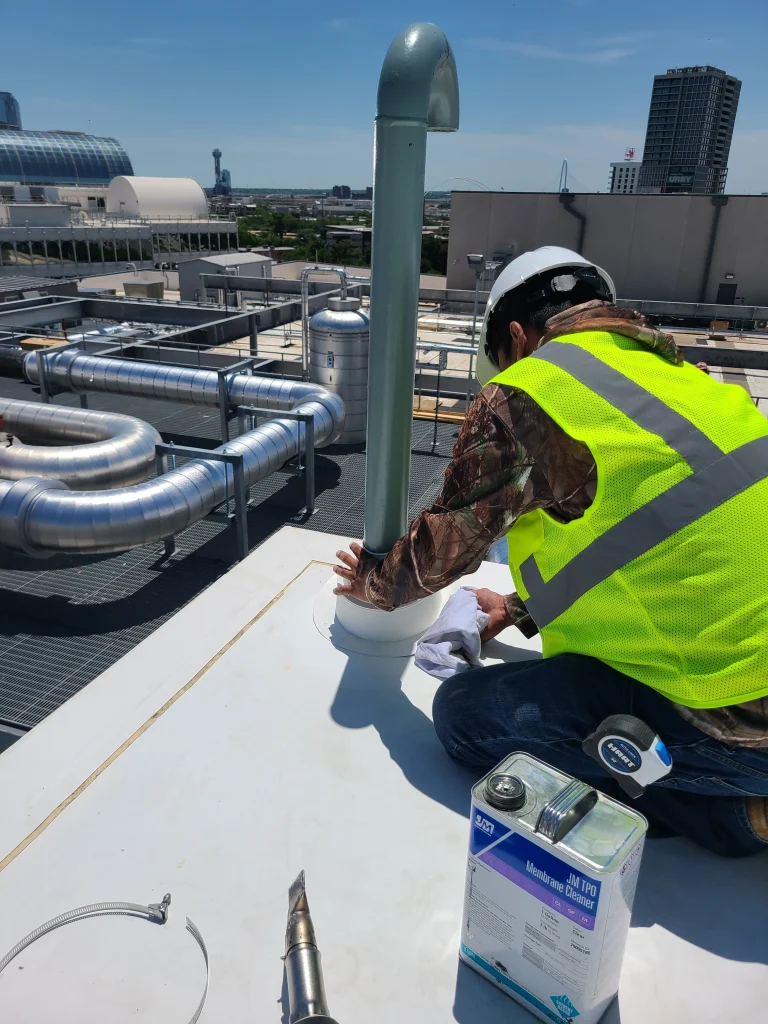
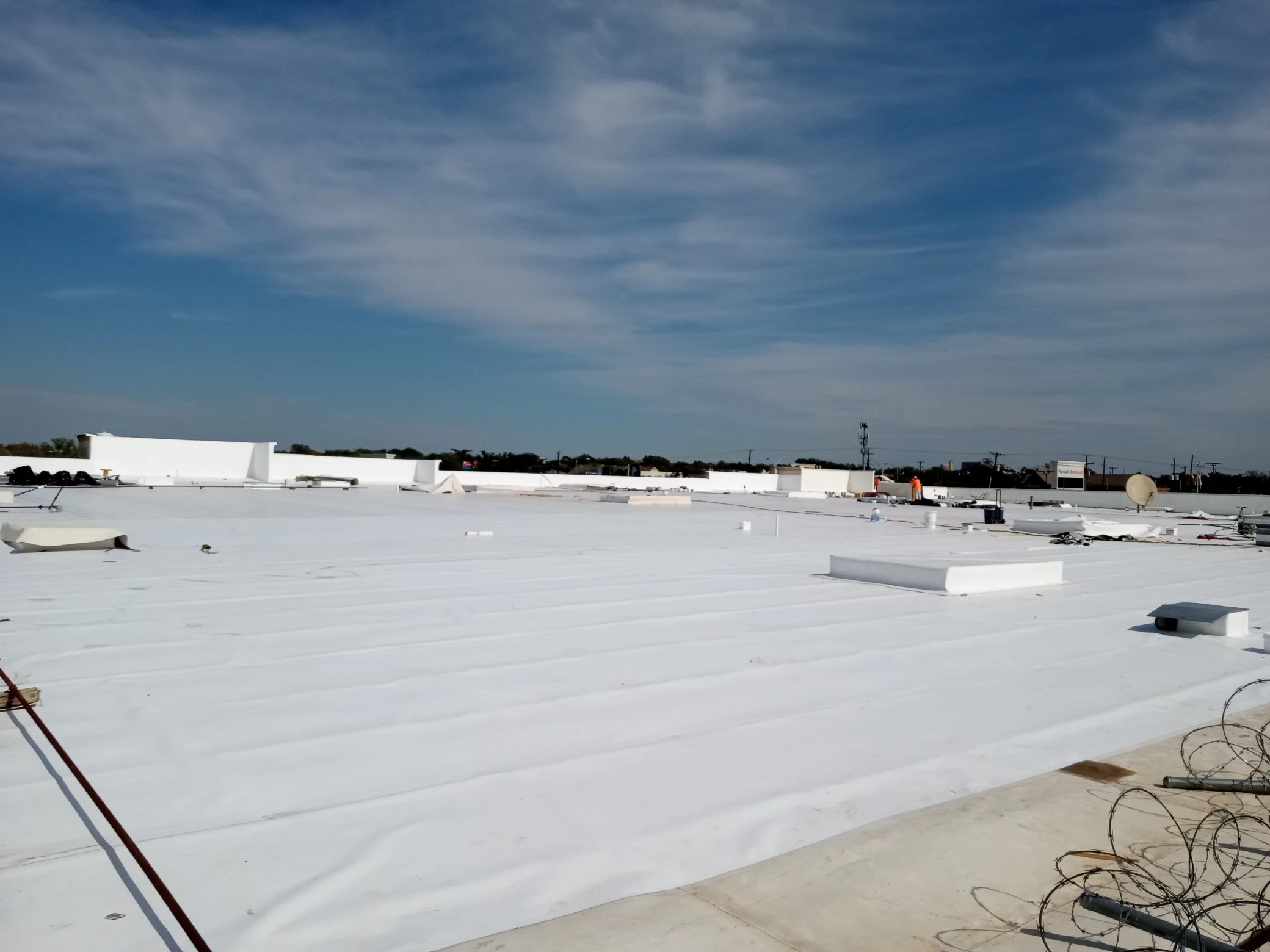
TPO roofing didn’t earn its dominant market share by accident. It’s fast to install, reflects solar heat better than most materials, and fits the budget-conscious priorities of property managers overseeing vast square footage.
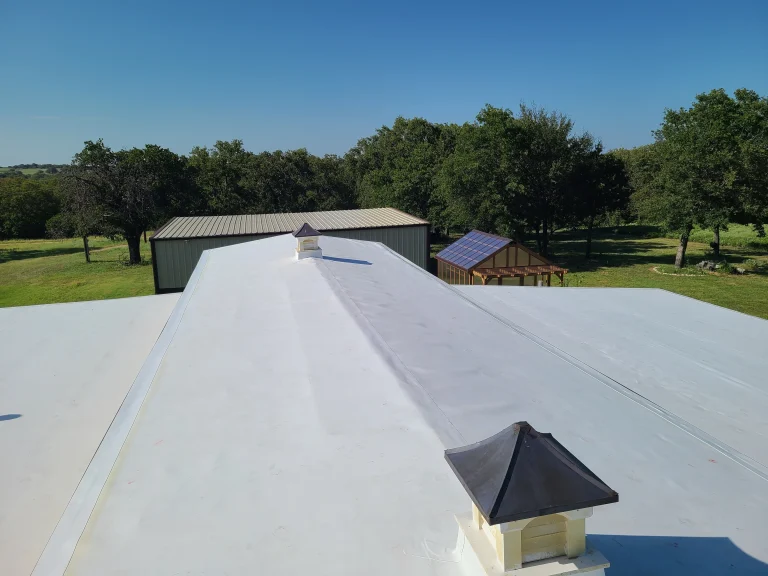
But here’s the real value in Fort Worth: TPO helps flat and low-slope systems stay code-compliant from day one. It delivers a bright white surface that reflects solar radiation, softens interior temps, and protects HVAC systems from brutal overuse.
It’s not the most elegant solution, and earlier versions had issues with brittleness in Texas heat. But today’s reinforced TPO membranes (especially fleece-backed) bring durability and insulation gains without blowing the capital plan apart.
Best fit: Warehouses, distribution centers, retail buildings with flat roofs and energy sensitivity.
PVC: Precision Meets Performance
If TPO is the pickup truck of commercial roofing, PVC is the German-engineered performance vehicle. It costs more up front but delivers a higher tier of chemical resistance, weld strength, and flame retardance. Restaurants, labs, and manufacturers with exhaust issues or rooftop grease know the difference.
What makes PVC a long-term win? It’s resilient under pressure. It doesn’t flinch under ponding water. And when hail smacks DFW rooftops in spring, reinforced PVC can take the hit.
Best fit: Kitchens, hospitals, manufacturing facilities, and buildings where chemical exposure or waterproofing failure is not an option.
EPDM: Quietly Reliable
Not every roof has to be white. For buildings less concerned with solar reflectivity or willing to add a coating to meet code, EPDM still earns its place. It stretches. It flexes. It handles Fort Worth’s overnight freeze-thaw cycles like a champ.
The black rubber membrane isn’t flashy. But when installed properly and maintained with care, it can outlast expectations. Think older buildings with tricky layouts, or owners seeking low-cost, proven solutions with a coating game plan.
Best fit: Re-roofs, multifamily buildings, or older commercial assets where budget or access make flexibility a necessity.
Modified Bitumen and BUR: Built for Battle
Membranes may dominate spec sheets, but when the weather turns violent or the roof sees daily foot traffic, older asphalt-based systems still outperform.
Modified Bitumen: The Workhorse with Armor
Modified bitumen, especially SBS-modified systems, has earned its stripes under Texas skies. These layered asphalt membranes are made to take a beating: from UV exposure, foot traffic, and pounding hail.
For owners who value resilience over trendiness, it’s hard to beat. Modified bitumen doesn’t mind standing water. It doesn’t fail at the first puncture. It holds the line after most membranes have tapped out.
Yes, it needs a good crew. Yes, it benefits from a reflective cap sheet or coating. But when performance is the non-negotiable, it’s still the system veteran contractors trust.
Best fit: Shopping centers, roof decks, and properties in high-traffic or high-hazard zones.
BUR: The Legacy Tank
Some roofs are built to be tanks, and BUR is the original heavy-duty spec. With multiple asphalt and felt layers, topped with gravel ballast or a UV-resistant coating, a well-installed BUR system can outlive the HVAC units sitting on top of it.
BUR isn’t fast. It isn’t lightweight. And in Fort Worth’s climate, you need a crew that knows the rhythm of hot asphalt in August. But when it’s right, it’s unbeatable.
Best fit: Large institutional properties: schools, municipal buildings, or commercial facilities prioritizing longevity over speed.
Metal Roofing: Long-Term Value with a Technical Twist
When slope is available and long-term ROI matters, metal roofing systems deliver in ways no membrane can match. In Fort Worth, they offer serious advantages, but only if the building and installer are up to the task.
Forget the outdated image of loud, leaky tin roofs. Today’s standing seam metal roofing systems use concealed fasteners and high-performance coatings that reflect heat, resist corrosion, and shrug off hail.
Galvalume and Kynar-finished panels dominate DFW specs for a reason: they bring Class 4 impact ratings, meet reflectivity code, and offer lifespans that blow past 50 years. With the right slope and detailing, metal becomes a near-permanent solution.
That said, flat retrofits need precise engineering. Expansion must be controlled. Panel oil-canning must be addressed. And if the installer doesn’t understand thermal movement or seam alignment, you’re left with noise, leaks, and callbacks.
Best fit: Owner-occupied commercial or light industrial buildings with a slope of 1:12 or greater and long-term hold strategy.
Roof Coatings: Stretch Your Investment
You’ve got a roof. It’s not leaking yet. But it’s aging, fading, and just starting to show signs of fatigue. You don’t want a tear-off. You just need time.
That’s where coatings shine. Silicone, acrylic, or polyurethane systems add reflectivity, seal minor flaws, and help building owners delay replacement for years. In Fort Worth, where summers are brutal and roof temperatures top 160°F, coatings can slash HVAC costs while keeping the roof envelope intact.
But they’re not paint. They require prep. They need dry conditions. And they work best on roofs that still have structural integrity.
Best fit: Flat commercial roofs approaching midlife, especially TPO, modified bitumen, or metal systems with minor wear and intact seams.
Making the Right Call for Your Building
The commercial roofing system you choose isn’t just a capital line item. It’s a protective shield for everything inside your building: your equipment, your tenants, your inventory.
In Fort Worth and across DFW, every decision about slope, system type, material thickness, or coating has downstream impact. Your roof has to fight through record heat, flying hail, 60-mile-per-hour winds, and weeks of blazing UV with zero room for failure.
Still thinking about putting it off another quarter?
A leaking roof isn’t just a nuisance. It’s a reputational risk, an operational liability, and an insurance nightmare waiting to surface. Moisture doesn’t wait. Your tenants won’t either.
Texcore Construction specializes in commercial roof installation, repair, replacement, and restoration. We help property owners and managers across Fort Worth make informed decisions that hold up for decades, not just until the next storm.
Book your inspection today.
Our insured crews deliver photo-documented assessments, infrared moisture readings, and straightforward system recommendations. No guesswork. No pressure.
Your roof protects your business. Protect your roof.