Commercial Roofing Maintenance: Best Practices
Commercial property owners and facility managers understand that roofing represents one of the most significant capital investments in any building. A well-maintained commercial roof protects assets, maintains operations, and preserves property value for decades. Yet many businesses overlook systematic maintenance until emergency repairs become necessary, transforming preventable issues into expensive disruptions. Implementing a commercial roof maintenance program reduces long-term costs, extends roof lifespan, and prevents the kind of sudden failures that interrupt business operations and threaten interior assets.
Why Commercial Roofing Maintenance Matters
The financial case for proactive maintenance extends far beyond avoiding repair costs. A neglected commercial roof deteriorates at an accelerated rate, potentially cutting its functional lifespan in half. Minor issues like ponding water, loose fasteners, or small membrane tears create entry points for moisture that compromise insulation, damage structural decking, and eventually require complete replacement years before the roof reaches its intended service life.
Property protection represents another critical consideration. Water intrusion damages inventory, equipment, finishes, and creates liability risks through slip hazards and mold growth. The cost of interior damage frequently exceeds the expense of the roofing repairs that could have prevented it.
Regular commercial roofing maintenance also preserves warranty coverage. Most manufacturers require documented routine maintenance as a condition of long-term warranties. Without inspection records and timely repairs, warranty claims may be denied when significant failures occur.
The True Cost of Deferred Maintenance
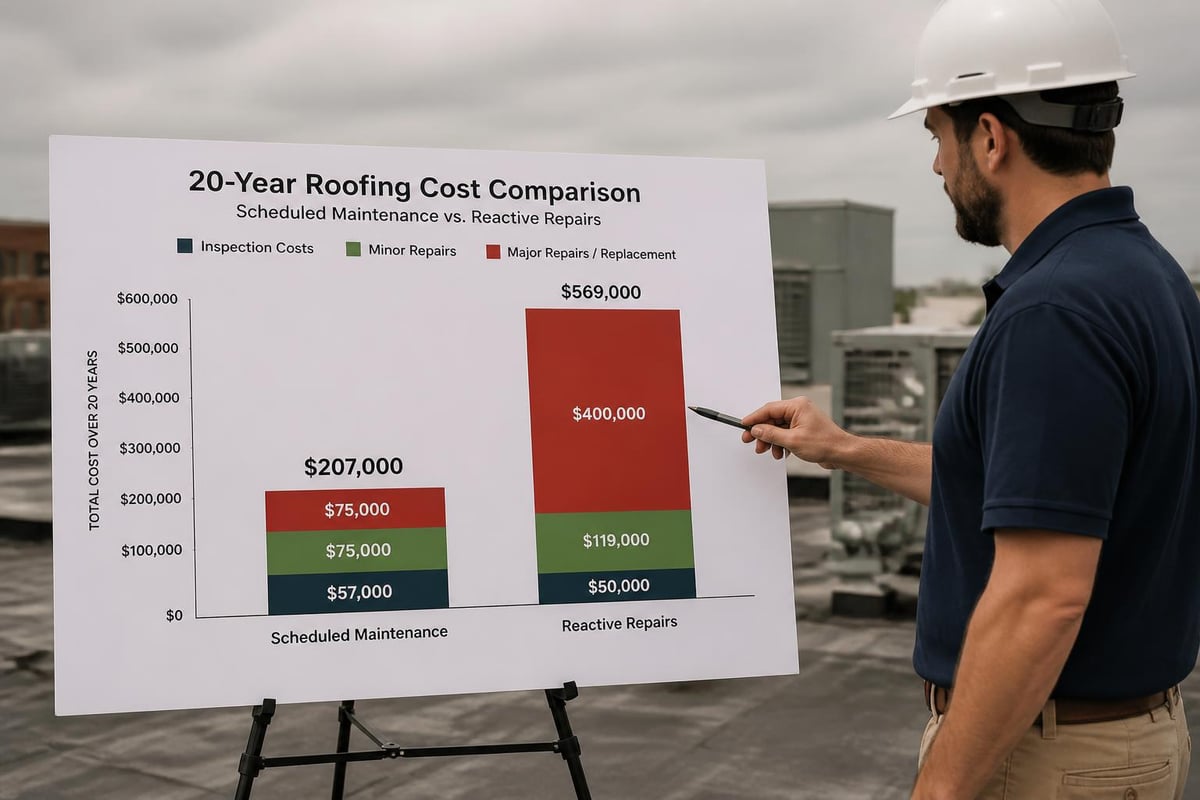
Deferred maintenance creates a compounding problem where small issues cascade into system-wide failures. A single clogged drain might seem insignificant, but the resulting ponding water accelerates membrane degradation, stresses seams, and eventually penetrates the roof assembly. What could have been addressed during a routine cleaning becomes a leak requiring membrane replacement, insulation removal, and potential structural repairs.
Industry data consistently demonstrates that every dollar invested in preventive maintenance saves approximately four to six dollars in future repair and replacement costs. This return on investment stems from addressing problems at their earliest, least expensive stage rather than managing consequences after damage spreads throughout the roof system.
Essential Components of Commercial Roofing Maintenance Programs
Developing an effective maintenance strategy requires understanding the key elements that protect your investment. Maintaining commercial roofs demands attention to multiple systems and potential failure points across the entire roof assembly.
Scheduled Inspection Protocols
Professional inspections form the foundation of any maintenance program. At minimum, commercial roofs require scheduled roof inspections twice annually, typically in spring and fall. These seasonal inspections identify damage from winter weather and prepare the roof for temperature extremes ahead.
Additional inspections should follow severe weather events:
- Hailstorms and high winds
- Heavy snow or ice accumulation
- Tornado or hurricane activity
- Unusual temperature fluctuations
Inspection thoroughness determines program effectiveness. Comprehensive evaluations examine the entire roof system — what an inspection covers goes well beyond obvious problem areas. Trained inspectors assess membrane condition, flashing integrity, penetration seals, drainage function, and fastener security while documenting findings with photographs and detailed notes.
| Inspection Element | Frequency | Critical Focus Areas |
|---|---|---|
| Membrane surface | Bi-annual | Punctures, splits, blistering, UV damage |
| Drainage systems | Bi-annual + after storms | Debris, standing water, outlet function |
| Flashing and edges | Bi-annual | Separation, corrosion, seal integrity |
| Penetrations | Bi-annual | Pipe boots, HVAC curbs, vent seals |
| Fasteners and seams | Annual | Withdrawal, separation, adhesive failure |
Drainage System Management
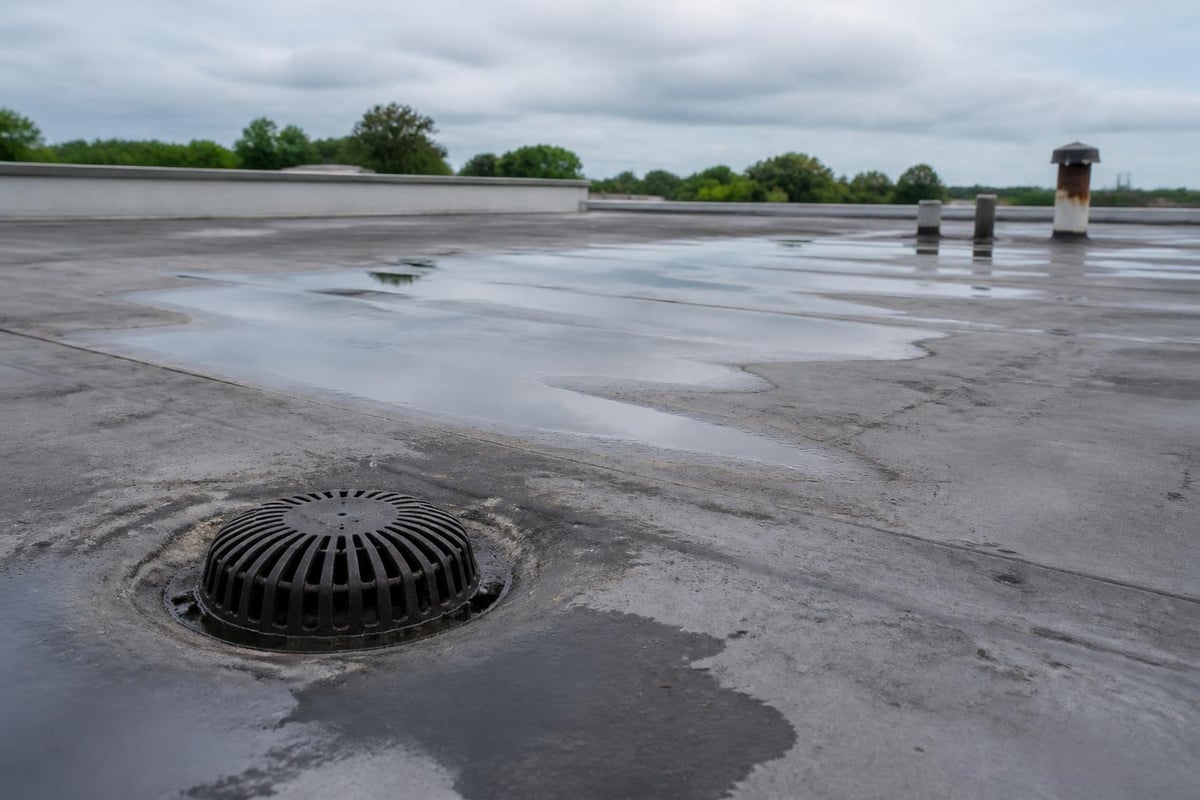
Proper water management prevents the majority of commercial roofing failures. Even small amounts of standing water create conditions for accelerated deterioration, membrane delamination, and eventual leaks. Drainage maintenance addresses multiple components that work together to move water off the roof surface.
Gutters, scuppers, and internal drains require regular cleaning to remove leaves, debris, and sediment. In the Fort Worth area, seasonal leaf fall and storm debris make quarterly drainage cleaning essential for most commercial properties. Inspectors should verify that all drains flow freely and downspouts discharge properly away from the building foundation.
Ponding water identification marks a critical maintenance checkpoint. Any water remaining on the roof surface 48 hours after precipitation indicates drainage problems requiring correction. Common causes include inadequate slope, sagging insulation, or blocked outlets. Addressing ponding early prevents the membrane damage and structural stress that develops when water repeatedly collects in the same location.
Preventive Maintenance Tasks and Schedules
Beyond inspections, active maintenance tasks preserve roof function and prevent deterioration. Different roof systems require specific attention, but several practices apply across all commercial roofing types. Best practices for commercial roof maintenance emphasize proactive intervention before minor issues develop into costly repairs.
Debris Removal and Surface Cleaning
Regular cleaning ranks among the simplest yet most impactful maintenance activities. Leaves, branches, dirt, and other debris trap moisture against the membrane, accelerate UV damage, and block drainage paths. Trees surrounding commercial buildings contribute significant debris that requires monthly removal during heavy foliage seasons.
Power washing and aggressive cleaning techniques can damage commercial roofing membranes. Soft sweeping with proper equipment removes debris without compromising membrane integrity or protective coatings. Professional maintenance teams understand material-specific cleaning methods that preserve rather than harm roofing systems.
Vegetation Control
Moss, algae, and plant growth indicate chronic moisture problems and actively damage roofing materials. Roots penetrate membranes and seams while organic growth retains water against the surface. Prompt removal prevents establishment and spread, but addressing the underlying moisture source matters most for long-term control.
Penetration and Flashing Maintenance
Roof penetrations for HVAC equipment, plumbing vents, electrical conduits, and other building systems create potential leak points. Seals around these penetrations deteriorate from UV exposure, thermal cycling, and mechanical stress. Bi-annual inspection and timely resealing prevent the water intrusion that frequently occurs at penetration points.
Metal flashing components require particular attention in commercial roofing maintenance programs. Edge metal, copings, and transition flashings expand and contract with temperature changes, gradually loosening fasteners and opening gaps in sealant. Regular inspection identifies separation before water enters, and prompt repair maintains weathertight conditions.
Documentation and Record Management
Maintenance programs deliver maximum value when comprehensive documentation supports decision-making and demonstrates due diligence. Every inspection, repair, and maintenance activity should be recorded with dates, findings, actions taken, and photographic evidence.
This documentation serves multiple critical purposes:
- Warranty compliance: Manufacturers require proof of regular maintenance for warranty claims
- Budget planning: Historical data reveals patterns and helps forecast future needs
- Insurance support: Documented maintenance demonstrates proper property stewardship
- Sale preparation: Maintenance records increase property value and buyer confidence
- Legal protection: Records provide evidence of reasonable care in liability situations
Digital documentation systems allow facility managers to track roof condition over time, compare inspection findings across years, and identify developing problems before they become emergencies. Photographs from the same locations during each inspection reveal subtle changes that might otherwise go unnoticed.
For commercial properties requiring industrial roof repair, complete maintenance records help contractors understand roof history and develop appropriate repair strategies.
Seasonal Maintenance Considerations
Commercial roofing maintenance requirements shift throughout the year as weather patterns and environmental conditions change. Strategic timing of maintenance activities aligns with seasonal challenges and prepares the roof for upcoming stress.
Spring Maintenance Priorities
Spring inspections assess winter damage and prepare roofs for summer heat. Heavy focus on drainage becomes essential as spring storms test system capacity. Inspectors examine:
- Membrane damage from ice formation and thermal shock
- Fastener withdrawal from freeze-thaw cycling
- Flashing separation from winter wind events
- Debris accumulation in drainage components
Spring represents the ideal time for repairs identified during fall inspections but deferred through winter months. Moderate temperatures optimize material performance during installation, and completing repairs before summer heat prevents additional deterioration.
Summer Maintenance Activities
Extreme heat stresses commercial roofing systems through thermal expansion, UV exposure, and temperature cycling. Summer maintenance focuses on:
- UV damage assessment: Extended sunlight exposure degrades membrane surfaces
- Thermal movement inspection: Expansion and contraction stress seams and fasteners
- HVAC equipment impact: Increased runtime generates heat and vibration affecting roof-mounted units
- Storm damage evaluation: Summer storms bring hail, wind, and heavy rain
Fall Preparation Tasks
Fall maintenance prepares commercial roofs for winter challenges while addressing summer damage. Comprehensive drainage cleaning removes seasonal debris before winter precipitation. Inspectors verify that all drainage components function properly, as frozen or blocked drains during winter create serious problems.
Sealing and flashing repairs gain urgency in fall. Any gaps or separations identified during inspection require completion before freezing temperatures compromise material performance and winter weather drives water through openings.
Winter Monitoring
Winter typically suspends routine maintenance due to weather conditions and material limitations, but monitoring remains essential. After significant snow or ice events, facility managers should verify that:
- Drainage systems handle melt water effectively
- Snow loads remain within design limits
- Ice dams do not form at edges or valleys
- Emergency access paths stay clear for urgent repairs
Working With Professional Roofing Contractors
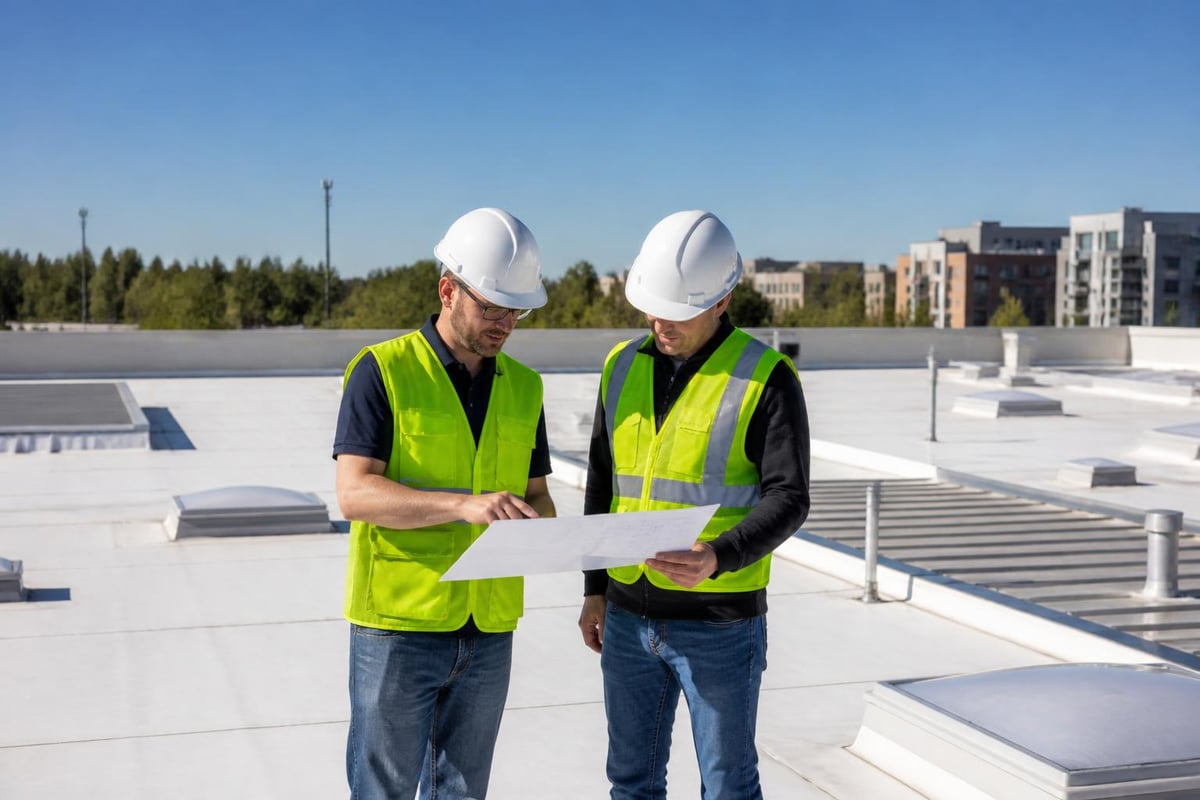
While facility staff can perform basic monitoring and debris removal, professional expertise proves essential for comprehensive commercial roofing maintenance. insured contractors bring specialized knowledge, proper equipment, and liability coverage that internal teams cannot replicate.
Selecting a maintenance contractor requires careful evaluation beyond cost considerations. Commercial roofing systems demand expertise with specific materials, installation methods, and repair techniques that vary significantly across roof types.
Key contractor qualifications include:
- Manufacturer certifications for installed roof systems
- Documented experience with your specific roof type
- insured in-house crews rather than subcontractors
- Comprehensive inspection and reporting capabilities
- Emergency response availability for urgent issues
- Clear communication and detailed documentation practices
In-house crews deliver consistency that subcontractor-dependent companies cannot match. When the same trained professionals service your roof during every visit, they develop facility-specific knowledge, recognize developing patterns, and provide continuity that enhances maintenance effectiveness.
| Contractor Attribute | Why It Matters | Questions to Ask |
|---|---|---|
| Licensing and insurance | Legal compliance, liability protection | Current license numbers? Certificate of insurance? |
| Manufacturer certification | Warranty preservation, technical expertise | Certified for our roof system? Training documentation? |
| In-house crews | Quality control, consistency | Who performs the actual work? Employee or subcontractor? |
| Emergency availability | Urgent leak response | Response time for emergencies? After-hours contact? |
| Documentation practices | Record quality, warranty compliance | Report format? Photographic documentation? Digital access? |
Common Maintenance Pitfalls to Avoid
Even well-intentioned maintenance programs fail when common mistakes undermine effectiveness. Understanding these pitfalls helps property managers develop strategies that deliver results rather than creating false security.
Inconsistent scheduling ranks as the most frequent mistake. Maintenance programs lose effectiveness when inspections occur irregularly or skip years due to budget constraints. The compounding nature of roof deterioration means that skipped inspections allow minor problems to become major failures, ultimately costing far more than the deferred maintenance saved.
Focusing exclusively on obvious problems while ignoring preventive tasks creates another common failure pattern. Addressing active leaks matters, but without resolving underlying causes and maintaining entire roof systems, new problems continuously emerge. Comprehensive approaches that combine reactive repairs with proactive prevention deliver sustainable results.
Inadequate Repair Quality
Quick fixes and temporary solutions rarely provide lasting value in commercial roofing maintenance. Patch repairs that address symptoms without resolving root causes simply delay inevitable failure while potentially voiding warranty coverage. Professional repairs follow manufacturer specifications, use compatible materials, and restore the roof system to proper function.
Unauthorized Roof Access
Allowing untrained personnel, vendors, or contractors onto the roof without supervision damages membranes and creates liability. HVAC technicians, antenna installers, and other trades frequently cause roofing damage through improper walking patterns, dragging equipment, or penetrating membranes without proper sealing.
Establishing controlled access protocols protects your investment. Designate walking paths, require advance notification for roof access, and inspect areas after any work to identify and address damage promptly.
Developing a Customized Maintenance Plan
Generic maintenance checklists provide starting points, but effective programs tailor activities to specific facility needs, roof systems, and environmental conditions. Commercial roof inspection best practices emphasize customization based on building characteristics and regional weather patterns.
Facility Assessment
Begin by documenting complete roof specifications including:
- Roof type and materials (TPO, EPDM, modified bitumen, built-up)
- Installation date and expected service life
- Warranty terms and maintenance requirements
- Previous repairs and problem areas
- Surrounding environmental factors (trees, industrial emissions, foot traffic)
This baseline information guides appropriate maintenance frequency and focus areas. Older roofs nearing the end of service life require more frequent attention, while newer installations benefit from preventive activities that maximize longevity.
Budget Allocation
Realistic budgeting prevents the feast-or-famine cycle where maintenance gets deferred until emergency repairs consume capital budgets. Industry guidelines suggest allocating approximately one to three percent of roof replacement cost annually for maintenance and minor repairs.
For a commercial roof with a $150,000 replacement value, annual maintenance budgets between $1,500 and $4,500 provide adequate resources for inspections, routine maintenance, and minor repairs. This investment protects against the far larger expense of premature replacement or major structural repairs from water damage.
Schedule Development
Create a written maintenance schedule that specifies:
- Bi-annual professional inspections (spring and fall)
- Quarterly drainage cleaning
- Monthly visual monitoring by facility staff
- Post-storm damage assessment protocols
- Annual detailed documentation review
- Five-year comprehensive evaluation and planning
Written schedules with assigned responsibility ensure that maintenance occurs consistently regardless of staff changes or competing priorities.
Integration With Overall Building Maintenance
Commercial roofing maintenance delivers maximum value when integrated with comprehensive facility management rather than treated as an isolated activity. The roof interacts with multiple building systems, and coordinated maintenance prevents conflicts while optimizing efficiency.
HVAC equipment represents the most significant interface. Rooftop units require regular maintenance that brings technicians onto the roof surface. Coordinating HVAC service with roofing inspections allows simultaneous evaluation of equipment impacts, vibration damage, and condensate drainage. This coordination also ensures proper walking paths and protection during HVAC work.
Structural monitoring complements roofing maintenance by identifying support issues before they compromise the roof system. Sagging areas, unusual deflection, or visible stress indicate problems requiring engineering evaluation. Early structural intervention prevents the catastrophic failures that occur when deteriorated supports can no longer carry roof loads.
Energy management initiatives often involve roof-related improvements like reflective coatings, additional insulation, or solar panel installation. Proper planning ensures these upgrades enhance rather than void existing warranties while maintaining appropriate access for future maintenance.
For properties maintaining comprehensive roofing warranties, coordinated maintenance documentation demonstrates the systematic care that supports warranty claims when unexpected failures occur.
Measuring Maintenance Program Effectiveness
Successful commercial roofing maintenance programs demonstrate measurable results that justify ongoing investment. Tracking specific metrics reveals program effectiveness and identifies opportunities for improvement.
Key performance indicators include:
- Roof lifespan compared to expected service life: Well-maintained roofs regularly exceed manufacturer projections
- Emergency repair frequency: Declining emergency calls indicate effective preventive maintenance
- Leak incidents per year: Tracking interior water intrusion events reveals prevention success
- Maintenance cost per square foot: Comparing annual maintenance expenses to replacement cost demonstrates value
- Warranty claim success rate: Approved claims validate documentation quality and maintenance compliance
Annual program reviews examine these metrics alongside roof condition assessments to determine whether current maintenance levels provide adequate protection or require adjustment. Roofs showing accelerated deterioration despite regular maintenance may need enhanced attention or indicate approaching end of service life requiring replacement planning.
Documentation quality directly impacts program effectiveness measurement. Detailed records with consistent data collection enable meaningful trend analysis, while incomplete documentation prevents objective evaluation.
Maximizing Return on Maintenance Investment
Strategic commercial roofing maintenance generates returns beyond avoided repair costs. Property owners who demonstrate comprehensive maintenance programs benefit through:
- Enhanced property values: Documented roof care increases marketability and sale prices
- Reduced insurance premiums: Some carriers offer discounts for verified maintenance programs
- Operational continuity: Preventing unexpected closures preserves revenue and reputation
- Extended asset life: Adding years to roof service life defers major capital expenses
- Improved energy efficiency: Well-maintained roofs provide better insulation and reflectivity
These benefits compound over time, making commercial roofing maintenance one of the highest-return facility investments available. The key lies in consistent execution rather than sporadic attention when problems force action.
Understanding commercial roofing basics helps building owners make informed decisions about maintenance priorities and resource allocation throughout the roof lifecycle.
Systematic commercial roofing maintenance protects your property investment while preventing the costly disruptions that emergency repairs create. Implementing a comprehensive program with regular professional inspections, documented preventive tasks, and prompt attention to developing issues extends roof life and delivers measurable financial returns. Texcore Construction provides Fort Worth commercial property owners with expert maintenance services delivered by in-house, insured crews who understand the unique demands of North Texas weather and building conditions. Our detailed inspections, transparent documentation, and proactive maintenance approach help you maximize roof performance while minimizing long-term costs.