Commercial Roofing Systems: A Complete Guide
Selecting the right roof for your commercial building represents one of the most critical infrastructure decisions property owners and facility managers face. Commercial roofing systems differ significantly from residential applications, requiring specialized materials, installation techniques, and maintenance protocols designed to protect large, often flat or low-slope structures. Understanding the options available, their performance characteristics, and long-term cost implications helps building owners make informed investments that protect their assets for decades. With advancements in roofing technology and materials science, today's commercial roofing options offer improved durability, energy efficiency, and weather resistance compared to systems installed just a generation ago.
Understanding Commercial Roofing System Categories
Commercial roofing systems fall into several distinct categories, each engineered for specific building types, climates, and performance requirements. The primary distinction between commercial and residential roofing lies in the roof slope, with most commercial buildings featuring low-slope or flat roof designs that require different waterproofing strategies than pitched residential roofs.
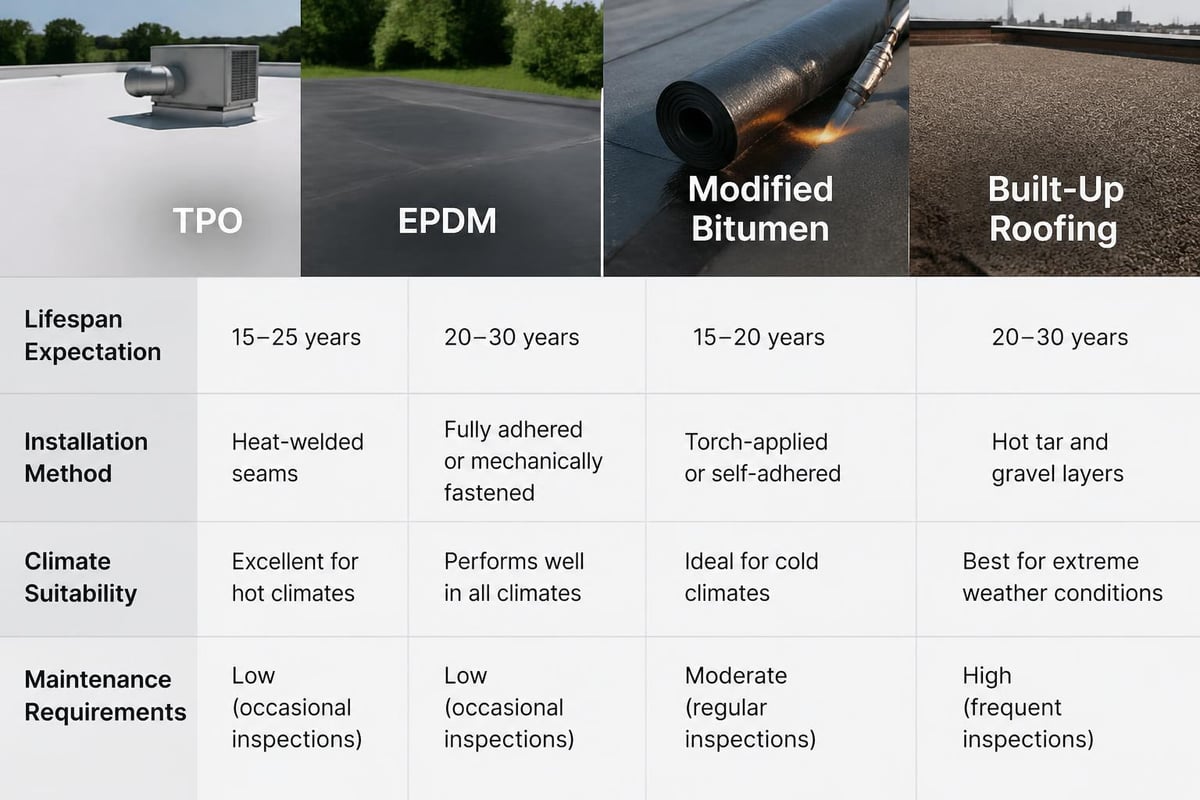
Single-ply membrane systems dominate the modern commercial roofing landscape, offering lightweight, flexible, and cost-effective solutions. These systems include thermoplastic polyolefin (TPO), ethylene propylene diene monomer (EPDM), and polyvinyl chloride (PVC) membranes, each with distinct advantages. TPO has gained significant market share due to its heat-reflective properties and strong seam strength, while EPDM remains popular for its proven longevity and weather resistance.
Built-up roofing (BUR) represents the traditional approach to commercial flat roofing, consisting of multiple layers of bitumen and reinforcing fabrics. Though newer technologies have emerged, BUR systems continue to perform well in specific applications, particularly where puncture resistance and proven track record matter most.
Modified bitumen systems bridge the gap between traditional built-up roofing and modern single-ply membranes. These systems combine the redundancy of multiple layers with improved installation techniques, including torch-applied, cold-applied, and self-adhering methods that accommodate various building conditions and contractor preferences.
Material Selection Criteria
Choosing among commercial roofing systems requires evaluating multiple factors beyond initial installation costs. Climate conditions significantly influence material performance, with temperature extremes, UV exposure, precipitation patterns, and wind loads all affecting long-term durability. A comprehensive understanding of commercial roofing materials helps property owners match system characteristics to their specific environmental challenges.
Building use and occupancy also drive material selection. Manufacturing facilities with heavy rooftop equipment require systems with superior puncture resistance and load-bearing capacity, while retail centers might prioritize aesthetics and energy efficiency. Understanding these operational requirements before selecting a roofing system prevents costly mistakes and premature failures.
Budget considerations must account for total lifecycle costs rather than installation price alone. A less expensive system requiring replacement after 15 years may ultimately cost more than a premium system lasting 30 years with minimal maintenance. Warranty coverage, maintenance requirements, and expected service life all factor into the true cost equation.
Single-Ply Membrane Systems Explained
Single-ply membranes transformed commercial roofing by offering lighter weight, faster installation, and improved performance compared to traditional multi-layer systems. These factory-manufactured sheets arrive at job sites ready for installation, reducing on-site labor and quality control variables.
TPO roofing has become increasingly popular since its introduction in the 1990s, now representing a significant portion of new commercial roof installations. The material's white or light-colored surface reflects solar radiation, reducing cooling costs in warm climates. TPO membranes typically range from 45 to 80 mils in thickness, with heat-welded seams creating watertight bonds stronger than the membrane itself.
EPDM rubber roofing offers exceptional durability and weather resistance, with many installations exceeding 30 years of service life. Available in black and white formulations, EPDM provides excellent resistance to ozone, UV radiation, and temperature extremes. The material's flexibility allows it to accommodate building movement and thermal expansion without cracking or splitting.
PVC roofing delivers superior chemical resistance, making it ideal for restaurants, manufacturing facilities, and buildings where roof exposure to oils, greases, or industrial emissions occurs. Though typically more expensive than TPO or EPDM, PVC's resistance to fire, chemicals, and biological growth justifies the premium in appropriate applications.
Installation Methods and Techniques
Single-ply membranes can be installed using three primary methods: fully adhered, mechanically attached, or ballasted. Each approach offers distinct advantages depending on building design, local wind loads, and budget constraints.
Fully adhered systems use bonding adhesives to secure membranes directly to the roof deck or insulation, creating a continuous attachment that maximizes wind uplift resistance. This method works well for buildings in high-wind regions or where ballast weight would exceed structural capacity. The Commercial Roofing Systems service provided by specialized contractors ensures proper adhesion techniques and material compatibility.
Mechanically attached systems use plates and fasteners to secure membranes to the roof deck, offering faster installation and easier repairs compared to fully adhered systems. This method accommodates various deck types and provides reliable performance in moderate climate zones.
Ballasted systems rely on stone or pavers to hold membranes in place, offering the most economical installation method where building structures can support the additional weight. This approach simplifies future maintenance and reroofing since the membrane remains loose-laid and easily accessible.
Built-Up Roofing and Modified Bitumen Systems
Traditional built-up roofing systems continue serving commercial buildings where proven performance and redundancy outweigh the advantages of newer technologies. BUR construction involves alternating layers of bitumen and reinforcing felts, creating a multi-ply waterproofing assembly typically finished with gravel or a reflective coating.
The redundancy inherent in built-up roofing provides excellent protection against leaks, as water must penetrate multiple layers before reaching the building interior. This characteristic makes BUR particularly suitable for critical facilities where roof failure consequences would be severe. The detailed anatomy and proper care of commercial roofs demonstrates how these traditional systems maintain their protective function.
Modified bitumen roofing evolved from built-up roofing technology, incorporating polymer-modified asphalt for improved flexibility and weather resistance. These systems typically involve one or two plies of reinforced membrane, offering easier installation than traditional BUR while maintaining the proven performance of asphalt-based systems.
Torch-applied modified bitumen uses an open flame to melt the underside of membrane rolls during installation, creating a strong bond to the substrate. Though this method requires skilled applicators and fire safety precautions, it produces reliable, long-lasting installations with excellent adhesion.
Cold-applied systems eliminate fire hazards by using adhesives instead of torches, making them suitable for occupied buildings or facilities where open flames present unacceptable risks. Modern cold adhesives provide bond strength comparable to torch-applied systems while improving safety and expanding installation weather windows.
Self-adhering modified bitumen membranes feature factory-applied adhesive protected by release paper, offering the simplest installation method. These systems work well for small projects, repairs, and applications where torch or adhesive fumes would create problems.
Coating Systems and Restoration Options
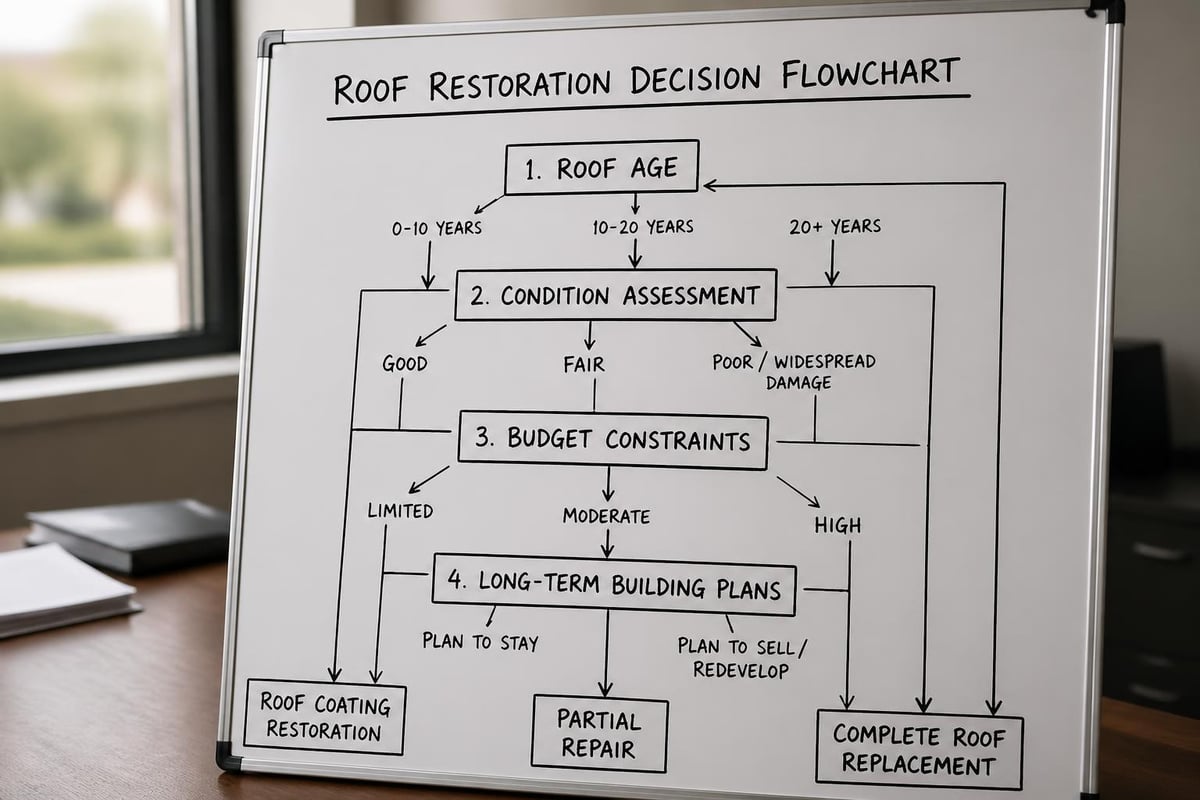
Roof coating systems offer cost-effective alternatives to complete roof replacement for aging commercial roofing systems showing moderate wear. Various coating technologies can extend roof life, improve energy efficiency, and address minor leaks without the expense and disruption of tear-off and replacement.
| Coating Type | Primary Benefits | Best Applications | Expected Lifespan |
|---|---|---|---|
| Acrylic | High reflectivity, UV resistance | Moderate climates, ponding water areas | 10-15 years |
| Silicone | Superior ponding water resistance | Flat roofs, wet climates | 15-20 years |
| Polyurethane | Excellent durability, impact resistance | High-traffic roofs, severe weather | 15-20 years |
| Asphalt Emulsion | Cost-effective, easy application | Built-up roofs, temporary protection | 5-10 years |
Acrylic coatings provide excellent solar reflectance and reasonable cost, making them popular for metal roofs and single-ply membranes in areas without significant ponding water. The material breathes, allowing moisture to escape from roof assemblies while preventing water intrusion.
Silicone coatings excel in ponding water conditions, maintaining their protective properties even when submerged for extended periods. This characteristic makes silicone ideal for flat roofs or buildings where drainage improvements would be cost-prohibitive. The material resists dirt accumulation and maintains reflectivity longer than acrylic alternatives.
Polyurethane coatings deliver exceptional toughness and abrasion resistance, suitable for roofs with foot traffic or exposure to hail and debris impact. Though typically more expensive than acrylic or silicone, polyurethane's durability justifies the investment for demanding applications.
Insulation and Energy Efficiency Considerations
Modern commercial roofing systems incorporate insulation layers that significantly impact building energy performance and occupant comfort. The thermal resistance (R-value) of roof assemblies affects heating and cooling costs, making insulation selection crucial for long-term operational efficiency.
Polyisocyanurate (polyiso) insulation dominates commercial roofing applications due to its high R-value per inch, lightweight characteristics, and compatibility with various membrane systems. Available in multiple thicknesses and facer materials, polyiso provides design flexibility while meeting or exceeding energy code requirements.
Expanded polystyrene (EPS) offers stable R-values across temperature ranges and costs less than polyiso, though its lower R-value per inch requires greater thickness to achieve equivalent thermal resistance. EPS works well in tapered insulation systems designed to improve roof drainage.
Extruded polystyrene (XPS) provides superior moisture resistance and compressive strength, making it suitable for plaza deck applications and other installations where water exposure or loading conditions exceed typical roof requirements. The material maintains thermal performance even when wet, unlike some alternatives that lose R-value with moisture absorption.
Cool Roofing Technology
Cool roofing systems reflect solar radiation and emit absorbed heat more efficiently than traditional dark-colored roofs, reducing surface temperatures by 50 to 80 degrees Fahrenheit during peak summer conditions. This temperature reduction translates directly to lower cooling costs and improved occupant comfort.
Energy Star certification provides a recognized standard for cool roofing products, requiring minimum solar reflectance and thermal emittance values verified through independent testing. Property owners seeking LEED certification or utility rebates often specify Energy Star-rated roofing systems to meet program requirements. Understanding fire safety considerations remains important when selecting roofing materials, and partnering with specialists like Firesurv Group Ltd ensures comprehensive building safety compliance.
The urban heat island effect drives many municipalities to mandate or incentivize cool roofing through building codes and tax benefits. Cities recognize that widespread cool roof adoption reduces ambient temperatures, improves air quality, and decreases peak electricity demand during summer months.
Maintenance Programs and Lifecycle Management
Proactive maintenance extends commercial roofing system service life and prevents minor issues from becoming major failures. Well-designed maintenance programs include regular inspections, prompt repairs, and documentation supporting warranty requirements and capital planning decisions.
Seasonal inspection protocols should occur twice yearly, typically in spring and fall, to identify and address weather-related damage, drainage problems, and general wear. These inspections catch issues early, when repairs cost less and cause minimal disruption to building operations.
Documentation requirements extend beyond simple inspection reports to include photographs, repair records, warranty information, and lifecycle cost tracking. This information supports insurance claims for roof damage, facilitates property transactions, and guides replacement timing decisions.
Professional roof inspections provide objective assessments from qualified contractors experienced in identifying potential problems before they cause leaks. Many property owners schedule inspections after severe weather events, even when no obvious damage appears, to catch subtle issues like wind damage to roof components that might not be immediately visible.
Common Maintenance Tasks
Drainage maintenance ranks among the most critical activities for commercial roofing system longevity. Clogged drains and gutters cause ponding water that accelerates membrane deterioration, promotes vegetation growth, and increases structural loads beyond design parameters.
- Clearing debris from roof surfaces, drains, and scuppers prevents water accumulation
- Inspecting and repairing flashing around penetrations, edges, and transitions stops leaks before they start
- Addressing surface damage like punctures, tears, or loose seams maintains waterproofing integrity
- Monitoring fastener and plate condition on mechanically attached systems prevents wind blow-offs
- Checking sealants and caulking around equipment, vents, and penetrations maintains weathertight seals
Minor repairs completed promptly typically cost hundreds of dollars, while deferred maintenance often leads to failures requiring thousands in emergency roof repair expenses plus interior damage restoration.
Installation Quality and Contractor Selection
Commercial roofing system performance depends as much on installation quality as material selection. Even premium materials fail prematurely when improperly installed, making contractor selection crucial to project success. Building owners and facility managers need comprehensive guidance when evaluating contractors and managing roofing projects.
Contractor qualifications should include proper licensing, insurance coverage, manufacturer certifications, and documented experience with the specified roofing system. Many manufacturers offer tiered certification programs recognizing contractors who complete training and maintain quality standards. These certified contractors often provide enhanced warranties and priority technical support.
In-house crews versus subcontractors significantly impacts project quality and accountability. Contractors using their own employees maintain better quality control, ensure consistent training, and provide clearer communication throughout projects. Subcontractor-dependent companies introduce additional variables that can compromise results.
Project references from similar buildings and recent installations provide insight into contractor performance, communication, and problem-solving abilities. Speaking with property managers who have worked with prospective contractors reveals how they handle challenges, meet schedules, and support their work after completion.
Warranty Coverage and Protection
Commercial roofing warranties typically include both material and labor components, with coverage periods ranging from 10 to 30 years depending on system type and manufacturer. Understanding warranty terms, exclusions, and maintenance requirements prevents coverage disputes when problems arise.
Manufacturer material warranties cover defects in roofing products but often exclude installation errors, damage from other trades, and failures resulting from deferred maintenance. Reading warranty fine print reveals requirements for periodic inspections, approved contractors for repairs, and notification procedures when problems occur.
Labor warranties provided by installing contractors cover workmanship issues for periods typically ranging from one to ten years. Companies offering longer labor warranties demonstrate confidence in their installation quality and provide building owners with greater protection against expensive callbacks.
Storm Resilience and Climate Adaptation
Commercial roofing systems face increasing challenges from severe weather events, including high winds, hail, heavy precipitation, and temperature extremes. Designing for resilience requires understanding local climate hazards and selecting systems proven to withstand these conditions.
Wind resistance testing and certification through organizations like FM Global provides objective performance data for various roofing assemblies. These ratings help property owners specify appropriate systems for their wind exposure category, reducing damage risk during severe weather. Working with experienced storm damage contractors ensures proper assessment and restoration when damage occurs.
Hail resistance ratings classify materials based on their ability to withstand impact from ice spheres of various sizes. Buildings in hail-prone regions should specify Class 3 or Class 4 rated systems that resist puncture and maintain waterproofing integrity after impact events. Understanding flat roof repair materials helps property owners make informed decisions about system durability.
Precipitation management becomes increasingly critical as climate change intensifies rainfall events beyond historical patterns. Roof drainage systems designed for outdated precipitation data may prove inadequate, requiring upgrades or additional drains to prevent ponding and structural overload during severe storms.
Financial Planning and Return on Investment
Commercial roofing system selection involves balancing upfront costs against long-term value, energy savings, maintenance expenses, and replacement timing. Sophisticated building owners analyze total cost of ownership rather than focusing solely on installation price.
Lifecycle cost analysis compares different roofing systems over their expected service lives, accounting for installation, maintenance, energy impact, and replacement costs. This approach often reveals that premium systems with higher initial costs deliver better value through extended service life and lower operating expenses.
Energy savings from cool roofing and properly insulated systems can offset higher installation costs within several years, particularly in climates with significant cooling loads. Utility rebates and tax incentives further improve financial returns, making energy-efficient roofing systems attractive from both environmental and economic perspectives.
| System Type | Typical Lifespan | Maintenance Level | Energy Efficiency | Best Value Scenario |
|---|---|---|---|---|
| TPO | 20-30 years | Low | High | New construction, re-roof |
| EPDM | 25-30 years | Low | Moderate | Long-term ownership |
| Modified Bitumen | 15-20 years | Moderate | Moderate | Budget-conscious projects |
| Built-Up Roofing | 20-30 years | Moderate | Low-Moderate | Heavy equipment loads |
| Metal | 30-50 years | Low | High | Premium applications |
Capital planning for roof replacement requires understanding remaining service life and budgeting for eventual replacement. Reserve studies for commercial properties should include roofing system condition assessments and projected replacement costs to prevent funding shortfalls when replacement becomes necessary.
Emerging Technologies and Future Trends
Commercial roofing continues evolving through material science advances, sustainability initiatives, and integration with building systems. Property owners planning major roofing investments should understand emerging trends that may influence long-term value and performance.
Vegetative roofing systems (green roofs) offer stormwater management, urban heat reduction, and environmental benefits that appeal to sustainability-focused organizations. Though installation costs exceed conventional systems, green roofs provide ecological services, rooftop amenity space, and enhanced building appeal that justify premiums in appropriate applications.
Solar-ready and photovoltaic roofing systems integrate renewable energy generation with weather protection, addressing dual building needs through coordinated design. Properly engineered solar installations preserve roof warranties while generating electricity that offsets building operating costs.
Smart roofing systems incorporate sensors monitoring moisture levels, temperature, and structural movement, providing early warning of potential problems. These technologies enable predictive maintenance strategies that prevent failures and optimize repair timing based on actual conditions rather than arbitrary schedules.
Selecting and maintaining commercial roofing systems requires careful evaluation of materials, climate conditions, building requirements, and long-term costs to protect your investment and ensure reliable performance. Whether you need installation guidance, storm damage assessment, or routine maintenance support, Texcore Construction delivers expert commercial roofing solutions backed by in-house crews, detailed documentation, and a five-year labor warranty. Contact our Fort Worth team today for a comprehensive roof evaluation and transparent recommendations tailored to your building's specific needs.