
Flat Roof Installer Guide for Commercial Properties
Selecting a qualified flat roof installer represents one of the most critical decisions property owners and facility managers face when planning commercial roofing projects. The difference between a properly installed flat roof system and a substandard installation can mean decades of reliable protection versus recurring leaks, premature failures, and costly emergency repairs. Understanding the installation process, material options, quality standards, and contractor selection criteria empowers property owners to make informed decisions that protect their investments and ensure long-term building performance. From initial assessment through final inspection, the expertise and attention to detail provided by your chosen installer directly impacts the durability, efficiency, and lifespan of your roofing system.
Understanding Flat Roof Installation Systems
A professional flat roof installer must demonstrate comprehensive knowledge across multiple membrane types and installation methods. The three primary systems dominate commercial applications, each requiring specific expertise and equipment.
TPO Membrane Installation
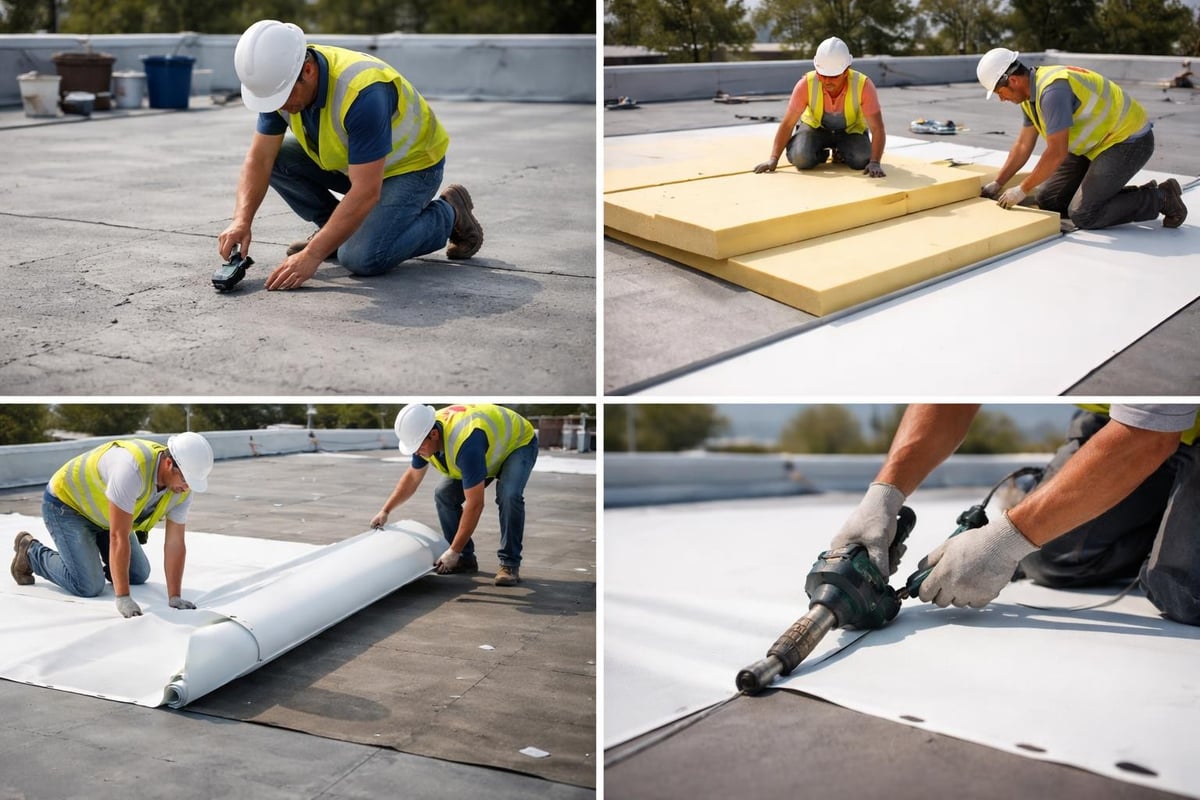
Thermoplastic Polyolefin (TPO) has become increasingly popular for commercial applications due to its heat-reflective properties and welded seam strength. The installation process requires precise measurement, careful membrane positioning, and skilled heat welding to create watertight seams. Quality installers understand proper overlap specifications, corner detailing, and penetration flashing techniques that prevent future leak points.
The white reflective surface of TPO membranes provides significant energy savings in warm climates. However, selecting the right TPO membrane thickness and reinforcement depends on building use, foot traffic expectations, and local weather patterns. Installers must evaluate these factors during the planning phase to recommend appropriate specifications.
EPDM Rubber Roofing
Ethylene Propylene Diene Monomer (EPDM) rubber roofing offers proven durability and relatively straightforward installation when handled by experienced professionals. The black membrane absorbs heat rather than reflecting it, making proper insulation selection crucial for energy efficiency. Installation typically involves either fully adhered, mechanically attached, or ballasted methods.
Each attachment method presents distinct advantages and challenges. Fully adhered systems provide maximum wind resistance but require meticulous substrate preparation. Mechanically fastened installations offer faster completion but create penetration points that demand careful sealing. Ballasted systems minimize membrane penetrations but increase structural load requirements.
Modified Bitumen Systems
Modified bitumen combines traditional built-up roofing reliability with modern polymer enhancements. These multi-ply systems require torch application or cold adhesive installation, each demanding specific safety protocols and technical skills. The redundant layers provide exceptional waterproofing when properly installed with overlapping seams and complete adhesion.
Professional installers recognize that modified bitumen works particularly well for properties requiring occasional roof access or equipment placement. The tough surface resists punctures and tears better than single-ply membranes, though proper installation technique remains essential for achieving the system's full performance potential.
Critical Installation Practices and Standards
Quality flat roof installation extends far beyond simply laying membrane material across a roof deck. The preparatory work, attention to detail, and adherence to manufacturer specifications separate professional installations from problematic ones.
Substrate Preparation Requirements
The foundation of any successful flat roof installation begins with proper substrate evaluation and preparation. Experienced installers conduct thorough structural assessments to identify damaged decking, inadequate support, or moisture infiltration before any new roofing material gets installed. This upfront investment prevents costly callbacks and premature system failures.
Essential substrate preparation steps include:
- Complete removal of existing failed roofing materials when necessary
- Deck board replacement for any rotted, damaged, or weakened sections
- Moisture testing to confirm dry substrate conditions before installation
- Surface cleaning to remove debris, oils, and contaminants
- Proper fastener placement to secure loose or shifting deck boards
Many installation problems trace back to inadequate preparation work. A qualified flat roof installer understands that rushing this phase compromises everything that follows, regardless of membrane quality or installation technique.
Drainage and Slope Design
Despite the "flat roof" terminology, proper water drainage requires intentional slope design. The industry standard minimum slope of 1/4 inch per foot may seem subtle, but it prevents the standing water that accelerates membrane degradation and creates leak risks. Inadequate drainage planning represents one of the most common installation mistakes.
Installers must carefully coordinate with architects and structural engineers when modifying slopes or adding tapered insulation systems. The drainage plan should account for primary roof drains, secondary overflow drains, and scupper placement that handles design rainfall events without backup or flooding.
| Drainage Component | Function | Installation Consideration |
|---|---|---|
| Primary Drains | Main water removal system | Positioned at low points with proper sump depth |
| Secondary Drains | Overflow protection | Located 2 inches above primary drain height |
| Scuppers | Wall penetration drainage | Sized for maximum expected flow rates |
| Tapered Insulation | Creates positive slope | Installed in coordinated pattern toward drains |
Flashing and Penetration Details
The interface between roofing membrane and vertical surfaces, equipment curbs, or penetrations creates the most vulnerable points in any flat roof system. Expert installers dedicate significant attention to these transition areas, recognizing that proper flashing prevents the majority of leak complaints.
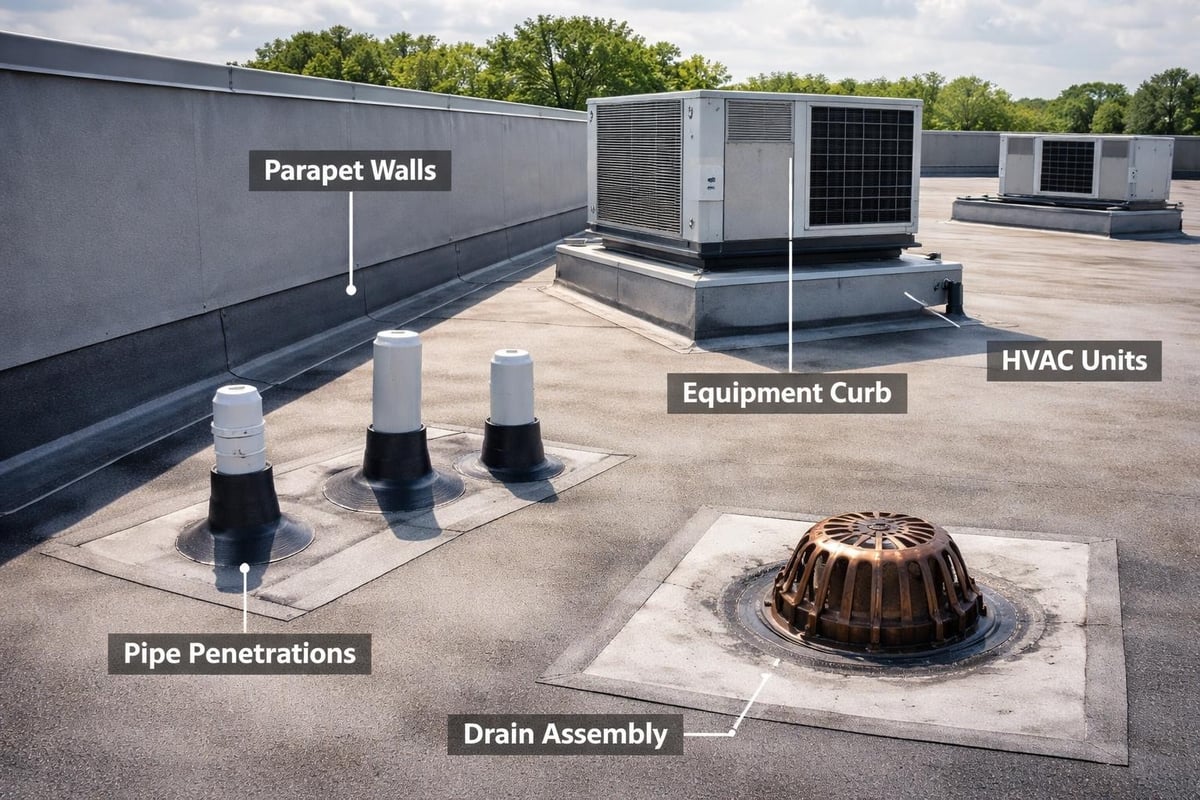
Counter-flashing should extend minimum heights above the roof surface, typically eight inches or more depending on local code requirements. Base flashing must adhere completely to both the substrate and the roofing membrane with no gaps, bubbles, or weak points. All penetrations require custom-fitted details that account for thermal expansion, structural movement, and material compatibility.
Professional installers also understand the importance of proper termination bars, sealant selection, and surface preparation at these critical junctions. The additional time invested in meticulous flashing work pays dividends through leak-free performance and extended system life. Property managers seeking reliable flat roof repair services often discover that flashing failures caused the original problems.
Selecting a Qualified Flat Roof Installer
The contractor selection process deserves careful consideration given the long-term implications of roof system performance. Not all roofing companies possess equal expertise with flat roof installations, and choosing based solely on price frequently leads to disappointing results.
Credentials and Experience Verification
Licensed, insured, and bonded contractors provide essential protection for property owners. However, basic licensing represents just the starting point. The best installers carry manufacturer certifications for the specific membrane systems they install, demonstrating specialized training and adherence to technical standards.
Key credentials to verify:
- Active contractor license valid in your jurisdiction
- General liability insurance with adequate coverage limits
- Workers compensation insurance protecting all crew members
- Manufacturer certifications for proposed roofing systems
- References from similar commercial projects
- Track record of warranty compliance and callbacks
Experience with your building type matters significantly. Industrial facilities present different challenges than retail centers or office buildings. A flat roof installer with relevant project experience understands the unique demands, access limitations, and operational constraints specific to your property type.
In-House Crews Versus Subcontractors
The employment structure of installation crews affects project quality, communication, and accountability. Companies utilizing in-house trained crews typically deliver more consistent results because workers follow standardized procedures, use familiar equipment, and maintain direct supervision throughout the project. This approach also simplifies warranty claims and ensures responsive service when issues arise.
Subcontractor-dependent companies introduce variables that can compromise quality control. Different crews may apply varying installation techniques, use inconsistent materials, or lack familiarity with specific manufacturer requirements. Property owners should ask directly about crew employment status and what percentage of work will be completed by company employees versus subcontractors.
Documentation and Communication Standards
Professional installers provide detailed documentation throughout the project lifecycle. Before work begins, expect comprehensive inspection reports identifying existing conditions, recommended repairs, and accurate scope of work descriptions. During installation, photo documentation captures substrate conditions, preparation work, and critical details that may later become hidden beneath finished surfaces.
The best contractors maintain clear communication channels with designated project managers available to address questions and coordinate with building operations. This transparency proves especially valuable for occupied commercial buildings where installation activities must minimize disruption to tenants or business operations.
Installation Timeline and Process Expectations
Understanding the installation sequence helps property owners plan around construction activities and recognize when delays may indicate problems requiring attention. While project duration varies based on roof size, system complexity, and weather conditions, the general workflow follows predictable patterns.
Pre-Installation Phase
Thorough planning prevents costly surprises and ensures smooth execution. Quality installers schedule pre-construction meetings to review access requirements, material staging areas, protection of landscaping and building features, and coordination with other trades or building activities. They also confirm delivery schedules, crew assignments, and contingency plans for weather delays.
This phase includes finalizing material selections, ordering long-lead items, and obtaining necessary permits. Property owners should expect transparent discussions about product options, performance characteristics, and cost implications. Installers who rush through planning or pressure clients toward specific products without explaining alternatives may lack the consultative approach that serves long-term interests.
Active Installation Work
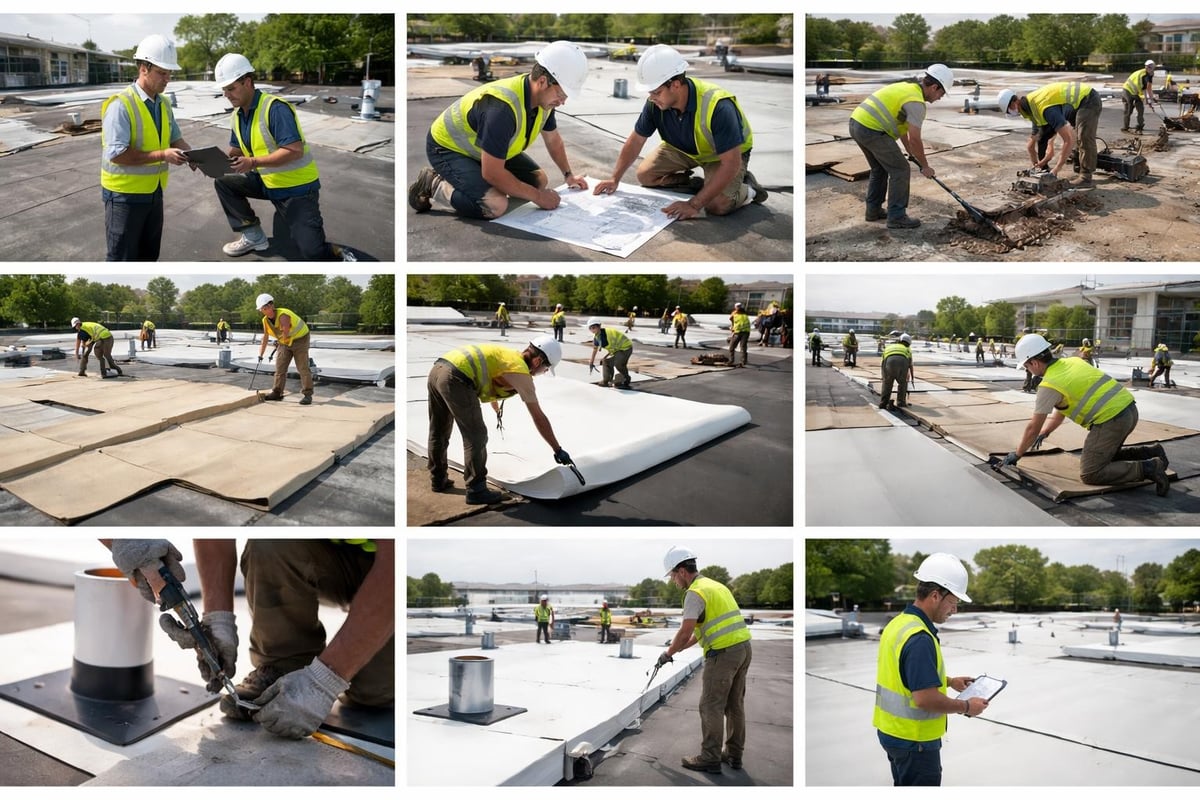
The visible construction phase begins with site preparation, equipment mobilization, and safety barrier installation. Following proper flat roof installation procedures ensures systematic progress through each layer of the roof assembly. Most commercial projects proceed through distinct stages including tear-off (when required), deck repair, insulation installation, membrane placement, and detail work.
Daily cleanup demonstrates contractor professionalism and reduces liability risks. Debris should be containerized promptly, and material staging should not obstruct building access or create hazards. Professional crews also protect surrounding property with appropriate barriers and take precautions against material or tool damage to walls, windows, and landscaping.
Weather interruptions require careful management to prevent moisture intrusion. Competent installers monitor forecasts closely and maintain tarps, temporary seals, or other protection ready for deployment. They never leave exposed areas vulnerable overnight or during precipitation events.
Final Inspection and Warranty Activation
Project completion involves more than the final membrane seam. Comprehensive walk-throughs identify any deficiencies, incomplete details, or areas requiring touch-up work. Third-party inspections may be required for certain warranty programs, adding another quality verification layer. Property owners should accompany installers during final inspections to understand system features, maintenance requirements, and warranty conditions.
Warranty documentation should be collected, reviewed, and stored securely. Most membrane manufacturers offer material warranties ranging from ten to thirty years, while labor warranties vary significantly between contractors. Understanding coverage terms, exclusions, and claim procedures prevents confusion when future service becomes necessary.
Common Installation Mistakes to Avoid
Even experienced contractors occasionally fall short of ideal installation standards. Property owners who understand common deficiencies can better evaluate proposals, monitor installation progress, and recognize warning signs requiring intervention.
Inadequate Insulation and Vapor Barriers
Thermal performance depends on proper insulation selection, thickness, and installation technique. Gaps between insulation boards, compressed or damaged insulation, or inadequate attachment compromise both energy efficiency and membrane support. Vapor barriers prevent moisture migration from building interiors into the roof assembly where condensation damages materials and reduces insulation effectiveness.
The flat roof installer must coordinate insulation specifications with building use, climate conditions, and HVAC system design. High-humidity operations like restaurants or manufacturing facilities require more robust vapor control than standard office spaces. Skipping or underspecifying these components to reduce costs creates long-term problems far exceeding the initial savings.
Poor Seam Quality
Membrane seams represent the primary defense against water intrusion. Whether heat-welded TPO, adhesive-bonded EPDM, or torch-applied modified bitumen, seam quality directly correlates with leak risk. Insufficient heat, inadequate adhesive coverage, contaminated surfaces, or improper overlap distances all compromise seam integrity.
Professional installers test seam strength using probe testing or destructive samples that verify proper bonding. They also understand that ambient temperature, humidity, and surface conditions affect bonding chemistry, adjusting techniques accordingly. Rushing through seam work to maintain schedule represents false economy that virtually guarantees callbacks.
Neglecting Manufacturer Specifications
Every roofing system comes with detailed installation instructions developed through extensive testing and field experience. Deviating from these specifications voids warranties and increases failure risk. However, some contractors take shortcuts or substitute materials they prefer despite manufacturer requirements.
Property owners should request confirmation that all materials and methods comply with manufacturer specifications. This includes substrate primers, adhesives, fastener types and spacing, lap widths, and detail treatments. When installers suggest alternatives, they should provide technical justification and manufacturer approval documentation.
Material Selection Considerations
The membrane type significantly influences installation complexity, long-term performance, and lifecycle costs. A knowledgeable flat roof installer helps clients evaluate options based on specific property requirements rather than defaulting to their preferred product.
Performance Requirements Analysis
Different buildings demand different roofing characteristics. High-traffic roofs supporting frequent HVAC maintenance require puncture-resistant membranes and reinforced walkway pads. Buildings in hail-prone regions benefit from impact-resistant systems with proven performance ratings. Energy efficiency priorities may favor highly reflective membranes that reduce cooling loads.
The Commercial Roofing Systems you choose should align with operational needs, budget constraints, and long-term facility plans. A twenty-year-old building scheduled for redevelopment within five years warrants different investment than a new construction project expected to serve for decades.
| Roof System | Typical Lifespan | Best Applications | Installation Complexity |
|---|---|---|---|
| TPO Single-Ply | 15-20 years | Energy efficiency, moderate traffic | Moderate – requires skilled welding |
| EPDM Rubber | 20-25 years | Cost-effective, low maintenance | Low to moderate – depends on attachment |
| Modified Bitumen | 20-30 years | Heavy traffic, equipment support | Moderate to high – torch safety critical |
| Built-Up Roofing | 20-30 years | Traditional applications, proven performance | High – labor intensive multiple layers |
Budget and Value Considerations
Initial installation cost represents only one component of total ownership expense. The most affordable upfront option frequently delivers the highest lifecycle cost through shorter lifespan, higher maintenance requirements, or increased energy consumption. Comprehensive cost analysis should account for expected service life, warranty coverage, maintenance needs, and energy performance.
Quality installers provide transparent pricing that separates material costs, labor expenses, and project-specific factors like disposal fees or structural repairs. They also explain how different specifications affect pricing and performance. Vague estimates or reluctance to itemize costs often indicate contractors who plan to cut corners or add charges later.
Quality Assurance and Long-Term Performance
The installation phase concludes, but the relationship with your flat roof installer continues through warranty periods and ongoing maintenance. Establishing clear expectations and documentation practices protects your investment.
Post-Installation Maintenance Programs
Regular maintenance extends roof life and identifies small problems before they become expensive emergencies. Professional contractors offer maintenance agreements that include periodic inspections, drain cleaning, minor repairs, and detailed condition reports. These programs typically cost a fraction of emergency repair expenses and help maximize warranty coverage by demonstrating proper care.
Maintenance visits should document roof conditions through photographs, identify areas requiring attention, and provide prioritized repair recommendations. Property managers can use this information for budget planning and to demonstrate due diligence to insurance carriers. Some contractors also coordinate roof leak fix services as part of comprehensive maintenance programs.
Performance Monitoring and Documentation
Smart property owners maintain complete roof files including original specifications, installation photos, warranty documents, inspection reports, and repair records. This documentation proves invaluable during warranty claims, insurance disputes, or property transactions. It also helps future contractors understand system history when planning repairs or replacement.
Modern technology enables enhanced monitoring through thermal imaging, moisture scanning, and drone inspections that identify problems invisible to visual inspection. Forward-thinking installers incorporate these tools into maintenance programs, providing property owners with detailed system condition data that supports informed decision-making.
The value of choosing an experienced flat roof installer extends far beyond the initial installation. Quality workmanship, proper materials, and attention to detail create roofing systems that protect buildings reliably for decades with minimal intervention. Understanding installation best practices, asking informed questions, and selecting contractors based on qualifications rather than lowest price positions property owners for successful outcomes that preserve property value and prevent costly disruptions.
Selecting the right flat roof installer determines whether your commercial roofing investment delivers decades of reliable protection or becomes a source of ongoing problems and expense. The expertise, materials, and attention to detail provided during installation directly impact long-term performance, maintenance requirements, and total ownership costs. Texcore Construction brings Fort Worth property owners the combination of technical expertise, in-house crews, and accountability that commercial roofing projects demand. From detailed initial assessments through meticulous installation and comprehensive warranty support, our team delivers the craftsmanship and transparency that protect your investment and provide lasting peace of mind.