Flat Roof Replacement Near Me: Complete Guide
Searching for "flat roof replacement near me" signals a critical decision point for property managers, business owners, and facility directors. Unlike sloped roofing systems that rely on gravity for water runoff, flat roofs depend entirely on membrane integrity, proper drainage design, and precise installation to protect your investment. Whether you're managing an aging commercial building, planning capital improvements, or responding to persistent leak issues, understanding the replacement process ensures you make informed decisions that balance immediate needs with long-term performance. This guide covers everything from material selection and cost factors to contractor evaluation and project timelines.
Understanding When Flat Roof Replacement Becomes Necessary
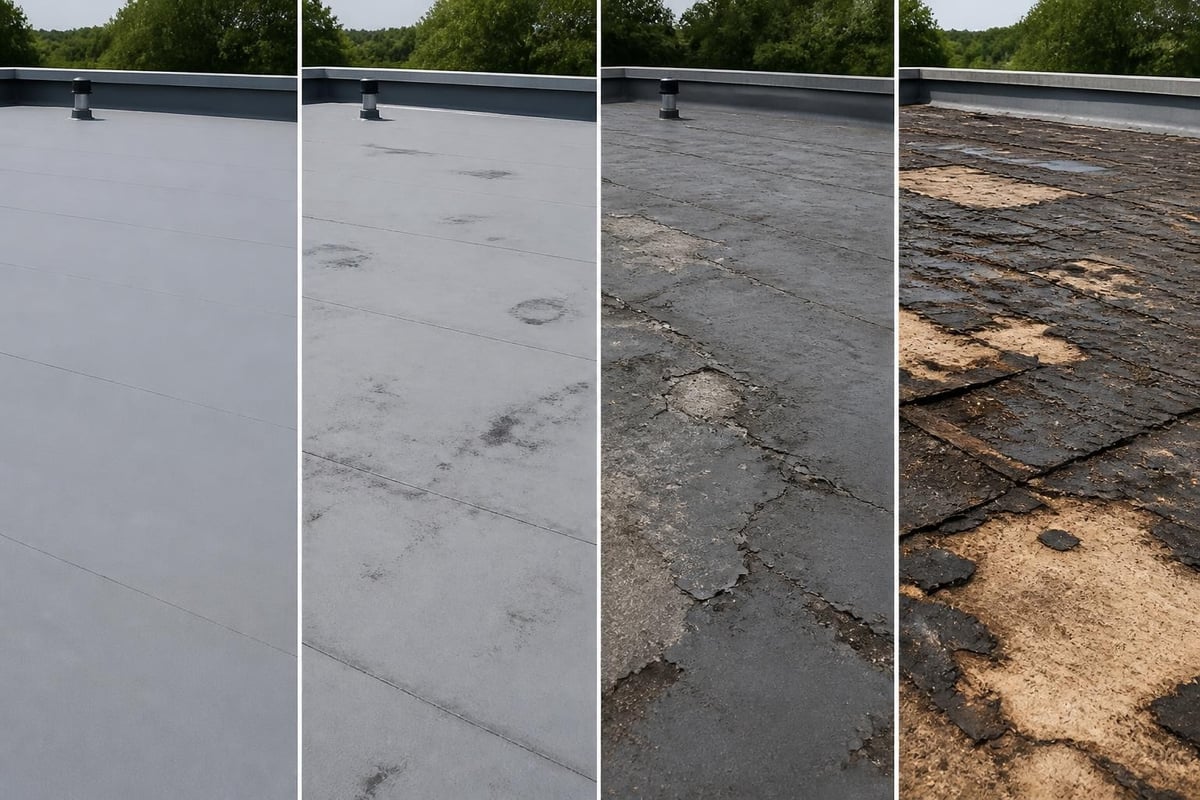
Flat roofs don't fail overnight. They deteriorate gradually through UV exposure, ponding water, thermal cycling, and physical wear. Recognizing the difference between repairable damage and true replacement scenarios saves both money and headaches.
Signs Your Flat Roof Needs Replacement
Multiple active leaks across different roof sections indicate systemic failure rather than isolated damage. When repair costs approach 30-40% of replacement costs, or when your roof has surpassed its expected lifespan, replacement becomes the practical solution.
Key indicators include:
- Widespread membrane splitting, bubbling, or delamination
- Extensive ponding water that persists 48 hours after rainfall
- Deteriorated insulation throughout multiple roof sections
- Visible daylight through roof decking from interior spaces
- Failed previous repairs that continue leaking within months
Roof age matters significantly. EPDM systems typically last 20-25 years, TPO membranes 15-20 years, and modified bitumen 15-20 years depending on installation quality and maintenance. A 25-year-old EPDM roof showing minor issues warrants replacement consideration even without catastrophic failure.
Repair Versus Replacement Economics
Property managers often face pressure to defer replacement through repeated repairs. This approach works for isolated damage on newer roofs but becomes financially counterproductive on aging systems.
Consider replacement when annual repair costs exceed 15% of full replacement costs for two consecutive years. A $50,000 replacement cost means annual repairs approaching $7,500 signal diminishing returns. Document all repair invoices and locations to identify patterns suggesting systemic issues rather than random damage.
Professional roofing teams provide detailed assessments separating repairable conditions from replacement scenarios, backed by documentation showing membrane condition, insulation integrity, and substrate soundness.
Flat Roof Replacement Material Options
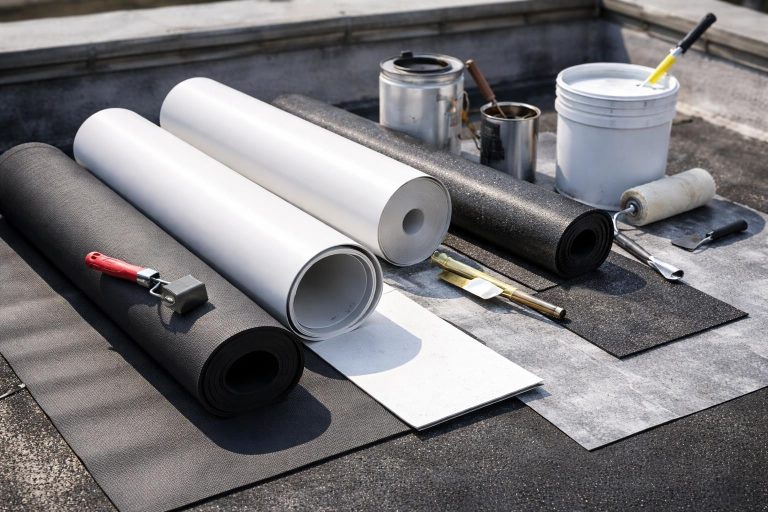
Material selection drives performance, longevity, and total project costs. Each membrane type offers distinct advantages depending on building use, budget constraints, and performance expectations.
TPO (Thermoplastic Polyolefin) Roofing
TPO has become the dominant commercial flat roofing material due to its balance of cost, performance, and energy efficiency. White TPO membranes reflect solar radiation, reducing cooling costs in warm climates like Fort Worth.
| Feature | Specification | Advantage |
|---|---|---|
| Lifespan | 15-20 years | Predictable replacement cycles |
| Installation | Heat-welded seams | Superior seam strength |
| Reflectivity | 0.72-0.87 | Significant energy savings |
| Cost | $5.50-$8.50/sq ft | Competitive pricing |
TPO withstands UV exposure effectively and resists punctures better than older single-ply membranes. The heat-welded seams create watertight bonds stronger than the membrane itself, eliminating the seam failures common with adhesive-based systems.
EPDM (Ethylene Propylene Diene Monomer) Roofing
EPDM represents proven technology with decades of field performance data. This synthetic rubber membrane handles temperature extremes well and resists ozone degradation that damages lesser materials.
Installation typically uses fully adhered, mechanically attached, or ballasted methods. Fully adhered EPDM performs best in high-wind regions, while mechanically attached systems offer easier repairs. Black EPDM absorbs heat, making it less ideal for cooling-intensive buildings but acceptable for warehouse and industrial applications prioritizing durability over energy efficiency.
Commercial roofing systems expertise ensures proper EPDM installation with appropriate seam treatments and flashing details that prevent the edge failures common in substandard installations.
Modified Bitumen Roofing
Modified bitumen combines traditional built-up roofing reliability with modern polymer modifiers. The multi-ply installation creates redundancy absent in single-ply systems, making it ideal for high-traffic roofs or buildings with roof-mounted equipment.
Installation methods include:
- Torch-applied (hot-work restrictions may prohibit)
- Cold-applied adhesive (suitable for occupied buildings)
- Self-adhering membranes (premium option with clean installation)
This system excels in puncture resistance and handles foot traffic better than TPO or EPDM. The visible granule surface shows wear patterns clearly, simplifying maintenance planning. Modified bitumen typically costs $6.00-$9.50 per square foot installed, positioning it between EPDM and premium systems.
PVC (Polyvinyl Chloride) Roofing
PVC offers the longest lifespan and best chemical resistance among single-ply membranes. Facilities with grease exhaust, chemical exposure, or demanding performance requirements justify PVC's premium pricing.
Heat-welded seams like TPO provide superior strength, but PVC's chemical resistance surpasses all alternatives. Restaurant roofs with grease-laden exhaust, chemical processing facilities, and buildings with aggressive environmental exposure benefit from PVC's durability. According to comprehensive flat roof material comparisons, PVC systems can last 25-30 years with proper installation and maintenance.
Flat Roof Replacement Cost Factors
Searching "flat roof replacement near me" requires understanding the variables influencing project costs. Simple price-per-square-foot estimates mislead without context about specific building conditions and project scope.
Material Cost Breakdown
Membrane selection represents just one cost component. Complete systems include insulation, cover boards, fasteners, adhesives, flashing materials, and edge metal that collectively equal or exceed membrane costs.
| System Component | Typical Cost Range | Function |
|---|---|---|
| Membrane | $2.50-$5.00/sq ft | Waterproofing layer |
| Insulation | $1.50-$3.50/sq ft | Thermal performance and substrate |
| Cover board | $0.75-$1.50/sq ft | Puncture resistance |
| Labor | $2.00-$4.00/sq ft | Installation expertise |
| Tear-off disposal | $0.50-$1.50/sq ft | Removal of existing materials |
Energy codes increasingly require higher R-values, adding insulation costs but delivering operational savings through reduced HVAC expenses. Building size affects pricing significantly due to mobilization costs, crane requirements, and economy-of-scale factors. Detailed flat roof replacement cost analysis shows how regional factors and building-specific conditions create substantial price variations.
Building-Specific Cost Variables
Roof height dramatically impacts costs through crane requirements, safety equipment needs, and labor productivity. Single-story buildings cost $5.50-$8.00 per square foot for complete TPO replacement, while five-story buildings may reach $9.00-$12.00 per square foot for identical materials due to access challenges.
Existing roof condition determines tear-off requirements. Roofs with single membrane layers cost less to remove than multiple built-up layers requiring intensive labor. Wet insulation demands complete replacement rather than membrane-only overlay, potentially doubling project costs on neglected roofs.
Penetrations complicate installation. HVAC units, vent pipes, skylights, and equipment supports require custom flashing details that consume labor hours. Buildings with extensive rooftop equipment pay premium costs for detail work ensuring watertight penetrations.
Selecting the Right Flat Roof Replacement Contractor
Contractor selection determines whether your investment delivers 20+ years of performance or becomes a recurring headache. Price alone fails as a selection criterion when installation quality drives long-term outcomes.
Verification and Credentials
Manufacturer certifications demonstrate technical training and quality standards. GAF, Firestone, Johns Manville, and other major manufacturers certify contractors who meet installation standards and agree to warranty protocols.
Request references from similar building types completed within the past three years. A contractor specializing in residential work may struggle with commercial flat roof complexities, while industrial roofing specialists understand large-scale project logistics absent in smaller firms.
Essential contractor qualifications:
- Manufacturer certifications for your selected membrane system
- General liability insurance minimum $2 million aggregate
- Workers compensation coverage for all crew members
- In-house crews rather than subcontractor reliance
- Detailed written scope of work with material specifications
- Clear warranty terms covering both materials and labor
Texas does not require roofing contractor licensing, making verification of manufacturer certifications and insurance coverage critically important. Contractors offering to handle insurance claims or suggesting deductible coverage arrangements violate Texas law and signal broader ethical concerns.
Proposal Evaluation Criteria
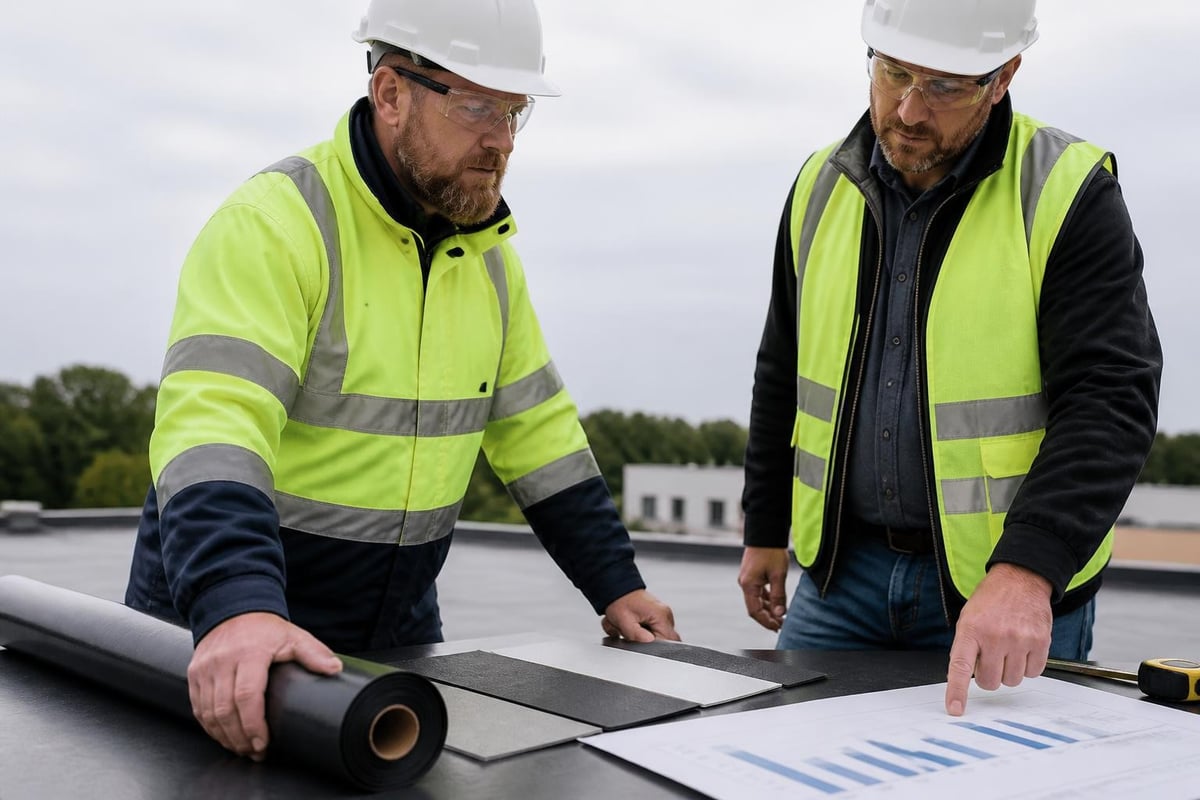
Comprehensive proposals detail every project phase from tear-off through final cleanup. Vague line items like "complete flat roof replacement" without material specifications, R-value requirements, or fastening methods indicate insufficient planning.
Compare proposals on equal terms by requesting identical specifications from multiple contractors. A $45,000 proposal using 60-mil TPO with polyiso insulation differs fundamentally from a $35,000 proposal using 45-mil TPO with minimal insulation despite both claiming "TPO replacement."
| Proposal Element | What to Verify | Why It Matters |
|---|---|---|
| Membrane specification | Exact thickness and brand | Performance and longevity |
| Insulation type and R-value | Specific product and thickness | Energy code compliance |
| Fastening method | Fully adhered, mechanical, or ballasted | Wind resistance |
| Flashing details | Material and installation method | Primary leak prevention |
| Warranty coverage | Years covered and exclusions | Long-term protection |
Timeline commitments separate professional contractors from overcommitted firms. Three-week delays compound when buildings have active leaks or seasonal weather windows close. Contractors managing their schedules conservatively deliver on commitments rather than overpromising.
The Flat Roof Replacement Process
Understanding project phases helps property managers plan tenant communications, coordinate building access, and recognize quality installation practices versus shortcuts.
Pre-Construction Planning
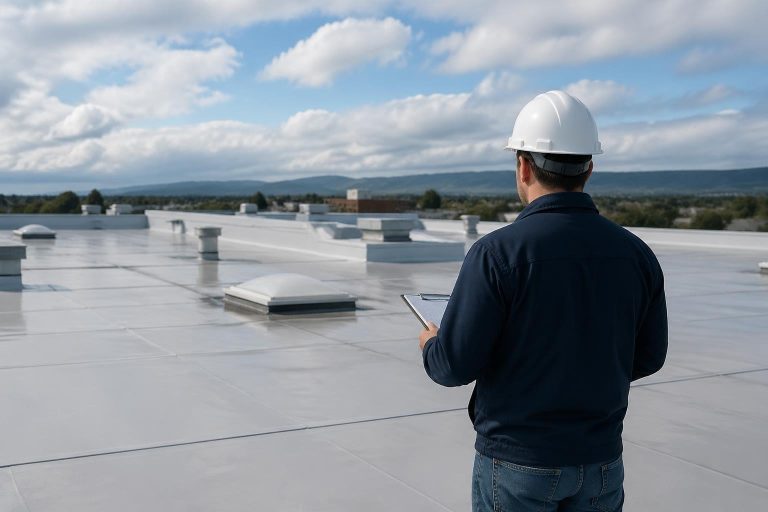
Thorough roof inspections reveal substrate conditions, drainage adequacy, and structural concerns requiring resolution before membrane installation. Discovering rotted decking during tear-off creates delays and budget overruns unless identified during planning.
Building occupants need advance notice about noise, vibration, roof access restrictions, and potential disruptions. Manufacturing facilities with sensitive equipment, medical offices with patient care concerns, and retail centers with customer traffic require communication plans minimizing operational impacts.
Staging area identification determines material delivery logistics and waste container placement. Limited site access, adjacent property concerns, or parking restrictions affect project scheduling and costs when cranes or specialized equipment become necessary.
Installation Sequence
Professional installation follows manufacturer specifications precisely. Deviations void warranties and compromise performance regardless of installer experience or opinions about "better methods."
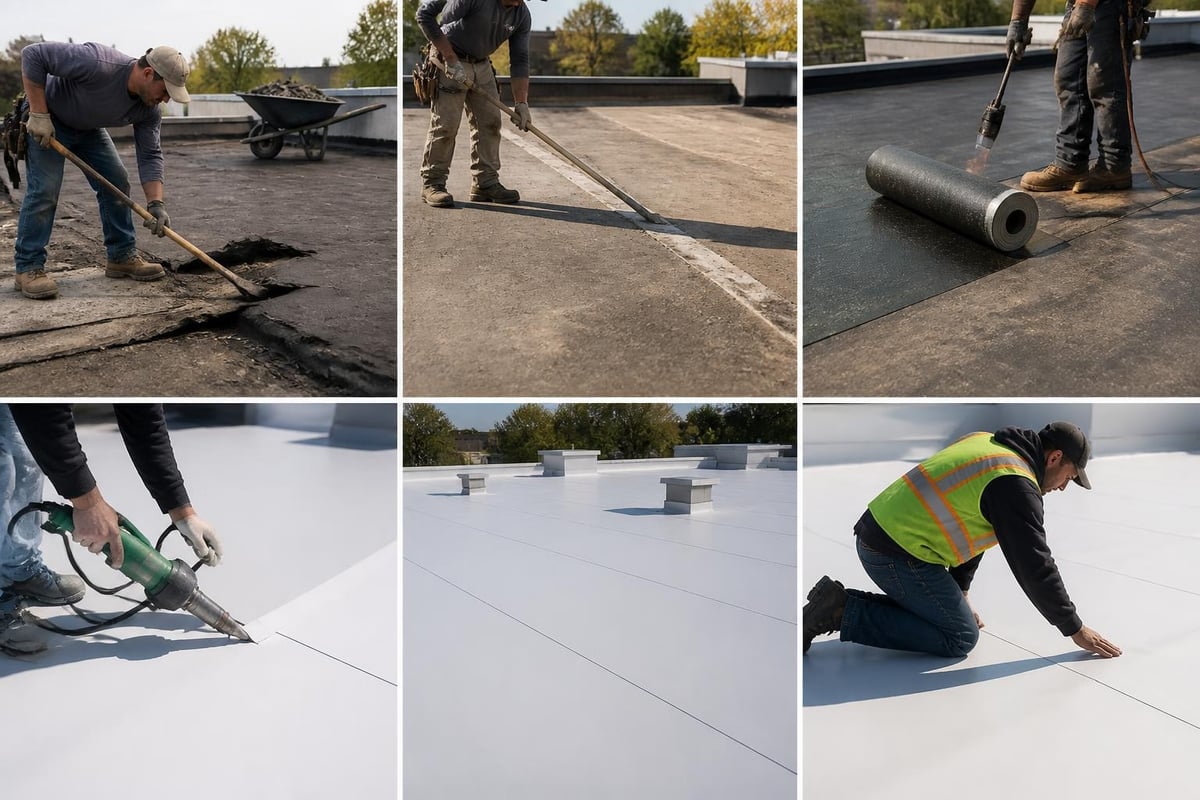
- Complete tear-off removes all existing roofing materials down to structural deck, revealing substrate conditions
- Deck inspection and repair addresses deteriorated panels, inadequate fastening, or structural deficiencies
- Insulation installation follows energy code requirements with proper fastening density and board stagger
- Cover board placement protects insulation from membrane installation traffic and provides puncture resistance
- Membrane installation proceeds using manufacturer-specified methods with quality control at seams and penetrations
- Flashing and edge metal installation seals roof perimeters and penetrations against water intrusion
- Final inspection and testing verifies seam integrity and identifies any deficiencies requiring correction
According to comprehensive flat roof system cost comparisons, proper installation sequencing and quality control separate 20-year performance from premature failures requiring costly interventions.
Weather monitoring becomes critical during installation. TPO and PVC require dry conditions for proper adhesion, while modified bitumen tolerates cooler temperatures than single-ply systems. Professional contractors schedule around weather rather than rushing installations during marginal conditions.
Maximizing Flat Roof Replacement Value
Strategic decisions during replacement planning deliver value beyond initial installation, reducing lifecycle costs through enhanced durability and operational efficiency.
Energy Efficiency Upgrades
Cool roof membranes with high solar reflectance reduce cooling loads substantially in commercial buildings. White TPO or PVC membranes achieve Solar Reflectance Index (SRI) values above 80, compared to black EPDM at 5-10 SRI.
Increased insulation beyond minimum code requirements pays back through energy savings. Upgrading from R-20 to R-30 insulation adds $1.50-$2.00 per square foot but can reduce annual HVAC costs by 15-25% depending on building type and climate zone. Calculate payback periods considering utility costs and building operational horizon.
Drainage Improvements
Ponding water accelerates membrane degradation and indicates inadequate drainage design. Replacement projects offer opportunities to correct drainage deficiencies through tapered insulation systems creating positive slope toward drains.
Proper drainage design maintains 1/4 inch per foot minimum slope throughout the roof field, with 1/2 inch per foot slopes within 10 feet of drains. Tapered insulation systems cost $0.75-$1.50 per square foot more than flat insulation but eliminate ponding water that otherwise shortens membrane life by years.
Additional roof drain installations improve drainage capacity on large roof areas or buildings with inadequate existing drains. Understanding roof issues before replacement ensures corrective measures address root causes rather than perpetuating deficiencies.
Warranty Considerations
Manufacturer warranties require certified installer participation and specific material combinations. Single-ply membrane warranties typically cover 10-20 years but exclude consequential damages, making contractor labor warranties equally important.
Warranty types include:
- Material-only warranties cover manufacturing defects but exclude installation failures
- System warranties cover materials and installation when certified contractors use specified products
- Extended warranties offer 20-30 year coverage with premium materials and installation standards
- Labor warranties protect against contractor workmanship defects separate from material coverage
Read warranty exclusions carefully. Most exclude damage from ponding water, improper maintenance, unauthorized repairs, or building modifications. Document roof condition at completion and maintain required maintenance records supporting warranty claims if needed.
Flat Roof Maintenance After Replacement
New roof installation doesn't eliminate maintenance requirements. Proactive care extends membrane life and preserves warranty coverage while identifying minor issues before they escalate.
Routine Inspection Protocols
Semi-annual inspections in spring and fall identify developing issues while they remain inexpensive to address. Post-storm inspections after hail, high winds, or severe weather catch damage requiring prompt repair.
Professional inspections document membrane condition, flashing integrity, drain function, and penetration seals through photographs and written reports. This documentation supports insurance claims for roof damage when storms cause insured losses requiring professional restoration.
Inspection focus areas:
- Seam integrity showing no separation or gaps
- Flashing adhesion at parapet walls and penetrations
- Drain strainers clear of debris and functioning properly
- Membrane surface free from punctures or cuts
- Edge metal secure with proper fastening
Minor repairs completed promptly prevent water intrusion that damages insulation and deck, avoiding the compounding costs that occur when small problems grow into major failures.
Preventive Maintenance Actions
Regular drain cleaning prevents overflow conditions stressing membranes and flashing. Debris accumulation around HVAC units, in roof valleys, and against parapet walls traps moisture accelerating deterioration.
Roof traffic management protects membrane integrity. Designate walking paths using protection boards or pavers, limiting traffic to necessary maintenance routes rather than allowing unrestricted access that causes premature wear.
Professional roof coatings applied 10-15 years after installation can extend membrane life by 5-10 years when underlying conditions remain sound. According to roofing system lifecycle information, properly timed coating applications maximize return on replacement investments through deferred replacement timing.
Regional Considerations for Fort Worth Properties
Local climate conditions, building codes, and weather patterns influence material selection and installation priorities for Fort Worth commercial properties.
Climate-Specific Material Performance
Fort Worth's hot summers with intense UV exposure favor reflective membranes reducing cooling loads. White TPO and PVC membranes deliver measurable energy savings compared to heat-absorbing EPDM, though EPDM's lower cost may suit warehouse applications prioritizing durability over energy efficiency.
Hail represents significant risk in North Texas, requiring impact-resistant membrane specifications and potentially upgraded insulation providing cushioning against hail strikes. FM Approvals and UL ratings indicate tested hail resistance levels, with FM 4470 Severe Hail ratings offering highest protection.
Temperature cycling between hot summers and occasional freezing winters demands membranes maintaining flexibility across wide temperature ranges. Quality TPO and PVC formulations resist thermal cycling better than economy-grade products showing brittleness in cold weather.
Local Code Requirements
Energy conservation codes require minimum R-values varying by building type and roof insulation placement. Commercial buildings typically require R-20 to R-25 roof insulation, with specific requirements depending on insulation location above or below deck.
Wind design requirements based on local wind speeds determine fastening densities and edge securement methods. Fort Worth falls in 115-120 mph wind zones requiring specific engineering calculations for mechanically attached systems or full adhesion meeting uplift resistance requirements.
Building permit requirements vary by jurisdiction within the Fort Worth area. Most commercial roof replacements require permits triggering inspections verifying code compliance, proper installation sequencing, and manufacturer specification adherence. Contractors handling permit acquisition streamline project timelines compared to owner-managed permitting processes.
Financial Planning and Project Timing
Strategic timing and financing approaches maximize value while minimizing operational disruption and financial strain on property budgets.
Budget Development
Comprehensive budgets account for base replacement costs plus contingencies for unforeseen substrate repairs, additional drain installations, or code-required upgrades discovered during construction.
Budget components include:
- Base membrane system installation
- Substrate repair allowance (typically 10-15% of base cost)
- Permit and inspection fees
- Temporary roof protection if phased installation required
- Contingency for weather delays on tight schedules
Multi-building properties benefit from phased approaches spreading capital outlays across fiscal years while achieving economy-of-scale pricing through volume commitments. Contractors offer pricing advantages when guaranteed multiple buildings versus competitive bidding on each individual roof.
Optimal Replacement Timing
Spring and fall offer ideal installation conditions with moderate temperatures and lower precipitation probability. Summer heat complicates TPO welding and worker productivity, while winter cold affects adhesive curing and membrane flexibility.
Scheduling around business cycles minimizes disruption. Retail properties avoid peak shopping seasons, while educational facilities target summer breaks and industrial buildings coordinate with planned shutdowns or slower production periods.
Emergency replacements cost 20-40% more than planned projects due to expedited material procurement, overtime labor, and compressed schedules limiting contractor competition. Proactive planning based on roof age and condition assessments avoids emergency scenarios through scheduled replacement at optimal timing.
Replacing your flat roof represents a significant investment demanding careful planning, material selection, and contractor evaluation to achieve decades of reliable performance. Understanding cost factors, material options, and installation quality markers empowers property managers and building owners to make informed decisions balancing immediate budgets with long-term value. Whether you're managing a single commercial building or overseeing a multi-property portfolio in Fort Worth, Texcore Construction delivers flat roof replacement expertise through in-house crews, detailed documentation, and transparent recommendations backed by manufacturer certifications and a five-year labor warranty.