Commercial Flat Roof Systems: Materials & Maintenance
The commercial flat roof represents one of the most common and practical roofing solutions for modern business buildings, warehouses, retail centers, and industrial facilities. Despite their name, these roofs maintain a slight pitch for drainage while offering advantages that sloped roofing cannot match. Understanding the materials, installation requirements, maintenance demands, and potential issues associated with commercial flat roofing systems helps property managers and building owners make informed decisions that protect their investments. This comprehensive guide explores every critical aspect of commercial flat roof systems, from material selection through long-term performance optimization.
Understanding Commercial Flat Roof Design
Commercial flat roof systems differ significantly from their residential counterparts in both construction methodology and performance requirements. Modern commercial roofing demands materials and installation techniques capable of spanning large areas without interior support structures while resisting thermal expansion, UV exposure, and substantial foot traffic from maintenance personnel.
The fundamental design principle behind every commercial flat roof involves creating a continuous membrane barrier that prevents water infiltration across expansive surfaces. Unlike residential pitched roofs that rely on gravity-assisted water shedding through overlapping shingles, commercial flat roofs depend on seamless or carefully sealed membrane systems.
Key Design Considerations
Building owners evaluating commercial flat roof options must account for several critical factors that influence material selection and installation approach. Climate conditions, expected foot traffic, mechanical equipment loads, and building usage patterns all play decisive roles.
Primary design factors include:
- Building structure and load-bearing capacity
- Local climate patterns and temperature extremes
- Required insulation values and energy efficiency goals
- Expected roof traffic and maintenance access needs
- Budget constraints for both installation and lifecycle costs
- Local building codes and fire rating requirements
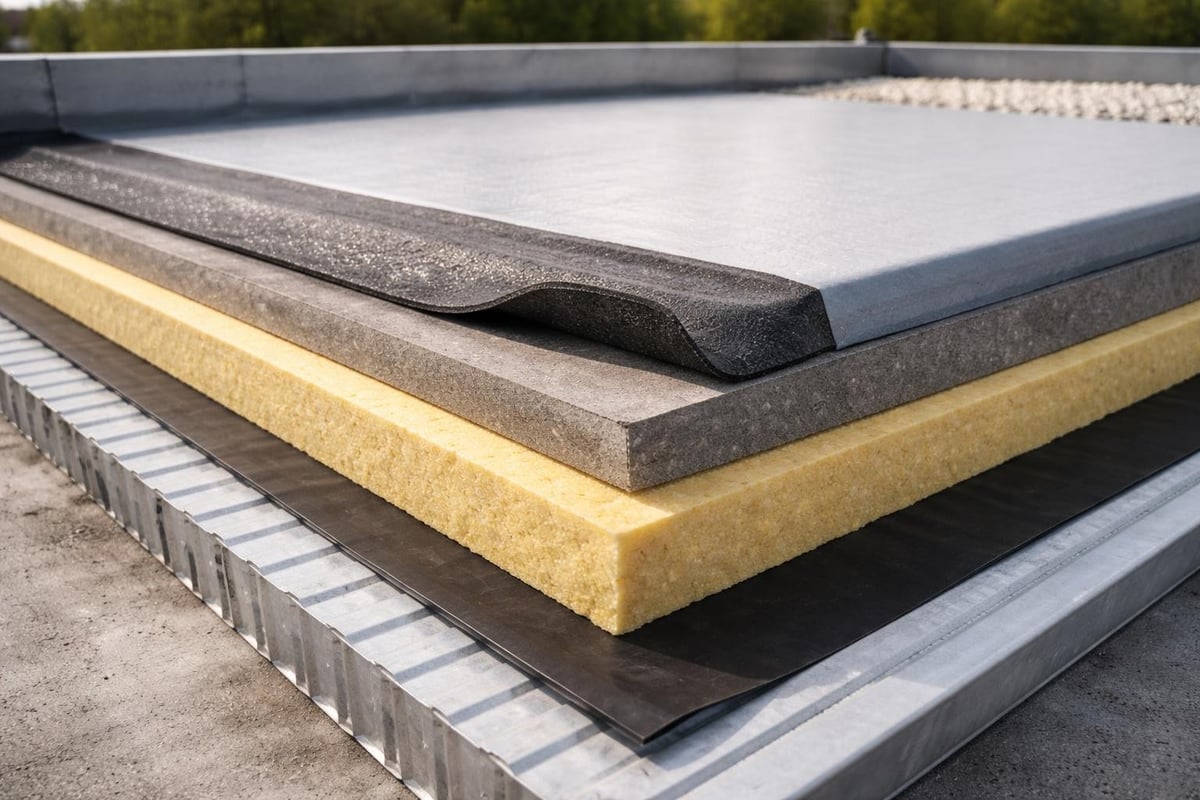
Most commercial flat roof systems incorporate multiple layers working together to provide waterproofing, insulation, and structural support. The typical assembly includes a structural deck, vapor barrier, insulation layer, roofing membrane, and often a protective top layer depending on the specific system chosen.
Commercial Flat Roof Material Options
The material selected for a commercial flat roof installation fundamentally determines its performance characteristics, maintenance requirements, and service life. Choosing the right flat roof system requires matching material properties to specific building needs and environmental conditions.
TPO Roofing Membranes
Thermoplastic Polyolefin (TPO) has emerged as one of the most popular commercial flat roof materials over the past two decades. This single-ply membrane offers exceptional reflectivity, reducing cooling costs while providing reliable waterproofing through heat-welded seams that create watertight bonds stronger than the membrane itself.
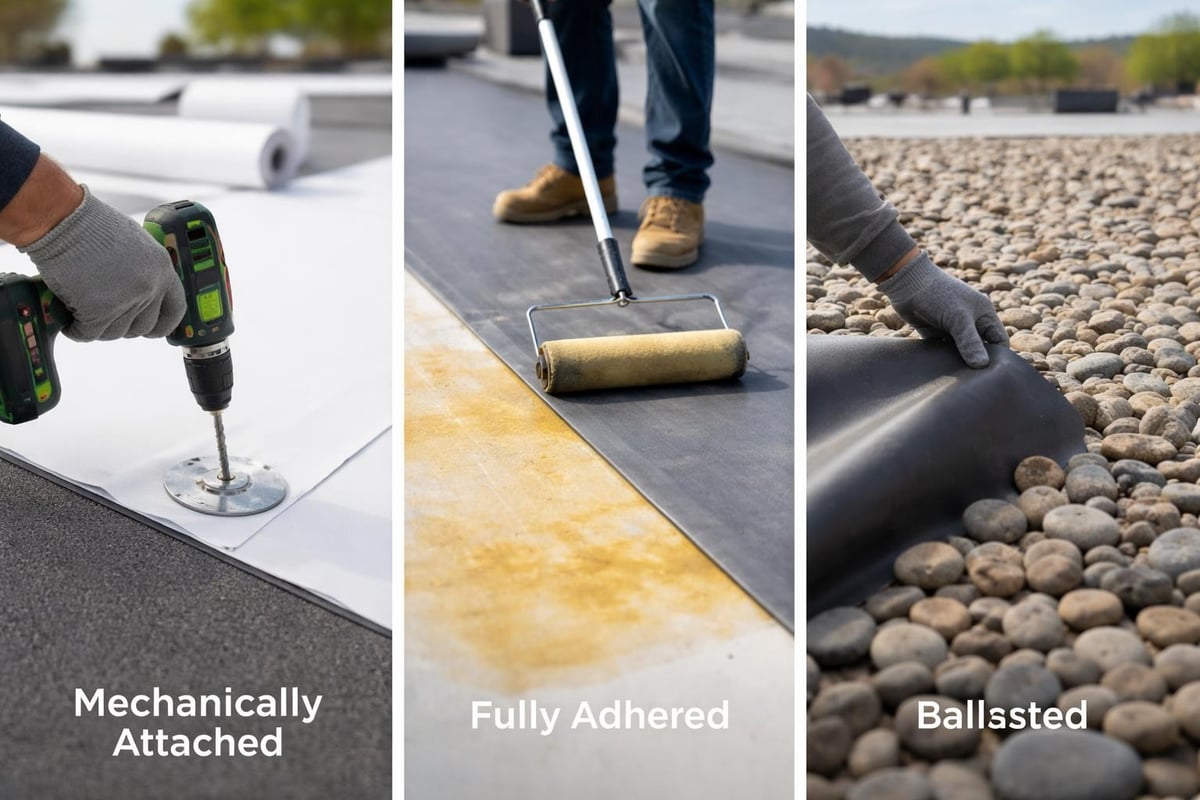
TPO installations typically involve mechanically attaching or fully adhering white or light-colored membranes that reflect solar radiation. The material resists UV degradation, maintains flexibility across temperature ranges, and accommodates building movement without cracking.
EPDM Rubber Roofing
Ethylene Propylene Diene Monomer (EPDM) represents the proven workhorse of commercial flat roof systems. This synthetic rubber membrane has protected commercial buildings for over five decades, demonstrating remarkable durability and weather resistance.
EPDM's black surface absorbs heat, which can increase cooling costs in warm climates but provides benefits in colder regions by accelerating snow melt. The material excels in extreme temperature environments and resists ozone degradation better than most alternatives.
| Material | Service Life | Reflectivity | Seam Method | Best Climate |
|---|---|---|---|---|
| TPO | 20-30 years | High | Heat-welded | Hot, sunny regions |
| EPDM | 25-35 years | Low | Adhesive/tape | Cold, variable climates |
| Modified Bitumen | 15-25 years | Medium | Torch/adhesive | Moderate climates |
| PVC | 20-30 years | High | Heat-welded | Chemical exposure areas |
Modified Bitumen Systems
Modified bitumen combines traditional built-up roofing concepts with modern polymer technology. These multi-ply systems incorporate asphalt modified with plastic or rubber polymers, creating membranes with enhanced flexibility and durability compared to conventional tar-and-gravel roofs.
Installation methods vary from torch-applied systems that heat-weld layers together to cold-applied adhesive systems safer for occupied buildings. The redundancy of multiple layers provides excellent waterproofing reliability, making modified bitumen a preferred choice for critical facilities.
Built-Up Roofing (BUR)
The original commercial flat roof system, built-up roofing layers alternating plies of reinforcing fabric and hot asphalt or coal tar, creating a thick, durable membrane. While less common in new construction, BUR systems remain viable options for specific applications requiring exceptional puncture resistance.
The gravel or mineral cap surface protects underlying layers from UV damage and foot traffic while providing fire resistance. However, the weight of BUR systems requires robust structural support, and installation generates strong odors that can disrupt building operations.
Installation Best Practices
Proper installation determines whether a commercial flat roof achieves its expected service life or fails prematurely. Even premium materials installed incorrectly will underperform compared to mid-grade products installed with meticulous attention to detail.
The foundation of every successful commercial flat roof begins with thorough substrate preparation. The roof deck must be clean, dry, and structurally sound before any roofing materials are applied. Moisture trapped beneath membranes leads to blistering, delamination, and accelerated deterioration.
Critical installation steps include:
- Complete substrate inspection and repair of damaged decking
- Proper vapor barrier installation to prevent condensation issues
- Correctly specified and installed insulation with staggered joints
- Membrane application following manufacturer specifications exactly
- Special attention to flashing details at penetrations and transitions
- Quality control inspections throughout the installation process
Flashing represents the most vulnerable aspect of any commercial flat roof system. Transitions between the field membrane and vertical surfaces, roof penetrations for mechanical equipment, and edge details require skilled craftsmanship to ensure long-term waterproofing integrity. Commercial roofing systems demand precision at every flashing detail to prevent the leak pathways that compromise even the highest-quality membranes.
Common Commercial Flat Roof Problems
Understanding typical failure modes helps property managers implement preventive maintenance strategies that extend roof service life and minimize unexpected repair costs. Commercial flat roof issues often develop gradually, making regular inspections essential for early detection.
Ponding Water Challenges
Water remaining on a commercial flat roof for more than 48 hours after rainfall indicates inadequate drainage. While properly installed membranes resist standing water, prolonged exposure accelerates membrane degradation, promotes vegetation growth, and adds structural loads.
Ponding typically results from inadequate roof slope, deflection in structural members, or clogged drainage systems. Addressing ponding requires identifying the root cause rather than simply coating over the problem area.
Membrane Punctures and Tears
Foot traffic, dropped tools, falling branches, and equipment installations all threaten membrane integrity. Small punctures often go unnoticed until water infiltration causes interior damage, making regular inspections critical.
Modern single-ply membranes are more vulnerable to puncture damage than traditional built-up systems, though they offer advantages in other performance areas. High-traffic roofs benefit from protective walkway pads or pavers in commonly accessed areas.
Thermal Stress and Expansion
Commercial flat roof membranes expand and contract with temperature fluctuations. Over years of thermal cycling, this movement can stress seams, pull fasteners, and cause splits in aged membranes.
Properly designed systems accommodate thermal movement through expansion joints, adequate fastener density, and membrane materials rated for local temperature ranges. Failure to account for thermal stress during installation leads to premature system failure.
Improper Installation Issues
Many commercial flat roof problems trace back to installation errors rather than material deficiencies. Common mistakes include inadequate seam overlaps, insufficient adhesive application, improperly welded seams, and missing or poorly executed flashing details.
Property owners protect their investments by selecting experienced commercial roofing contractors who employ in-house crews rather than subcontractors. Consistent crew training and quality control procedures reduce installation errors that compromise roof performance.
Maintenance Requirements and Strategies
A comprehensive maintenance program represents the difference between a commercial flat roof reaching its design life and requiring premature replacement. Regular inspections, prompt repairs, and preventive measures protect the substantial investment commercial roofing represents.
Inspection Frequency and Focus Areas
Commercial flat roofs require professional inspections at least twice annually, typically in spring and fall. Additional inspections after major storm events help identify damage before minor issues become major leaks. Understanding common flat roof problems guides effective inspection protocols.
Priority inspection areas include:
- All penetration flashings and seals
- Drainage systems including gutters, scuppers, and drains
- Membrane seams and field areas for splits or punctures
- Edge flashings and parapet walls
- Areas with known ponding water
- Roof-mounted equipment supports and curbs
Documentation of inspection findings with photographs and detailed notes establishes baseline conditions and tracks deterioration over time. This documentation proves invaluable when planning repairs or justifying replacement timing.
Drainage System Maintenance
Clogged drains cause ponding water that accelerates membrane deterioration and can lead to catastrophic structural failure if ice dams form in cold climates. Debris removal from drains, gutters, and roof surfaces should occur quarterly at minimum, with additional cleanings after storms.
Proper drainage extends membrane service life significantly while reducing the risk of sudden leak events. Simple preventive maintenance like drain cleaning costs a fraction of emergency repairs resulting from water infiltration.
Proactive Repair Strategies
Small repairs completed promptly prevent water infiltration that causes exponentially greater damage to building interiors, insulation, and structural components. Property managers should establish clear protocols for addressing identified issues rather than deferring maintenance.
Modern flat roof repair materials enable quick, effective repairs that restore waterproofing integrity when completed properly. However, repeated patching eventually becomes cost-prohibitive compared to systematic restoration or replacement.
Restoration versus Replacement Decisions
Commercial flat roof systems eventually reach the end of their effective service lives, requiring property owners to evaluate restoration options versus complete replacement. This decision involves technical assessment, financial analysis, and strategic planning.
Roof Condition Assessment
Professional evaluation determines whether a commercial flat roof remains a candidate for restoration or requires complete replacement. Factors include membrane condition, insulation integrity, deck soundness, and the extent of existing problems.
Roofs with isolated damage areas and structurally sound decks often benefit from restoration systems that extend service life 10-15 years at a fraction of replacement costs. Conversely, roofs with widespread membrane failure, wet insulation, or deck deterioration require full replacement to ensure reliable performance.
Restoration System Options
Various restoration approaches exist for commercial flat roofs showing age but not requiring immediate replacement. Liquid-applied coatings, spray polyurethane foam systems, and adhered membrane overlays each offer distinct advantages depending on existing conditions.
Restoration systems typically cost 40-60% less than complete replacement while delivering significant service life extension. However, restoration only succeeds when applied to properly prepared substrates meeting system requirements.
Replacement Planning Considerations
Complete commercial flat roof replacement represents a major capital investment requiring careful planning to minimize business disruption. Phased replacement schedules allow occupied buildings to maintain operations while maximizing budget efficiency.
Modern commercial roofing systems offer improved energy efficiency, reduced maintenance requirements, and longer service lives than older systems. Replacement provides opportunities to upgrade insulation values, improve drainage, and enhance overall building performance.
| Decision Factor | Restore | Replace |
|---|---|---|
| Membrane condition | 60%+ remaining life | <50% remaining life |
| Insulation status | Dry and intact | Wet or compressed |
| Deck integrity | Sound and stable | Deteriorated or damaged |
| Cost comparison | 40-60% of replacement | Full investment required |
| Service life gained | 10-15 years | 20-30+ years |
Energy Efficiency and Environmental Considerations
Commercial flat roof selections significantly impact building energy consumption and environmental footprint. Cool roofing technologies, improved insulation standards, and sustainable material options allow property owners to reduce operating costs while meeting corporate sustainability goals.
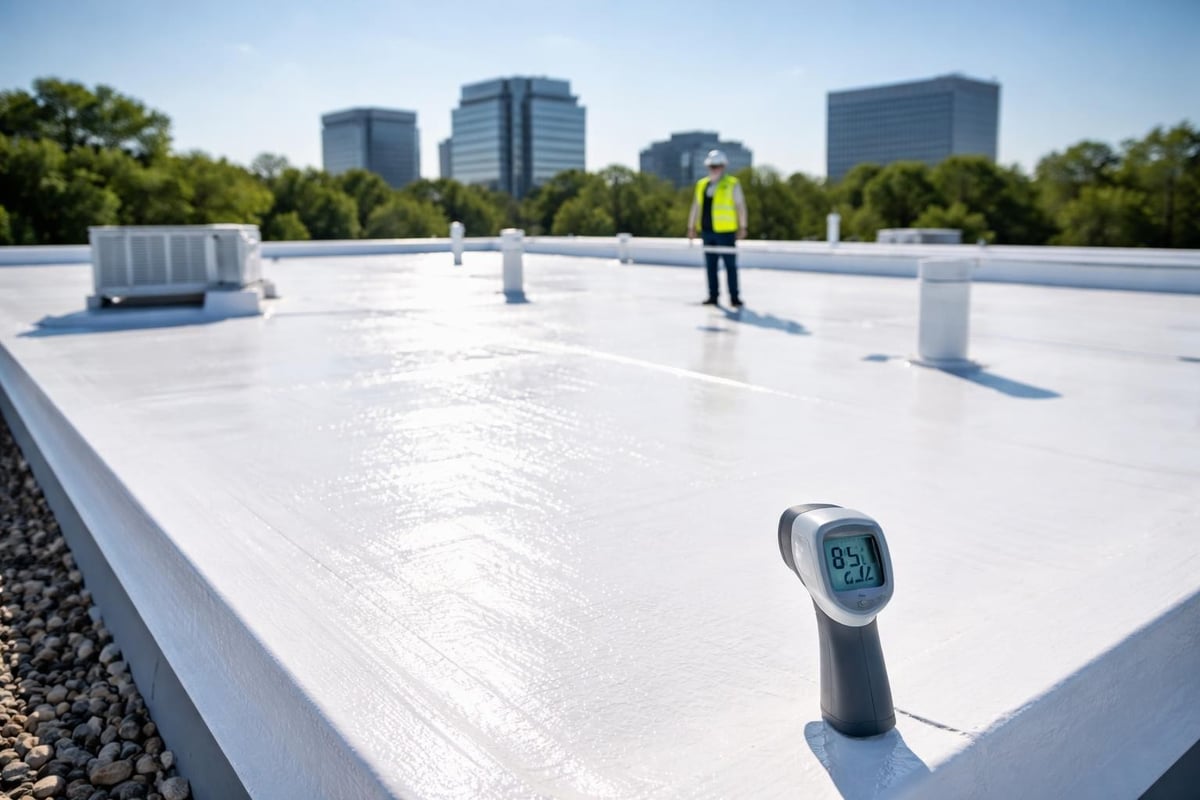
Reflective roofing membranes reduce heat absorption, lowering cooling loads during summer months. White TPO and PVC membranes reflect up to 80% of solar radiation compared to traditional black EPDM that absorbs heat. The cooling benefit varies by climate but proves substantial in southern regions with long cooling seasons.
Insulation Performance Standards
Modern building codes require higher R-values than older commercial flat roof systems typically provided. Replacement projects offer opportunities to upgrade insulation, reducing energy consumption while improving occupant comfort.
Proper insulation installation prevents thermal bridging through fasteners and overlaps joints to maximize effectiveness. The investment in quality insulation systems returns dividends through reduced utility costs over the roof's service life.
Sustainable Material Selection
Environmental considerations increasingly influence commercial flat roof material decisions. Recyclable materials, products with recycled content, and systems minimizing waste during installation align with corporate sustainability commitments.
Some manufacturers offer recycling programs for old membranes, diverting material from landfills. Additionally, vegetative green roof systems provide environmental benefits including stormwater management, urban heat island reduction, and habitat creation, though they require specialized design and maintenance.
Storm Damage and Emergency Response
Severe weather events test commercial flat roof systems, exposing installation deficiencies and material weaknesses. Understanding storm damage patterns and establishing emergency response protocols minimizes property damage and business interruption.
High winds can peel back poorly attached membranes, while hail punctures single-ply systems. Heavy rain overwhelms inadequate drainage, and flying debris creates penetrations that allow water infiltration. Property managers in storm-prone regions benefit from pre-storm inspections that identify vulnerable areas requiring reinforcement.
Emergency response capabilities matter when storms damage commercial flat roofs. Contractors offering same-day service prevent minor damage from escalating into major losses through prompt temporary repairs and permanent restoration. Detailed insurance claim documentation supports full recovery of repair costs while minimizing out-of-pocket expenses.
Long-Term Performance Optimization
Maximizing commercial flat roof service life requires strategic planning extending beyond material selection and proper installation. Comprehensive performance optimization programs integrate design features, maintenance protocols, and proactive interventions that protect investments.
Asset management approaches treat commercial roofing as critical infrastructure requiring systematic care rather than reactive repairs. Building owners adopting this perspective realize lower total cost of ownership through extended service lives and minimized emergency expenditures.
Performance optimization strategies include:
- Establishing roof management plans with scheduled inspections and maintenance
- Budgeting for preventive repairs before problems escalate
- Documenting all work for warranty compliance and condition tracking
- Training facility staff in proper roof access procedures
- Restricting unnecessary roof traffic and equipment installations
- Planning replacement timing to avoid emergency conditions
Professional contractors provide detailed documentation including scope specifications, material certifications, and installation photographs. This information proves essential for warranty claims, insurance documentation, and future planning decisions. The historical context of flat roofing development demonstrates continuous improvement in materials and methods, with modern systems dramatically outperforming earlier options.
Understanding what constitutes commercial roof systems helps property managers communicate effectively with contractors and make informed decisions. This knowledge prevents costly mistakes and ensures investments deliver expected performance.
The dominance of flat roofing in commercial construction reflects practical advantages including lower installation costs, usable rooftop space for mechanical equipment, easier maintenance access, and compatibility with modern architectural design preferences.
Building owners considering different commercial flat roof types benefit from understanding the advantages and limitations each system presents. No single solution suits every application, making professional evaluation essential for optimal outcomes.
The structural requirements of commercial flat roofing differ substantially from residential applications, demanding specialized knowledge and experience. Property managers protect their interests by engaging contractors demonstrating commercial expertise rather than primarily residential operators.
Commercial flat roof systems represent significant investments requiring informed decision-making throughout their lifecycles from initial material selection through eventual replacement. Understanding available options, maintenance requirements, and performance optimization strategies protects property values while minimizing total ownership costs. When your commercial facility needs expert flat roof installation, restoration, or repair, Texcore Construction delivers the craftsmanship, responsiveness, and accountability Fort Worth property managers demand. Our in-house crews provide same-day commercial roof leak repairs, comprehensive reroofing services, and transparent guidance backed by detailed documentation and five-year labor warranties that ensure long-term performance and peace of mind.