Service Roofing: Expert Solutions for Lasting Protection
Service roofing encompasses the full spectrum of professional care your roof requires throughout its lifespan, from routine inspections and preventive maintenance to emergency repairs and complete system replacements. Whether you own a commercial property or residential home, understanding what professional service roofing entails helps you protect your investment, extend your roof's life, and prevent costly damage. Quality service roofing combines technical expertise, consistent communication, and accountability to deliver solutions that prioritize long-term performance over quick fixes. With the right partner, service roofing becomes a strategic asset rather than an unexpected expense.
Understanding the Scope of Service Roofing
Professional service roofing covers every aspect of roof care, designed to keep buildings protected regardless of age, material, or climate challenges. This comprehensive approach distinguishes true service roofing from one-time installations or reactive patching.
Core Service Roofing Components
The foundation of service roofing rests on several interconnected elements that work together to maintain roof integrity. Routine inspections identify potential issues before they escalate into major problems, while preventive maintenance addresses minor concerns during scheduled visits. When damage occurs, repair services restore functionality quickly, and when systems reach the end of their serviceable life, replacement installations provide fresh protection.
Each component plays a distinct role in the lifecycle management approach that defines professional service roofing. Property owners benefit most when these elements work as a coordinated strategy rather than isolated interventions.
Differentiating Residential and Commercial Service Roofing
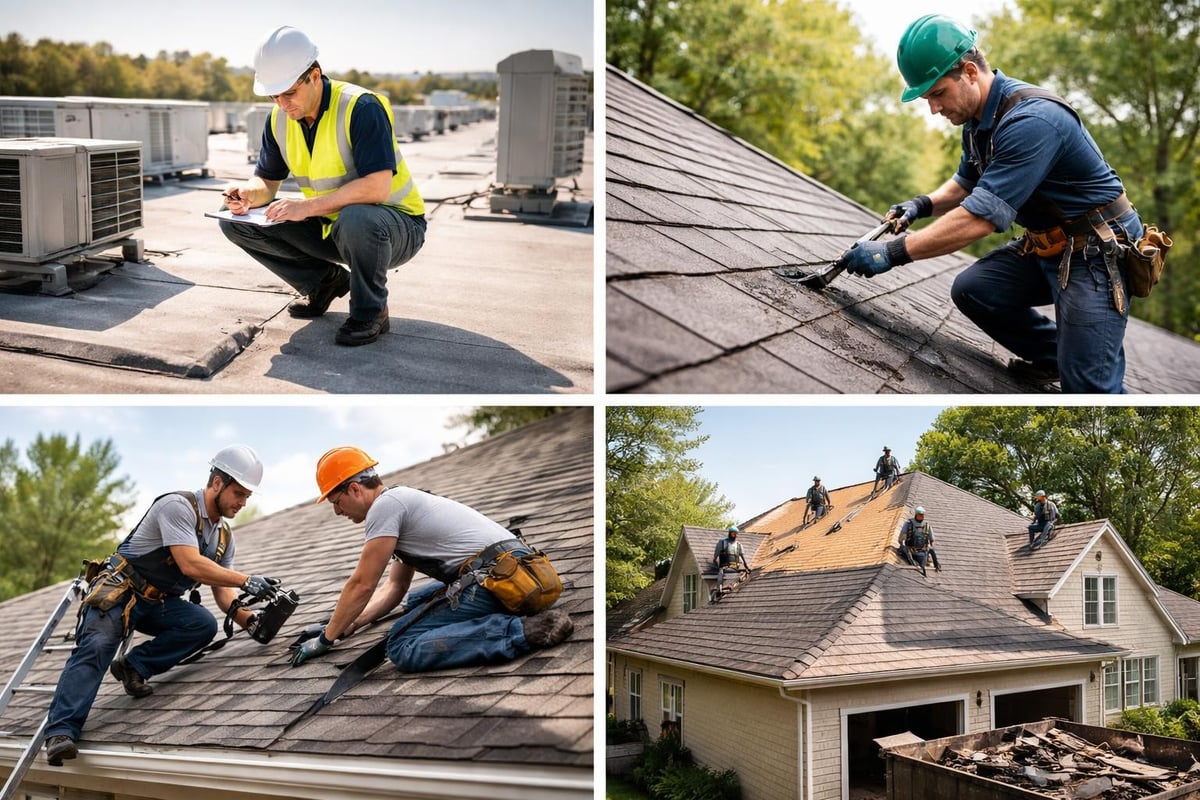
Service roofing adapts to building type, occupancy patterns, and roof system design. Residential properties typically feature pitched roofs with asphalt shingles, requiring attention to flashing details, ventilation systems, and storm damage vulnerability. Commercial buildings often utilize flat or low-slope systems with TPO, EPDM, or modified bitumen membranes that demand different maintenance protocols and repair techniques.
| Aspect | Residential Service Roofing | Commercial Service Roofing |
|---|---|---|
| Common Systems | Asphalt shingle, metal, tile | TPO, EPDM, Modified Bitumen, built-up |
| Primary Concerns | Storm damage, flashing leaks, ventilation | Ponding water, membrane seams, HVAC penetrations |
| Service Frequency | Annual to biannual inspections | Quarterly to biannual maintenance |
| Response Time Needs | 24-48 hours for emergencies | Same-day for active leaks |
Understanding these distinctions ensures service roofing delivers appropriate solutions matched to building requirements and occupant needs.
Essential Service Roofing Practices
Effective service roofing relies on proven methodologies that balance immediate problem-solving with long-term system health. These practices separate professional contractors from general repair providers.
Comprehensive Documentation Standards
Documentation forms the backbone of professional service roofing, creating accountability and providing valuable historical records. Detailed inspection reports should include photographic evidence, measurement data, condition assessments, and prioritized recommendations. This transparency helps property owners make informed decisions and establishes baseline conditions for insurance purposes.
When storm damage occurs, thorough documentation becomes especially critical. Proper assessment and documentation practices ensure claims receive appropriate consideration and supporting your insurance claim with thorough documentation for necessary repairs.
The National Roofing Contractors Association emphasizes adherence to codes and standards throughout all service roofing activities, ensuring installations and repairs meet regulatory requirements and industry benchmarks.
Preventive Maintenance Programs
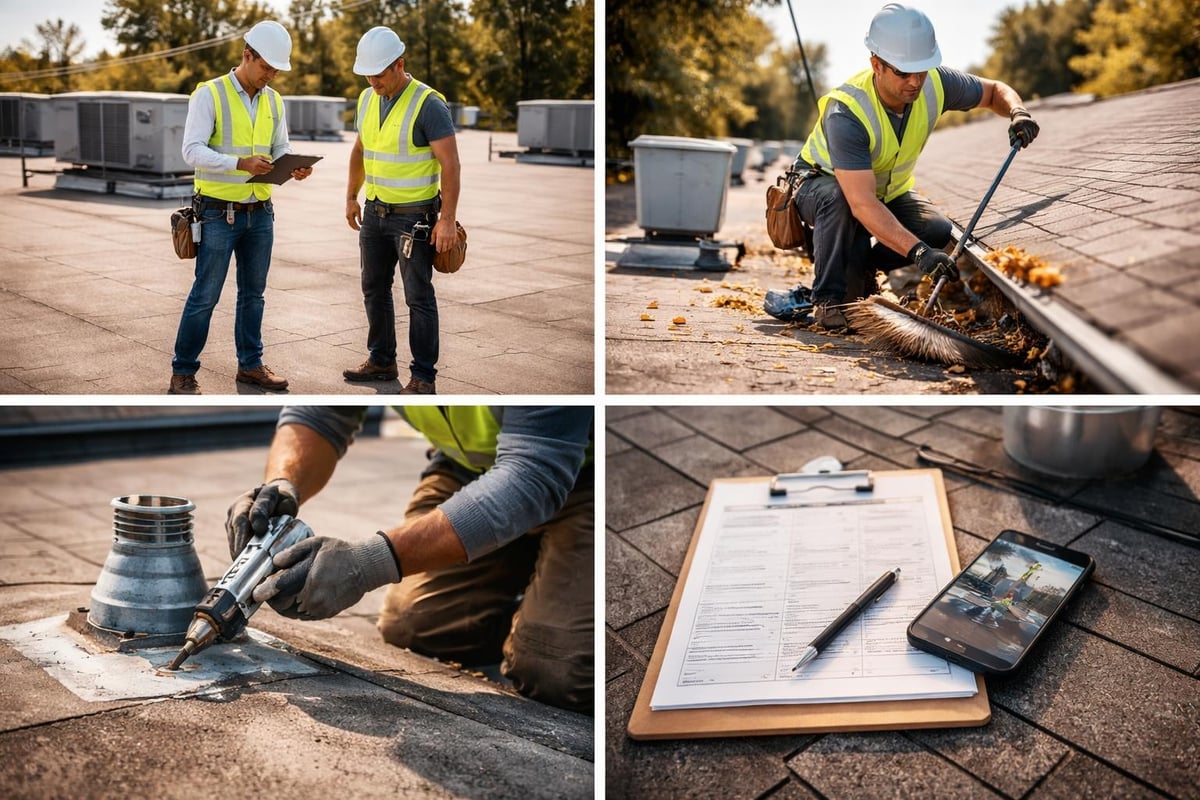
Proactive service roofing includes scheduled maintenance that extends roof lifespan and prevents expensive emergency situations. Regular cleaning removes debris that retains moisture and accelerates deterioration. Sealant reapplication maintains waterproof barriers around penetrations and transitions. Minor repairs completed during maintenance visits prevent small issues from becoming major failures.
Key preventive maintenance activities include:
- Clearing drains, gutters, and scuppers to ensure proper water evacuation
- Inspecting and resealing flashing around chimneys, vents, and HVAC units
- Checking membrane seams and edge details on flat roofs
- Examining fastener patterns and panel integrity on metal systems
- Assessing shingle condition and replacing damaged units before leaks develop
Industry best practices for maintaining roofs emphasize regular inspections and prompt attention to minor issues as the most cost-effective approach to roof management.
Emergency Response Capabilities
Service roofing must include rapid emergency response for sudden failures, storm damage, and active leak situations. The ability to deploy crews within hours rather than days prevents water intrusion from causing secondary damage to building contents, structural elements, and operational continuity.
Emergency service roofing priorities focus on immediate water control through temporary measures, followed by permanent repairs once conditions stabilize. Professional contractors maintain materials inventory, equipment readiness, and crew availability to respond when urgent situations arise.
For property owners in Fort Worth and surrounding areas, Emergency Roof Repair services with same-day response capability provide critical protection when unexpected roof failures occur, minimizing damage and getting buildings back to secure condition quickly.
Service Roofing Quality Indicators
Identifying contractors who deliver genuine professional service roofing requires evaluating specific quality markers that separate experienced providers from opportunistic vendors.
In-House Crew Advantages
Service roofing quality depends heavily on crew consistency and accountability. Contractors who maintain in-house teams deliver superior results compared to those relying on subcontractors. Direct employee relationships enable better training, quality control, and communication throughout projects.
In-house crews understand company standards, follow established protocols, and take ownership of workmanship because their reputation connects directly to every completed job. This structure eliminates coordination gaps, ensures consistent application of techniques, and provides clear accountability when questions or concerns arise.
Property owners benefit from knowing exactly who will arrive at their building, what training those professionals possess, and who stands behind the completed work. This transparency defines professional service roofing.
Warranty Coverage and Guarantees
Comprehensive warranty protection demonstrates contractor confidence in service roofing quality. Labor warranties covering workmanship for five years or longer indicate commitment to proper installation and repair techniques. Material warranties from manufacturers provide additional protection, but only when installation follows specified guidelines.
Effective service roofing warranties should cover:
- Installation workmanship defects
- Material performance failures
- Leak development from service-related activities
- Flashings and transition details
- Fastener integrity and membrane seams
Understanding warranty terms before engaging service roofing providers prevents confusion when issues develop and ensures proper recourse channels exist for addressing concerns.
Communication and Transparency
Professional service roofing includes clear communication from initial contact through project completion and beyond. Detailed scopes of work outline exactly what services will be performed, what materials will be used, and what results property owners should expect. Transparent pricing eliminates surprise costs and hidden fees.
Throughout service delivery, contractors should provide regular updates, explain findings in understandable terms, and offer guidance that helps property owners make informed decisions. This consultative approach builds trust and establishes long-term relationships rather than transactional interactions.
Technical Excellence in Service Roofing
Service roofing quality ultimately depends on technical competency applied to diverse roof systems, building conditions, and performance requirements.
Proper Diagnostic Capabilities
Accurate problem identification forms the foundation of effective service roofing. Surface symptoms rarely tell the complete story, requiring systematic investigation to determine root causes. Water stains might result from roof leaks, but they could also indicate condensation issues, plumbing failures, or HVAC problems.
Professional diagnostic techniques include moisture scanning to detect trapped water within roof assemblies, thermal imaging to identify insulation gaps and air leakage paths, and core sampling to assess layering and material condition. These tools complement visual inspection, providing comprehensive understanding of roof system health.
Best practices for predicting service life of roof systems emphasize thorough inspections and forensic analysis as essential components of accurate condition assessment.
Installation and Repair Standards
Service roofing quality depends on strict adherence to manufacturer specifications and industry standards during both new installations and repair activities. Every roof system includes specific requirements for substrate preparation, material application, fastener spacing, seam welding, and detail finishing.
Commercial roofing installation best practices highlight proper seam welding, careful attention to transitions, and consideration of building-specific factors as critical elements of successful projects.
| System Type | Critical Installation Factors | Common Service Roofing Needs |
|---|---|---|
| TPO Membrane | Heat-welded seams, proper membrane relaxation | Seam failures, puncture repairs, flashing restoration |
| EPDM Rubber | Seam tape application, substrate cleanliness | Seam separation, penetration leaks, shrinkage issues |
| Modified Bitumen | Torch application temperature, overlap consistency | Blister formation, seam openings, surface granule loss |
| Asphalt Shingle | Starter course installation, nail placement | Wind damage, seal failure, flashing deterioration |
Understanding these system-specific requirements ensures service roofing delivers appropriate solutions rather than generic approaches that may create additional problems.

Safety and Job Site Management
Professional service roofing maintains strict safety protocols and clean work environments throughout projects. Fall protection systems, proper equipment usage, and hazard mitigation protect crew members and building occupants. Organized job sites minimize disruption, contain debris, and prevent damage to landscaping or adjacent structures.
Daily cleanup, protected material storage, and contained waste disposal demonstrate professionalism and respect for property. These practices separate contractors who view service roofing as a professional discipline from those treating it as casual labor.
Insurance Integration and Service Roofing
Modern service roofing frequently intersects with insurance claims, particularly in regions prone to severe weather events. Understanding how these systems interact helps property owners supporting your insurance claim with thorough documentation and minimize out-of-pocket expenses.
Storm Damage Assessment
When hail, wind, or other weather events impact roofs, professional service roofing includes thorough damage documentation that supports insurance claims. Contractors should photograph affected areas, measure impact sizes, note damage patterns, and distinguish storm damage from general wear.
This detailed assessment provides adjusters with clear evidence supporting claim validity and scope accuracy. Understanding immediate storm response steps helps property owners protect buildings while preserving claim eligibility.
Claims Process Navigation
Service roofing professionals with insurance expertise guide property owners through the claims process, explaining coverage terms, coordinating adjuster meetings, and addressing documentation requirements. This support proves especially valuable when depreciation factors, coverage limits, or disputed damages complicate settlements.
Effective insurance integration includes:
- Pre-loss documentation establishing roof condition
- Timely damage reporting following storm events
- Detailed scope preparation matching adjuster requirements
- Material and labor cost documentation supporting claim amounts
- Supplement requests when initial estimates prove insufficient
Quality service roofing contractors understand these processes and advocate for property owners throughout claim resolution.
Long-Term Service Roofing Relationships
The most successful service roofing arrangements develop into ongoing partnerships where contractors become trusted advisors who understand building history, previous repairs, and performance patterns.
Building Performance History
Consistent service roofing relationships create valuable institutional knowledge about specific properties. Contractors familiar with building quirks, previous problem areas, and unique conditions provide better recommendations and more efficient service. This continuity prevents repeated diagnostic costs and reduces time needed for condition assessment.
Historical records maintained by service roofing providers track repair locations, material changes, warranty status, and inspection findings. This documentation helps property owners plan capital improvements, budget for eventual replacement, and make strategic decisions about repair versus replacement timing.
When addressing persistent issues like roof leaks, contractors with building knowledge quickly identify patterns and implement lasting solutions rather than repeatedly patching symptoms.
Proactive Planning and Budgeting
Professional service roofing supports long-term financial planning through condition assessments that project remaining service life and forecast capital needs. Multi-year maintenance plans spread costs predictably while ensuring consistent roof care. Replacement timing recommendations help property owners budget appropriately and avoid emergency situations requiring rushed decisions.
This strategic approach transforms service roofing from reactive expense into managed investment, optimizing value throughout the building ownership period.
Selecting Service Roofing Providers
Choosing the right service roofing contractor significantly impacts both immediate project outcomes and long-term building protection. Several key factors distinguish qualified professionals from marginal providers.
Licensing and Insurance Verification
Legitimate service roofing contractors maintain current licenses for all jurisdictions where they operate and carry comprehensive insurance coverage protecting property owners from liability. General liability insurance covers property damage and injuries, while workers compensation protects against employee injury claims.
Request and verify:
- Current contractor license numbers
- General liability certificates with adequate limits
- Workers compensation coverage confirmation
- Manufacturer certifications for specific systems
- References from recent similar projects
This due diligence prevents engagement with unqualified or uninsured contractors whose work may void warranties or create liability exposure.
Local Market Knowledge
Service roofing effectiveness improves dramatically when contractors understand regional climate patterns, common building practices, and local code requirements. Fort Worth area contractors familiar with Texas weather extremes, hail frequency, and thermal expansion concerns provide more relevant recommendations than distant providers unfamiliar with regional conditions.
Local contractors also maintain established relationships with material suppliers, ensuring faster emergency response and consistent product availability. Community reputation matters more to local businesses, providing additional accountability beyond contractual obligations.
Realistic Scheduling and Pricing
Professional service roofing includes honest scheduling commitments and transparent pricing that reflects true project scope. Unrealistically low bids often indicate cut corners, inferior materials, or hidden costs that emerge during work. Extremely fast completion promises may compromise quality or indicate intention to rush through proper procedures.
Detailed written estimates breaking down labor, materials, and specific activities enable meaningful comparison between contractors and prevent misunderstandings about project scope.
Professional service roofing combines technical expertise, proactive maintenance, and responsive repair capabilities to protect your property investment throughout your roof's entire lifecycle. When you need dependable roofing solutions built around speed, accountability, and craftsmanship, Texcore Construction delivers comprehensive service roofing backed by in-house crews, detailed documentation, and a five-year labor warranty. Contact our Fort Worth team today for transparent recommendations and roofing services designed for long-term performance.