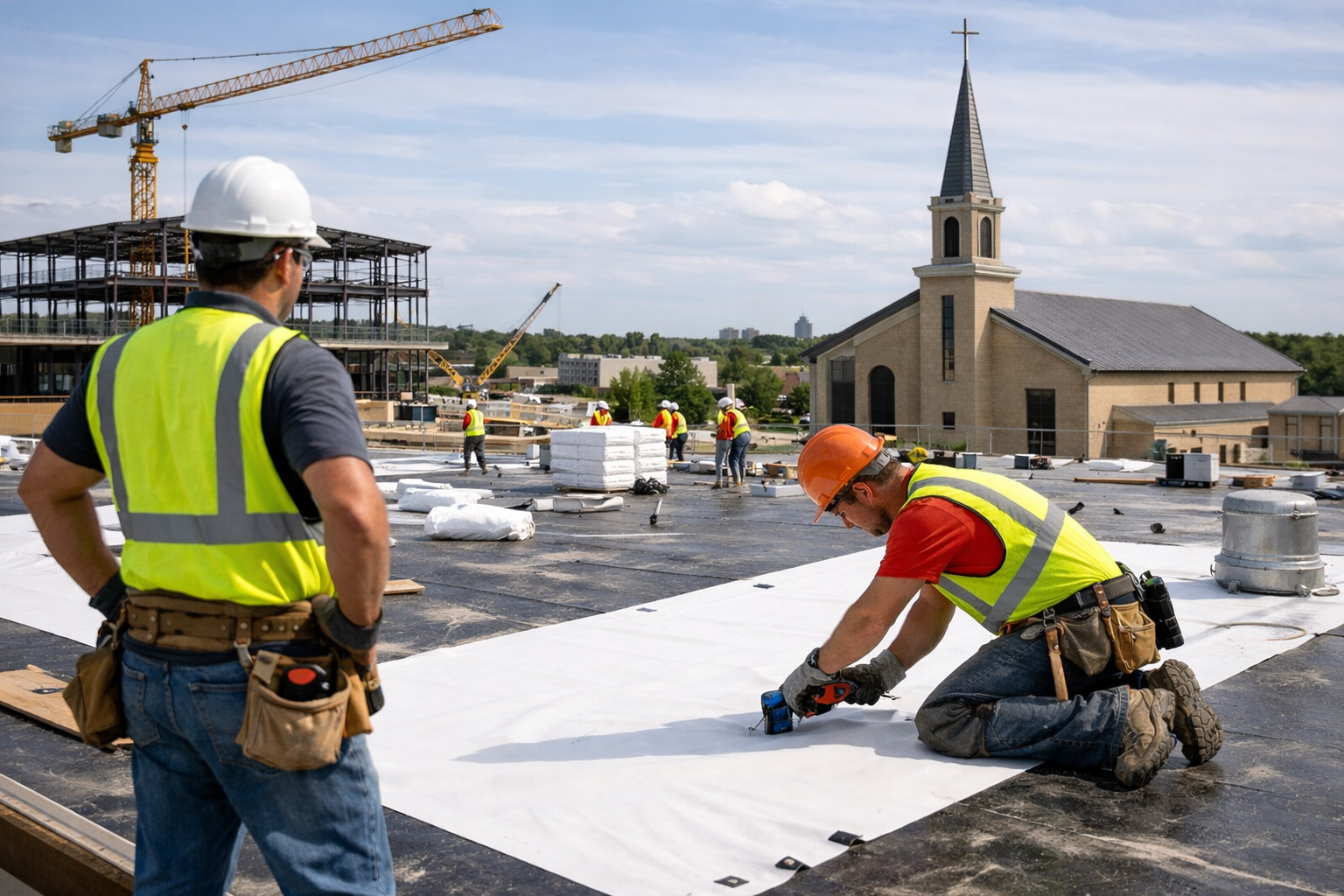
New Construction Roofing for Large Commercial Facilities: North Texas
New commercial construction projects in North Texas require more than a standard roofing install. For large facilities across the DFW area, the roof is a mission-critical system that affects structural performance, energy efficiency, insurance compliance, and long-term operating costs. This is why experienced developers, facility boards, and general contractors rely on new construction roofing contractors with proven expertise in large-scale commercial projects.
Facilities such as churches, schools, warehouses, and institutional buildings present unique challenges that demand early planning, strict coordination, and disciplined execution. Unlike replacement or repair work, mistakes made during new construction are built into the structure itself and often surface years later as leaks, warranty disputes, or premature system failure.
What Sets New Construction Roofing Apart From Other Commercial Roofing Work
New construction roofing is integrated into the building process from the earliest stages. It is not a standalone trade that can operate independently or make on-the-fly adjustments without consequences.
Key differences include:
- Integration with structural load calculations and deck design
- Early-stage vapor barrier and moisture control planning
- Strict adherence to architectural drawings and engineered specifications
- Inspection checkpoints tied directly to permitting and occupancy approvals
Each of these elements must be executed correctly before other trades can proceed. A qualified commercial new construction roofing contractor understands how their work impacts framing, mechanical systems, and interior buildout. Poor coordination at this stage often results in costly delays and long-term performance issues that are difficult to correct once the building is occupied.
Roofing Requirements for Churches and Large Institutional Buildings
Churches and large institutional facilities are among the most demanding environments for new construction roofing in the DFW market. These buildings typically feature expansive roof areas, complex geometries, and ownership timelines measured in decades rather than years.
Roofing considerations for churches and similar facilities include:
- Long-term durability rather than short warranty cycles
- Drainage design for large flat or low-slope roof systems
- Structural accommodation for long-span roof sections
- Safe access planning for inspections, maintenance, and repairs
Churches also serve as community hubs and, in some cases, emergency shelters during severe weather. This places added responsibility on new construction roofing contractors in North Texas to deliver systems that minimize leak risk and maintain integrity under extreme conditions common to the region.
Material Selection Matters More in New Construction
Material selection in new commercial construction is a strategic decision that affects the entire life cycle of the building, not just the initial installation cost. The roofing system chosen will influence energy efficiency, maintenance frequency, repair flexibility, and long-term operating expenses for decades. For large facilities such as churches, schools, and warehouses, the roof must perform consistently across wide surface areas while withstanding intense North Texas heat, high winds, and seasonal storms.
Choosing the wrong roofing system can increase energy costs through poor insulation performance, limit future repair options due to incompatible materials, and significantly shorten the roof’s service life. In many cases, these issues do not appear immediately but emerge years later, when corrections are costly and disruptive. Experienced new construction roofing contractors evaluate material performance, manufacturer requirements, and building use together to ensure the system selected supports both short-term construction goals and long-term ownership needs.
Experienced new construction roofing contractors help evaluate:
- TPO, PVC, or modified bitumen systems for large commercial roofs
- Insulation thickness and attachment methods for Texas heat loads
- Perimeter edge metal designed for regional wind uplift ratings
- Drainage components sized for intense North Texas rainfall events
Once installed, these systems are difficult and expensive to modify. Proper material selection during construction helps ensure energy efficiency, insurance approval, and predictable maintenance costs over time.
Why In-House Crews Matter on New Construction Projects
Large commercial construction projects operate on rigid schedules with multiple trades working in sequence, often under contractual deadlines tied to inspections, financing, and occupancy approvals. Roofing is a critical path item in this process. If the roof is delayed or installed incorrectly, it can halt progress across the entire site, preventing interior work, mechanical installation, and final inspections from moving forward.
Roofing delays or quality issues can stall inspections, push back occupancy timelines, and create financial strain through extended carrying costs or missed opening dates. On projects such as churches and institutional facilities, these delays can also disrupt community planning and scheduled events. This is why experienced new construction roofing contractors prioritize coordination, clear scheduling, and disciplined execution to keep projects moving efficiently and avoid cascading delays that affect every other trade on site.
Advantages of working with in-house crews include:
- Consistent installation quality across large roof areas
- Better coordination with general contractors and inspectors
- Clear accountability when issues arise
- Reduced risk of warranty disputes tied to subcontracted labor
For churches, schools, and multi-building campuses, this level of control helps prevent rework and ensures the roofing system is installed exactly as specified.
Permitting, Inspections, and Documentation in the DFW Area
North Texas municipalities enforce strict permitting and inspection requirements for new commercial construction, particularly on large facilities where roof failures could pose significant safety risks to occupants. Roofing systems are closely reviewed for compliance with building codes, wind uplift standards, fire ratings, and manufacturer installation guidelines. These inspections are not optional and must be passed before construction can proceed to the next phase.
For churches, schools, and other large public-use buildings, scrutiny is even higher due to occupancy load and long-term public use. Missing documentation, failed inspections, or improper installation details can delay approvals and jeopardize warranty coverage. New construction roofing contractors familiar with DFW-area permitting processes help ensure inspections are scheduled correctly, documentation is complete, and the roofing system meets all local and manufacturer requirements without unnecessary setbacks.
Qualified new construction roofing contractors manage:
- Permit coordination with local jurisdictions
- Manufacturer-required inspections during installation
- Photo documentation of all critical installation phases
- Closeout packages required for warranty issuance
Incomplete documentation is one of the most common causes of delayed final inspections. Contractors familiar with local requirements help projects move smoothly from construction to occupancy without unnecessary setbacks.
Planning for the Full Life of the Roof
A new construction roofing project should be planned with the full life of the building in mind. The goal is not simply to dry in the structure, but to create a system that can be maintained, repaired, and adapted over decades.
Long-term planning considerations include:
- Future rooftop equipment additions
- Safe access for inspections and maintenance
- Repairability without system-wide disruption
- Warranty compliance through proper service practices
For churches and institutional facilities, this approach protects both the building and the people who rely on it, reducing unexpected costs and operational disruptions.
Choosing the Right New Construction Roofing Contractor in North Texas
Selecting the right contractor for a new commercial build is one of the most important decisions made during construction. Experience with large facilities, manufacturer certifications, in-house crews, and a disciplined documentation process are all critical indicators of capability.
The best new construction roofing contractors understand North Texas weather patterns, local inspection requirements, and the long-term priorities of facility owners. Their role extends beyond installation to delivering a roofing system that performs reliably for decades.