
Wind Damage to Roof: Signs, Causes, and Repair Solutions
Wind damage to roof systems represents one of the most common yet underestimated threats to property integrity across North Texas. Even moderate wind events can compromise roofing materials, create entry points for water intrusion, and escalate into expensive structural problems if left unaddressed. Understanding how wind affects your roof, recognizing the warning signs of damage, and knowing when to call professionals can save property owners thousands of dollars while protecting their investments from further deterioration.
How Wind Causes Roof Damage
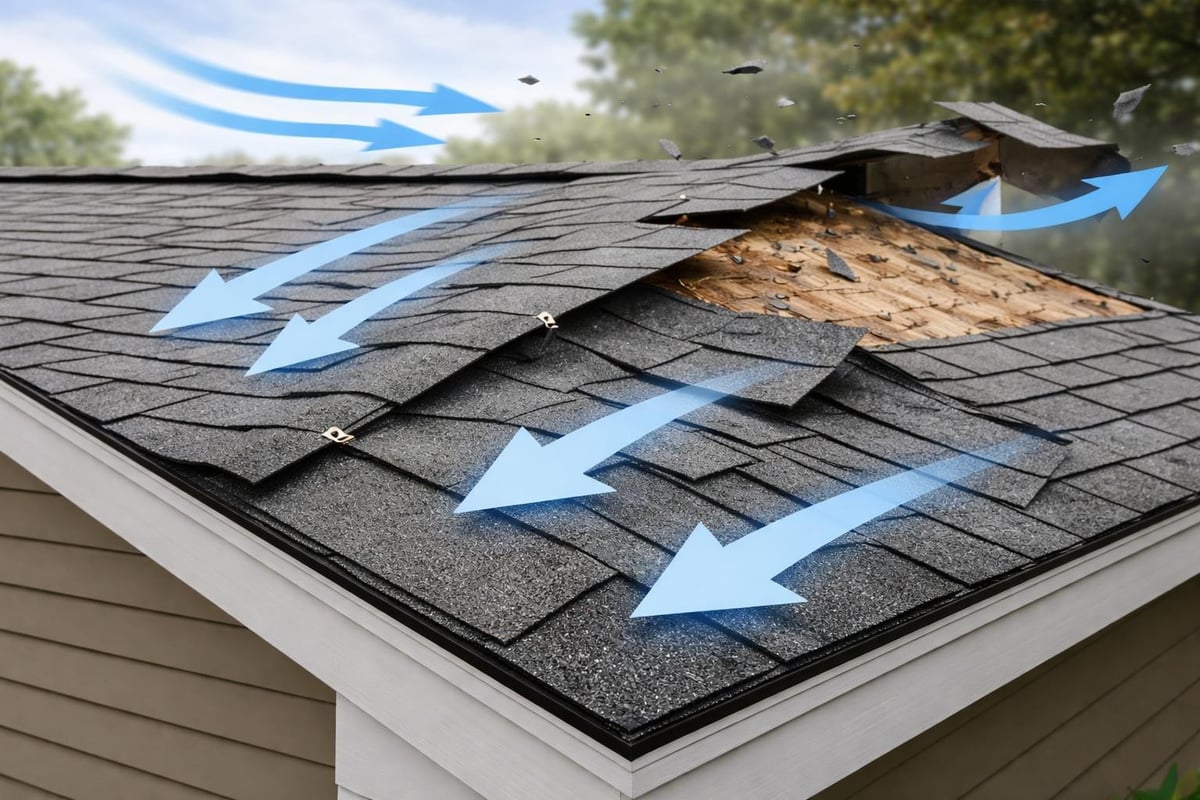
Wind interacts with roofing systems through uplift forces that create negative pressure on the roof surface. When wind flows over a building, it accelerates across the roof plane, generating suction that pulls upward on roofing materials rather than pushing down. This uplift pressure concentrates most intensely at roof edges, corners, and ridges where wind speeds increase and turbulence intensifies.
The destructive sequence typically begins with fastener failure. Nails, screws, or adhesive bonds holding shingles, tiles, or panels begin loosening under repeated stress cycles. Once fasteners compromise, individual roofing components lift slightly with each wind gust, creating gaps that allow subsequent gusts to penetrate beneath the material. This progressive failure pattern explains why wind mitigation inspections focus heavily on fastener quality and installation techniques.
Wind Speed Thresholds and Damage Severity
Different wind speeds produce distinct damage patterns:
- 40-50 mph: Loose or improperly fastened shingles begin lifting; granule loss accelerates on older roofs
- 50-60 mph: Well-installed but aging materials show vulnerability; flashing components may separate
- 60-75 mph: Significant shingle loss occurs; metal panels can peel back; secondary water barriers may expose
- 75+ mph: Catastrophic damage potential; structural decking may sustain impact from flying debris
Understanding these thresholds helps property owners contextualize windstorm damage and insurance claims when severe weather strikes the Fort Worth region.
Identifying Wind Damage to Roof Systems
Recognizing wind damage early prevents minor issues from escalating into major structural problems. Many property owners miss subtle indicators until water stains appear on interior ceilings, by which point damage has already progressed significantly.
Exterior Warning Signs
Shingle Damage Patterns
Missing shingles represent the most obvious indicator, but partial damage proves equally concerning. Look for shingles with lifted corners or tabs, creased or bent sections, and exposed fastener heads where wind has pulled material upward. Granule accumulation in gutters following wind events signals surface degradation that compromises shingle integrity and weather resistance.
Flashing and Edge Vulnerabilities
Metal flashing around chimneys, vents, and roof-to-wall intersections frequently sustains wind damage to roof perimeters before field shingles show distress. Inspect for separated sections, bent edges, and gaps where sealant has failed. Drip edge and rake edge trim may pull away from fascia boards, creating water entry points that bypass primary roofing materials entirely.
Debris Impact Markers
Wind-blown tree branches, patio furniture, and construction materials create punctures, dents, and fractures in roofing surfaces. Even small impacts compromise waterproofing membranes and accelerate deterioration around damaged areas. For property owners also managing garage facilities, coordinating roof inspections with services like NextLevel Garage Co. ensures comprehensive property protection following storm events.
Interior Damage Indicators
| Warning Sign | What It Indicates | Urgency Level |
|---|---|---|
| Water stains on ceilings | Active or recent leak penetration | High |
| Damp insulation in attic | Ongoing moisture intrusion | High |
| Daylight visible through decking | Structural compromise or material loss | Critical |
| Musty odors in upper floors | Hidden moisture accumulation | Medium |
| Peeling interior paint near roofline | Chronic minor leaks | Medium |
Interior indicators often appear weeks or months after initial wind damage to roof structures occurs, making proactive exterior inspections essential for early detection.
Common Roofing Materials and Wind Vulnerability
Different roofing materials exhibit varying resistance levels to wind forces based on their installation methods, weight, and design characteristics.
Asphalt Shingle Performance
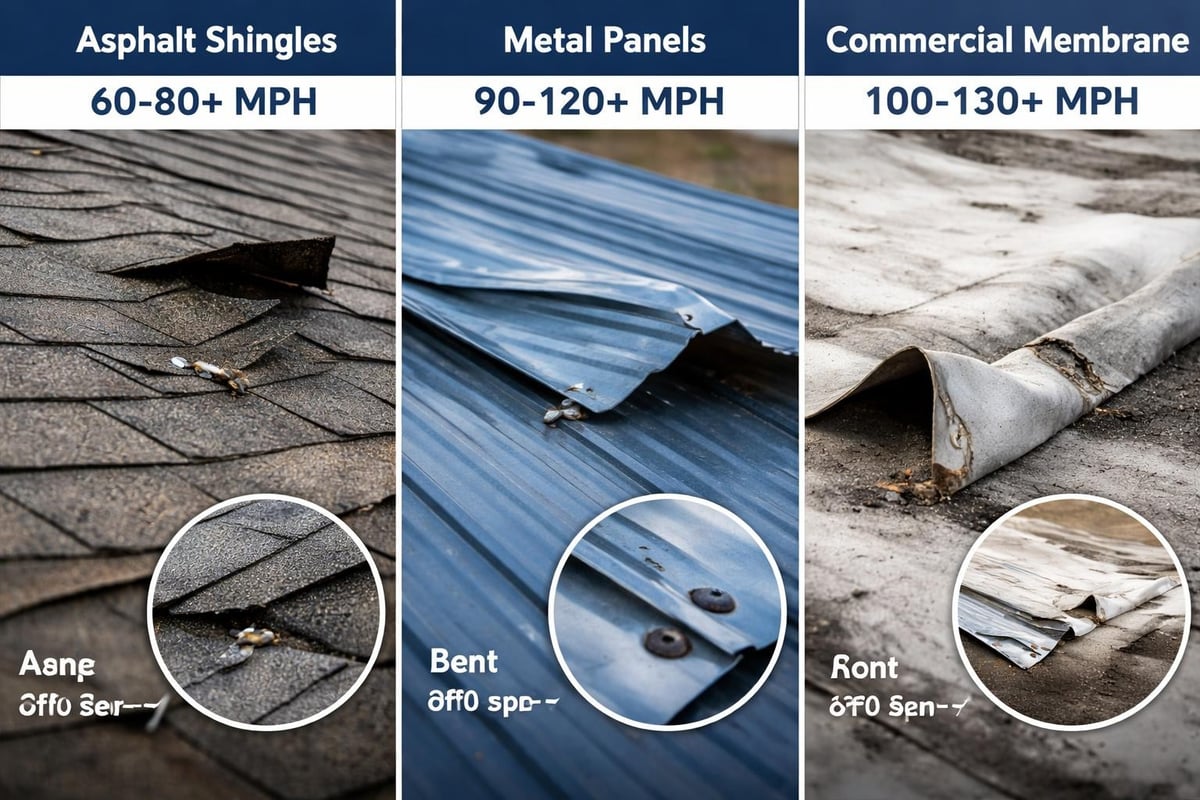
Three-tab asphalt shingles, common on residential properties, typically withstand winds up to 60 mph when properly installed with adequate fasteners. Architectural shingles offer improved performance through enhanced thickness and multi-layer construction, often rated for 110-130 mph winds. However, installation quality matters more than material ratings. Even premium shingles fail prematurely when contractors use insufficient fasteners or improper nailing patterns.
Age significantly impacts wind resistance. Shingles older than 15 years lose flexibility and adhesive strength, making them vulnerable to winds that wouldn't affect newer installations. Understanding these vulnerabilities helps homeowners prioritize roof wind damage repair before minor issues cascade into complete system failure.
Metal Roofing Systems
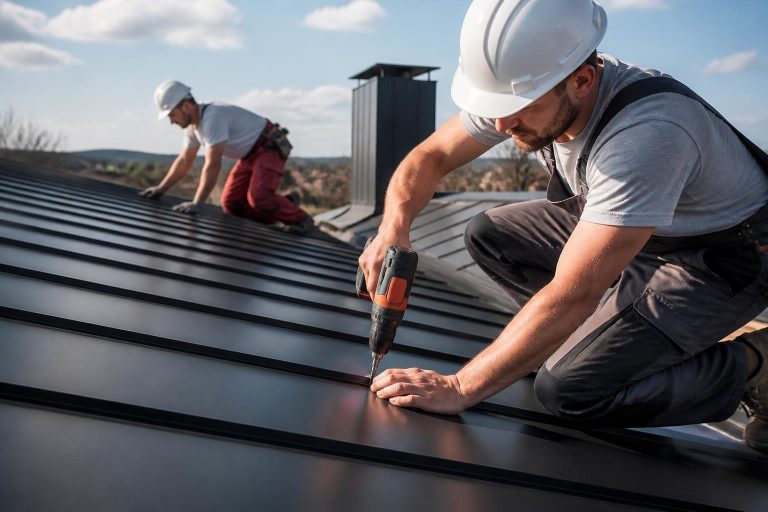
Standing seam metal roofs demonstrate superior wind resistance when properly fastened, with many systems rated for 140+ mph winds. The continuous attachment method distributes forces evenly across panels rather than concentrating stress at individual fastener points. However, exposed fastener metal roofs share vulnerabilities with asphalt systems since each screw penetration represents a potential failure point.
Coastal and high-wind regions often require metal roofing for commercial applications precisely because of this performance advantage. Fort Worth properties benefit from metal's durability during severe thunderstorm season when straight-line winds frequently exceed 60 mph.
Flat and Low-Slope Commercial Roofs
TPO, EPDM, and modified bitumen systems on commercial buildings face unique wind challenges. These membranes rely on adhesives, mechanical fasteners, or ballast weight to resist uplift. Wind damage to roof membranes often manifests as billowing sections where adhesive has failed, torn seams at panel edges, and displaced fastener plates that allow water penetration.
The Role of Installation Quality in Wind Resistance
Material specifications mean little without proper installation techniques. Many wind damage insurance claims trace back to substandard workmanship rather than material defects or extraordinary weather conditions.
Critical Installation Factors
Fastener Placement and Quantity
Building codes specify minimum fastener requirements, but these minimums may prove inadequate in high-wind zones. Premium installations exceed code minimums, particularly at vulnerable perimeter zones where uplift forces concentrate. Proper nailing depth matters equally since overdriven nails tear shingle material while underdriven nails lack holding power.
Starter Strip and Edge Details
Many contractors skip or improperly install starter strips along eaves and rakes, creating immediate vulnerabilities at roof edges where wind forces peak. Quality installations feature fully adhered starter courses with adequate overhang to prevent water infiltration while maintaining material security during wind events.
Underlayment and Secondary Protection
Premium synthetic underlayments provide critical backup protection when primary roofing materials sustain wind damage. These membranes prevent water intrusion even after shingle loss, buying property owners time to arrange repairs before interior damage occurs. Electrical systems remain particularly vulnerable to water damage, making coordination with specialists like Evolve Electrical important when roof leaks threaten wiring and smart home infrastructure.
Storm Response and Emergency Repairs
When severe weather strikes, rapid response minimizes secondary damage from water intrusion. Fort Worth experiences multiple severe thunderstorm events annually, making preparedness essential for property managers and homeowners.
Immediate Post-Storm Actions
- Conduct a safe ground-level inspection looking for obvious damage indicators like missing shingles or debris on the roof
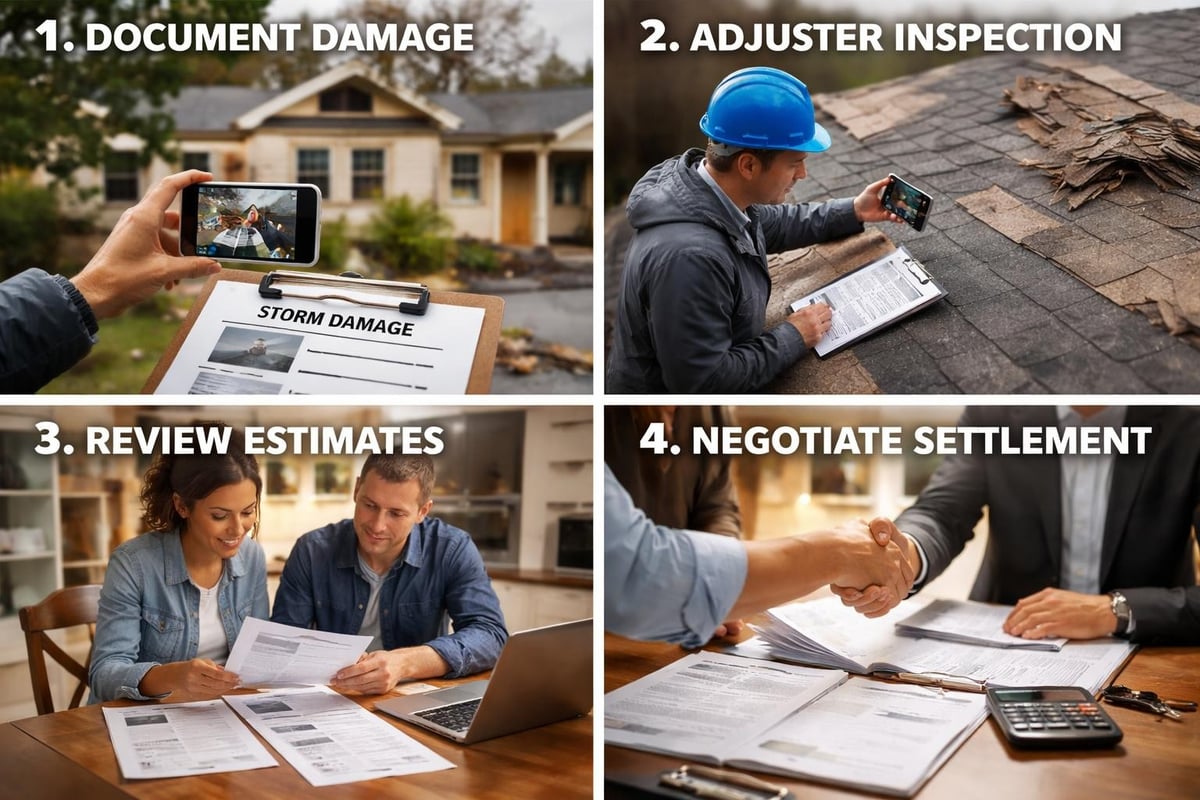
- Document all visible damage with photographs from multiple angles for insurance documentation
- Contact professional inspectors rather than attempting roof access, which creates liability and safety risks
- Arrange temporary protection such as tarping if active leaks threaten interior spaces
- Notify your insurance carrier within reporting deadlines specified in your policy
Property owners facing active leaks benefit from emergency roof repair services that provide same-day response to stop water intrusion before it damages ceilings, insulation, and structural components.
Professional Assessment Requirements
Licensed roofing contractors perform comprehensive inspections that identify both obvious and hidden wind damage to roof systems. Professional assessments include:
- Deck integrity evaluation checking for loose or damaged sheathing boards
- Fastener pull-through testing to verify attachment strength
- Flashing condition analysis at all penetrations and transitions
- Moisture intrusion detection using thermal imaging when appropriate
- Detailed photographic documentation supporting insurance claims
These thorough evaluations prevent overlooked damage from progressing into major structural issues while providing the documentation insurance adjusters require for claim approval.
Insurance Considerations for Wind Damage
Understanding coverage details before damage occurs helps property owners navigate claims processes efficiently and supporting your insurance claim with thorough documentation for legitimate repairs.
Coverage Scope and Limitations
Most homeowner and commercial property policies cover wind damage to roof systems under standard perils, but specific terms vary significantly between carriers. Common coverage elements include:
- Direct wind damage from storms meeting policy wind speed thresholds
- Secondary water damage resulting from wind-created openings
- Debris removal for tree branches and materials blown onto roofs
- Temporary protective measures like emergency tarping services
However, policies typically exclude damage from deferred maintenance, pre-existing conditions, or cosmetic issues not affecting roof function. Age-based depreciation clauses reduce reimbursement for older roofing systems, making documentation of proper maintenance history valuable for claim negotiations. For detailed guidance on navigating these processes, exploring resources on roof wind damage provides property-specific insights.
Documentation Best Practices
| Document Type | Purpose | Retention Period |
|---|---|---|
| Installation receipts | Prove roof age and quality | Permanent |
| Maintenance records | Demonstrate proper care | Permanent |
| Pre-storm photos | Establish baseline condition | Update annually |
| Post-storm damage photos | Support claim submissions | Until claim settles |
| Professional inspection reports | Validate damage extent | Until claim settles |
| Repair estimates | Compare adjuster assessments | Until claim settles |
Comprehensive documentation strengthens claim positions and accelerates approval processes, particularly when adjuster assessments undervalue actual damage scope.
Preventive Measures and Wind Mitigation Strategies
Proactive steps reduce vulnerability to wind damage and potentially lower insurance premiums through recognized mitigation credits.
Structural Reinforcement Options
Enhanced Fastening Systems
Upgrading from standard six-nail shingle attachment to eight-nail patterns or adhesive-backed products significantly improves wind resistance. Ring-shank nails provide superior holding power compared to smooth-shank alternatives, particularly in areas experiencing uplift cycling during prolonged wind events.
Impact-Resistant Materials
Class 4 impact-rated shingles incorporate modified asphalt compounds and reinforced matting that resist both hail damage and wind uplift. While premium-priced initially, these materials often qualify for insurance discounts that offset the investment over the roof's lifespan.
Secondary Water Barriers
Installing ice and water shield along eaves, valleys, and penetrations creates redundant protection when primary materials sustain wind damage to roof surfaces. This relatively inexpensive upgrade prevents catastrophic water intrusion during the days or weeks between damage occurrence and professional repairs.
Maintenance Programs
Regular professional inspections identify and address minor issues before wind events exploit weaknesses. Effective maintenance programs include:
- Bi-annual professional inspections conducted before and after storm season
- Immediate repair of lifting shingles to prevent progressive failure
- Flashing resealing at penetrations showing age-related deterioration
- Fastener reinforcement in high-stress zones showing early failure signs
- Debris removal preventing accumulation that traps moisture and creates projectiles during storms
Properties enrolled in structured maintenance programs experience significantly less severe damage during equivalent wind events compared to neglected roofs, reducing both repair costs and operational disruption.
Regional Considerations for Fort Worth Properties
North Texas weather patterns create specific wind damage challenges that property owners should understand when evaluating vulnerability and planning improvements.
Seasonal Wind Patterns
Spring severe weather season brings the greatest wind threats to Fort Worth properties. Thunderstorm outflow boundaries frequently generate straight-line winds exceeding 60 mph, while occasional tornadoes produce catastrophic forces capable of destroying even well-constructed roofs. Summer thunderstorms continue the pattern through September, though with somewhat reduced intensity.
Winter cold fronts occasionally drive sustained winds above 40 mph for extended periods, testing older roofs through cyclical fatigue rather than single catastrophic events. This sustained loading pattern causes progressive fastener withdrawal that may not produce obvious damage until the next severe event triggers rapid failure.
Building Code Evolution
Fort Worth building codes have strengthened wind resistance requirements over recent decades, meaning newer construction typically demonstrates superior performance during equivalent wind events. Properties built before 2000 often lack adequate fastener quantities, proper edge detailing, and secondary water barriers that current codes mandate.
Upgrading older properties to modern standards during routine replacement projects makes economic sense, particularly when insurance companies offer premium reductions for documented improvements. Resources from organizations focused on best commercial roofing companies in Fort Worth help property managers identify qualified contractors capable of implementing these upgrades correctly.
Repair Versus Replacement Decision Framework
Determining whether wind damage to roof systems requires repairs or full replacement depends on multiple factors beyond simple damage extent.
Damage Assessment Criteria
Percentage Affected
Industry standards generally recommend replacement when damage affects more than 25-30% of total roof area. Attempting piecemeal repairs on extensively damaged roofs often proves more expensive long-term due to repeated service calls, mismatched materials, and continued vulnerability of undamaged but aging sections.
Age and Expected Lifespan
A roof within five years of expected replacement date justifies full replacement even with moderate damage since repair costs approach replacement expenses while providing minimal extended service life. Conversely, newer roofs with isolated damage clearly warrant targeted repairs.
Pattern Distribution
Damage concentrated in specific zones may indicate isolated installation defects or unusual exposure conditions that repairs can address effectively. Widespread random damage patterns suggest systemic vulnerabilities requiring comprehensive solutions.
Cost-Benefit Analysis
| Scenario | Repair Cost | Replacement Cost | Recommended Action | Rationale |
|---|---|---|---|---|
| 10% damage, 5-year-old roof | $2,500 | $15,000 | Repair | Excellent condition otherwise |
| 30% damage, 15-year-old roof | $6,000 | $15,000 | Replace | Limited remaining life |
| 15% damage, 20-year-old roof | $4,000 | $15,000 | Replace | Nearing end of lifespan |
| 40% damage, any age | $8,000+ | $15,000 | Replace | Extent justifies new system |
These calculations change when insurance coverage applies, potentially making replacement economically preferable even with repairable damage levels.
Working With Roofing Professionals
Selecting qualified contractors ensures repairs restore full protection while avoiding the shoddy workmanship that leads to premature re-damage during subsequent wind events.
Qualification Criteria
Look for contractors offering in-house crews rather than subcontracting work to unknown third parties. This direct employment model ensures quality control, accountability, and consistent communication throughout projects. insured status protects property owners from liability while demonstrating professional commitment.
Detailed documentation capabilities matter significantly for insurance claims and quality assurance. Contractors who provide comprehensive photo documentation, written scopes of work, and transparent recommendations help property owners make informed decisions rather than feeling pressured into unnecessary services.
Service Response Expectations
Wind damage situations often require urgent attention to prevent secondary water damage. Contractors specializing in storm response should offer same-day assessment availability and emergency protection services. However, permanent repairs may require several days to weeks depending on material availability and contractor scheduling.
Understanding realistic timelines helps property owners plan accordingly. Quality work requires proper material procurement, favorable weather windows for installation, and adequate time for thorough completion. Contractors promising immediate full replacements often cut corners that compromise long-term performance.
Wind damage to roof systems demands prompt attention and professional expertise to protect your property investment and prevent escalating repair costs. Understanding damage patterns, maintaining thorough documentation, and implementing preventive measures position property owners to weather North Texas storm seasons with minimal disruption. Whether you're dealing with emergency storm damage or planning proactive upgrades to improve wind resistance, working with experienced professionals ensures quality results backed by solid warranties. Texcore Construction delivers the rapid response, in-house craftsmanship, and detailed documentation Fort Worth property owners need when wind threatens their roofs. Contact our team for comprehensive assessments and reliable repairs that restore complete protection to your property.