Wind Damage to Shingles: Signs, Causes & Prevention
Wind damage to shingles represents one of the most common yet misunderstood threats to residential and commercial roofing systems across the Fort Worth area. Unlike the obvious destruction left by fallen trees or hail, wind damage often manifests subtly, creating vulnerabilities that worsen over time and lead to costly leaks and structural issues. Understanding how wind interacts with your roof, recognizing the signs of damage, and implementing preventive measures can save property owners thousands of dollars in unexpected repairs. This comprehensive guide examines the mechanics of wind-related shingle failure, common misconceptions, inspection techniques, and actionable strategies to protect your roofing investment from North Texas weather patterns.
Understanding How Wind Damages Asphalt Shingles
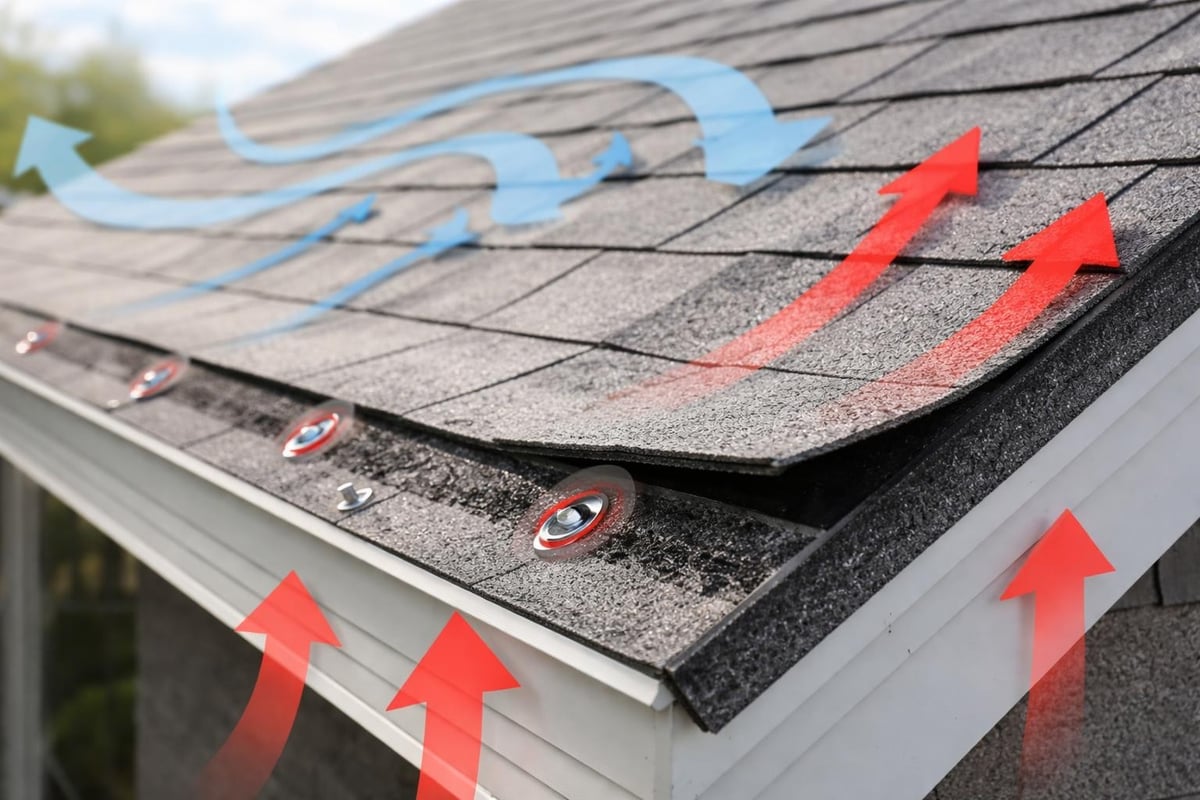
Wind interacts with roofing systems through complex aerodynamic forces that create uplift pressure beneath shingles. When wind flows over a roof surface, it generates negative pressure on the leeward side while creating positive pressure on the windward side. This pressure differential attempts to lift shingles from their fastened position, stressing the sealant strips and nails holding them in place.
The mechanics of wind uplift depend on several critical factors:
- Wind speed and duration during storm events
- Roof geometry including pitch, slope, and edge configurations
- Building height and surrounding landscape features
- Shingle age and condition affecting adhesive strength
- Installation quality and fastener placement
According to research on wind effects on asphalt shingles, edge zones and corners experience significantly higher uplift forces than field areas. This explains why wind damage to shingles typically begins at roof perimeters, ridges, and hips before progressing toward center sections.
The Role of Seal Strip Integrity
Asphalt shingles rely on heat-activated adhesive strips to bond overlapping courses together. These seal strips create a unified roofing membrane that resists wind uplift when properly engaged. However, seal integrity can be compromised by:
- Insufficient heat activation in shaded or northern-facing roof sections
- Manufacturing defects affecting adhesive quality
- Premature aging from UV exposure and thermal cycling
- Debris accumulation preventing proper bonding
- Installation during cold weather limiting initial adhesion
Property owners should understand that unsealed shingles do not automatically indicate wind damage unless accompanied by creasing, tearing, or missing sections. Many misconceptions exist regarding what constitutes legitimate storm damage versus normal weathering.
Identifying Wind Damage During Roof Inspections
Recognizing wind damage to shingles requires systematic inspection techniques and knowledge of damage patterns. Professional evaluations examine both obvious failures and subtle indicators that suggest progressive deterioration.
Primary wind damage indicators include:
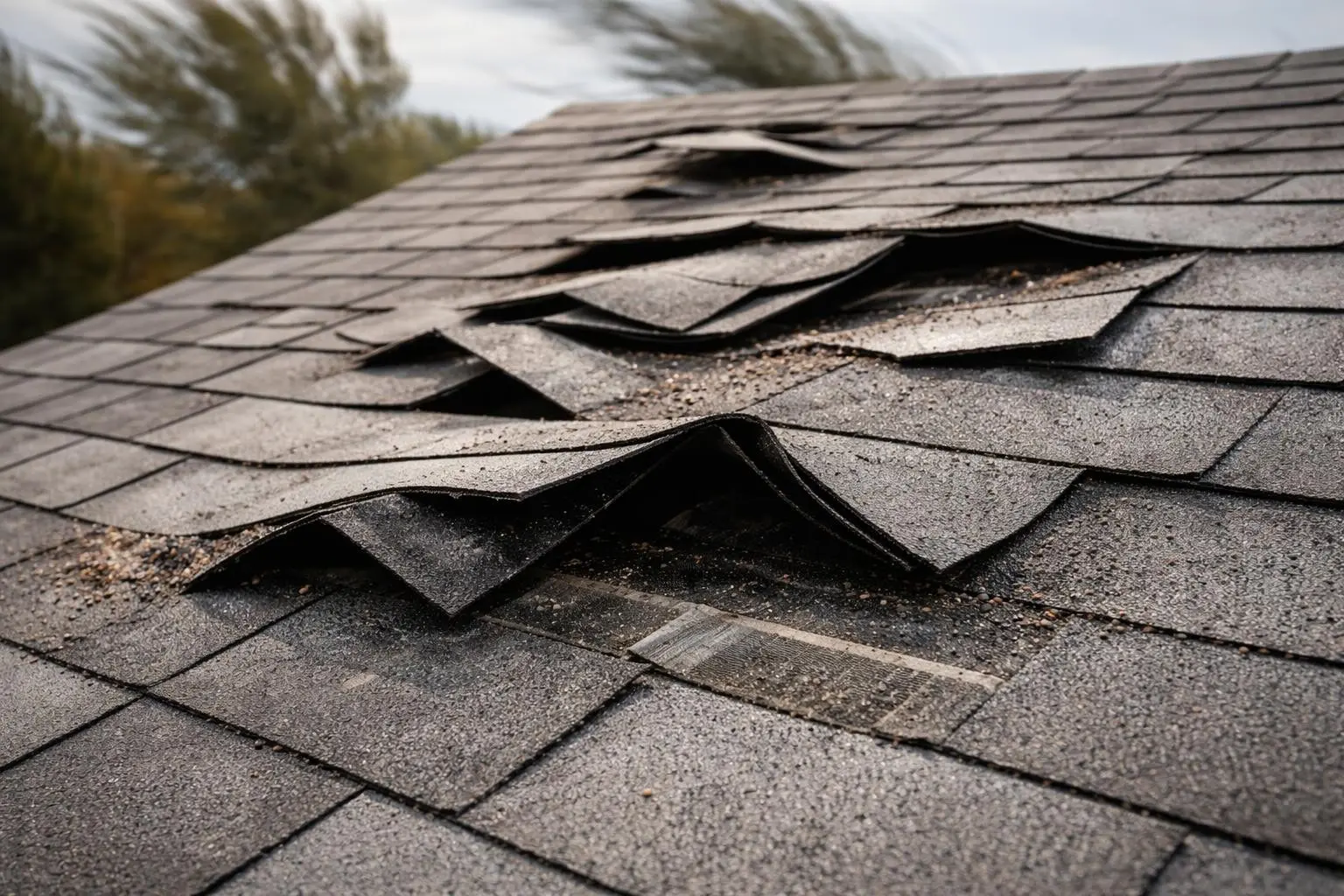
- Lifted, bent, or curled shingle edges
- Missing shingle tabs or entire sections
- Exposed fasteners from nail pull-through
- Creased shingles showing stress lines
- Granule loss patterns concentrated at edges
- Broken or cracked shingle corners
- Displaced ridge cap shingles
| Damage Type | Visual Characteristics | Severity Level |
|---|---|---|
| Lifted Edges | Unsealed tabs raised from roof deck | Moderate |
| Missing Sections | Complete shingle absence exposing underlayment | High |
| Creasing | Horizontal fold lines across shingle body | Moderate to High |
| Broken Corners | Fractured shingle edges at stress points | Moderate |
| Granule Loss | Concentrated bare spots on shingle surface | Low to Moderate |
Proper documentation becomes essential when filing insurance claims. Understanding how wind damage to roof shingles is handled by insurance companies helps property owners navigate the claims process effectively. Many insurers require specific evidence standards and professional assessments before approving repair coverage.
Common Inspection Mistakes
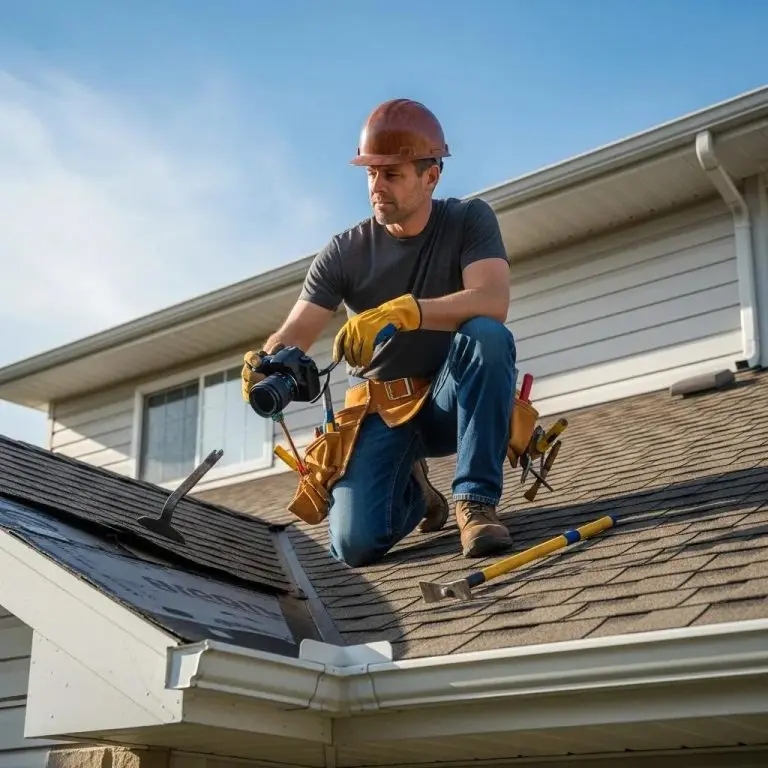
Many homeowners attempt self-inspection but miss critical damage signs or misinterpret normal wear patterns. Walking on roofs without proper safety equipment creates additional risks and can cause secondary damage to already-weakened shingles.
Professional inspectors examine:
- Ventilation adequacy affecting thermal performance
- Flashing condition at penetrations and transitions
- Deck integrity beneath damaged shingle areas
- Previous repair quality that may have created vulnerabilities
- Surrounding trees that could impact future wind resistance
The comprehensive approach to identifying storm damage ensures nothing gets overlooked during assessment, particularly when preparing insurance documentation.
Wind Speed Thresholds and Damage Probability
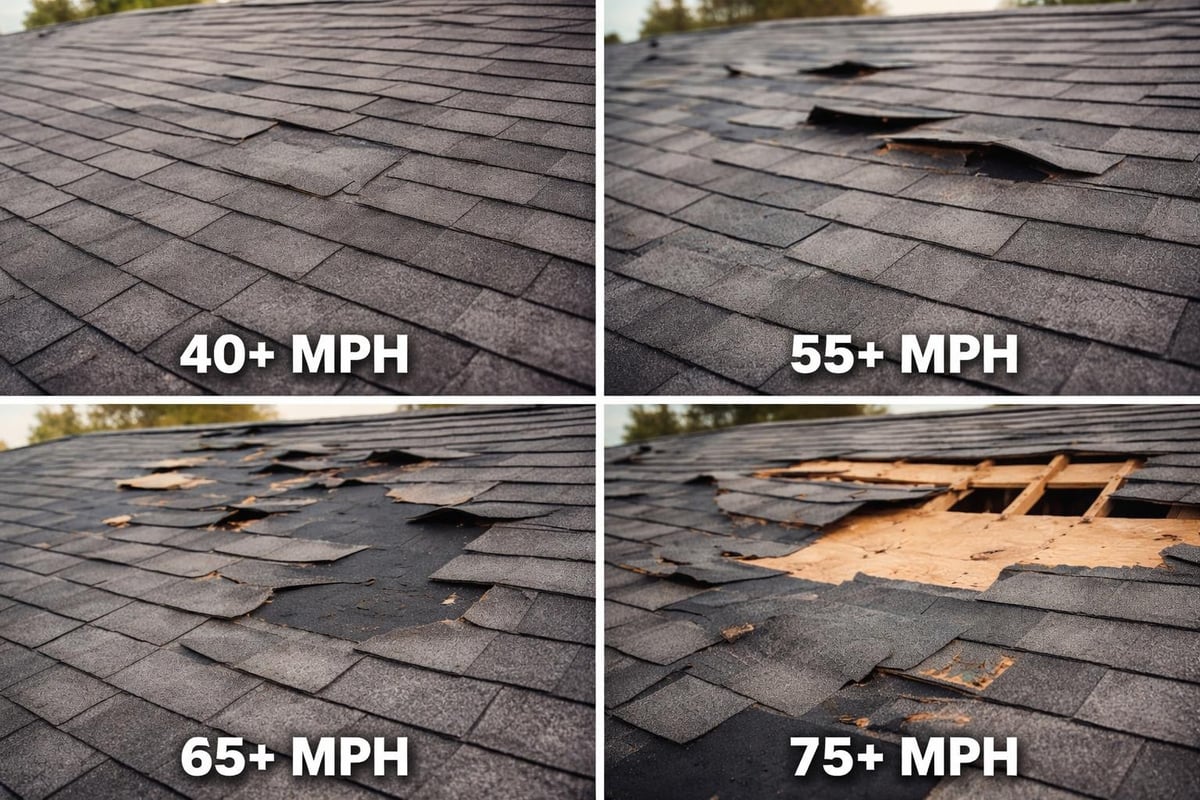
Different wind speeds create varying levels of risk for asphalt shingle roofing systems. Understanding these thresholds helps property owners assess vulnerability after storm events and make informed decisions about inspection timing.
Wind damage probability by sustained wind speed:
| Wind Speed (mph) | Damage Risk | Typical Effects |
|---|---|---|
| 40-50 | Low | Minor edge lifting on older roofs |
| 50-60 | Moderate | Tab lifting, seal failures on compromised systems |
| 60-75 | High | Missing shingles, widespread lifting |
| 75+ | Severe | Extensive damage, structural concerns |
Fort Worth experiences periodic severe thunderstorms with straight-line winds exceeding 60 mph, creating significant exposure for aging roofing systems. The National Roofing Contractors Association study on windstorm damage demonstrates how seemingly moderate wind events can cause substantial damage to improperly installed or maintained roofs.
Gust duration matters as much as peak velocity. Sustained high winds create cumulative stress that progressively weakens fastener connections and seal bonds. Short-duration gusts may lift shingles temporarily without causing permanent displacement, while prolonged wind events often result in complete shingle loss.
Regional Factors Affecting Wind Vulnerability in North Texas
Fort Worth's geographic location and climate patterns create specific wind-related challenges for roofing systems. Understanding these regional factors helps property owners make informed decisions about materials, maintenance schedules, and proactive upgrades.
Thunderstorm Dynamics
North Texas experiences severe thunderstorm activity from March through November, with peak intensity during spring months. These storms generate:
- Straight-line winds from microbursts and downdrafts
- Tornadic activity creating extreme localized wind speeds
- Rapid temperature changes stressing roofing materials
- Hail accompaniment compounding wind damage effects
The combination of wind and hail creates particularly destructive scenarios. Impact damage from hail weakens shingle integrity, making subsequent wind events more likely to cause displacement and tearing.
Urban Heat Island Effects
Fort Worth's urban development influences local wind patterns through heat island effects that modify air flow over buildings. Taller structures create wind tunneling that accelerates speeds in narrow corridors, while temperature differentials between developed and undeveloped areas generate unpredictable gusts.
Property owners should consider:
- Nearby building heights affecting wind deflection
- Landscape features providing wind breaks or channeling
- Roof orientation relative to prevailing wind directions
- Historical damage patterns in the specific neighborhood
Working with experienced contractors familiar with Fort Worth's microclimate patterns ensures roofing solutions address local conditions effectively. Just as timber frame buildings require specialized knowledge of structural loads and material behavior in the UK, roofing systems in North Texas demand expertise in regional weather patterns and their cumulative effects on building envelopes.
Misconceptions About Wind Damage Assessment
Several persistent misconceptions complicate accurate wind damage to shingles assessment, leading to unnecessary repairs or overlooked problems. Clearing up these misunderstandings helps property owners make informed decisions.
Common myths include:
-
All lifted shingles indicate wind damage – Many shingles never fully seal due to shade, installation timing, or manufacturing issues unrelated to wind events.
-
Wind damage always involves missing shingles – Subtle creasing and mat deterioration from uplift stress can compromise waterproofing without visible shingle loss.
-
Newer roofs can't experience wind damage – Improper installation or defective materials make even recently installed roofs vulnerable to wind failure.
-
Wind damage occurs uniformly across the roof – Damage concentrates in high-stress zones like edges, ridges, and corners due to aerodynamic pressure patterns.
-
Insurance covers all wind-related issues – Policies distinguish between sudden storm damage and gradual deterioration, with coverage varying significantly.
Research on misconceptions of wind damage to asphalt shingles clarifies these issues and provides technical guidance for proper assessment. Understanding the difference between legitimate storm damage and pre-existing conditions becomes critical during insurance claim evaluations.
The Seal Strip Controversy
One particularly contentious issue involves broken or unsealed adhesive strips. Many adjusters and contractors incorrectly assume that any unsealed shingle represents wind damage requiring replacement. However, shingles may remain unsealed for years without compromising roof performance, particularly in shaded areas where thermal activation never occurs.
Legitimate wind damage indicators beyond unsealing include:
- Visible creasing from uplift stress
- Torn or fractured shingle material
- Displaced position from original installation
- Granule loss patterns indicating abrasion during movement
- Exposed fasteners from pull-through
Installation Quality and Wind Resistance
Proper installation techniques dramatically influence how roofing systems withstand wind events. Even premium shingles fail prematurely when installed incorrectly, while builder-grade materials can perform admirably when installed according to manufacturer specifications.
Critical Installation Factors
Fastener placement and quantity represent the most important installation variable affecting wind resistance:
- Shingles require minimum four fasteners, six in high-wind zones
- Fasteners must penetrate deck material adequately (minimum 3/4 inch for wood)
- Placement should follow manufacturer patterns, typically 1 inch from edges
- Over-driven or under-driven fasteners compromise holding power
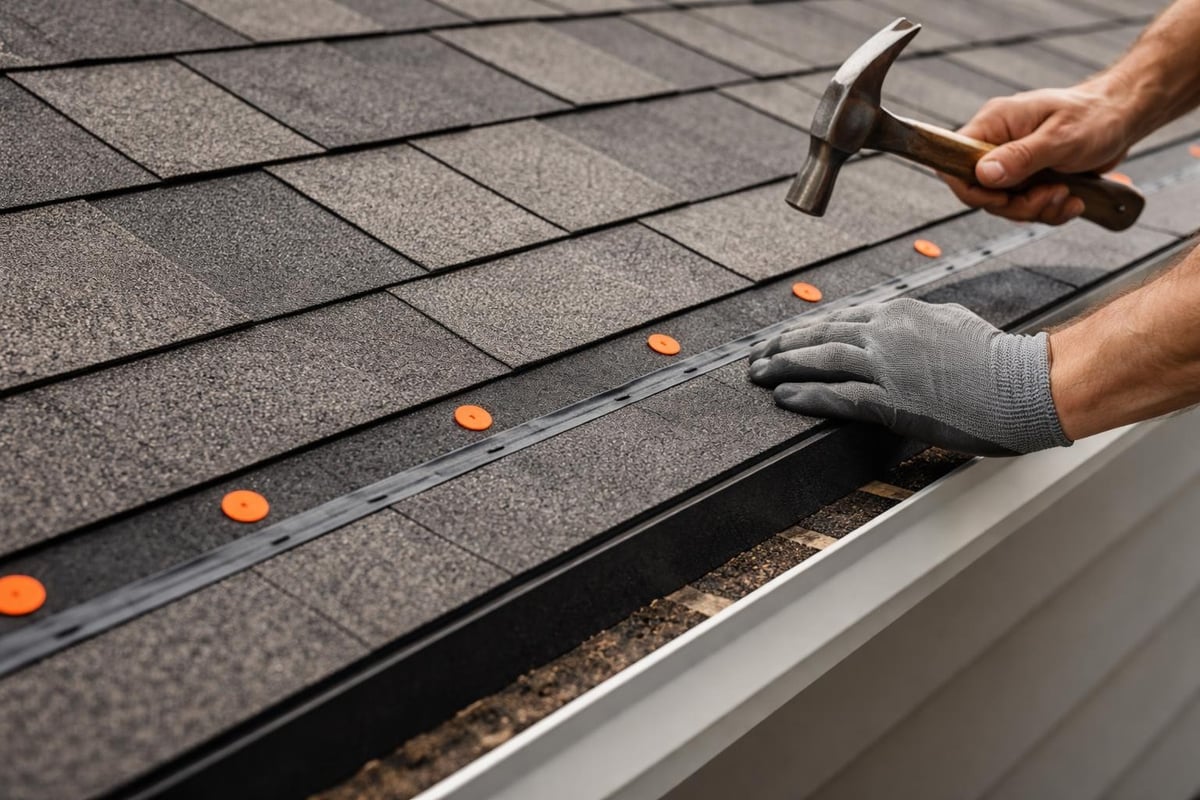
Starter strip application at eaves and rakes prevents edge uplift:
- Install self-adhering starter strips along all roof edges
- Overlap strips at corners following manufacturer specifications
- Ensure proper overhang dimensions for drip edge integration
- Verify adhesive activation in cold-weather installations
Shingle alignment affects seal engagement and aesthetic appearance:
- Maintain consistent exposure across all courses
- Offset cutouts properly to prevent water channeling
- Align courses perpendicular to eaves for optimal load distribution
- Use chalk lines for straight installations on complex roof geometries
The importance of professional installation cannot be overstated. While DIY roofing appeals to cost-conscious property owners, the long-term performance implications and potential insurance complications make professional installation the prudent choice for most situations.
Preventive Maintenance Strategies
Proactive maintenance extends roof lifespan and reduces wind damage to shingles vulnerability. Regular inspections and timely repairs address minor issues before they escalate into major failures during storm events.
Recommended maintenance schedule:
| Frequency | Maintenance Activity | Purpose |
|---|---|---|
| Bi-annual | Visual ground inspection | Identify obvious damage or debris |
| Annual | Professional roof inspection | Comprehensive assessment of all components |
| Post-storm | Damage evaluation | Document storm-related issues promptly |
| As needed | Debris removal | Prevent moisture retention and abrasion |
| 3-5 years | Seal inspection | Verify adhesive strip engagement |
Tree Management
Overhanging branches create multiple wind-related risks:
- Direct impact damage during high winds when limbs break
- Abrasion damage from constant branch movement across shingle surfaces
- Shade-induced seal failures preventing thermal adhesive activation
- Debris accumulation blocking drainage and retaining moisture
Property owners should maintain minimum clearance of 10 feet between tree canopies and roof surfaces. Regular pruning removes dead wood that might become wind-borne projectiles while improving air circulation and sunlight exposure for proper shingle curing.
Attic Ventilation and Wind Resistance
Proper attic ventilation influences wind damage susceptibility through temperature regulation and pressure equalization. Inadequate ventilation creates:
- Excessive heat buildup degrading shingle adhesives
- Moisture accumulation weakening roof deck
- Pressure differentials during wind events increasing uplift forces
- Premature aging of roofing materials
Balanced intake and exhaust ventilation maintains neutral attic pressure during wind events, reducing uplift forces on shingles. Ridge vents combined with soffit intake provide optimal air flow for most residential applications.
Repair Versus Replacement Decision Framework
Determining whether to repair localized wind damage to shingles or replace entire roof sections requires careful evaluation of multiple factors. Property owners benefit from understanding decision criteria beyond simple cost comparisons.
Repair may be appropriate when:
- Damage affects less than 30% of total roof area
- Surrounding shingles remain in good condition
- Matching materials are readily available
- Roof age suggests at least 10 years remaining service life
- No evidence of widespread seal failures or mat deterioration
Replacement becomes necessary when:
- Damage exceeds 40% of roof area or entire slope faces
- Existing roof approaches end of expected service life
- Widespread granule loss indicates advanced aging
- Multiple previous repairs have been required
- Matching shingles are discontinued or significantly aged
Real estate professionals like Wendy Dean, Esq. Realtor and Associate Broker frequently advise clients that comprehensive roof replacement often provides better return on investment than extensive patch repairs, particularly when preparing properties for sale. A new roof with warranty coverage becomes a significant selling point, while visible repair patches raise questions about overall property maintenance.
Insurance Claim Considerations
Understanding coverage limits and deductible structures influences repair decisions. For property owners dealing with roofing insurance claims, detailed documentation and professional assessments supporting your insurance claim with thorough documentation value while ensuring repairs meet code requirements and manufacturer specifications.
Most policies cover actual cash value or replacement cost for wind damage:
- Actual cash value deducts depreciation from replacement cost
- Replacement cost provides full repair funding without depreciation
- Deductibles typically range from $1,000 to $5,000 or percentage-based
- Age restrictions may apply to older roofs, limiting coverage
Advanced Wind Mitigation Techniques
Beyond standard installation practices, specialized techniques enhance wind resistance for properties in high-exposure areas or with documented vulnerability history.
Enhanced Fastening Systems
Hurricane clips and enhanced nailing patterns exceed minimum code requirements:
- Six-nail patterns versus standard four-nail installation
- Ring-shank nails providing superior withdrawal resistance
- Specialized underlayment adhesives creating secondary wind barriers
- Reinforced edge metal securing perimeter shingles
These upgrades increase material and labor costs but significantly improve performance during severe wind events. Property owners in tornado-prone corridors or near open terrain benefit most from enhanced fastening.
Impact-Resistant Shingles
Class 4 impact-rated shingles incorporate reinforced backing that resists both hail impact and wind-induced stress:
- Modified asphalt formulations maintain flexibility during uplift
- Reinforced mat construction prevents tearing
- Enhanced adhesive systems bond more reliably
- Premium warranties often include wind speed guarantees
Many insurance companies offer premium discounts ranging from 5% to 20% for impact-resistant roofing installations, offsetting higher initial costs through long-term savings.
Architectural Modifications
For properties experiencing repeated wind damage, architectural changes may prove cost-effective:
- Reduce roof overhang dimensions to minimize uplift surfaces
- Install continuous ridge venting to equalize attic pressure
- Add wind breaks through strategic landscaping
- Modify roof slope on additions or replacement projects to reduce wind exposure
Working with experienced contractors ensures modifications comply with building codes while addressing specific vulnerability factors. The detailed guidance available through resources like causes and signs of wind damage to roof shingles helps property owners understand options appropriate for their situations.
Emergency Response Protocol After Wind Events
Prompt action following suspected wind damage to shingles prevents secondary water damage and preserves insurance claim validity. Property owners should implement systematic response procedures after severe weather.
Immediate steps after wind storms:
- Safety assessment – Verify no downed power lines or structural hazards exist before approaching building
- Ground-level inspection – Look for displaced shingles, debris, or obvious damage without accessing roof
- Interior inspection – Check attic spaces and ceilings for active leaks or moisture intrusion
- Temporary protection – Place tarps or buckets to contain water damage if leaks are present
- Professional inspection scheduling – Contact licensed roofing contractors for comprehensive assessment
Do not attempt roof access during or immediately after storms. High winds may continue, surfaces become slippery, and concealed structural damage creates fall hazards. Professional contractors have proper safety equipment and training for post-storm evaluations.
Documentation Best Practices
Thorough documentation supports insurance claims and ensures nothing gets overlooked during repair planning:
- Photograph all visible damage from multiple angles and distances
- Note storm date and conditions including approximate wind speeds if known
- Document interior damage showing water stains, ceiling damage, or attic moisture
- Preserve displaced shingles as physical evidence of storm impact
- Record communication with insurance adjusters and contractors
Understanding what homeowners should do if they suspect wind damage streamlines the response process and prevents common mistakes that complicate claims or delay repairs.
Material Selection for Wind-Prone Regions
Choosing appropriate roofing materials for North Texas conditions balances performance requirements, budget constraints, and aesthetic preferences. Different materials offer varying wind resistance characteristics.
Asphalt shingle options for wind resistance:
| Shingle Type | Wind Rating | Typical Cost | Warranty Period |
|---|---|---|---|
| Three-tab | 60 mph | $ | 20-25 years |
| Architectural | 110-130 mph | $$ | 30-50 years |
| Impact-resistant | 110-130 mph | $$$ | 30-50 years |
| Designer/premium | 130+ mph | $$$$ | Lifetime limited |
Three-tab shingles, while economical, offer minimal wind resistance and represent poor value in high-wind regions. Architectural shingles provide the optimal balance of cost, performance, and aesthetics for most Fort Worth properties.
Alternative Roofing Materials
For commercial applications or property owners seeking maximum wind resistance, alternative materials deserve consideration:
- Metal roofing rated for winds exceeding 140 mph when properly installed
- Concrete or clay tiles offering exceptional durability but requiring structural reinforcement
- Modified bitumen for low-slope commercial applications
- Single-ply membranes like TPO or EPDM for flat commercial roofs
Commercial property owners benefit from understanding specialized systems addressing their unique requirements, just as those exploring comprehensive solutions for wind damage to roof repairs need professional guidance navigating material options and installation standards.
Long-Term Performance Monitoring
Establishing systematic monitoring practices helps property owners track roof condition over time and make data-driven decisions about maintenance timing and eventual replacement.
Recommended monitoring approach:
- Maintain detailed inspection records with photographs
- Track repair history including dates and locations
- Note weather events and observable impacts
- Monitor energy costs for anomalies suggesting ventilation issues
- Schedule professional inspections before and after severe weather seasons
Creating a roof performance file provides valuable documentation for insurance purposes, supports due diligence during property transactions, and helps contractors understand maintenance history when planning repairs or replacements.
Technology-Enabled Monitoring
Modern tools enhance monitoring capabilities:
- Drone inspections providing detailed imagery without roof access
- Thermal imaging identifying moisture intrusion and insulation deficiencies
- Digital documentation platforms organizing inspection data and creating shareable reports
- Weather tracking correlating storm events with observable damage patterns
These technologies reduce inspection costs while improving accuracy, particularly for large commercial properties or multi-building portfolios requiring consistent oversight.
Code Compliance and Wind Load Requirements
Building codes establish minimum wind resistance standards based on geographic location and structure characteristics. Fort Worth falls within specific wind zones requiring compliance with International Residential Code and local amendments.
Key code requirements affecting wind resistance:
- Minimum fastener quantities and specifications
- Underlayment type and application methods
- Edge metal installation standards
- Flashing details at penetrations and transitions
- Ventilation requirements affecting pressure equalization
Recent code updates have strengthened wind resistance standards following major storm events. Properties built or re-roofed since 2015 typically incorporate enhanced requirements, while older installations may not meet current standards despite being compliant when originally constructed.
Upgrade Opportunities During Repairs
When addressing wind damage to shingles, property owners can voluntarily exceed code minimums to improve performance:
- Install impact-resistant underlayment even when not required
- Use enhanced fastening patterns in high-stress zones
- Upgrade edge metal to heavier gauges with improved fastening
- Add supplemental sealing at critical transitions
These upgrades require modest additional investment during active projects but prove far more expensive if implemented separately during later maintenance cycles. Working with knowledgeable contractors ensures upgrade recommendations align with specific property vulnerabilities and risk tolerance.
Understanding wind damage to shingles empowers Fort Worth property owners to protect their investments through informed material selection, proper installation, regular maintenance, and prompt storm response. Whether you're addressing current damage, planning preventive upgrades, or preparing for inevitable North Texas weather challenges, professional guidance ensures optimal outcomes. Texcore Construction delivers expert assessment, transparent recommendations, and reliable repairs backed by in-house crews and comprehensive warranties, helping residential and commercial clients maintain secure, weather-resistant roofing systems built to withstand the toughest conditions.