Commercial Flat Roofing Guide: Essential Tips for 2026
Protecting your commercial property starts from the top. The right choice among flat and low-slope roofing systems is essential for safeguarding assets, supporting business continuity, and protecting long-term value. Many owners and managers worry about leaks, rising energy costs, and ongoing maintenance. This guide delivers clear, practical advice to help you make confident decisions about commercial flat roofing. Discover the types of systems, materials, installation processes, maintenance strategies, repair options, and tips for selecting the best contractor for your needs.
Understanding Commercial Flat Roofing: Basics and Benefits
Commercial flat roofing is a foundational element for many businesses, protecting assets while offering design flexibility. Unlike pitched roofs, these systems feature a low slope, making them ideal for a variety of commercial structures. Recognizing the basics and benefits of commercial flat roofing helps property owners make informed decisions and maximize their investments.
What Is Commercial Flat Roofing?
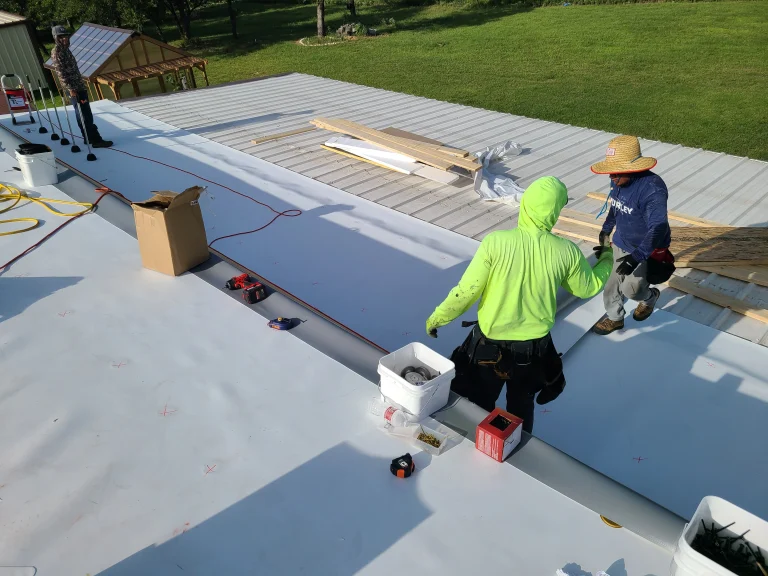
Commercial flat roofing refers to roofing systems with a minimal slope, usually less than 10 degrees. Unlike steeply pitched roofs, these are nearly level, creating a broad, usable surface. You will often find commercial flat roofing on warehouses, office complexes, retail spaces, and industrial buildings, where maximizing interior volume and rooftop utility is a priority.
The typical structure of commercial flat roofing includes three main layers:
| Layer | Function |
|---|---|
| Membrane | Waterproof barrier |
| Insulation | Energy efficiency, comfort |
| Decking | Structural support |
Drainage is essential with commercial flat roofing. Since water does not naturally run off as quickly as on a pitched roof, proper design incorporates internal drains, scuppers, or tapered insulation. These systems help prevent standing water and potential damage.
For a deeper dive on materials, system types, and practical guidance, you can visit the Commercial Flat Roofing Guide.
Advantages of Flat Roofing for Commercial Buildings
Commercial flat roofing offers significant advantages for business owners and property managers. One of the main benefits is cost-effectiveness. Flat roofing systems are generally less expensive to install and repair than pitched alternatives, thanks to simpler designs and efficient use of materials.
Accessibility is another key advantage. Flat surfaces allow for easier inspections, routine maintenance, and the installation of equipment such as HVAC units or solar panels. This accessibility reduces labor costs and downtime during service.
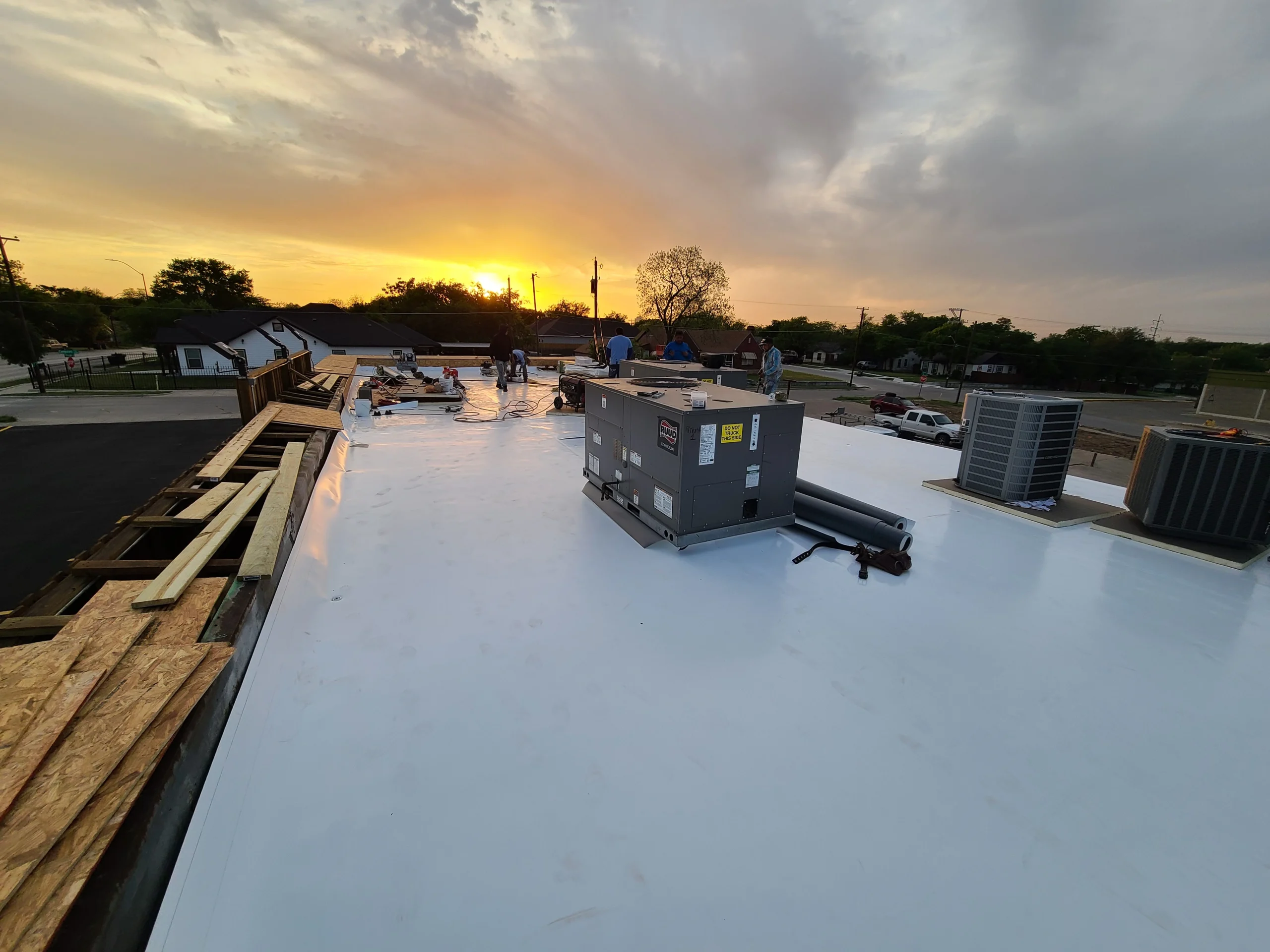
Space utilization is a major benefit. The flat rooftop can be used for green roofs, recreational areas, or additional storage. On a large warehouse roof, commercial flat roofing leaves room for HVAC units, solar panels, and other rooftop utilities.
Energy efficiency opportunities abound with commercial flat roofing. Upgraded insulation and reflective membranes, often called cool roofs, can help lower utility costs and contribute to sustainable building practices. Flat roofs also make it easier to retrofit energy-saving technologies.
Key Challenges and Considerations
While commercial flat roofing brings many benefits, it also presents unique challenges. Ponding water is a common issue, as inadequate drainage can lead to standing water and leaks. Over time, this can damage the membrane and underlying structure.
Proper design and professional installation are critical to preventing costly failures. In North Texas, summer UV exposure can degrade roofing materials faster, and hail and heavy spring rain test every seam. Material choice and drainage design need to account for both.
Routine maintenance is essential for maximizing the lifespan and performance of commercial flat roofing. Regular inspections, prompt repairs, and proactive care help property owners avoid unexpected expenses and keep their buildings protected.
Types of Commercial Flat Roofing Systems
Selecting the right commercial flat roofing system is a critical decision for property managers and building owners. Each system offers unique benefits, challenges, and suitability for specific building needs. Understanding the full range of commercial systems is the foundation for long-term roof performance and investment protection. For a detailed comparison of available systems, see the Best Commercial Roofing Options in Texas.
Built-Up Roofing (BUR)
Built-Up Roofing, often called BUR, is a time-tested commercial flat roofing solution. It consists of alternating layers of bitumen and reinforcing fabrics, creating a durable, multi-ply membrane.
- Structure: Multiple layers for redundancy and resilience.
- Advantages: Proven fire resistance and longevity, especially for high-traffic rooftops.
- Maintenance: Requires periodic inspections for surface cracks or blistering.
BUR is commonly used in warehouses and facilities prioritizing durability. Its layered approach helps protect against weather extremes, a key reason it remains a staple in commercial flat roofing.
Modified Bitumen Roofing
Modified bitumen systems are an evolution of BUR, blending asphalt with modifiers for enhanced flexibility and strength. This commercial flat roofing option is favored for its adaptability to temperature changes.
- Application Methods: Torch-applied, cold-applied, and self-adhered membranes.
- Strengths: High resistance to foot traffic and thermal movement.
- Use Cases: Ideal for buildings in regions with wide temperature swings.
Routine maintenance, especially at seams and flashings, is essential to maximize the lifespan of modified bitumen commercial flat roofing systems.
Single-Ply Membrane Systems
Single-ply membranes are lightweight, flexible, and popular for large commercial flat roofing projects. The three main types (TPO, EPDM, and PVC) each offer distinct benefits.
| Membrane | Key Strengths | Best For |
|---|---|---|
| TPO | Energy efficiency, heat-welded seams | Large, sun-exposed roofs |
| EPDM | Flexibility, UV resistance | Variable climates |
| PVC | Chemical resistance | Restaurants, factories |
These systems are valued for easy installation and competitive cost, making them a leading choice in commercial flat roofing.
Spray Polyurethane Foam (SPF) Roofing
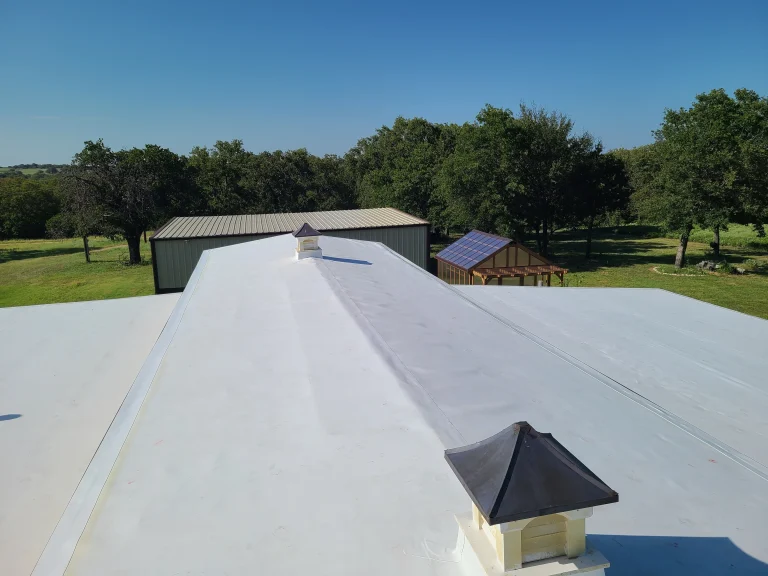
SPF roofing is a commercial flat roofing system applied as a liquid that expands and cures into one continuous, insulating layer of foam. With no seams to fail, it lowers leak risk.
- Benefits: Superior insulation and waterproofing.
- Application: Conforms to irregular shapes and penetrations.
- Maintenance: Requires periodic re-coating to sustain protection.
SPF is especially advantageous for retrofits or roofs with complex layouts, supporting long-term energy savings in commercial flat roofing.
Metal Flat Roofing
Metal is an increasingly popular commercial flat roofing material, especially for low-slope applications. Standing seam and corrugated panels provide strong protection.
- Advantages: Longevity up to 40 years, hail and wind resistance.
- Retrofit Use: Can overlay existing roofs, reducing tear-off costs.
- Maintenance: Infrequent, focused on seams and fasteners.
Metal roofing is well-suited for facilities seeking minimal maintenance and high durability, making it a strategic choice in commercial flat roofing.
Roof Coatings and Restoration Systems
Roof coatings offer a cost-effective way to extend the life of commercial flat roofing without full replacement. Elastomeric, silicone, and acrylic coatings create continuous, reflective barriers with no seams.
- Benefits: Improved waterproofing, energy savings, and restoration of aging roofs.
- Applications: Ideal for structurally sound but weathered roofs.
- Maintenance: Reapplication schedules keep the coating performing.
Coatings are a sustainable strategy for property owners to maintain and enhance the value of commercial flat roofing investments.
Commercial Flat Roof Installation: Process and Best Practices
Installing a commercial flat roofing system requires careful planning, skilled execution, and attention to every detail. Each step, from assessment to the final inspection, plays a vital role in the durability and performance of your investment.
Pre-Installation Assessment and Planning
The foundation of any successful commercial flat roofing project begins with a thorough pre-installation assessment. Roofing professionals conduct detailed inspections, including core sampling and moisture mapping, to assess the condition of the existing structure.
Evaluating drainage is essential. Poor drainage leads to standing water, which can shorten the lifespan of commercial flat roofing systems. Assessing the slope and structural integrity, as well as identifying potential weak spots, confirms the new roof will perform as intended.
Finally, understanding local building codes and securing necessary permits is a must. Compliance avoids costly delays and guarantees the finished roof meets all safety and performance standards.
Material Selection and System Design
Choosing the right materials and designing the correct system are critical decisions in the commercial flat roofing process. Factors such as climate, intended building use, and budget all influence the selection.
For example, facilities in regions with high heat may benefit from reflective membranes, while buildings exposed to chemicals might require PVC. Insulation selection also impacts energy efficiency and interior comfort.
Attention to detail is key. Proper design around penetrations, such as HVAC units or skylights, and the use of quality flashing and edge metal, help prevent leaks and extend the life of the commercial flat roofing system.
Installation Steps (Chronological)
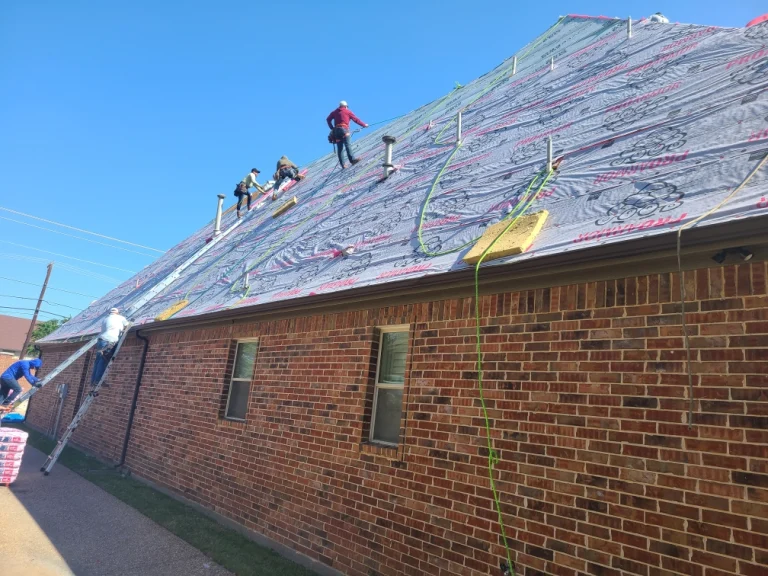
The installation phase for commercial flat roofing begins with deciding between a full tear-off or an overlay of the existing system. This choice depends on the current roof's condition, local codes, and long-term goals.
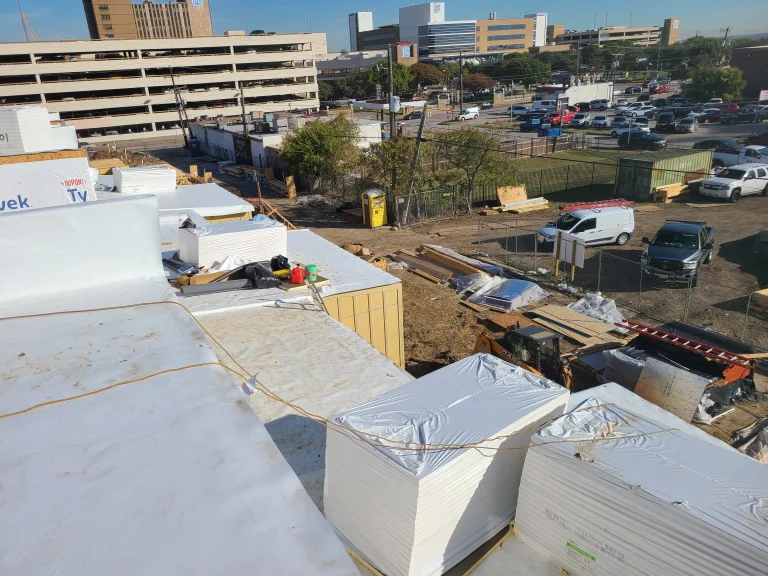
Surface preparation is next. The substrate must be clean and sound before applying new materials. Installers then lay vapor barriers, insulation, and the chosen membrane or coating in precise layers.
Seaming, flashing, and detail work are critical for watertightness. Quality assurance inspections are performed throughout, and manufacturers often require documentation for warranty eligibility. Every step should follow industry best practices for optimal results.
Common Installation Mistakes to Avoid
Even with the best materials, improper installation can jeopardize a commercial flat roofing system's integrity. One of the most common errors is inadequate drainage planning, which can result in ponding water and premature failure.
Another frequent mistake is poorly executed seams and flashing details. These weak points are the primary entryways for water. Hiring unqualified or inexperienced contractors also increases the risk of costly errors and voided warranties.
Avoiding these pitfalls requires diligence, skill, and a commitment to following manufacturer specifications and industry standards for commercial flat roofing systems.
Example: Benefits and Challenges of TPO Installation in a Distribution Center
Consider a large distribution center opting for TPO as its commercial flat roofing solution. The process began with a full evaluation, revealing the need for improved drainage and upgraded insulation.
TPO was selected for its energy efficiency and heat-welded seams, which are highly resistant to leaks. Installation involved removing the old system, preparing the deck, and meticulously installing each layer.
Challenges included managing installation around numerous rooftop penetrations and maintaining strict timelines to minimize business disruption. The result was a durable, low-maintenance roof that enhanced energy performance and protected valuable assets.
Maintenance and Repair Strategies for Commercial Flat Roofs
Maintaining commercial flat roofing is essential for building performance and long-term cost control. With the right approach to flat roof materials and maintenance, property owners can prevent unexpected roofing failures, reduce energy waste, and avoid costly repairs. A strong maintenance plan is the foundation for protecting your investment and strengthening the roof’s reliability.
Importance of Regular Maintenance
Routine care for commercial flat roofing is not just a recommendation; it is a necessity. Regular inspections and proactive service help identify minor issues before they become major problems, such as leaks or membrane damage.
Neglecting maintenance can lead to premature roof failure, higher total costs, and even void warranties. Insurance providers often require documented maintenance as a condition for coverage. By prioritizing scheduled upkeep, owners extend the lifespan of commercial flat roofing, reduce emergency repair expenses, and maintain compliance with manufacturer and insurance requirements.
Key Maintenance Tasks
A well-structured maintenance plan for commercial flat roofing involves several recurring tasks. These include:
- Inspecting the roof surface, seams, and flashings for wear or damage
- Clearing debris, leaves, and obstructions from drains and gutters
- Cleaning the membrane to prevent algae or mold growth
- Checking for ponding water and confirming proper drainage
- Examining all penetrations and rooftop equipment for secure seals
Following a seasonal checklist means no critical steps get missed. For more actionable advice, consider reviewing these Flat Roof Maintenance Tips to maximize your roof’s longevity and performance.
Leak Detection and Emergency Repairs
Even with diligent care, leaks can occasionally occur in commercial flat roofing. Early detection is key to minimizing damage. Techniques like infrared thermography and moisture mapping help locate hidden moisture below the membrane.
When a leak is discovered, immediate actions such as temporary patching or diverting water are crucial. Permanent repairs should address the root cause, which often involves seam re-sealing, flashing replacement, or localized membrane restoration. Timely intervention protects the building’s interior, inventory, and structural integrity.
Roof Coatings and Restoration as Preventive Maintenance
Applying roof coatings is a proactive method to extend the service life of commercial flat roofing. Elastomeric, silicone, and acrylic coatings cure into one continuous, waterproof layer that resists UV rays and reduces heat transfer.
These systems are ideal for restoring aging but structurally sound roofs, delaying the need for full replacement. Scheduled restoration cycles can prevent leaks, enhance energy efficiency, and save money over time. Choosing the right coating depends on the existing roof material, climate, and building needs.
Case Example: Leak Repair Process and Outcomes in a Large Facility
Consider a large distribution center that develops a leak after severe weather. The facility manager initiated a thorough inspection of the commercial flat roofing system, identifying compromised seams near rooftop units.
The repair process involved isolating the affected area, applying a temporary patch, and scheduling permanent membrane restoration. By acting quickly and following best practices, the facility minimized downtime, prevented inventory loss, and extended the roof’s service life. This case highlights the value of prompt, professional maintenance and repair strategies for commercial flat roofing.
Choosing the Right Commercial Flat Roofing Contractor
Selecting the right contractor for your commercial flat roofing project is critical. The right partner can help you avoid costly mistakes, extend roof lifespan, and protect your investment. Understanding what makes a contractor reliable keeps your project running smoothly, from initial consultation to final inspection.
What to Look for in a Commercial Roofing Partner
When choosing a commercial flat roofing contractor, start by confirming their insurance and manufacturer certifications. These credentials prove the company meets industry standards and is authorized to install specific roofing systems. Always ask for proof, as reputable contractors will provide documentation without hesitation.
Experience is equally important. Look for a contractor with a proven track record in commercial flat roofing, especially with projects similar in size and scope to yours. Local knowledge matters, since building codes and climate conditions can affect installation methods and material choices.
Ask if they use in-house crews or subcontractors. In-house teams often deliver better quality control and consistent workmanship. Contractors who invest in ongoing training are more likely to be familiar with the latest materials and methods. For example, firms that stay current with emerging technologies in commercial roofing can offer innovative solutions tailored to your building’s needs.
Evaluating Proposals and Warranties
A professional commercial flat roofing contractor will provide a detailed, itemized proposal. This document should outline the full scope of work, materials, installation methods, and project timeline. Carefully review each section, and do not hesitate to ask questions about unclear items. Transparent proposals help prevent unexpected expenses and project delays.
Warranties are another essential aspect. Understand the difference between labor and material warranties, including what is covered, duration, and any exclusions. Ask for copies of manufacturer warranties and confirm your contractor offers a written labor warranty. Reliable contractors also document their work with before and after photos, which are valuable if you ever need to file an insurance claim.
Warranty and insurance compliance both require clear documentation. A contractor who is organized and detail-oriented in their paperwork is likely to bring the same level of care to your commercial flat roofing installation.
Communication, Safety, and Job Site Management
Successful commercial flat roofing projects depend on clear communication. Your contractor should provide a realistic timeline, regular progress updates, and be available to answer questions throughout the process. Consistent communication helps minimize disruptions to your daily operations.
Safety is non-negotiable. Ask about the contractor’s safety protocols and job site management practices. The team should follow OSHA guidelines, use proper safety equipment, and maintain a clean, organized site. A tidy work environment reduces hazards and demonstrates respect for your property.
Job site management also includes minimizing noise, debris, and other disruptions. Professional contractors will coordinate schedules to limit impact on your business and confirm all materials are properly disposed of at the end of the project. Attention to these details is a strong indicator of a high-quality commercial flat roofing partner.
Red Flags and Common Pitfalls
Be cautious of contractors who offer unusually low bids or vague estimates. While a lower price can be tempting, it often signals the use of inferior materials or shortcuts in workmanship. Never accept a proposal without clear scope, timeline, and warranty details.
Unverified references or a lack of local experience are warning signs. Ask for client referrals and check online reviews. Be wary of warranty promises not backed by major manufacturers, as these can leave you unprotected if issues arise.
If a contractor is reluctant to provide documentation or pressures you to sign quickly, consider it a red flag. Take the time to compare options and choose a commercial flat roofing specialist with a reputation for transparency and reliability.
Example: How a property manager avoided costly errors by vetting contractors and demanding documentation.
A property manager overseeing a large retail center faced multiple leaks after a previous poorly executed roof repair. Determined to avoid repeat issues, she requested proof of insurance, certifications, and references from all commercial flat roofing bidders. Only firms willing to provide detailed proposals and documentation made her shortlist. By choosing a contractor with strong credentials and transparent communication, she got quality repairs and a valid warranty.
Maximizing Flat Roof Performance: Trends, Upgrades, and Future-Proofing
Keeping your commercial flat roofing system ahead of the curve is essential for long-term performance and value. Today’s advancements in materials, technologies, and best practices help property managers both lower costs and safeguard assets. By understanding new trends and practical upgrades, you can make informed decisions that future-proof your investment.
Energy Efficiency and Cool Roof Technologies
Energy efficiency is a top priority for commercial flat roofing today. White reflective membranes, insulation upgrades, and advanced coatings are now standard options for reducing heat absorption. These solutions can lower cooling costs, support code compliance, and extend the life of your roof.
Many building owners are turning to cool roof coatings that reflect sunlight and release absorbed heat. According to Cool Roof Coatings for Energy Efficiency, these coatings not only improve efficiency but can also help qualify for local incentives. Pairing cool roofs with adequate insulation enhances energy savings even further.
Rooftop Utilization and Sustainability
Modern commercial flat roofing offers more than weather protection. Rooftops can host solar panels, green spaces, or even recreational areas, making better use of available space. Solar integration is increasingly common, providing both sustainability and utility savings.
Green roofs help manage stormwater and improve insulation. Rooftop HVAC placement is easier with flat designs, streamlining maintenance and system upgrades. Sustainable choices in commercial flat roofing can attract eco-conscious tenants and support long-term property value.
Digital Tools and Smart Maintenance
Digital monitoring is transforming commercial flat roofing management. Remote sensors, leak detectors, and moisture mapping tools allow property managers to spot small issues before they become major repairs. Predictive maintenance helps extend roof lifespan and reduces emergency calls.
Software platforms can track inspections, schedule preventive care, and keep documentation organized. These digital solutions help owners make proactive, data-driven decisions for their commercial flat roofing assets.
Planning for Extreme Weather and Climate Resilience
Climate resilience is a growing concern for commercial flat roofing. Material selection should consider local hazards like hail, wind, or heavy snow. In tornado-prone areas, metal overlays can protect aging roofs, while TPO membranes perform well in sun-exposed climates.
Proper drainage design and reinforced seams prevent water intrusion during storms. Regular inspections after severe weather events help maintain warranty coverage and catch hidden damage early. Resilient commercial flat roofing systems are a smart investment against unpredictable weather.
Budgeting for Lifecycle Costs
Smart budgeting goes beyond installation expenses. The total cost of commercial flat roofing includes maintenance, energy use, repairs, and eventual replacement. Comparing systems by upfront and long-term costs helps owners maximize ROI.
Proactive maintenance and timely restoration can delay costly tear-offs. Energy-efficient upgrades may also deliver long-term savings on utilities and insurance. Understanding the full lifecycle cost is crucial for effective capital planning in commercial flat roofing projects.
| Roofing System | Upfront Cost | Lifespan (years) | Maintenance Needs | Energy Savings |
|---|---|---|---|---|
| TPO | Moderate | 20 to 30 | Low | High |
| Metal Overlay | High | 40+ | Low | Moderate |
| BUR | Moderate | 15 to 25 | Moderate | Moderate |
| Green Roof | High | 30+ | High | High |
Regulatory and Insurance Considerations
Staying current with building codes and insurance requirements is essential for commercial flat roofing. Code changes may affect material choices, insulation values, and drainage standards. Insurance policies increasingly require documentation of maintenance and repairs.
When storm or hail damage occurs, organized records support faster claims and reduce disputes. A good contractor builds your commercial flat roofing system to current code and documents the work for your records.
As you consider the best ways to protect your commercial property and maximize the value of your investment, having a clear understanding of your roof’s condition is essential. With everything we’ve covered, from system types to long-term maintenance, the next logical step is to make informed decisions based on real data. If you want clear answers tailored to your building, you can Get a Commercial Roof Condition Report from Texcore Construction. This assessment will help you spot potential issues early, plan upgrades confidently, and get your roof ready for whatever 2026 brings.