Roof Repair in Texas: What Property Owners Need to Know
Texas roofing systems face some of the most demanding conditions in the country. From scorching summer temperatures that regularly exceed 100 degrees to sudden hailstorms, high winds, and intense UV exposure, roof repair in Texas requires specialized knowledge and materials designed for extreme weather. Property owners and managers throughout the state must understand not only when repairs are necessary but also which repair strategies deliver long-term performance in this challenging climate. This guide explores the critical factors that influence roof repair in Texas, from state-specific regulations to material selection and timing considerations.
Understanding Texas Climate Impact on Roofing Systems
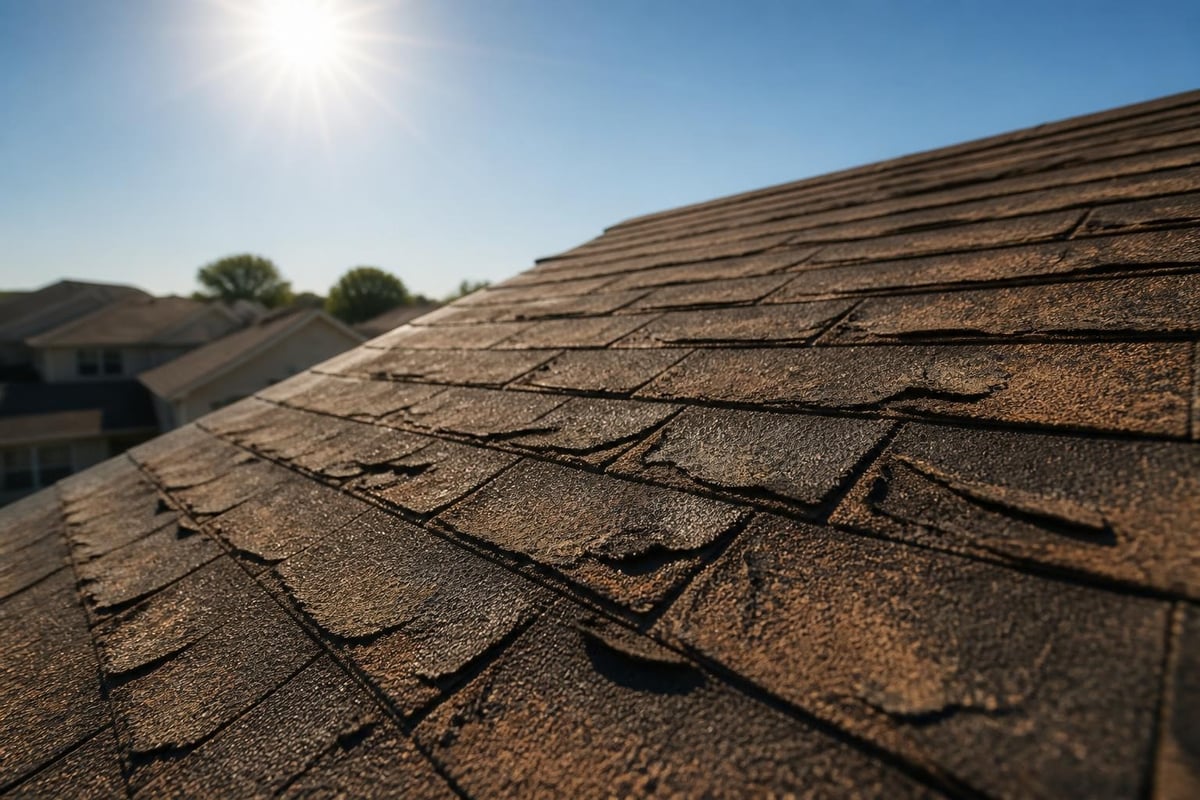
The Texas climate creates unique stresses that accelerate roof deterioration compared to more moderate regions. Thermal cycling, the repeated expansion and contraction of roofing materials due to dramatic temperature swings, breaks down sealants and fasteners over time. Asphalt shingles can reach surface temperatures of 160 degrees or higher during summer months, causing granule loss and premature aging.
Heat-Related Roof Damage Patterns
Prolonged exposure to intense heat causes several distinct failure modes:
- Thermal splitting in asphalt shingles, particularly on south and west-facing slopes
- Membrane shrinkage in flat commercial roofing systems
- Fastener backing out as decking expands and contracts
- Sealant degradation around penetrations and flashing details
These heat-related issues often develop gradually, making regular inspection essential for early detection. When addressing roof repair in Texas, contractors must account for thermal movement in their repair specifications, selecting materials and installation methods that accommodate expansion and contraction without failure.
Storm and Hail Damage Considerations
Texas ranks among the top states for hail frequency and severity. The "Hail Alley" corridor from north Texas through the Panhandle experiences dozens of significant hail events annually. Impact damage from hail compromises shingle integrity even when visible damage appears minimal. Bruising on the underside of shingles reduces their lifespan and creates future leak points.
Wind events, including tornadic activity and severe thunderstorm downbursts, cause uplift damage particularly at roof edges, ridges, and corners. Property managers dealing with storm damage should document conditions immediately, as damage progression accelerates once the protective envelope is breached.
Texas Roofing Regulations and Compliance Requirements
Unlike many states, Texas does not require state-level licensing for roofing contractors. This regulatory approach places additional responsibility on property owners to verify contractor qualifications through manufacturer certifications, insurance documentation, and work history. The Texas Department of Insurance provides guidance on insurance considerations when planning roof work.
The Texas 25 Percent Rule
One of the most significant regulations affecting roof repair in Texas is the 25 percent rule. When repairs, alterations, or reconstruction affect more than 25 percent of roof area within a 12-month period, the entire roof must be brought into compliance with current building codes. This regulation impacts insurance claims and project planning, often converting what initially appears to be a repair project into a full replacement.
The rule applies differently across jurisdictions:
| Jurisdiction Type | Application | Inspection Requirement |
|---|---|---|
| Incorporated cities | Local building code enforcement | Required permit and inspection |
| Unincorporated areas | Varies by county | May not require inspection |
| Windstorm-designated zones | Additional TWIA requirements | Windstorm inspection may apply |
Property owners should verify local requirements before proceeding with repairs. Some areas require permits even for minor repairs, while others have minimal oversight outside the 25 percent threshold.
Windstorm Inspection Requirements
Coastal and designated windstorm areas have additional compliance layers. The Texas windstorm inspection process requires certified inspectors to verify that new or substantially repaired roofs meet wind resistance standards. However, many routine repairs do not trigger windstorm inspection requirements, making it essential to understand which scope changes cross regulatory thresholds.
Common Roof Repair Scenarios in Texas
Leak Detection and Emergency Response
Active leaks demand immediate attention to prevent secondary damage to building interiors, electrical systems, and stored inventory. Water intrusion through compromised roofing creates mold growth, insulation saturation, and structural wood decay within days. For businesses facing operational disruption, emergency roof repair capabilities become critical.
Common leak sources include:
- Failed or deteriorated flashing at walls, chimneys, and penetrations
- Storm-damaged or missing shingles creating direct exposure points
- Membrane seam failures in flat commercial roofing
- Clogged or damaged drainage systems causing ponding water
- Fastener pullout allowing water infiltration at attachment points
Professional leak detection often requires moisture mapping equipment and infrared scanning to identify the actual entry point, which frequently differs from visible interior damage locations.
Hail Damage Assessment and Documentation
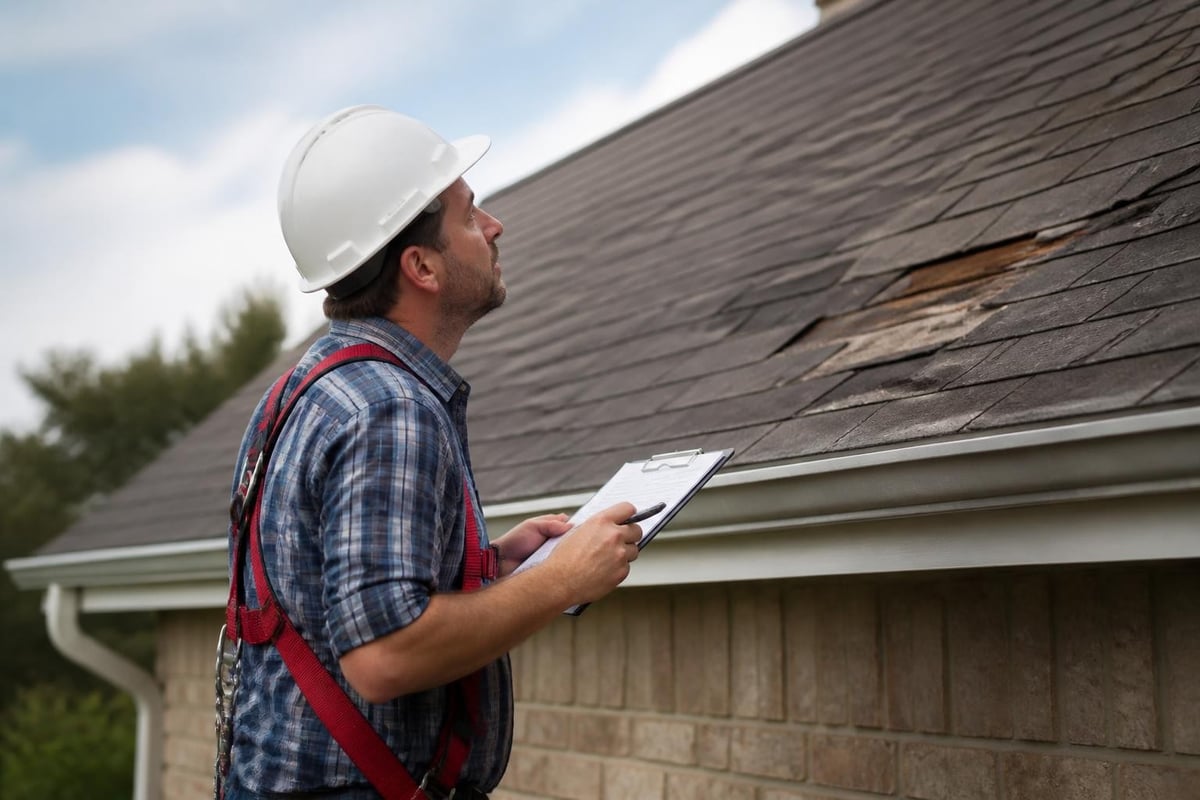
Hail damage evaluation requires trained inspection to identify impacts that compromise long-term performance without causing immediate leaks. Functional damage occurs when impacts fracture the shingle mat or dislodge protective granules, accelerating weathering even when the roof remains watertight initially.
A systematic hail inspection documents:
- Impact density across different roof sections and orientations
- Damage severity including bruising depth and granule displacement
- Affected area calculation to determine whether damage exceeds the 25 percent threshold
- Collateral damage to gutters, vents, flashing, and other components
- Photographic evidence with measurement references for documentation
Property owners managing insurance claims for roof damage benefit from detailed professional documentation that provides clear evidence for their insurance adjuster's review.
Flashing Repair and Replacement
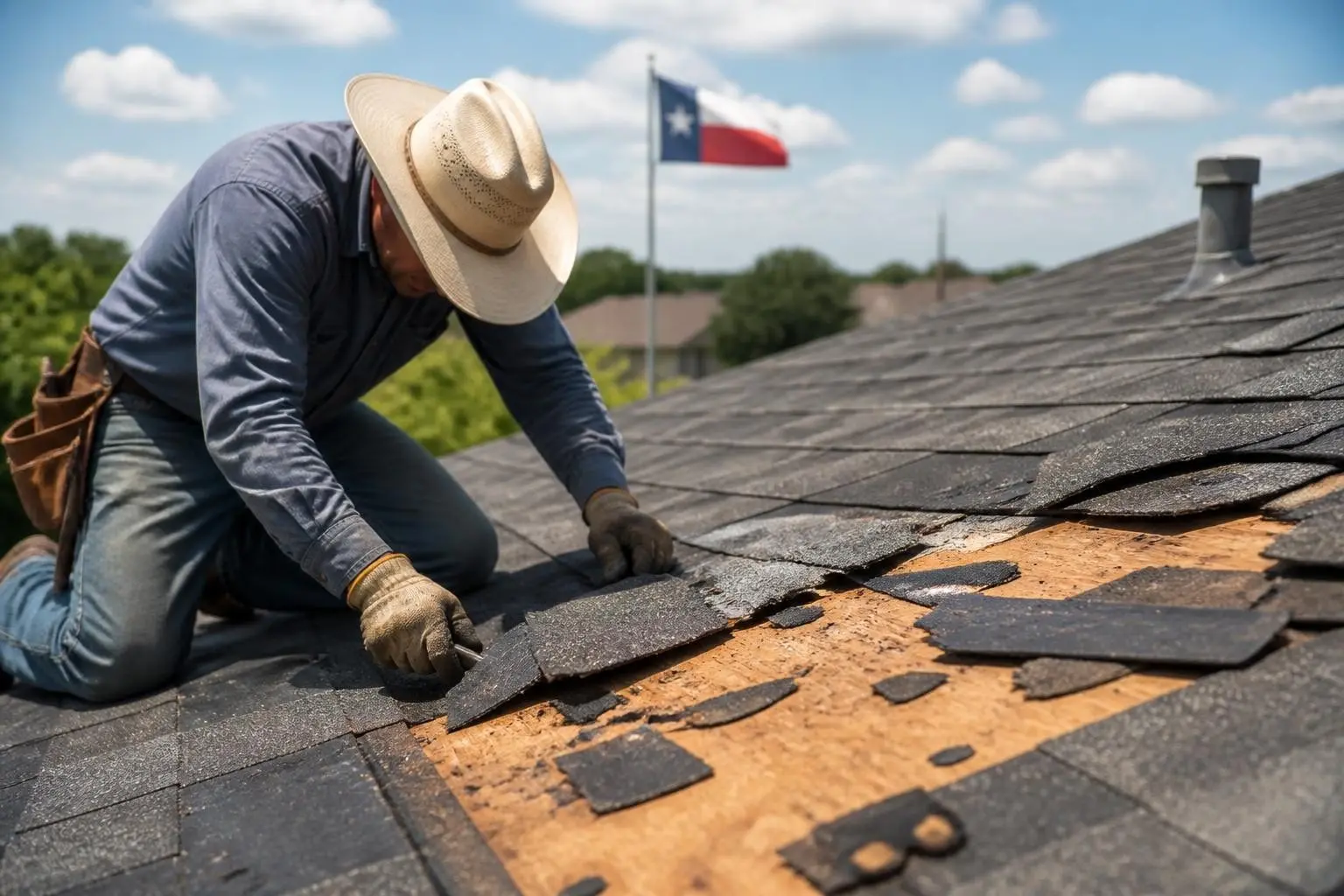
Flashing failures account for a disproportionate percentage of roof leaks despite representing a small fraction of total roof area. Texas heat accelerates sealant breakdown, while thermal movement stresses metal flashing connections. Critical flashing locations include:
- Chimney surrounds and cricket assemblies
- Sidewall and headwall transitions
- Plumbing vent penetrations
- HVAC curb and equipment supports
- Valley installations on complex roof geometries
Quality flashing repair requires proper material selection matched to the base roofing system, correct installation sequencing to ensure water-shedding overlap, and compatible sealants rated for Texas temperature extremes.
Material Selection for Texas Roof Repairs
Asphalt Shingle Considerations
Residential roof repair in Texas most commonly involves asphalt shingles, but not all shingles perform equally in this climate. Class 4 impact-resistant shingles with modified asphalt formulations provide superior hail resistance and often qualify for insurance discounts. These products incorporate rubber-like polymers that absorb impact energy rather than cracking.
When matching existing shingles for partial repairs, weathering differences create aesthetic challenges. New shingles alongside aged materials show distinct color variation, particularly with organic-based products that fade significantly. Dimensional or architectural shingles generally weather more uniformly than three-tab products.
Temperature rating matters significantly for Texas installations. Shingles rated for high-temperature climates include heat-resistant adhesives that maintain seal integrity above 150 degrees, preventing blow-off during summer months when standard adhesives may soften.
Commercial Flat Roofing Systems
Commercial properties typically utilize membrane systems requiring different repair approaches:
| Membrane Type | Repair Method | Texas Performance Notes |
|---|---|---|
| TPO (Thermoplastic Polyolefin) | Heat-welded patches | Excellent heat reflection, good hail resistance |
| EPDM (Rubber) | Adhesive or tape patches | Requires UV-resistant formulations for Texas sun |
| Modified Bitumen | Torch-applied or cold-adhesive | Self-healing properties benefit thermal cycling |
| Built-up Roofing (BUR) | Hot-mopped layers | Traditional durability but heat-absorbing surface |
| PVC | Heat-welded seams | Superior chemical resistance and longevity |
Commercial roof repair in Texas often involves selective membrane replacement over deteriorated insulation, creating hybrid systems that extend service life without complete tear-off. This approach manages costs while addressing localized failure zones.
Metal Roofing Repair Techniques
Metal roofing systems, increasingly popular for both commercial and residential applications, present unique repair challenges. Fastener corrosion in coastal and high-humidity areas creates leak points, while thermal expansion can cause oil-canning (panel distortion) if clips and fasteners restrict movement.
Panel repairs range from sealant application for minor penetrations to complete panel replacement for impact damage. Color-matching becomes difficult as factory finishes fade differently than field-applied paints, making preventive maintenance valuable for preserving appearance.
Repair Versus Replacement Decision Framework
The most challenging aspect of roof repair in Texas often involves determining when repairs no longer make economic or practical sense. Several factors drive this analysis:
Remaining Service Life Calculation
A roof approaching the end of its design life receives limited benefit from repairs. If the existing system has 70 percent of its expected lifespan already elapsed, investing in repairs that provide only two to three additional years of service rarely delivers adequate return.
Age-based decision points:
- 0-7 years: Repairs almost always cost-effective unless damage exceeds 40 percent
- 8-15 years: Evaluate repair cost versus remaining life and warranty coverage
- 16+ years: Replacement typically provides better long-term value
Storm damage on aged roofing systems frequently triggers the 25 percent rule, converting repair projects to mandated replacements that must meet current code requirements.
Cost-Benefit Analysis
Compare total repair costs, including permits, engineering (if required), and disruption costs, against replacement pricing. Factor warranty considerations, as repairs to existing systems rarely include comprehensive coverage compared to new installation warranties.
When repair costs exceed 40 percent of replacement cost, replacement generally delivers superior value through extended service life, improved energy efficiency, and transferable warranties that enhance property value.
Building Sale or Refinance Timing
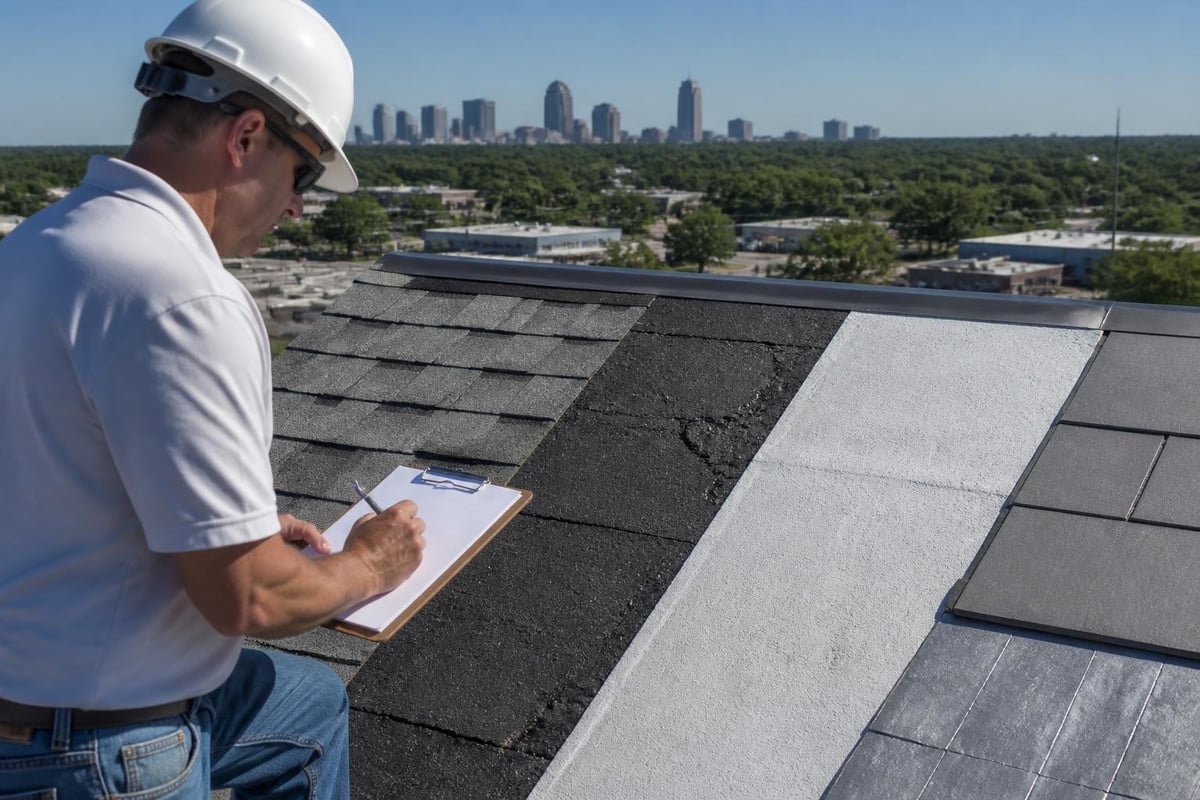
Properties entering sale or refinance cycles require particular attention to roof condition. Lenders and buyers increasingly demand professional roof inspections with clear remaining-life assessments. Strategic repairs that address documented deficiencies provide better transaction outcomes than deferred maintenance.
Commercial properties especially benefit from documented repair history showing systematic maintenance programs rather than reactive emergency responses. This documentation demonstrates asset management competence and supports valuation arguments.
Documentation and Insurance Considerations
Texas property insurance has undergone significant changes affecting roof repair coverage. Many policies now include separate windstorm and hail deductibles, percentage-based deductibles calculated on property value, and depreciation schedules that reduce coverage as roofs age.
Professional Damage Documentation
When storm events cause damage, thorough documentation becomes essential for supporting insurance claims. Professional documentation includes measured damage density, photographic evidence with scale references, and detailed written reports describing damage mechanisms and required repairs. Property owners receive this documentation to submit to their own insurance adjuster for evaluation.
Quality documentation differentiates cosmetic damage from functional impairment. Insurance adjusters focus on functional damage, material compromise that affects weather protection and lifespan, while often excluding purely aesthetic concerns from coverage determinations.
Understanding Coverage Limitations
Texas insurance policies typically specify:
- Replacement cost versus actual cash value coverage affecting claim settlements
- Matching provisions for partial damage repair on visible roof slopes
- Code upgrade coverage for bringing older systems into current code compliance
- Deductible structures including separate wind/hail amounts
Landlord responsibilities for roof repairs in Texas rental properties follow specific legal requirements, with habitability standards requiring weather-tight roofing regardless of insurance coverage or deductible amounts.
Preventive Maintenance Strategies
Proactive maintenance programs reduce emergency repair frequency and extend roof system lifespan significantly. Regular inspection cycles identify developing problems before they cause interior damage or require emergency response.
Recommended Inspection Frequency
Commercial properties: Semi-annual inspections in spring and fall, plus post-storm evaluations after significant weather events
Residential properties: Annual inspections, with additional checks after known hail or wind events
Inspection protocols should document:
- Flashing condition and sealant integrity
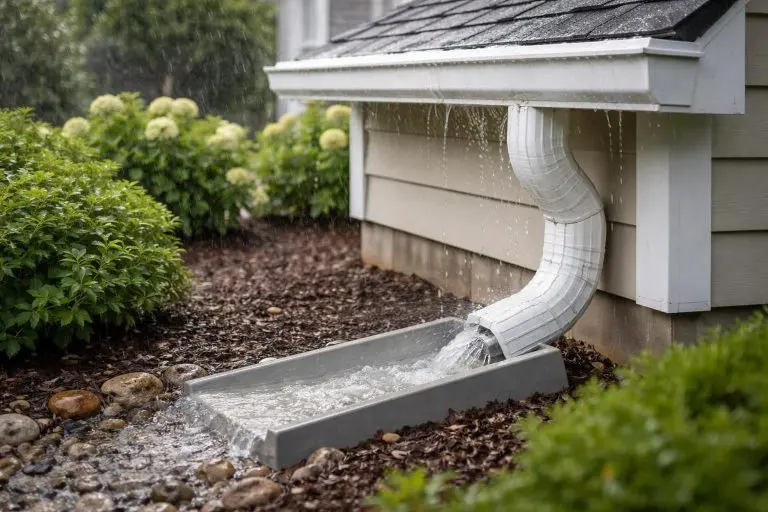
- Drainage system functionality and debris accumulation
- Membrane or shingle condition including granule loss
- Fastener security and penetration seals
- Structural issues including sagging or deflection
Minor Repair Integration
Addressing minor deficiencies during routine maintenance prevents escalation to major repairs. Sealant replacement, fastener tightening, and debris removal cost minimal amounts during scheduled service but prevent water intrusion that causes expensive secondary damage.
Maintenance documentation creates valuable records showing systematic care, supporting warranty claims and insurance coverage when major events occur. Properties with documented maintenance programs often receive favorable consideration during claim evaluation compared to those with no maintenance history.
Working with Qualified Roofing Contractors
Selecting qualified contractors for roof repair in Texas requires verification beyond basic licensing, since the state does not mandate roofing licenses. Property owners should evaluate:
Contractor Qualification Criteria
- Manufacturer certifications from major roofing product suppliers
- Insurance documentation including general liability and workers' compensation coverage
- Direct employee crews rather than subcontracted labor for quality consistency
- Project portfolio demonstrating similar scope and building type experience
- Written warranties covering both materials and labor for specified periods
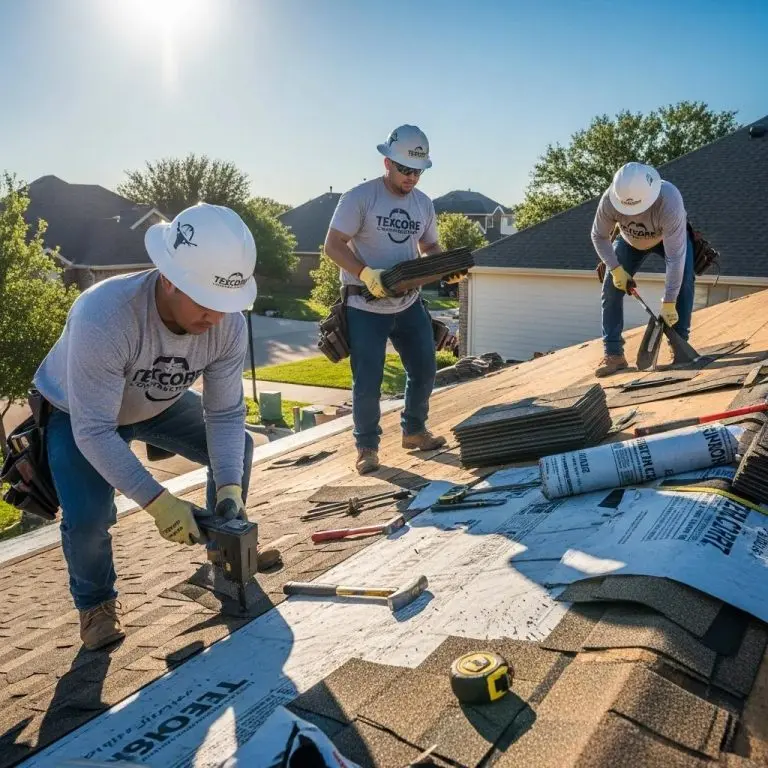
Contractors who maintain in-house crews provide better quality control, project scheduling reliability, and accountability compared to those relying on subcontractors. This operational approach ensures consistent installation standards and enables rapid response for emergency situations.
Scope Documentation and Pricing Transparency
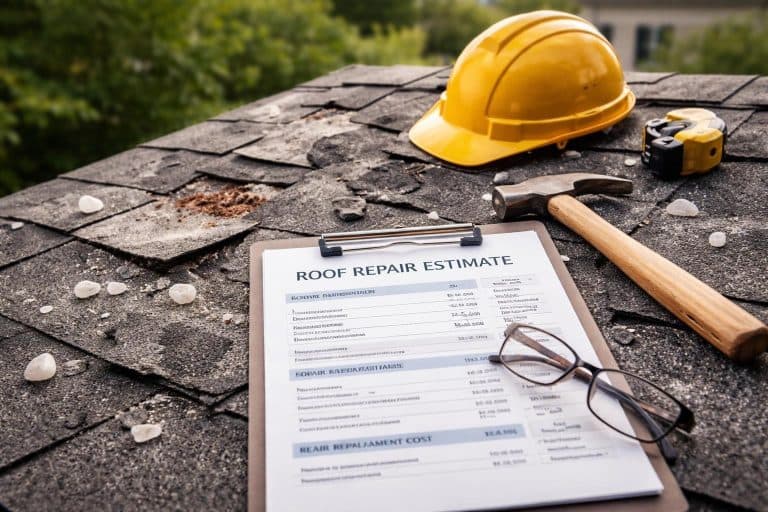
Quality contractors provide detailed scope documents specifying materials, installation methods, project timeline, and pricing breakdowns. Vague estimates lacking material specifications or installation detail create opportunities for quality reduction and change order disputes.
Transparent pricing separates material costs, labor, permits, disposal, and contingencies, allowing informed decision-making. Bundled pricing without itemization makes cost comparison difficult and obscures value differences between competing proposals.
For commercial properties requiring roofing contractors in Fort Worth, verifying contractor capability for coordinating with property operations, minimizing business disruption, and managing multi-phase projects becomes essential beyond basic repair competency.
Regional Considerations Across Texas
Texas spans multiple climate zones creating regional variation in roof repair priorities and material performance. Coastal regions face salt exposure and hurricane wind loads requiring different solutions than north Texas hail zones or west Texas heat and drought.
North Texas and Dallas-Fort Worth Metroplex
This region experiences the state's most frequent hail activity combined with significant tornado risk. Impact resistance and proper fastening for wind uplift dominate material selection. The combination of hail, heat, and periodic ice events creates demanding performance requirements.
Urban heat island effects in metropolitan areas increase surface temperatures beyond rural locations, accelerating thermal degradation. Commercial properties with large roof expanses face particularly severe heat exposure requiring reflective coatings or light-colored membranes.
Gulf Coast and Houston Area
High humidity, salt air, and hurricane exposure define coastal roofing requirements. Metal component corrosion occurs rapidly without proper coatings and material selection. Flat commercial roofs require robust drainage design to handle intense rainfall rates exceeding eight inches per hour during tropical systems.
Windstorm inspection requirements apply throughout designated coastal zones, adding compliance steps to repair projects. Properties within the Texas Windstorm Insurance Association (TWIA) service area face additional documentation and inspection requirements.
Central and West Texas
Extreme heat with minimal humidity creates intense UV exposure and thermal stress. Dust and wind-blown debris accumulation in roof drainage systems requires frequent maintenance. Scattered severe thunderstorms produce localized hail without the frequency patterns seen in north Texas.
Lower humidity reduces some deterioration mechanisms but intensifies others, particularly UV degradation of exposed membrane surfaces and sealants. Material selection emphasizes UV resistance and thermal stability over moisture management priorities.
Emerging Technologies and Methods
Roof repair in Texas increasingly incorporates advanced diagnostic tools and installation methods that improve accuracy and durability.
Infrared and Moisture Detection
Thermal imaging identifies wet insulation and moisture intrusion invisible to visual inspection. This technology maps damage extent on flat commercial roofs, preventing unnecessary tear-off by precisely defining deteriorated areas requiring replacement.
Moisture meters and impedance scanning provide quantitative data supporting repair versus replacement decisions. Documentation of moisture content creates objective evidence for insurance claims and validates contractor scope recommendations.
Drone Inspection Capabilities
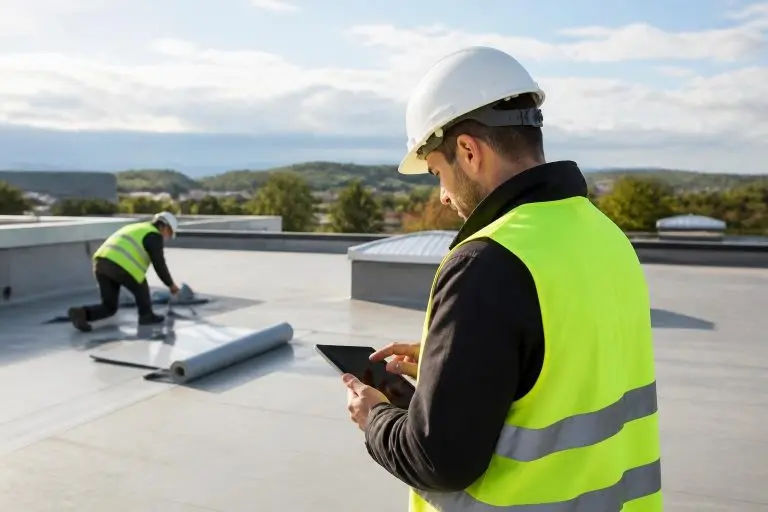
Unmanned aerial systems enable safe inspection of steep or high roofs without scaffolding or specialized access equipment. High-resolution imagery identifies damage patterns and documents conditions for property records and insurance purposes.
Drone technology particularly benefits large commercial properties where manual inspection of entire roof areas proves time-consuming and expensive. Periodic drone surveys create baseline documentation showing roof evolution and maintenance effectiveness over time.
Coating and Restoration Systems
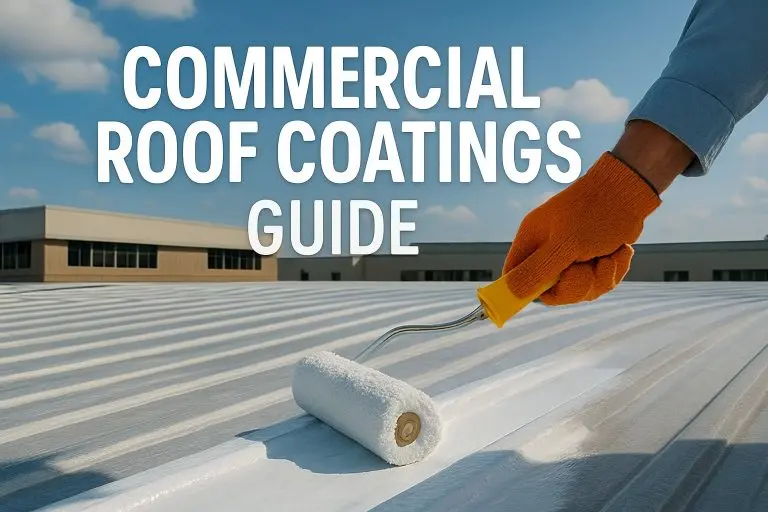
Reflective roof coatings applied over aged but structurally sound membranes extend service life while improving energy performance. Acrylic, silicone, and polyurethane coating systems provide different performance characteristics suited to specific base materials and exposure conditions.
Restoration versus replacement calculations must account for substrate condition, existing insulation value, and energy code compliance. Coatings work effectively when applied to fundamentally sound roofing with localized deterioration, but fail when underlying materials have reached end of life.
Quality Assurance and Project Completion
Professional roof repair in Texas includes verification steps ensuring work meets specifications and performance standards. Quality control processes separate competent contractors from those cutting corners to reduce costs.
Installation Verification Methods
- Progressive inspection at key installation milestones rather than only final review
- Fastener pattern verification using pull tests and density counts
- Seam integrity testing for membrane systems using electronic detection
- Water testing of repaired areas before closing inspection
Contractors should document installation steps with photographs showing substrate preparation, flashing details, and material application. This documentation supports warranty claims if future issues arise and demonstrates installation compliance with manufacturer specifications.
Performance Testing and Warranties
Completed repairs should include defined warranty coverage specifying labor and material responsibilities, coverage duration, and exclusions. Five-year labor warranties represent industry standard minimums for quality work, with material warranties following manufacturer terms.
Warranty documents must specify maintenance requirements preserving coverage, notification procedures for warranty claims, and dispute resolution processes. Property owners should verify warranty transferability if building sale occurs during coverage periods, as transferable warranties enhance property value.
Understanding the unique demands that Texas weather places on roofing systems helps property owners make informed decisions about repair timing, material selection, and contractor qualification. Whether addressing storm damage, managing aging system deterioration, or implementing preventive maintenance programs, roof repair in Texas requires specialized knowledge and quality execution. Texcore Construction delivers that expertise with in-house crews, detailed damage documentation, transparent recommendations, and five-year labor warranties on every project throughout the Fort Worth area.