
Commercial Roof Repair Contractors: Selection Guide
Selecting the right commercial roof repair contractors determines whether your facility experiences minimal disruption or costly prolonged damage. Commercial roofing demands specialized expertise beyond residential work, from understanding complex drainage systems to navigating regulatory requirements specific to commercial properties. The difference between qualified contractors and substandard operators becomes evident in their approach to diagnostics, repair methodology, and long-term accountability. Property managers and building owners must evaluate contractors based on verifiable credentials, proven repair techniques, and transparent communication rather than solely on price quotes.
Understanding Commercial Roofing System Complexity
Commercial roofing systems differ fundamentally from residential applications in material composition, structural load requirements, and maintenance protocols. Most commercial buildings feature flat or low-slope roofing systems constructed with TPO, EPDM, modified bitumen, or built-up roofing materials that require specialized installation and repair knowledge.
Material-Specific Repair Requirements
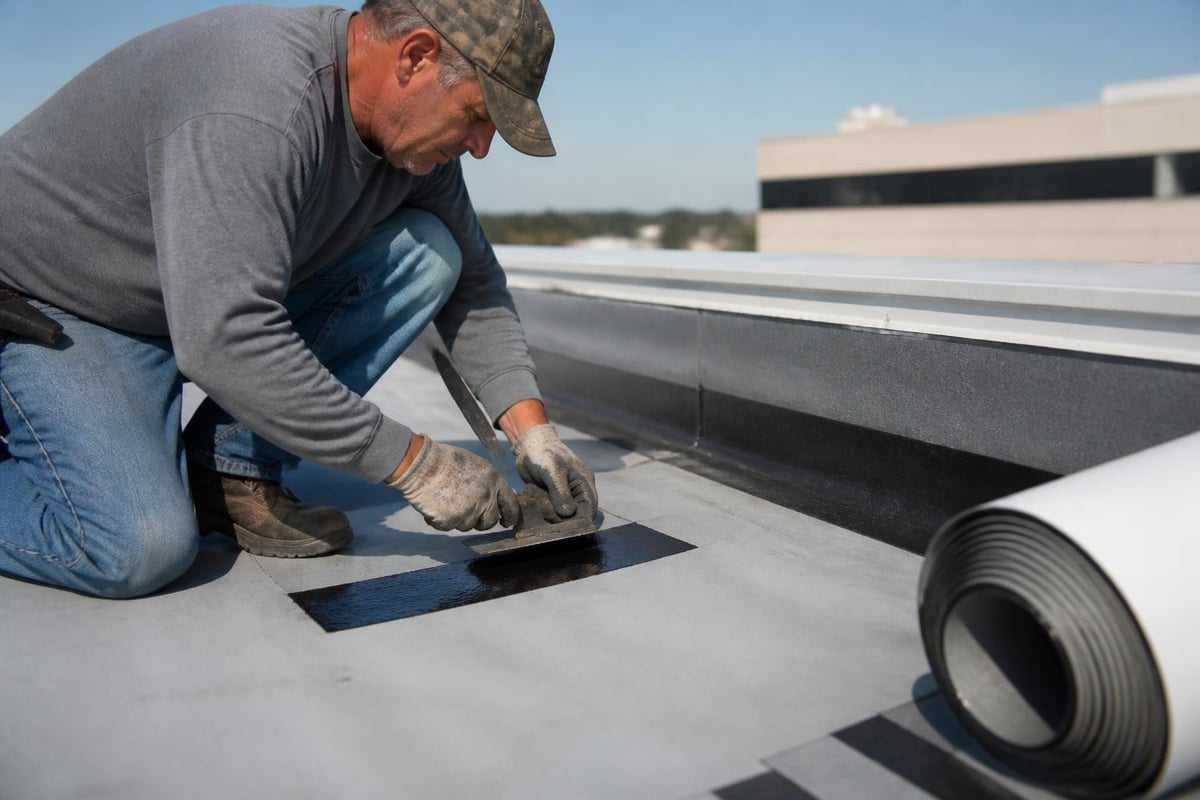
Each commercial roofing material demands distinct repair approaches and compatible products. TPO systems require heat-welded seams and manufacturer-approved patches, while EPDM repairs use adhesive-based applications. Modified bitumen systems need torch-applied or cold-process materials depending on the original installation method.
Material compatibility creates significant repair challenges:
- Mixing incompatible products voids warranties and accelerates deterioration
- Age-related product formulation changes require precise material matching
- Coating systems must chemically bond with substrate materials
- Flashing repairs demand compatible metal types to prevent galvanic corrosion
Property owners should verify that commercial roof repair contractors maintain relationships with major manufacturers and stock appropriate repair materials for diverse roofing systems. Contractors who attempt universal repair approaches across all material types lack the specialization commercial properties require.
Evaluating Contractor Credentials and Qualifications
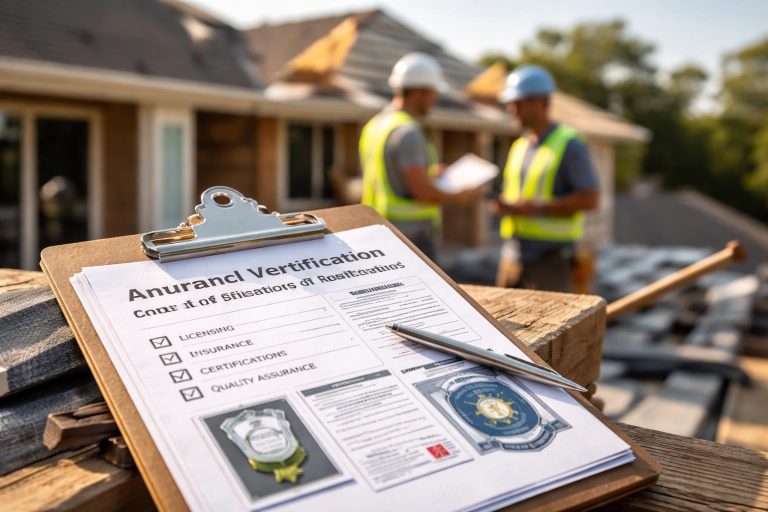
Credentials separate qualified commercial roof repair contractors from general contractors attempting commercial work without appropriate expertise. Manufacturer certifications demonstrate training in specific roofing systems and authorize contractors to perform warranty-compliant repairs.
| Credential Type | Verification Method | Significance |
|---|---|---|
| Manufacturer Certifications | Contact manufacturer directly | Authorizes warranty work and system-specific repairs |
| Insurance Coverage | Request current certificates | Protects property owner from liability claims |
| Safety Training Documentation | Review OSHA compliance records | Indicates professional operation standards |
| Business Licensing | Verify with local authorities | Confirms legitimate business operation |
Insurance and Liability Protection
Commercial properties face substantial liability exposure during roof repairs. Qualified contractors carry comprehensive general liability insurance, workers compensation coverage, and commercial auto insurance for equipment transport. Property owners should request current certificates of insurance listing coverage limits and policy expiration dates.
Minimum insurance requirements for commercial work include:
- General liability coverage of $2 million aggregate
- Workers compensation meeting state requirements
- Commercial auto coverage for company vehicles
- Completed operations coverage extending beyond project completion
The absence of proper insurance transfers risk directly to the property owner. Understanding insurance documentation procedures helps property managers evaluate contractor qualifications before authorizing work.
Diagnostic Capabilities and Inspection Protocols
Accurate damage assessment separates professional commercial roof repair contractors from those who provide superficial evaluations. Comprehensive diagnostics identify underlying causes rather than merely addressing visible symptoms, preventing recurring failures and unnecessary repairs.
Comprehensive Inspection Components
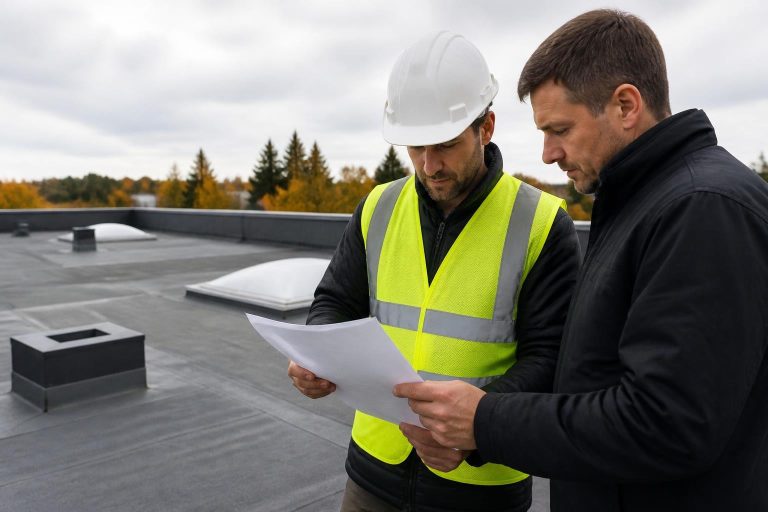
Professional contractors conduct systematic inspections examining drainage systems, flashing details, penetration seals, membrane conditions, and structural components. Thermal imaging identifies moisture intrusion invisible to visual inspection, while core samples reveal substrate conditions beneath surface materials.
Contractors should provide detailed documentation including:
- Photographic evidence showing damage locations and severity
- Drainage evaluation assessing ponding areas and scupper function
- Membrane condition reports documenting deterioration patterns
- Structural assessment identifying load-bearing concerns
- Code compliance review noting regulatory requirement changes
Many property owners find that storm damage documentation by experienced contractors provides essential evidence for their insurance adjusters, particularly following hail or wind events common in Texas.
Repair Methodology and Installation Standards
Commercial roof repair contractors employ various repair methodologies ranging from targeted patches to comprehensive restoration systems. The appropriate method depends on damage extent, roof age, and expected service life requirements. Effective repair strategies balance immediate cost against long-term performance.
Targeted Repair Applications
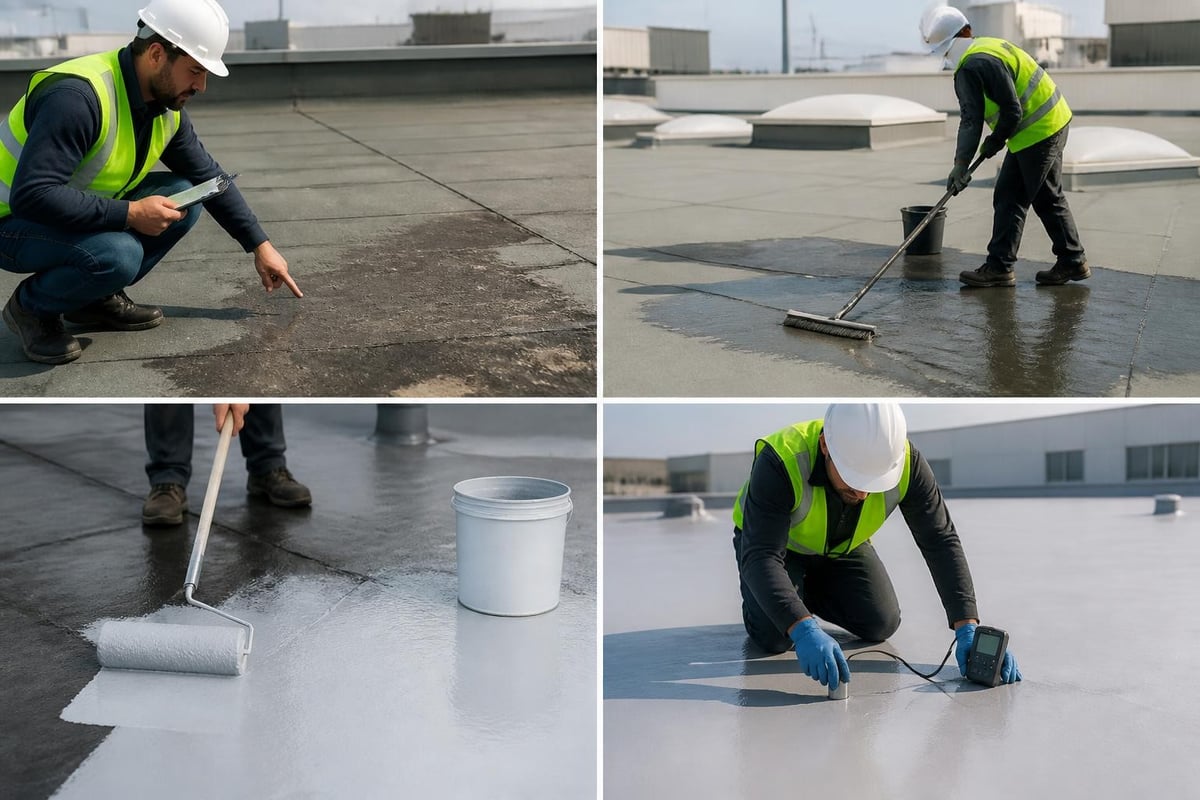
Localized damage from punctures, tears, or flashing failures typically responds to targeted repairs when the surrounding membrane remains serviceable. Professional contractors clean and prepare repair areas, apply compatible materials following manufacturer specifications, and verify water-tight seals through flood testing.
Critical factors in successful targeted repairs:
- Surface preparation removing all contaminants and loose materials
- Primer application ensuring adhesion to existing substrates
- Material overlap extending beyond damaged areas per specifications
- Seam reinforcement providing mechanical strength
- Quality verification through visual inspection and water testing
Coating and Restoration Systems
Aging roofs with widespread minor deterioration benefit from coating systems that restore waterproofing without full replacement. Roof restoration practices extend service life by 10-15 years when applied to structurally sound substrates. Contractors should specify coating type, application thickness, and expected performance duration in written proposals.
Emergency Response Capabilities
Commercial facilities cannot afford extended downtime from active roof leaks threatening inventory, equipment, or operations. Commercial roof repair contractors with genuine emergency capabilities maintain material inventories, staff availability, and equipment resources for rapid response.
Same-Day Service Requirements
True emergency service requires in-house crews rather than subcontractor networks that introduce scheduling delays. Contractors should specify response timeframes in service agreements and demonstrate capacity to mobilize within hours of contact. For Fort Worth properties experiencing urgent leaks, emergency roof repair services with same-day response prevent extensive secondary damage.
Emergency response protocols include:
- 24/7 contact availability through dedicated emergency lines
- Immediate temporary measures including tarping and leak containment
- Permanent repair scheduling coordinated with business operations
- Documentation protocols capturing damage conditions and repair actions
- Clear communication updating stakeholders throughout the process
Property managers should establish relationships with qualified contractors before emergencies occur, ensuring rapid response when needed.
In-House Crews Versus Subcontractor Networks
The crew composition directly affects project quality, communication clarity, and accountability. Commercial roof repair contractors using in-house crews maintain consistent quality standards, whereas those relying on subcontractor networks introduce variability and coordination challenges.
| Aspect | In-House Crews | Subcontractor Networks |
|---|---|---|
| Quality Control | Direct supervision and consistent standards | Variable quality across different subcontractors |
| Communication | Single point of contact throughout project | Multiple contacts creating confusion |
| Scheduling | Flexible coordination with property operations | Dependent on subcontractor availability |
| Accountability | Clear responsibility for all work performed | Diffused responsibility across multiple parties |
| Insurance Coverage | Unified coverage protecting property owner | Potential gaps between contractor and subcontractor policies |
Quality Consistency and Supervision
In-house crews work under direct contractor supervision following established procedures and quality standards. Foremen can immediately address concerns and adjust approaches without coordination delays inherent in subcontractor arrangements. This structure proves particularly valuable for commercial properties where repairs must meet specific operational requirements.
Warranty Coverage and Long-Term Accountability
Comprehensive warranty protection extends beyond material manufacturer warranties to include labor coverage for installation quality. Commercial roof repair contractors should provide written warranties specifying coverage duration, included components, and exclusions that might void protection.
Labor Warranty Components
Professional contractors stand behind their workmanship with multi-year labor warranties covering installation defects and failures resulting from improper repair techniques. Standard labor warranties range from one to five years, with longer durations indicating contractor confidence in work quality.
Essential warranty provisions include:
- Specific coverage duration stated in years from completion
- Clear definition of covered repairs versus excluded maintenance
- Transfer provisions if property ownership changes
- Inspection requirements for warranty validation
- Response timeframes for warranty claim processing
Material warranties from manufacturers complement labor coverage but typically require authorized contractor installation to remain valid. Property owners should verify that selected contractors hold manufacturer certifications authorizing warranty-compliant work.
Documentation Standards and Reporting
Professional commercial roof repair contractors provide comprehensive documentation supporting informed decision-making and future maintenance planning. Detailed reports establish baseline conditions, justify repair recommendations, and create maintenance records valuable for property management.
Inspection Report Requirements
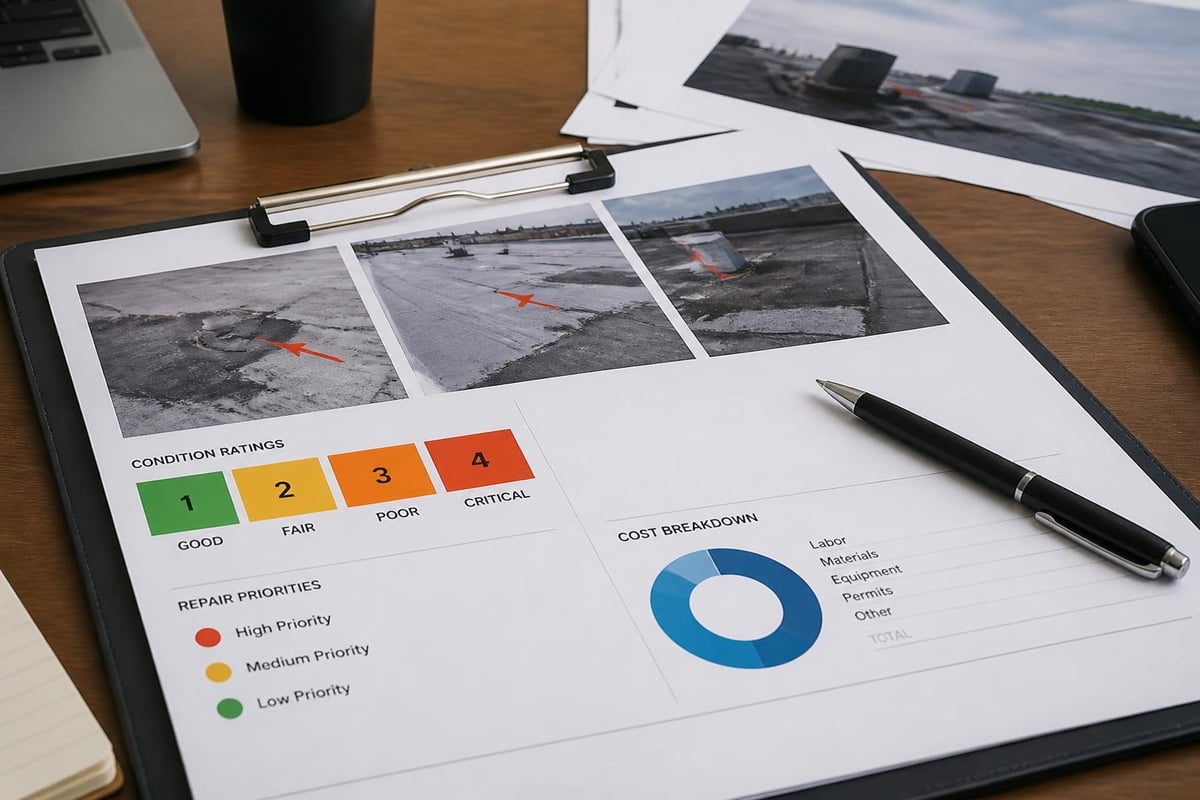
Thorough inspection reports include annotated photographs showing damage locations, written descriptions of observed conditions, recommended repair approaches, and cost estimates for each repair category. Proper documentation practices enable property owners to prioritize repairs based on urgency and budget constraints.
- Executive summary highlighting critical findings requiring immediate attention
- Detailed condition assessment describing each roof section systematically
- Photographic documentation with annotations identifying specific issues
- Repair recommendations prioritized by urgency and performance impact
- Cost estimates itemizing labor, materials, and project timelines
This documentation proves particularly valuable when property owners must provide evidence to their insurance adjusters following storm damage events.
Maintenance Program Development
Forward-thinking commercial roof repair contractors help property owners establish preventive maintenance programs that extend roof service life and reduce emergency repair frequency. Regular maintenance protocols identify minor issues before they escalate into costly failures.
Preventive Maintenance Components
Scheduled inspections twice annually and following severe weather events form the foundation of effective maintenance programs. Contractors should provide maintenance checklists, track historical conditions, and recommend proactive repairs addressing deterioration before leaks develop.
Routine maintenance tasks include:
- Debris removal from drains, scuppers, and roof surfaces
- Flashing inspection and sealant renewal
- Membrane condition assessment documenting wear patterns
- Penetration seal verification around HVAC and plumbing equipment
- Drainage function testing identifying ponding areas
Property managers benefit from contractors who offer maintenance agreements ensuring consistent service delivery and priority scheduling during peak demand periods.
Project Communication and Coordination
Commercial properties operate on schedules that cannot accommodate unannounced disruptions or unclear project timelines. Commercial roof repair contractors must coordinate work around business operations, communicate progress regularly, and minimize tenant or operational impacts.
Operational Coordination Requirements
Professional contractors develop project schedules considering facility operations, coordinate equipment placement avoiding restricted areas, and maintain clean job sites preventing debris migration into occupied spaces. Clear communication protocols keep property managers informed of progress, schedule changes, and completion timelines.
Contractors should establish:
- Pre-project meetings reviewing access requirements and operational constraints
- Daily progress updates confirming completed work and next-day activities
- Schedule change notifications providing advance notice of timing adjustments
- Completion walkthroughs verifying work quality and site cleanliness
- Documentation delivery providing as-built records and warranty information
This coordination level distinguishes contractors experienced in commercial work from those primarily serving residential markets where operational disruption carries less consequence. The unique considerations in commercial versus residential repairs demand contractors who understand business continuity priorities.
Safety Protocols and Compliance
Commercial roof work involves substantial fall hazards, equipment risks, and regulatory compliance requirements that qualified contractors address through comprehensive safety programs. OSHA regulations mandate specific fall protection measures, and contractors must demonstrate compliance through documented safety training and equipment inspection records.
Fall Protection Requirements
Commercial roofing work requires personal fall arrest systems, guardrail installations, or safety net systems depending on roof configuration and work scope. Contractors should maintain current safety training certifications for all crew members and document compliance with federal and state safety regulations.
| Safety Component | Requirement | Verification Method |
|---|---|---|
| Fall Protection Systems | Personal arrest systems or guardrails | Equipment inspection logs and training records |
| Ladder Safety | Proper securing and three-point contact | Site observation and safety checklist completion |
| Hot Work Permits | Required for torch applications | Permit documentation and fire watch protocols |
| Equipment Operation | Certified operators for aerial lifts | Operator certification verification |
Property owners share liability for contractor safety violations occurring on their premises. Verifying contractor safety protocols before work authorization protects against regulatory exposure and potential citation consequences.
Cost Structures and Pricing Models
Commercial roof repair contractors employ various pricing structures including time-and-materials, fixed-price contracts, and maintenance agreement models. Understanding cost components and pricing methodologies helps property owners evaluate proposals beyond bottom-line figures.
Transparent Pricing Components
Professional contractors itemize proposals separating material costs, labor rates, equipment charges, and project management fees. This transparency allows property owners to compare proposals accurately and understand cost drivers affecting total investment.
Typical cost components include:
- Labor rates reflecting crew skill levels and supervision requirements
- Material costs based on specified products and quantities
- Equipment rental for lifts, safety systems, and specialized tools
- Waste disposal addressing removal and recycling of damaged materials
- Project management covering coordination, permitting, and documentation
Unusually low bids often indicate inadequate scope understanding, inferior materials, or insufficient insurance coverage that transfers risk to property owners. Best practices for commercial installations emphasize value over lowest price to ensure long-term performance.
Regional Expertise and Local Knowledge
Commercial roof repair contractors with established regional presence understand local weather patterns, common failure modes, and building code requirements specific to their service areas. This knowledge informs repair recommendations and material selections appropriate for regional conditions.
Climate-Specific Considerations
Fort Worth's climate presents unique challenges including severe hail potential, intense UV exposure, and temperature extremes that accelerate roofing material deterioration. Contractors familiar with these conditions specify appropriate materials and design details addressing regional performance requirements.
Local expertise provides advantages in:
- Material selection based on proven regional performance
- Weather timing scheduling work during optimal conditions
- Code compliance understanding local regulatory requirements
- Supplier relationships ensuring material availability and support
- Storm response mobilizing quickly during peak demand periods
Property owners benefit from contractors maintaining local offices, material inventories, and crew bases enabling rapid response rather than distant contractors traveling to service areas.
Reference Verification and Past Performance
Evaluating commercial roof repair contractors requires examining their track record through reference checks, project portfolios, and verifiable performance history. Professional contractors provide references from similar property types and project scopes demonstrating relevant experience.
Reference Check Protocols
Property owners should contact multiple references asking specific questions about project execution, problem resolution, schedule adherence, and post-completion support. References from projects completed several years prior reveal long-term performance and warranty responsiveness.
Key reference questions include:
- How did the contractor handle unexpected conditions or complications?
- Was the project completed within quoted budget and timeline?
- How responsive was the contractor to questions and concerns?
- Have you experienced any issues with the completed work?
- Would you hire this contractor again for future projects?
Contractors unwilling to provide references or offering only recent project contacts may lack sufficient performance history for confident evaluation. Local roofing contractors with established reputations typically maintain extensive reference lists spanning multiple years and property types.
Selecting qualified commercial roof repair contractors requires systematic evaluation of credentials, repair capabilities, and performance accountability. Property owners who prioritize verifiable expertise, comprehensive insurance coverage, and transparent communication establish relationships that protect their investments through responsive service and quality workmanship. When your Fort Worth commercial property needs reliable roof repairs backed by in-house crews and a five-year labor warranty, Texcore Construction delivers same-day leak response, detailed documentation, and expert craftsmanship without subcontractors. Contact our team for thorough inspections and transparent repair recommendations built around your facility's operational requirements.