Flat Roof Patching: Methods, Materials & Best Practices
Flat roofs are a practical choice for commercial buildings, warehouses, and some residential properties, but they require regular maintenance and timely repairs to prevent water intrusion and structural damage. Flat roof patching is a cost-effective solution that addresses isolated problem areas without the expense of a full roof replacement. Understanding the proper techniques, materials, and timing for flat roof patching helps property owners and managers extend roof life, minimize downtime, and protect their investments. Whether addressing a small leak or preparing for a larger restoration project, knowing how to approach flat roof patching makes the difference between a quick fix and a lasting repair.
Understanding Flat Roof Systems and Common Failure Points
Before tackling flat roof patching, it's essential to understand the roof system in place. Commercial and residential flat roofs typically use one of several membrane types, each with distinct characteristics and repair requirements.
Membrane Types and Their Characteristics
The most common flat roofing systems include EPDM (ethylene propylene diene monomer rubber), TPO (thermoplastic polyolefin), PVC (polyvinyl chloride), modified bitumen, and built-up roofing (BUR). Each material responds differently to weather, UV exposure, and physical stress.
EPDM roofs are durable rubber membranes that resist weather and UV damage but can develop seam failures and punctures over time. TPO roofs offer heat-reflective properties and chemical resistance, though seams and mechanical fasteners create potential weak points. PVC membranes provide excellent chemical resistance and welded seams, making them ideal for properties with rooftop equipment or chemical exposure.
| Membrane Type | Primary Weakness | Common Patch Method | Average Lifespan |
|---|---|---|---|
| EPDM | Seam separation, punctures | Adhesive patches, tape | 20-25 years |
| TPO | Seam failure, fastener issues | Heat-welded patches | 15-20 years |
| PVC | UV degradation, shrinkage | Heat-welded patches | 20-30 years |
| Modified Bitumen | Blistering, surface cracks | Torch-down patches, cold adhesive | 15-20 years |
| Built-Up Roofing | Gravel displacement, membrane tears | Hot tar, fabric reinforcement | 15-30 years |
Modified bitumen and built-up roofing systems use asphalt-based materials and multiple layers. They're susceptible to blistering from trapped moisture and surface cracking from thermal cycling. Understanding the specific roofing material installed on your property is the first step toward effective patching.
Where Flat Roofs Typically Fail
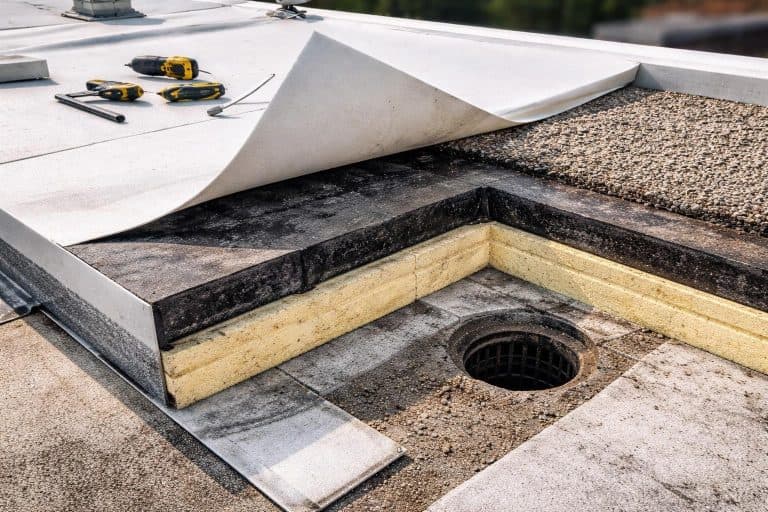
Flat roof patching becomes necessary when specific areas experience wear, damage, or installation defects. The most common failure points include seams where membrane sections join, penetrations around HVAC units and plumbing vents, and parapet walls where the roof meets vertical surfaces.
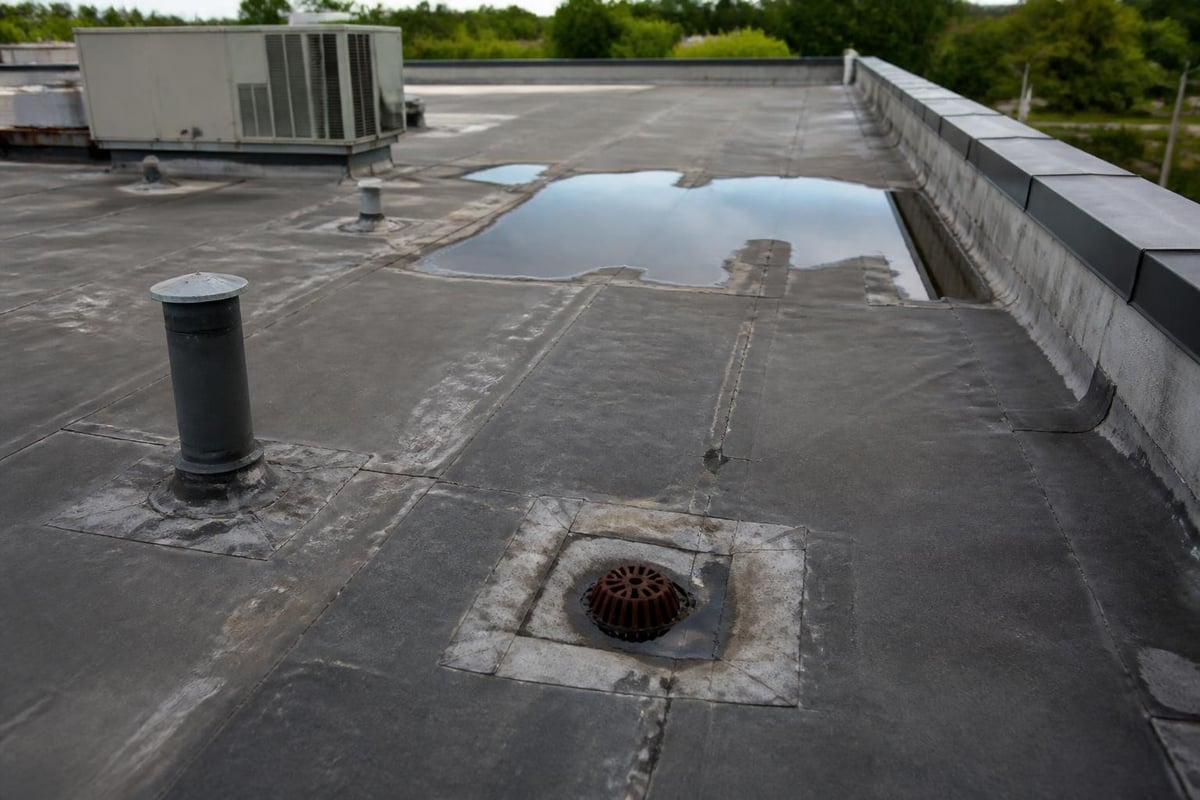
Ponding water is a leading cause of premature roof failure. When water remains on a roof surface for more than 48 hours after rainfall, it accelerates membrane degradation and creates stress on seams and flashings. Low spots that collect water often require not just patching but structural correction to ensure proper drainage.
Thermal movement causes flat roofs to expand and contract daily and seasonally. This movement stresses seams, fasteners, and flashing details. Over years, even well-installed systems develop small separations that allow water infiltration during heavy rain or snow melt.
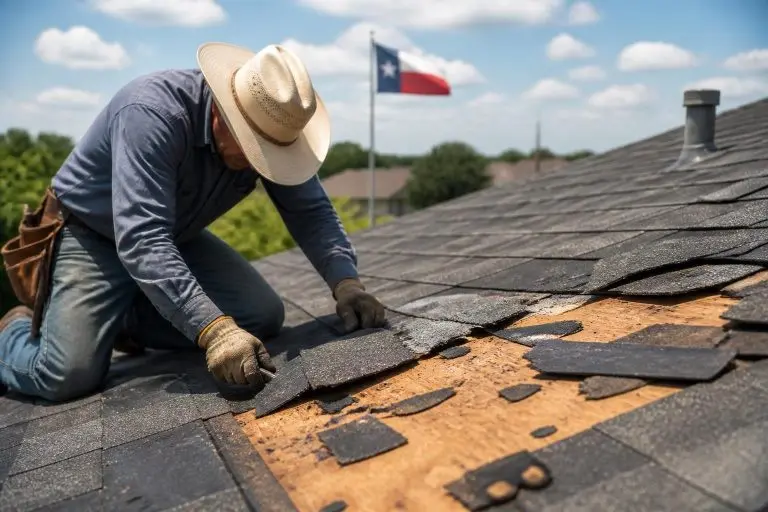
Fort Worth's climate presents unique challenges with intense summer heat, occasional winter freezes, and severe thunderstorms that can deposit hail and drive wind-blown debris onto roof surfaces. These conditions accelerate wear and create sudden damage that demands immediate attention. When severe weather strikes, storm damage roofers can assess the extent of impact and document necessary repairs.
Assessing Damage and Choosing the Right Patching Method
Effective flat roof patching begins with accurate damage assessment. Rushing to apply a patch without understanding the underlying problem often leads to failed repairs and recurring leaks.
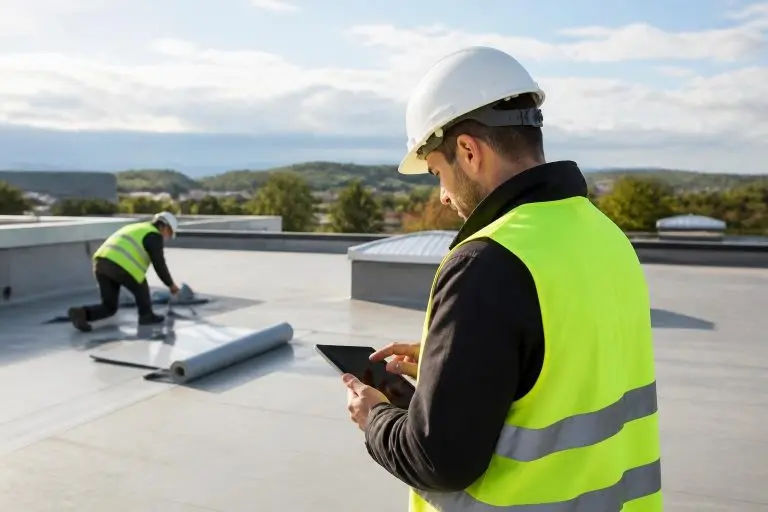
Inspection and Leak Detection Techniques
Start by examining the roof surface during dry conditions. Look for visible signs of damage including tears, punctures, blistering, or seam separation. Check all penetrations and flashings for gaps or deterioration. Note areas where gravel or coating has worn away, exposing the underlying membrane.
Water staining on interior ceilings doesn't always appear directly below the leak source. Water can travel along roof deck seams, structural members, or insulation before dripping into occupied spaces. Trace stains back to their origin by inspecting the roof area directly above and upslope from the interior damage.
- Visual inspection identifies obvious damage, wear patterns, and ponding areas
- Flood testing isolates leak locations by flooding suspected areas with water
- Infrared scanning detects trapped moisture beneath the membrane
- Core sampling reveals membrane condition and insulation moisture content
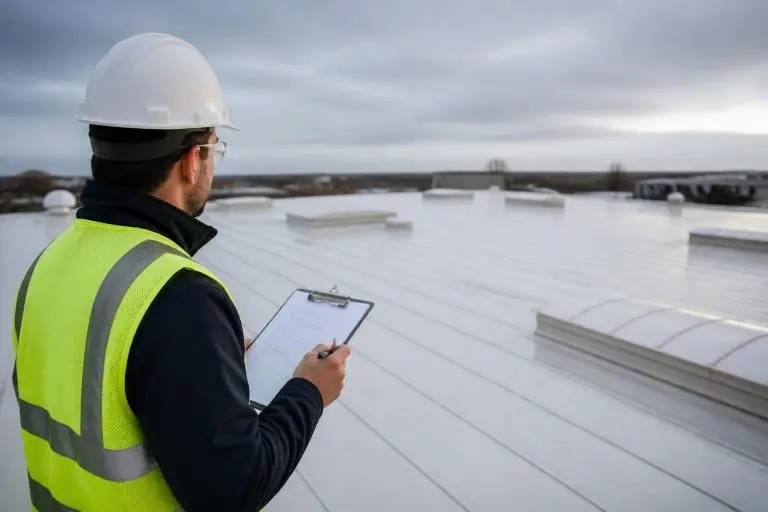
For commercial properties with large roof areas, professional inspection methods provide the most reliable results. Roof inspection services can identify problems before they cause interior damage and document existing conditions for property records.
Matching Patch Materials to Roof Systems
Successful flat roof patching requires compatible materials. Using the wrong patch material creates adhesion failures, chemical incompatibilities, or thermal expansion mismatches that cause the repair to fail.
EPDM patching uses EPDM rubber patches with specialized adhesives or peel-and-stick tape designed for rubber membranes. Clean the damaged area thoroughly, apply primer if required, and press the patch firmly to eliminate air bubbles. Larger repairs may require uncured EPDM that can be shaped to fit irregular damage.
TPO and PVC patching relies on heat welding for permanent repairs. Clean the area, cut a patch from compatible membrane material, and use a hot air welder to fuse the patch to the existing roof. Heat welding creates a homogeneous bond stronger than the membrane itself when performed correctly. Professional repair techniques ensure proper temperature and welding speed for lasting results.
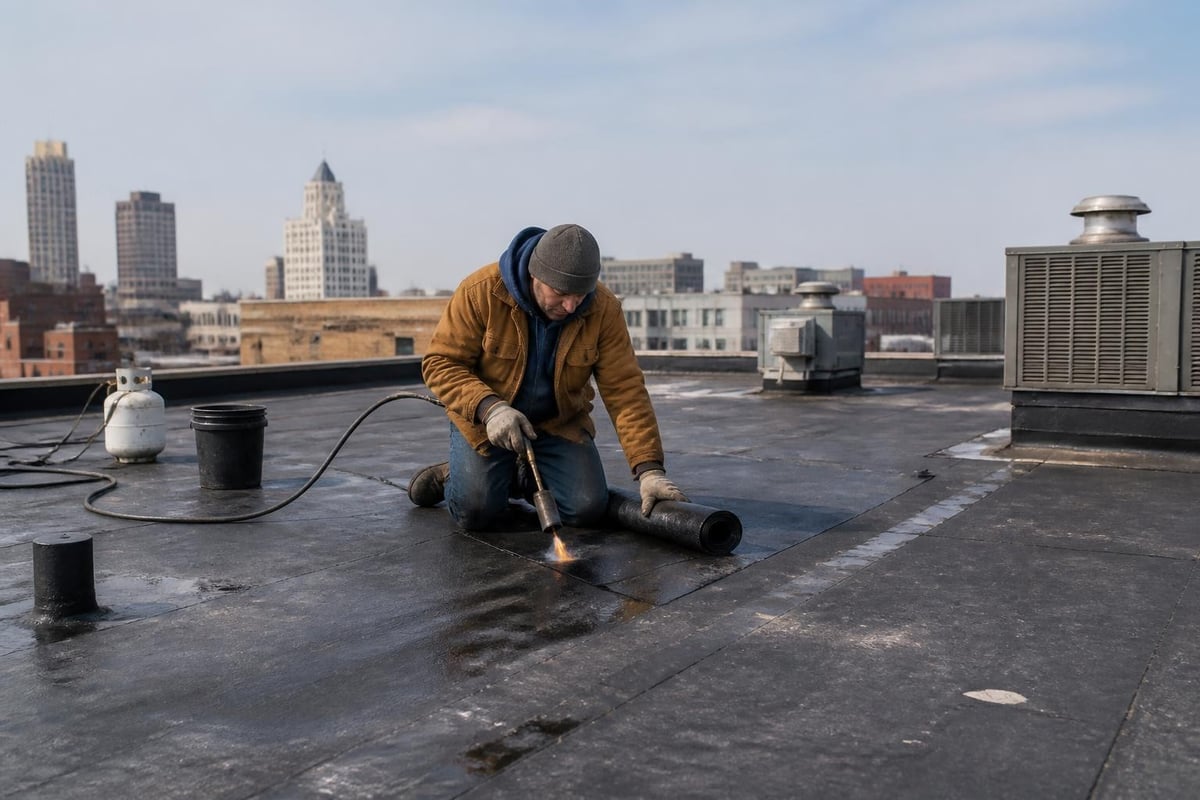
Modified bitumen and BUR patching uses asphalt-based materials applied with heat or cold adhesives. Torch-applied patches provide excellent adhesion but require experienced technicians and strict safety protocols. Cold-applied patches work well for smaller repairs and eliminate fire hazards on occupied buildings.
Step-by-Step Flat Roof Patching Procedures
Proper execution separates temporary fixes from long-lasting repairs. Following proven procedures and using quality materials ensures flat roof patching delivers reliable performance.
Surface Preparation Requirements
Surface preparation determines patch longevity more than any other factor. Contaminated or improperly prepared surfaces prevent adhesion and allow water to penetrate around patch edges.
Begin by removing all loose material, dirt, gravel, and debris from the damaged area. Extend cleaning at least 6 inches beyond the visible damage in all directions. For membrane tears or punctures, cut away damaged material to create clean, straight edges.
Moisture must be eliminated before applying patches. Wet surfaces prevent adhesive bonding and trap water beneath patches, leading to blistering and delamination. Use fans, heat guns, or allow adequate drying time. Never attempt flat roof patching during rain, fog, or when morning dew covers the surface.
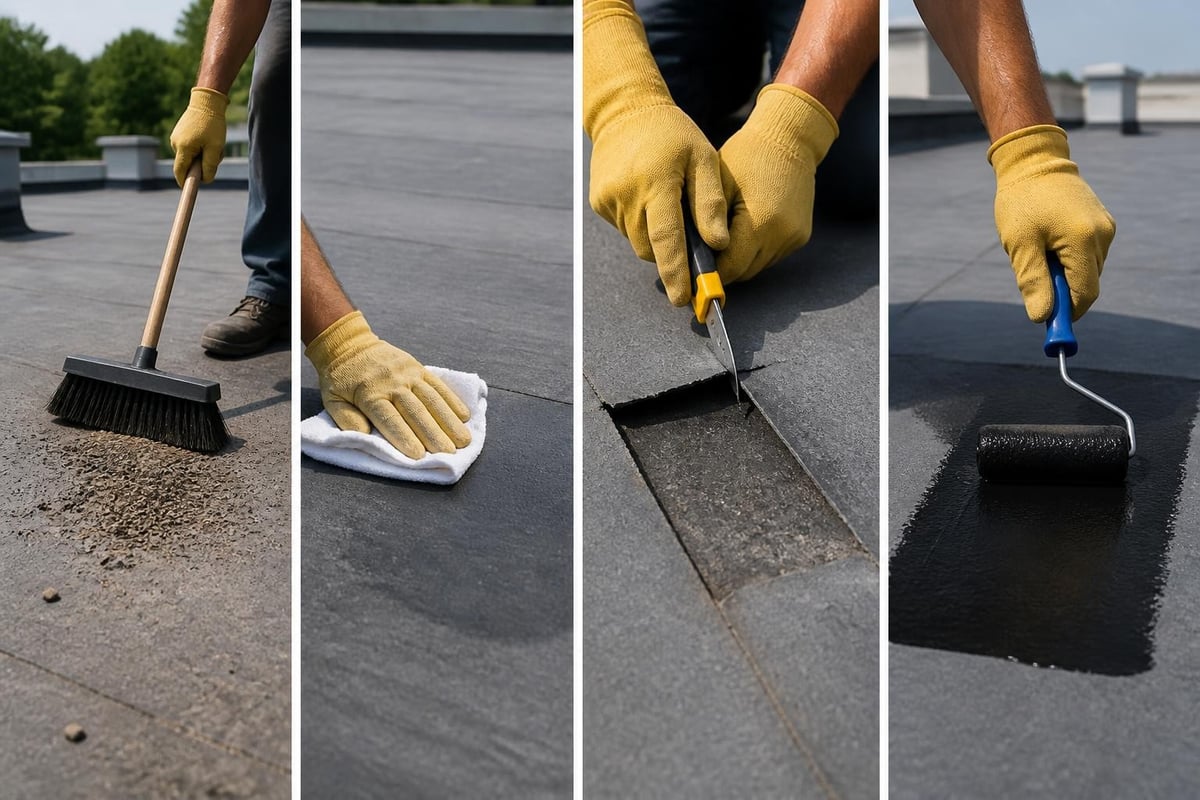
- Clean the damaged area with appropriate cleaners (mineral spirits for EPDM, TPO cleaner for TPO/PVC)
- Dry the surface completely and verify substrate is sound and stable
- Remove damaged material by cutting straight edges with a utility knife
- Apply primer if required by manufacturer specifications
- Measure and cut patch material to extend 4-6 inches beyond damaged area
- Install patch using appropriate method (adhesive, heat welding, or torch application)
- Seal edges and verify complete adhesion with no air pockets or wrinkles
Primers improve adhesion between old and new materials, especially on aged or weathered membranes. Always use primers specified by the patch material manufacturer. Some systems require priming both the roof surface and the patch material for maximum bond strength.
Patch Installation Techniques
Installation methods vary by roofing material but share common principles. Work in moderate temperatures when possible, as extreme heat or cold affects adhesive performance and material flexibility.
For adhesive-applied patches, spread adhesive evenly on both surfaces using a notched trowel or brush. Allow flash-off time as specified by manufacturer instructions, typically 5-15 minutes. Position the patch carefully as repositioning can compromise the bond. Roll the patch thoroughly with a hand roller to eliminate air pockets and ensure complete contact.
Heat-welded patches require proper equipment and technique. Adjust the hot air welder to the correct temperature for the membrane type (typically 900-1200°F for TPO and PVC). Move the welder steadily along the seam, applying enough heat to melt both surfaces without burning through. Use a silicone roller immediately behind the welder to press the joint together while the material remains hot.
Torch-applied patches for modified bitumen must be heated uniformly to create a proper bond. Apply heat evenly to avoid scorching or under-heating. A small bead of asphalt should squeeze out along all edges when properly installed. Different repair methods suit specific damage types and roof systems.
Edge Sealing and Reinforcement
Patch edges are the most vulnerable points where water can infiltrate. Proper edge sealing prevents lifting, delamination, and water intrusion.
Apply mastic or sealant around all patch edges to create a watertight seal. Some systems use fabric reinforcement embedded in mastic at edges for additional strength. This reinforcement layer distributes stress and prevents edge peeling.
For high-traffic areas or locations subject to thermal stress, consider reinforced patches that use fabric layers between membrane plies. These multi-layer patches resist punctures, thermal cycling, and mechanical damage better than single-layer repairs.
Advanced Patching Solutions and Preventive Strategies
While basic flat roof patching addresses immediate leaks and damage, advanced techniques and preventive measures extend roof life and reduce long-term costs.
Dealing with Complex Damage Patterns
Sometimes damage extends beyond what simple patching can address. Widespread blistering, extensive seam failure, or multiple leak points may indicate systemic problems requiring more comprehensive solutions.
Blistering occurs when moisture or air becomes trapped beneath the membrane. Small blisters can be cut, dried, and patched, but extensive blistering often signals wet insulation or improper installation. In these cases, sectional roof replacement may be more cost-effective than repeated patching attempts.
Seam failures across multiple locations suggest membrane shrinkage, inadequate fastening, or poor initial installation. Rather than patching individual seams as they fail, consider installing a seam plate system that reinforces all suspect seams simultaneously. This proactive approach prevents sequential failures and extends roof life significantly.
| Damage Pattern | Simple Patch Suitable | Advanced Solution Required | Typical Cost Comparison |
|---|---|---|---|
| Single puncture | Yes | No | Patch: $200-500 |
| Multiple small tears | Yes | Consider coating system | Patch: $500-1500, Coating: $2-4/sq ft |
| Seam separation (one location) | Yes | Monitor adjacent seams | Patch: $300-800 |
| Widespread seam failure | No | Seam plate system | System: $3-7/sq ft |
| Extensive blistering | No | Sectional replacement | $8-15/sq ft |
| Ponding water areas | No | Drainage correction | $1000-5000+ |
Coating Systems as Comprehensive Patching
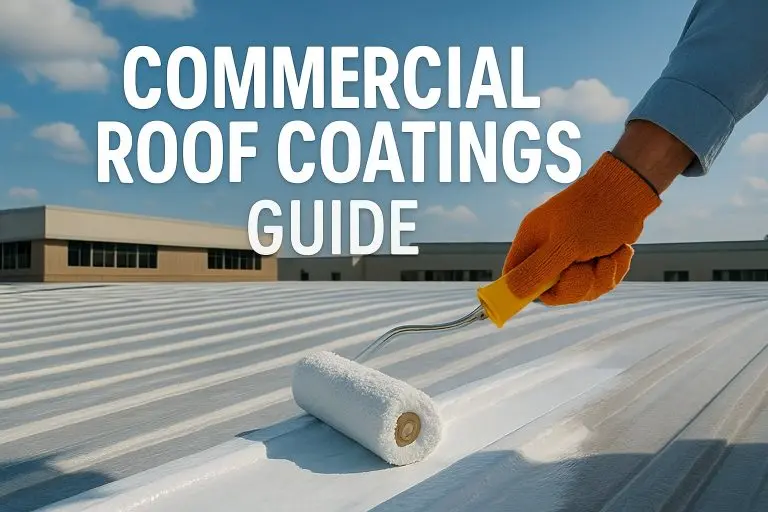
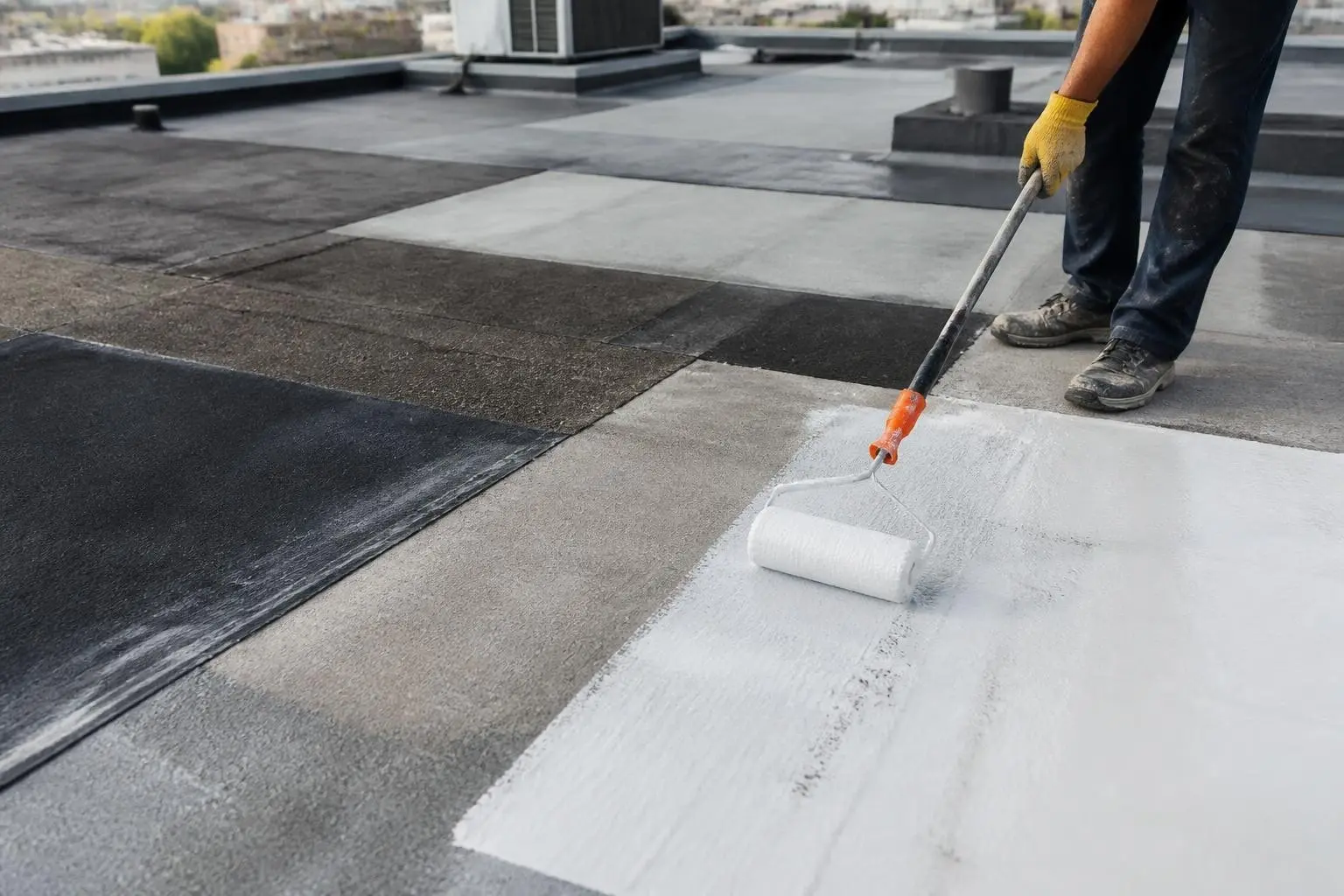
Roof coating systems provide an alternative to traditional flat roof patching when damage is widespread but the underlying structure remains sound. Acrylic, silicone, or polyurethane coatings create a seamless waterproof layer that covers multiple problem areas simultaneously.
Coatings work best on roofs with multiple small leaks, surface wear, or UV degradation. They restore weatherproofing, improve reflectivity, and extend roof life 10-15 years when properly applied. However, coatings cannot correct structural problems, severe ponding, or wet insulation.
Preventive Maintenance Programs
The most cost-effective flat roof patching is the kind you never need to perform. Regular maintenance identifies and addresses minor issues before they become major problems.
Implement a twice-yearly inspection schedule, checking roofs in spring and fall. Document roof conditions with photos and written reports to track changes over time. Address small problems immediately rather than waiting for leaks to develop.
Keep drains and scuppers clear of debris to prevent ponding water. Trim overhanging branches that deposit leaves and can damage the membrane during storms. Inspect and maintain all roof-mounted equipment, ensuring proper clearances and support.
For commercial properties with complex roofing systems, professional maintenance programs provide consistent oversight and documentation. When urgent issues arise, having emergency roof repair services available ensures rapid response to prevent interior damage.
Material Selection and Quality Considerations
Not all patching materials deliver equal performance. Selecting high-quality products appropriate for your specific application ensures repairs last years rather than months.
Manufacturer-Approved Materials
Using materials approved by the original roof manufacturer protects warranties and ensures compatibility. Many roof warranties become void if repairs use unapproved products or methods.
OEM patches (original equipment manufacturer) match the installed membrane precisely in composition, thickness, and performance characteristics. While often more expensive than generic alternatives, OEM materials eliminate compatibility concerns and maintain warranty coverage.
Generic patching products can work well when properly selected, but verify compatibility with your specific membrane type. Some products claim universal compatibility but perform poorly on certain materials. Check manufacturer specifications and, when possible, test adhesion on a small area before committing to large repairs.
Understanding Product Ratings and Certifications
Quality patching materials carry industry certifications that verify performance characteristics. Look for products tested to ASTM standards for adhesion, water resistance, UV stability, and temperature performance.
- Peel adhesion values indicate how much force is required to separate bonded materials
- Tensile strength measures material resistance to tearing and stretching
- Water absorption ratings show how much moisture the material absorbs
- Temperature range specifications define safe application and service conditions
- UV resistance ratings predict outdoor durability and color stability
Products with higher ratings typically cost more but deliver superior longevity. For critical repairs on commercial properties, premium materials justify their cost through extended service life and reduced failure rates.
Seasonal Considerations for Fort Worth Properties
Fort Worth's climate affects both when flat roof patching should be performed and which materials work best. Summer temperatures exceeding 100°F can make some materials too soft to work with, while winter freezes prevent proper adhesive curing.
Ideal patching conditions occur in spring and fall when temperatures range between 50-85°F and humidity is moderate. These conditions allow proper material handling, adequate working time, and complete adhesive curing. Understanding repair timing helps schedule work for optimal results.
Hot weather patching requires special handling. Store materials in shaded areas, work during cooler morning hours, and use products formulated for high-temperature application. Some adhesives become too fluid in extreme heat, running off vertical surfaces or taking excessive time to set.
Cold weather patching presents different challenges. Many adhesives won't cure properly below 40°F, and membrane materials become brittle and difficult to work with. When emergency repairs are necessary during cold weather, use low-temperature formulations and protect the work area with temporary enclosures.
Safety Protocols and Professional Considerations
Flat roof patching involves working at height with tools, chemicals, and sometimes heat sources. Proper safety measures protect workers and property while ensuring quality repairs.
Jobsite Safety Requirements
Commercial properties must comply with OSHA regulations for fall protection, typically requiring guardrails, safety nets, or personal fall arrest systems for work on roofs above six feet. Residential projects should follow the same safety principles even when not legally mandated.
Fall protection is non-negotiable for all roof work. Use properly anchored lifelines, full-body harnesses, and shock-absorbing lanyards. Never work alone on roofs, and maintain communication with ground personnel.
Fire safety becomes critical when using torch-applied materials or hot air welders. Keep fire extinguishers immediately accessible, maintain hot work permits as required, and never perform heat work near combustible materials. Some jurisdictions require fire watches to continue for hours after completing torch work.
Chemical safety matters when using solvents, primers, and adhesives. Provide adequate ventilation, use appropriate personal protective equipment including respirators when specified, and follow all manufacturer safety data sheet (SDS) requirements. Store and dispose of chemicals according to local regulations.
When to Call Professional Roofers
While some property managers and building maintenance staff can handle basic flat roof patching, many situations demand professional expertise. Complex repairs, large damaged areas, or warranty considerations often justify professional involvement.
Professional roofers bring specialized knowledge of different membrane systems, proper patching techniques, and building codes. They carry proper insurance, use commercial-grade materials, and provide warranties on completed work. For commercial properties where roof failure can disrupt operations or damage inventory, professional repairs minimize risk.
Emergency situations require rapid response and reliable repairs. Local roofing contractors with dedicated service teams can respond quickly to prevent interior damage and business interruption.
Consider professional services when repairs involve extensive damage, critical building systems, roof areas that are difficult or dangerous to access, warranty preservation requirements, or insurance documentation needs. Detailed damage documentation helps property owners make informed decisions about repair scope and cost.
Cost Analysis and Long-Term Value
Understanding the true cost of flat roof patching helps property owners make informed decisions about repair strategies and budget allocation.
Direct Repair Costs
Basic flat roof patching costs vary widely based on damage extent, material type, access difficulty, and regional labor rates. Small patches addressing minor punctures or tears typically cost $200-800 including labor and materials. Larger repairs, seam reinforcement, or complex flashing work can range from $1,000-5,000.
Material costs for DIY patches range from $50-300 depending on patch size and membrane type. However, improper installation can void warranties and lead to premature failure, ultimately costing more than professional repairs.
Labor costs reflect the skill required for proper installation. Experienced commercial roofers charge $75-150 per hour in most markets, but their expertise ensures quality results and long-lasting repairs. Emergency service calls and after-hours work command premium rates.
Hidden Costs of Delayed Repairs
Postponing necessary flat roof patching creates cascading costs that far exceed the repair price. Water intrusion damages insulation, roof decks, structural members, and interior finishes. Mold growth creates health concerns and expensive remediation requirements.
For commercial properties, roof leaks can damage inventory, disrupt operations, and create liability exposures if customers or employees are affected. A $500 patch performed promptly prevents thousands in water damage and business interruption.
Energy costs increase when wet insulation loses R-value. Even small amounts of moisture reduce insulation effectiveness by 40-50%, forcing HVAC systems to work harder and consume more energy. Over a season, the added energy cost can equal or exceed the repair cost.
ROI Calculations for Preventive Patching
Strategic flat roof patching as part of preventive maintenance delivers excellent return on investment. Addressing minor problems early extends roof life, maintains energy efficiency, and prevents emergency repairs during extreme weather.
Consider a commercial building with a 20,000 square foot TPO roof nearing the end of its expected service life. Investing $5,000-10,000 in strategic patching and minor repairs might extend roof life 3-5 years, delaying a $150,000-200,000 replacement. The return on that preventive investment exceeds 1,500%.
Regular inspection and prompt patching maintains warranty coverage, documents roof conditions for potential insurance claims, and provides data for long-term capital planning. These benefits extend beyond immediate cost savings to support comprehensive property management.
Effective flat roof patching requires understanding your roof system, using appropriate materials and techniques, and acting promptly when damage occurs. Whether you're managing a commercial property or maintaining a residential flat roof, knowing when simple patches suffice and when professional intervention is necessary protects your investment and prevents costly water damage. For Fort Worth property owners facing flat roof challenges, Texcore Construction delivers expert assessment, quality repairs using in-house crews, and transparent recommendations backed by detailed documentation and a five-year labor warranty that ensures long-term performance and peace of mind.